Author Archives: melissahillman

The Response to “Pussygate” Oozes Hypocrisy

After every horrific thing Trump has said and done– insulting Mexicans, Muslims, the disabled, a Gold Star family, the poor, journalists, women– suddenly his 2005 off-camera boast, caught by a hot mic, that he’s able to sexually assault women (“grab them by the pussy,” and “get away with it” because he’s “a star”) has his supporters among the GOP fleeing like rats leaving a sinking ship.

After every horrible thing he’s said and done, why is this suddenly the line that loses him almost all his support? It’s not like he hasn’t insulted women in the past. He’s openly attacked individual women throughout the campaign– Megyn Kelly, Alicia Machado, Elizabeth Warren, Ruth Bader Ginsberg, Katie Couric, Angela Merkel, Carly Fiorina, Heidi Cruz, Meghan McCain, Ana Navarro, Bette Midler, and Cher, just to name a few. He has publicly speculated about dating his own daughter. When it comes to women, he’s never made it a secret that he’s a monster.

His outrageous racism, sexism, xenophobia, narcissism, startling ignorance, childish bullying, petulant tantrums, open hatred of freedom of the press, and contempt for anyone who doesn’t lavishly praise him have slowly eroded his GOP support, but his boast about sexual assault was the nail in the coffin of his candidacy, losing him the support of the RNC itself and many prominent GOP politicians, many of whom are calling for Trump to step down. What that would mean for the GOP is unclear since voting has already begun– tens of thousands of mail-in ballots have been filed so far.

Various scenarios, each more dubious than the last, have been floated by desperate Republicans in the past 48 hours. Trump could vow to step aside before swearing in and let Pence become POTUS (because what American really needs is a man who thinks women should be legally required to pay for funerals for miscarriages and abortions— now that’s respect for women!). Trump could step aside now and be replaced on some, but not all, ballots if the Supreme Court allows it (unlikely, since the problem is just that the GOP chose an asshole, not that he’s been incapacitated by illness or killed in a plane crash, although I would not put assassination past the RNC at this point.) The election could proceed as planned and the electoral college could just choose to vote for someone else, violating the law in states where the electoral college is legally bound to honor the popular vote, with Republicans speculating they would somehow magically be able to protect these electors from the law through the sheer force of national hatred for Trump. (“No way would they be prosecuted,” they argue, because Republicans have always been so adept at predicting the future.) But that presupposes Clinton won’t have enough electoral votes to win, which is becoming increasingly unlikely.

14611139_10154256484384079_3084048758172515858_n

Whether or not Republicans sort out how to rid themselves of the eternally squawking bigoted albatross they fashioned out of stale circus peanuts and bile and hung around their own necks, my point is that Trump viciously attacked women for months in this campaign– entertainers, politicians, private citizens, even foreign leaders– and no one cared. But when he threatened women in the abstract, well, now, that’s a different story.

America has centered a massive amount of its cultural mythology around “protecting women,” especially white women. But we only care about women in the abstract.

We use the “protect our wives and daughters” excuse to get all kinds of laws passed that directly harm real women. We pass laws that are solely designed to restrict access to safe abortions, and to close clinics that provide OBGYN services to women, putting their health (and the health of their babies) at risk. We restrict transwomen from access to women’s restrooms. We have a long history of creating laws to “protect” women in the abstract that restrict and oppress real women.

When Trump finally made an egregious attack on women in the abstract by boasting about sexually assaulting “women” as an abstract concept, politicians and pundits immediately denounced him and distanced themselves from him. When he went after real, living women, the nation collectively shrugged. When he was accused of sexual assault of a minor by a real, living woman, the nation collectively shrugged. When he went after “women” as an abstract concept, we drew the line.

People who drew the line at Trump’s boast about getting away with sexual assault are the very same people– on both sides of the aisle– who  belittle, minimize, and otherwise cast doubt on the testimony of real women who have been sexually assaulted, especially when they have been sexually assaulted by wealthy and powerful celebrities using their wealth, power, and fame as a cover for their actions. Sexual assault victims who speak out are routinely disbelieved and even attacked as “liars.”

We worry about the “promising futures” of young rapists, and give them laughably light sentences, especially if they’re white and/or athletes. Campuses ignore reports of sexual assault, issue slaps on the wrist to violators, or even punish women who report sexual assault. We routinely blame women for their own assaults for wearing the wrong thing, saying the wrong thing, drinking the wrong thing, or being in the wrong place, despite all the evidence we have the shows without question that none of those things matter. We refuse to adequately support processing rape kits.

Yes, what Trump said about his ability to sexually assault women and “get away with it” is horrific– just as horrific as everything else he said when he was still getting the full-throated support of millions of Americans and the GOP establishment. I’m glad many more people are finally understanding– or pretending to understand as the national zeitgeist shifts– why Trump is an execrable human being whose soul is best represented by a grainy image of a pile of rat droppings in a broken cooler half-buried in a toxic waste dump.

Women are people, not symbols of male honor in either protection or conquest. When women speak out about sexual assault, we’re not going off-script in your honor narratives about us for our perverse pleasure. We’re just– and you may want to take a seat for this– telling the truth. The tiny percentage of false sexual assault reports do not change anything. The vast majority of us are telling the truth, yet when we speak out, we are automatically mistrusted, disbelieved, looked at with suspicion. Our stories are minimized and dismissed. Our culture despises sexual assault in the abstract, but we revile the real women who speak openly about being sexually assaulted in real life. They’re disrupting male honor narratives by accusing real men of real crimes. If she’s assaulted, either men failed to protect her or she’s ungratefully rejecting an honorable conquest. There’s no way for men to preserve their honor narratives when real women are sexually assaulted. While men openly despise sexual assault in the abstract, they also openly revile real women who speak out about real sexual abuse. Even in the face of incontrovertible proof, they will find ways to blame the victim. If she’s a woman of color, the blame is intensified sevenfold.

So excuse me if I roll my eyes at all the Republican men clutching their pearls this weekend about Trump’s statements.

Men, especially you Republican men suddenly jumping off the SS Trump Is Human Garbage as it burns and sinks into the briny deep: The next time a woman speaks out about sexual abuse, especially if the abuser is wealthy, powerful, and/or famous, remember how publicly outraged you were about Trump’s comments. And remember that we will spare no mercy in decrying your hypocrisy when your first response to a real victim is to doubt and mistrust her. Do not think we will forget that you’re only interested in protecting women in the abstract.
14500576_10154256216354079_3157991271473616681_o

VOTE.

Tagged , , , ,

Casting, Race, and Why Tim Burton is Alarmingly Wrong


47294497-cached

Tim Burton. Photo: Petr Topic/SIFA/Getty Images

Recently director Tim Burton was asked by Bustle writer Rachel Simon why his latest film, Miss Peregrine’s Home for Peculiar Children, features an all white cast with the single exception of Samuel L. Jackson (who is cast, disappointingly yet unsurprisingly, as the murderous villain), Burton had this to say:

“Nowadays, people are talking about it more,” he says regarding film diversity. But “things either call for things, or they don’t. I remember back when I was a child watching The Brady Bunch and they started to get all politically correct. Like, OK, let’s have an Asian child and a black. I used to get more offended by that than just… I grew up watching blaxploitation movies, right? And I said, that’s great. I didn’t go like, OK, there should be more white people in these movies.”

“Things either call for things, or they don’t.” This is an alarmingly incorrect position to take.

By “things” one can only assume he means “films” or perhaps “film casts.” The idea that a film can, all on its own, cry out for an all white cast with a single black villain while the humble director, helpless, must obey without question is, of course, preposterous. “Things” do not “call for” anything– directors make specific decisions. You cannot abdicate responsibility for your casting by blaming it ON THE FILM YOU MADE, in which you personally made or approved every artistic decision.

If by “things” he means “the source material,” meaning that initially the book series was all white (adding characters of color later on in the series), once again he is abdicating responsibility for his personal decisions by pretending that he’s but a faithful reproducer of the source material. Where was this desire to faithfully reproduce the book when he was directing Charlie and the Chocolate Factory, for example? While Burton’s version is closer to the original 1964 Roald Dahl book than the 1971 film adaptation Willy Wonka and the Chocolate Factory, Burton still deviated in multiple ways from the book. Is whiteness the only inviolable aspect of source material?

unknown-1

A PR shot for Miss Peregrine’s Home for Peculiar Children released by Fox.

As directors, we make the decisions that bring the world of the play, the film, or the show to life. We create the worlds you see on screen and on stage. We can choose a diverse world that reflects the one in which we live, or we can choose an all white world that shuts out people of color, denies opportunities for actors of color, and creates the illusion that white people are the only people whose stories are worthy of telling unless something is specifically about being Black, Latinx, Asian, etc. When a work is just about “people”– when the story has nothing to do with race specifically–if you then think the work “calls out” for whiteness because you see white as “neutral,” you have, at the very least, a failure of imagination. But that failure goes much deeper.

The alarming aspect of Burton’s abdication of the very basics of film directing– the artistic decisionmaking– is that he imagined the work itself somehow told him he needed to create a group of wonderful white people whose major threat is a murderous black man. This kind of reinscribing of whiteness as superior, innocent, and good alongside blackness that exists solely as a dangerous threat to that whiteness is a trope that literally gets innocent black people killed every day. This isn’t “just a film.” There’s no such thing. Our culture is primarily impacted by the narratives of popular culture. Films are massively important cultural artifacts that have the power to shift an entire culture.

When police officers have a split second decision to make, why do they imagine seeing a gun in the hand of an unarmed black man, or imagine a black man reaching for a gun when he reaches for his wallet as instructed, or imagine a black man lying on the ground with his arms in the air is a threat, or imagine a black child with a toy gun is an adult threatening their lives, especially when police bring in European American active shooters alive routinely? When our culture pumps out narrative after narrative after narrative equating blackness with DANGER, that has a massive impact on the real world.

When we talk about police “retraining” we have to realize that no amount of retraining has the power to combat the massive force of our popular culture. There’s no police-specific training that can combat that without each individual officer personally committing to actively fighting those narratives in their hearts and minds every day of their lives– which, by the way, is something I think we should all be doing. Even then there are no guarantees that the narratives white supremacy relentlessly puts into their hearts and minds are all examined, understood, and held in check in that moment they stand before black people with their guns drawn.

As the people who literally build western culture every day through the choices we make as we create and release our art, we have a responsibility to the people whose lives are being violently stolen every day to do better. It’s an insult to their lost lives to say that the “thing” magically “called for” you to use an all white cast with a black villain.

It’s telling that Burton imagines that a lack of white people in blaxploitation films of the 1970s is somehow equivalent to his all white cast/black villain in 2016, as if the obvious race privilege of white people in the 1970s didn’t exist and the films at the time were racially problematic– yet magnanimously forgiven by Burton– for not including white people. As if we’re not now all aware of the massive social injustice faced by black people who are treated unfairly at every level of the criminal justice system, and who face police use of force– from small acts of violence to fatal ones– at far greater percentages than white people, and what it means in 2016 to make a group of innocent white children the heroes battling against a murderous black man. It’s astonishing, really, that anyone who makes his living from creating art– from understanding the value of symbols and tropes and narrative– could miss this. It’s alarming. These tropes, unchecked in our culture, are complicit in the deaths of far too many people of color, including children.

It’s telling that Burton says “oh, let’s have an Asian child and a black” in decrying the tokenism of shows– again from the 1970s (dude, that was 40 years ago)– like The Brady Bunch. Apart from the dehumanizing phrase “a black” (a black what?), Burton cannot imagine diversity as anything but tokenism, as if people of color do not exist outside of whiteness, as if including people of color is automatically tokenism, as if he can only imagine a single token actor of color in a film. Tim, why not cast people of color in lead roles? In lots of roles? In all the roles? Why not consider a diverse range of actors for every role and see who best fits the part when race is removed from consideration? Yes, sometimes race needs to be a foremost consideration in casting. If you direct A Raisin in the Sun (please no one ever let Burton do this), Mr. Lindner needs to be European American and everyone else needs to be Black. But in, say, Mrs. Peregrine’s Home for Peculiar Children, race is not central to the narrative. Nothing would have been lost by hiring a diverse cast, and much would have been gained. No one is asking you to cast a single token Black actor, and yet THAT IS EXACTLY WHAT YOU DID in casting Samuel L. Jackson, making that even more egregious by casting him as the villain. But The Brady Bunch‘s dippy 70’s “we’re all one big happy melting pot” nonsense is “more offensive” to you?

I’m not going to criticize Jackson for taking the role, since I have no idea how much he really knew when he signed the contract, and his statement about it does read like, “I am under contract to do positive PR for this film.” He’s an actor whose job is to act. Who knows what he was told about how the film would be created.

I am, however, flat out astonished that someone of Burton’s level of talent with symbol, narrative, and trope would create such an obvious lie as “things call out for things” as a cover for his own decisionmaking. Then again, I’m not surprised at all.

This article is also available on the Huffington Post here.

Please also check out “An Open Letter to Tim Burton from a Black Fangirl” by DeLa Doll, posted to HuffPo yesterday. 


Tagged , , , , , , ,

Why the Hatred of Video Games is Ableist

Humans love games. Some of our earliest cultural artifacts are game pieces. The modern world has several massively lucrative industries around games. People will dump half a week’s salary into two tickets to a professional sports event (make that a whole week’s salary if you each want a beer). We take activities like cooking, fashion, singing, trivia, drinking, and even theatre and “gamify” them by creating gaming structures around them. If there’s one thing people love, it’s a way to score more points than someone else.

And there’s nothing wrong with that. I love games as much as the next human. But for a game-loving society, we spend an inordinate amount of time hating video games.

skyrim

Elder Scrolls V: Skyrim, created by Bethesda Softworks

We claim they are dangerous to developing brains, cause people to be more violent, prevent people from forming healthy human relationships, are rife with sexism, racism, and homophobia, and we have the studies to “prove” it. Yet we romanticize sports and excuse its negative aspects– its shockingly high injury rate (including brain injuries); its continuous problems with sexism, racism, and homophobia;  and a culture of bullying and hazing that permeates and poisons athletics, particularly K-12 and college athletics– because we believe that games you play with your body are intrinsically, even morally, better than games you play with your mind.

Video game culture is no better than sports culture in any of those respects save injuries, but we treat it as if it is intrinsically, morally lesser, and that engaging in a game you play with your body is somehow morally superior to engaging in a game you play with your mind.

It’s an ableist position to take.

cayde-6_02_feature.png

Destiny NPC Cayde-6, voiced by actor Nathan Fillion. Destiny is created by Bungie.

We frame physical activity as the best of all possible choices for filling free time. An hour with a book or a video game is “indulgent,” but an hour of cycling or basketball is “healthy” and “making good choices.” We worship the body and what it can do, granting the highest cultural status to people with able-bodied, thin, athletic bodies. We even describe them using the word “fit,” as if people who are disabled, fat, or unathletic are “unfit.”

Because our culture worships the body and ignores– even denigrates— the mind, we’ve elevated physical games over every other kind of game and created a vast cultural mythology around pretending physical games are moral and good and healthy while video games are destructive, bad, and unhealthy.  People whose bodies allow them to play physical games have access to a level of cultural privilege denied to those who cannot. People whose bodies cannot play physical games but who still want to game have more options open to them than ever before, yet all of them are considered morally inferior to physical games.

pride-demon

Facing off against a pride demon in Dragon Age: Inquisition. The Dragon Age series is created by Bioware.

But video games are violent! So are sports. The difference between violence in video games and violence in sports is that physical violence in video games is pretend and physical violence in sports is real. Violence during games is an ongoing problem at all levels of athletics. Sports has immense bullying problems; sports fans are notoriously violent during victories, losses, and even just in the stands. Even little league parents get violent. Off the field, college athletes are more likely to commit sexual assault than other students and less likely to be convicted.

If you wish to extend “violence” to harassment and bullying, and I absolutely do, it’s undeniable there are violent aspects in video game culture, but sports culture is no better; in fact, statistically speaking, it’s clearly worse. Yet we frame sports as inherently wholesome, marred by a few bad apples, and video games as inherently worthless, alleviated by a few wholesome bright spots, simply because we value the body and its abilities, look, and “fitness” more highly than the mind.

civilization

Civilization V is a massive, complex strategy game from Firaxis wherein you must build and maintain your civilization from prehistoric times through the future.

But video games make people more violent! The problem with that notion is that violent crime has actually reduced since the introduction of video gaming, leading to the logical conclusion that video games do not “cause violence.”

The problem lies in the studies themselves. When you structure a study around video game violence, you don’t send researchers to sit in 2500 rooms for 100 hours each to watch 2500 people make their way through the Dragon Age: Origins narrative, wherein the player’s character is centered as a hero saving the world from monsters, or the Fallout 3 narrative, wherein the character must survive in a nuclear war-shattered wasteland and fight to realize the character’s father’s dream of bringing clean water to its people. The most common studies involve measuring aggression as relates to non-narrative contexts. The resulting data is completely meaningless. It would be like comparing the way people feel after watching a sophomore player on an underdog team score a game-winning touchdown in a bowl game and then immediately kneel down and propose to his girlfriend, the head cheerleader, and the way people feel after being forced to watch footage of sacks over and over and over without context.

hearthfireconstruction3

The Hearthfire expansion in Skyrim allows players to design and build their own homes bit by bit as they acquire the resources.

The idea that video games are somehow more dangerous, more prone to generate violent acts, than physical games is ableist nonsense that comes from romanticizing and valorizing the body while minimizing the mind. Sure, we talk a good game about the mind, education, and intelligence, but all our attention, money, and concern are focused on the body. We pay university sports coaches huge sums of money while we pay university lecturers below the poverty level. Schools REQUIRE students to participate in physical games and BAN playing video games on campus.

One of the most powerful cultural myths underpinning the hatred of video games is the longstanding fear of technology. We have feared and mistrusted every technological advance ever, from movable type to the internet. The absolute silliest argument is that analog games such as board games are healthy, but video games are dangerous, as if the screen itself has some kind of magical power to render the game’s benefits inert. This fear and mistrust of technology are themselves arguably aspects of anti-intellectualism– fear of what the “eggheads” have unleashed upon us. Fear of science, technology, and new knowledge have been encoded into our culture at every level, from the Garden of Eden to Faust to Battlestar Galactica. Pushing the limits of what the body can do is prized and treasured as a measure of humanity’s highest worth. Pushing the limits of what the mind can do in the form of new technologies, inventions, and discoveries is deeply mistrusted, with each new advance meeting a screeching wall of resistance based on its supposed “dangers.”

reapers

The main antagonists in Bioware’s Mass Effect series are the Reapers, a sentient race of synthetic-organic starships.

The truth is, playing video games is as good, maybe even better, than playing sports. Video games– even violent shooter games– exercise your mind in the same way that physical games exercise your body.

Video games are elaborate puzzles, often within complex narratives with far more narrative content, and more complex narrative content, than a book or a film has room to hold. There are many games where the mythopoeia alone could fill several volumes.

Video games make players better problem solvers, as well as boost memory and cognitive skills. Gamers are helping scientists solve complex problems. An enormous number of modern games track a player’s in-game choices, changing the way NPCs (non-player characters) interact with the player based on the morality of their past choices. Two of many examples include Dragon Age: Origins, where NPCs on your team gain special skills as you gain their trust and friendship, and Fallout 3, where high karma results in NPCs giving you gifts and the in-game radio DJ, Three Dog, singing your praises on the air. As in life, often the morality of in-game choices is unclear, and players must live with the consequences of their actions long after it’s too late to go back and change their decisions. Many games tackle complex social and historical issues. The Bioshock series, for example, has been ruthless in its criticism of American nostalgia, juxtaposing gorgeous vintage imagery with the brutal reality of our racist, classist, and unregulated capitalist past, leaving the player to draw their own conclusions about the present.

bioshock_infinite_columbia_propaganda

Bioshock Infinite (from Irrational Games) confronts America’s racist past in multiple ways both in the world-building and in the central narrative.

The idea that a teenager who plays video games after school is somehow wasting his time while a teenager who plays football after school is an American Hero reflects our characterization of the body and its achievements as the most wholesome, most moral, most admirable aspect of human life. This is ableist nonsense that reserves the highest moral position in our culture to people whose physical bodies meet or exceed arbitrary standards.

“Can play football at a mediocre level” is somehow framed as morally superior to “Has beaten the Heroic King’s Fall raid on Destiny.” While I can only dream of EITHER, in theory my disability does not prevent me from completing the King’s Fall raid in the same way they prevent me from playing sports, yet my human brain still craves the complex problem solving, action, and competition of game play.

There’s nothing wrong with playing sports, but let’s step away from the silly– and ableist– notion that playing video games is morally inferior.


Tagged

“Diversity” Is A Problem

In theatre and in academia, my two worlds, we talk a lot about “diversity.” In theatre, we talk about diversity in casting, we talk about diversity in programming, we talk about diversity in audiences. In academia, we talk about “attracting and retaining diverse students” and “the diversity of our faculty.” But there’s a massive elephant in the room that we continue to ignore.

Diversity is not enough.

Do not confuse “diversity” with “equity.” I have been in far too many situations where an organization hires a handful of people of color, plunks them into the lowest rung (either by title or by treatment) and then never thinks about them again. I have been in far too many situations where faculty believe they are “working to retain” students of color by designing classes with titles like “Keepin’ It Real: African American Performance,” taught by a fussy middle-aged musical theatre professor, instead of engaging the students directly to discover what support they actually need. I have been in far too many situations where highly skilled and qualified women are hired and then passed over for promotion in favor of mediocre– or even demonstrably unqualified– men. I have been in far too many situations where a white man who is new to the organization is suddenly and dramatically promoted and given plum assignments in secret, announced to the stunned women who were passed over as a fait accompli.

Diversity fails if it’s not combined with equity.

Too many white male-run orgs frame diversity as bending down to lift up women and people of color. Women dominate the indie theatre scene as artistic leaders. They’re already out there, creating art every day. People of color aren’t just creating art– they’ve created most of popular American culture.

It’s telling when you hear people say things like, “Black children in the inner cities have no access to art,” and “We need to find ways to help people of color access theatre.” When we discuss “art” or “theatre” in these contexts, we mean “white art” and “white theatre.” We mean the work white people have deemed “important.” If there’s one thing inner cities have never lacked, it’s art. Most of popular American culture originated with artists of color in inner cities. Hip hop revolutionized music across the globe. Graffiti became a global school of art. Both hip hop and graffiti are already studied and taught in universities globally alongside other important artistic movements like minimalism and abstract expressionism, both of which, I’d like to point out, were originally held in as much disdain as hip hop and graffiti have been. You don’t bend down to grant art to people of color. They’re not starved for art, waiting for a white savior to show up and grant them access. People of color are lapping white culture artistically.

The problem isn’t a lack of access to “art” for women and people of color. The problem is lack of access to funding and well-paid positions of power. The problem is equity.

If we’re discussing equity, we’re discussing important topics like the glass ceiling– how larger theatres across the nation give almost all the positions of power to white men and show no signs of improving over the years we’ve been discussing this. How universities still give the majority of their tenure track positions to men and the majority of their poverty-level adjunct positions to women, despite that Cornell study that measured hypothetical attitudes. The hard data is clear, and those numbers widen when you add race to the mix.

If we’re discussing equity, we’re discussing how grantors and individual donors give white-run arts orgs far more funding than they do arts orgs run by people of color. We’re discussing how the study I linked above had the audacity to suggest that lower-funded orgs run by people of color should be left to “wither” and close.

If we’re discussing equity, we’re discussing how large, well-funded, white-run theatres are given massive grants to do “community outreach” programs to potential audiences of color when the theatres run by people of color, who are already doing that work, are left to fight for scraps. That’s diversity without equity– funding a wealthy white org’s diversity initiative instead of funding a smaller Black org that’s been doing that work for decades. Funding doesn’t have to be either/or. Where are the grants that fund partnerships or co-productions between those orgs? Or between women-run smaller theatres that attract diverse young audiences and the larger theatres that say they’re desperate for those audiences? I would have brought my theatre company into a larger theatre for a co-production in a heartbeat.

The problem with diversity without equity is that diversity can be accomplished in ways that entirely preserve the white male power structure. We congratulate diversity in programming and we ignore the fact that nearly every LORT AD position in the US from the institution of the 501c3 in 1954 to this very day has gone to a man, almost always a white one. We’re making calls for diversity that amount to asking white men to please hire more women and people of color while we ignore the fact that theatres run by women and people of color are literally starving for funding.

Diversity alone is not enough without actively seeking equity at all levels of our industry. We need to commit to both diversity AND equity.

UPDATE 9/8/16: Please read Jason Tseng’s excellent article about equity in arts funding: “The Kaiser Games.”

Tagged , , , , , , ,

My Book Is Out!

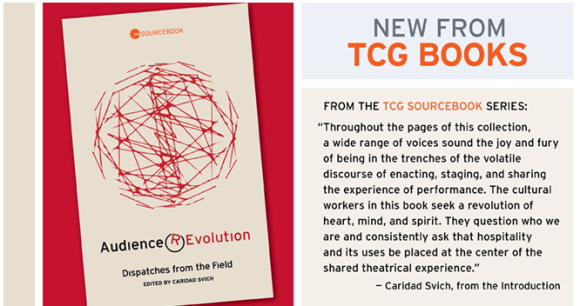
AudRevBooks

This image is shamelessly heisted from the TCG website. Link below.

And by “my book is out,” I mean Caridad Svich‘s book is out. The ever-brilliant (srsly) Svich has released a collection of essays for TCG entitled Audience (R)Evolution: Dispatches from the Field. In addition to one by yours truly called “The Lies We Tell About Audience Engagement,” it contains essays by Larissa Fasthorse, Richard Montoya, Itamar MosesJules Odendahl-James, Sylvan Oswald, Bill Rauch, Lisa D’Amour, Roberto G. Varea, Callie Kimball, Carlton Turner, and Svich herself, among many others.

Order your copy here!

Tagged , , , , , , , , , , , , , ,

The Sexism in our Non-Sexist Industry

The theatre community prides itself on its left-leaning culture, openness to diversity, and acceptance of difference. Yet we have constant problems with gender parity. Women are underrepresented in every area of our industry apart from the indie scene, often dramatically. There are so many studies and think pieces about this, I’m not going to bother choosing any one to link to– we’ve all read them.

Although we consider ourselves “not sexist,” we’re still unwittingly *saying and doing things that are sexist*. Sexism (and racism, and ableism, and etc) are actions and words as well as thoughts and attitudes. In 2016, we’re not seeing “No woman can direct a man with proper authority” and the like, but we’re all still dealing with the sexism pervasive in our culture, and it impacts our actions through unconscious bias. Unconscious bias is why people who are committed feminists are still sometimes making decisions motivated by sexism (and racism, and transphobia, etc).

And while this applies without question to women who have internalized the sexism inherent in our culture and its many systems and structures, often what we, as women, are struggling with in this industry are the unconscious biases of men.

“She’s perfect for the role!” When I cast something with straight male input, I often find myself struggling to make him understand that the woman with whom he is most taken is not actually the best actor or right for the role. Because our culture has rigid, oppressive strictures about what constitutes “attractive,” most often that woman is young, European-American, thin, able-bodied, and traditionally “pretty.” I often find myself struggling to make him understand that a woman less physically attractive to him is much more skilled, or closer to the center of the role. Here’s what I hear men say about the woman they’re attracted to: “She has a certain quality that just pulls the eye”; “She has the right look”; “She has so much presence”; “She has something; I just can’t put my finger on it, but it’s there”; “I think her acting drawbacks would actually be strengths in this role.” Here’s what I hear men say about the woman they’re less attracted to: “I just can’t see her in the role”; “She’s just not as interesting to watch”; “She lacks presence”; “I don’t believe her”; “I don’t think the audience will accept her as a romantic lead.” Or he’ll suddenly decide that the *crucial qualities* he insisted the woman to whom he’s attracted would bring to the role are *massive, problematic drawbacks* when embodied in a woman less attractive to him. Or he “just can’t see” the traditionally “pretty” woman’s massive comic skills.

To be clear, this isn’t universal. I shouldn’t even have to say it by this point, but #notallmen. However, if a director’s every lead looks the same (for example, thin, European-American, and blonde), that director should probably have a seat and take a think on it. Remember that acting on an unexamined sexist bias in casting doesn’t make you a terrible person, or even “a sexist.” We’re all struggling with finding and eliminating our unconscious biases. We could all benefit from looking carefully at our attitudes and casting habits and interrogating our decisions fearlessly, and not just about women, but about gender nonconforming people, race, ability, size, etc.

“I don’t understand this play. It’s not for me.” Straight European-American men make up less than a third of the US population– a definite minority. Yet the stories of straight European-American men are considered “neutral”– stories for everyone, universal. A play starring a straight European-American man, written by a straight European-American man, is never considered to be coming from a particular, unique point of view– it’s never about being straight and European-American. It’s about, for example, overcoming loss, or reconciling with family, or forgiveness and healing. The social positionality of the work fades into the background as irrelevant– “universal.” However, work by and featuring women, people of color, disabled people, gender nonconforming people, is marked by its distance from the straight European-American male “universal.” It’s a “Black play” or a “woman’s play.”

Because we posit the straight European-American male experience as “universal,” we never expect straight European-American men to translate– to find ways to see the work of people unlike them as relevant to them– because we define that work by its distance from them. Yet they expect without question for everyone to automatically translate work from a European-American male perspective, both seeing and relating to the “universal” message inside. When you’re sitting in a season planning meeting or a development meeting, and the European-American men around you claim they “don’t understand” a play or that a play is “not for them,” but they fully expect you as a woman and/or person of color to relate to stories from a European-American male perspective because they’re “universal,” you’re seeing unconscious bias in action.

There’s an easy way to tell if the play is actually incomprehensible or if men on the team are just refusing to translate, and that’s to see whether opinions of the play are divided by gender. Repeat as necessary for race, ability, sexuality, etc. Part of privilege is that the world pretends the privileged experience is universal. Part of fighting systemic injustice is actively working to learn how to translate.

When you’re ready to toss aside a play as “not for everyone,” “not universally appealing,” or “for women,”  take a second and think: “Am I just refusing to translate?”

“I’m all for diversity. . . I have a Black female intern!” If you’re a European-American man who is proposing that diversity be a key consideration for every position but your own, I see you. Let’s focus on hiring actors, directors, designers, techs, and/or playwrights who are women or people of color, you say, and we all rightfully applaud. Except the European-American men in positions of power and gatekeeping at those theatres retain every scrap of their power, and the fact that theatres over a certain size in this county are almost exclusively run by European-American men does not change. Too often “diversity” means “we hired some Black people” or “one director is a woman.” We have diversity without equity, because the decision makers and gatekeepers preserve that power for the privileged.

Theatres, almost every single time you’re looking for a new Artistic Director, you hire a man. It’s so pervasive I’m finding myself involuntarily assuming that every decision is rooted in sexism, assuming the man was hired because he was a man. I find that thought popping into my head even when I know better, even when I personally know and respect the man and would hire him myself. I wonder which women they refused to seriously consider. I look at so many young women with so much promise, and it breaks my heart thinking they’ll have to watch man after man they hired and trained be promoted over them.

There’s a lock on the boys’ club of artistic leadership, and current artistic leadership, including boards, holds the key. A few festivals of plays by women, or giving a Black woman an internship, is not bringing meaningful change. Put women and people of color on your boards. Hire women and people of color for positions of power. Remember that Black female intern when a position of artistic leadership becomes available. Until then, you’re making me wonder if you’re not just trying to quell dissent to shore up your own cultural and professional power by committing to diversity without committing to equity.

“I would love to hire more women. I just can’t find any.” The indie scene is dominated by women and people of color. What I don’t understand is why those women and people of color seem to fade to invisibility when larger theatres dip into the indie community to look for new talent, bringing up European-American men with far more frequency, and at far earlier stages of their careers, than women and people of color. I’ve run an indie theatre for 20 years, and I’ve seen it happen over and over and over. What makes you look at a young European-American man with very little experience and see “promise” but look at a young woman of color with more experience and see “she’s not ready”? Keep your eyes on the local scene, wherever you are, and make an effort to seek out women and people of color. Wherever you are on the budget spectrum, there’s someone working at the level “below” you that you can bring up, and every time you bring someone up, you’re putting them into the pipeline that ends at LORT and Broadway jobs. Be conscious of whom you’re putting into that pipeline– think about to whom you’re giving opportunities. Are you hiring with gender parity? Are you hiring people of color? Or are you hiring 84% European-American men?

Fighting for social justice means fighting your unconscious bias all day, every day. It means continually examining your opinions and motivations. There’s no finish line where the crowd screams in envious joy as Rebecca Solnit and Michelle Obama pour gatorade on your head and hand you a NOT SEXIST trophy. This takes work. It’s OK to fail at it and keep trying. Just please keep trying.


Tagged , , , , , , , ,

I Don’t Mind Voting for a Man, Just Not THAT Man

Listen, I’m not sexist. I would totally vote for a man. I would vote for that one guy who’s not running (don’t you just LOVE him?) in a heartbeat. The mayor of our town is a man, and I voted for him. Or, I mean, I would have; I was really busy that day. I would, personally, LOVE to vote for a man. Just not THAT man.

First of all, his personality is just abrasive. Who wants to listen to that screech, screech, screech? Ugh, it’s like a nagging tirade every time he opens his mouth. Seriously, his aides should get him a secret shock collar to zap him whenever his voice starts to get screechy. It’s like he’s always yelling at us. His opponent’s passionate speeches are so much better. When she gets going, whew! She gets fiery, amirite? It’s hard to resist that kind of sincere, intense passion. You can just tell she cares by how passionate she is.

And his look, let’s face it, is just frumpy. Did you hear how much he paid for that pantsuit? He’s always wearing those ugly pantsuits. His hair is a catastrophe. Is he trying to look older or younger or what? It’s just embarrassing. He says he cares about the people, but he can’t even handle his own look. Ugh, care about the fact that we have to look at you. Imagine having to watch that for the next eight years, just getting older and frumpier.

Remember that thing he said 30 years ago? Right?! Listen, I know his opponent agreed with him at the time, but she had good reason, and then she evolved on the issue and really fought hard for it ten years later. He only came out for it and fought for it when it was politically expedient for him, like a freaking DECADE later. And we’re expected to trust him?!

I don’t trust him. There’s not an honest bone in his body. I know I was using factchecking sites like snopes and politifact to support my points for the last eight years, but now they’re clearly in his pocket because their hard research and facts don’t support my belief that he’s untrustworthy, which, come on, we ALL know is true. Have you seen that homemade youtube video??? It really shakes my faith in Pulitzer prize-winning factchecking sites. Who can you believe, right? What is he hiding, right? He’s never been indicted, but he *will* be. He could be. He should be. For something. I just feel it in my bones. He’s untrustworthy. Look at him! Listen to his screechy voice. It’s just something about him. No man gets to that level of power without some kind of cheating. I just know it.

Speaking of cheating, his wife. LOL5000! He wouldn’t be where he is without his wife’s fame, power, and influence. And she is shady af. Look at all this shit she said and did! Her behavior clearly indicates he can’t be trusted. Why did he stick by her all these years? Because he needed her for his schemes and plots to grab political power, that’s why. All his success comes from her. Would we even be talking about him if he wasn’t her husband?

He’s just so . . . aggressive, you know? Too aggressive and pushy. Always pushing his point of view. Like, UGH, it’s not all about you. You can just tell he’s power-hungry. And don’t you think it’s kind of, well, unmanly to be so aggressive all the time? So emotional. Do we really want a man like that running the country? He just seems so unsympathetic. It’s not about him being a man; it’s about him being unsympathetic, overemotional, and untrustworthy.

The only reason people vote for him is because he’s a man. What has he actually achieved? No, not the stuff about men’s rights, ugh, that doesn’t count. Of course he does stuff for men. And not the stuff about children’s health; I mean real stuff. No, those doesn’t count, either, because he didn’t support those positions from birth, and why would you trust someone who listens to his constituents and changes his point of view? No, those also don’t count, because they were compromises, not exactly what I wanted, and why would I support a politician who compromises?! Why can’t his supporters find anything good to say about him? I’m listening; I’m waiting. But they can’t. They only support him because he’s a man and they’re voting with their penises.

Listen, like I said, I would vote for a man in a heartbeat, just not THAT man. I would happily support a man if there ever was one who was flawless, pure, and perfect in every deed, word, and thought. Until that day comes– and I welcome it!!!– we’ll just have to stick to the flawed women candidates we have.


Tagged , ,

Whiteness Is a Disease

I’ve been sitting on this essay for months, because I’m a coward. I’ve been through so many attacks this year for writing about race and for writing about the Democratic primary that I was afraid to post this, despite how deeply I believe in it. And then the events of the past few days– the extrajudicial executions of Alton Sterling and Philando Castile– happened and I could no longer live with my cowardice. Our Black brothers and sisters are taking their lives in their hands every time they leave their houses, and I’m afraid to post *an article* because I’ll be sent more attacks and threats. I was ashamed by my desire to protect myself with privilege and silence. So here is my essay.


Whiteness.Jessica.Rath

“Whiteness” by Jessica Rath

We use the phrases “white people,” “white America,” and the like all the time. I say that I’m “white.” I experience “white” privilege routinely. But how do we define “white”? What is “whiteness”?

While the usage of the term “white” has been used for millennia as a physical descriptor (along with “black” and similar descriptors) often attached to various cultures or groups, the term “white” was first applied as a cross-ethnic racial category in the late 17th century, created specifically around the racialization of slavery. (I hate to use wikipedia as a source, but this isn’t a bad summary.) “White” was created to mean “not Black, therefore, culturally superior and not subject to slavery or racial discrimination.” This meaning has never substantially changed.

Jews, the Irish, and southern Italians were not widely considered “white” when the first large waves of immigrants came here in the late 19th century. They slowly became “white” over the 20th century, through a process of assimilation that, in some cases, involved assimilating “white” America’s anti-Black racism. It’s important to note there’s no consensus about that process. There’s a great deal of academic discussion about who was considered “white,” when it happened, and what regional differences there may have been. But just the fact that there’s room for argument, the fact that there are differences of opinion even amongst experts, proves that there is no essential “whiteness.” “Whiteness” is a constructed social category that means nothing but “accorded cultural superiority.”

Irish American. Swedish American. French American. English American. Ashkenazi Jewish American. Scottish American. Greek American. Polish American. These are legitimate ethnic identities tied to proud cultures, traditions, heritages. These are identities and heritages of which one can (and should) be proud. Being “white,” however, has no intrinsic meaning. It means nothing but “accorded cultural superiority over people of color, especially Black people,” and, as such, the only heritage, culture, and traditions of “whiteness” are slavery, lynching, racism, oppression. “Whiteness” was conceptualized as a weapon to use against Black people, and as such, it’s spawned an extraordinary amount of social ills. When you raise children to understand their proud Greek, French, or even American heritage, that means something specific about your family, its past, and its connections to a long and storied culture and history. When you raise children to understand they are “white,” that means literally nothing but which position they occupy within a deliberately created system of racial hierarchy. “Whiteness” is a disease from which an enormous amount of our social ills have sprung. It’s time to dismantle the concept of whiteness.

I’m not calling for the dismantling of the concept of “Blackness” because Blackness is completely different. Blackness is an ethnicity, a culture with many subcultures. Black culture developed in this country because we ripped people from an enormous variety of different cultures (research shows that most Black slaves came from one of 46 different ethnic groups), threw them all together, often isolating them from anyone who spoke their native language, told them they were now “Black” instead of Ibo or Temne, told them they were now Christian instead of Muslim or adherents to their traditional tribal faiths, and tortured them the second it looked like one might be considering disobedience. Faced with an unimaginably traumatic disconnection from their cultures of origin, Black people in America together created a vibrant, strong, detailed culture with multiple subcultures, and with multiple linguistic and artistic traditions, influenced by their cultures of origin but crafted into something unique that would have (and continues to have) an enormously disproportionate impact on American culture as a whole. Black people make up just 13% of this nation. Yet how much of American music, language, and art comes from Black culture? This culture, with all its subcultures, miraculously created like a fucking phoenix from the ashes of one of the worst human rights atrocities in human history, is so powerful, so rich, so potent, it has, despite being the culture of just 13% of our people, invented just about everything you love about America. A Black woman invented rock and roll, Black people invented every piece of slang you use (I’m not even going to link that because we all know), Black people invented nearly every form of music we label “American” (jazz, blues, hip hop, gospel). Black inventors have revolutionized multiple industries. A Black man invented the home video game console. Black culture is so rich and influential, it makes America American, and spreads far beyond the borders of America to influence cultures all over the world.

When all is said and done, and America has joined the ranks of Great Dead Societies, Black American culture will have been as globally influential as Greece or Rome. To say that an American is “Black” is to tie them to a very specific, robust culture that is intrinsically tied to race because “white” Americans forcibly grouped them as such. It means something culturally specific in the way that “white” does not. (BTW, this is why I capitalize “Black” but do not capitalize “white.”) I’m sure Black people would have loved to have had the luxury of coming here (or not) by choice, and identifying as Nalu American or Ewe American, or, as many modern immigrants do, Nigerian American, Ethiopian American. That choice was denied to them, and they created a unique, robust culture of their own.

“White” Americans, on the other hand, nearly all came here by choice– even the indentured servants— and had the luxury to preserve their culture, or not, as they chose. I don’t mean to denigrate the enormous pressure for late 19th/early 20th century immigrants to assimilate, or the racism some (including my own ancestors) faced. But they came here by choice, and, despite those pressures were able to retain much of their cultures of origin.

“White” people didn’t put together a “white” culture with “white” traditions that became an entirely new ethnic identity. People from varying ethnic traditions identified as “white” for the sole purpose of oppressing Black Americans, then navigated back to their specific ethnic, regional, or religious identities at will.

Each and every one of the people who fall under the category “white American” have a more potent, more meaningful, more, let’s face it, real culture than the constructed racist identity of “whiteness.”

If your family has been here so long it’s lost all connection to its culture or cultures of origin, you have multiple options to move past your “whiteness.” You can reclaim a heritage identity; you can identify as “American,” you can identify with your region or religion. You have numerous options, many of which, I would wager, you already use. There’s no reason to cling to a label that was created specifically to be deployed as a weapon of  oppression.

If we can step away from the concept of “whiteness,” we can step towards equity. I’m not naive enough to believe that people will magically lose their racism when they start identifying as “Finnish American” instead of “white.” But I do believe that language shapes thinking, and that what we call something– or someone– shapes how we think of them. If you call yourself, and people who look like you, “white,” that will have an impact on how you think about yourself and others. Restructuring how we understand “white” people into various ethnic categories that are not definitionally hierarchical is a step, one step, in the right direction towards eliminating the many structures and systems of racism that exist in American culture, American minds, American hearts. Eliminating the concept of “whiteness”– seeing ourselves and each other in terms that are not specifically defined by who is accorded cultural superiority– is a step toward eliminating that cultural superiority and building equity.

I’m not naive enough to think that whiteness is something I can unilaterally renounce for myself, and step out of the white privilege that exists as a prominent part of my intersectional identity. But I do think that all of us living as “white” people together taking responsibility for the impact of “whiteness” on people of color, renouncing that label and hierarchical concept, and claiming identities not based in deliberate cultural hierarchy as a tool for oppression, is one first necessary step towards dismantling white privilege. White privilege will always exist as long as we reinforce the racist concept of “whiteness.” This will take generations, so we better get cracking.

Refuse your whiteness. It’s a disease that feeds on Black lives. Claim identities that speak to your truth, not to a history of oppression.

Tagged ,

How We Stop Abuse in Theatre

no

The initial response to the devastating exposé of the abuse at celebrated Chicago theatre Profiles Theatre was swift and decisive: we were all appalled. Nearly everyone in the industry decried the abuse in no uncertain terms. We were appalled that a theatre would continue to allow such actions, even from a founding member and a widely respected (and lauded) artist like Darrell Cox. “How could this happen?” we asked ourselves. “Not in our house,” we repeated, echoing the Chicago group bravely attempting to stem abuse in Chicago theatre.

And then, because we were not the ones accused, we went about our business, which includes hiring abusers and making excuses for them.

When I posted the story on social media in June, I wrote that I would stand by anyone in the Bay Area who needed someone to stand with them. A number of people contacted me privately to share their stories. Not one was willing to come forward publicly for fear of retaliation and public scorn. A few refused to name their abusers, instead providing me with leading clues like, “won X award X year” or “directed a lot of [playwright] during [years].” One mentioned that she initially wanted to file a report to AEA, but was cautioned against it by other women– fear the consequences, she was told. For good reason– our culture is unkind, to say the least, to women who publicly speak out about their abuse, especially at the hands of powerful men. Our first impulse is to call her a liar, out for personal gain. As if anything could be gained that way but scorn, trauma, pain.

I thought long and hard about what to do with these stories. I won’t make public accusations because these aren’t my stories to tell, and I will not violate the consent of these people who bravely shared their stories with me. But I will take this knowledge and create a primer for fellow Artistic Directors and others in positions of power– including board members– at theatres to give them a clear picture of where we have failed our people over the years and how we can do better in the future. I will not name names. But I can point to where we went wrong.

no2

1. Make sure that everyone working in your theatre understands that you have a zero tolerance policy for abuse. I never did this, trusting to our “culture of respect,” and I count it as one of my worst failures as an Artistic Director. Openly state your zero tolerance policy while clearly defining “abuse” and clearly stating consequences. Not in Our House (linked above) is developing a Code of Conduct for non-AEA theatres that they are allowing others to access online, but not to adopt unless they are a designated pilot theatre. They hope to release adoption in 2017. Until that time, it’s a great document to use as a model to create your own basic set of rules. While we cannot yet adopt their code, I feel strongly that we in the indie theatre community cannot continue to run with *zero* code of conduct. If you’re an AEA theatre, do not assume that everyone on your team knows and understands AEA rules of conduct. Make sure everyone knows what you expect, and what you will not tolerate. THEN ENFORCE IT.

2. When people come to you with stories of abuse, complaints that someone is making them uncomfortable, complaints that someone is not respecting their boundaries, LISTEN TO THEM and BELIEVE THEM. Quietly take other members of the team aside and talk to them to get a clearer picture about what’s happening if necessary, but believe me, very few take the risk to come forward without good reason. Then enforce your zero tolerance policy with its clearly stated consequences. Do not protect abusers, minimize abuse, or sweep it under the rug.

3. Pay close attention to the behavior of the people you have on staff. People will not always be brave enough to come forward about bad behavior. Sometimes people gaslight victims by claiming that the abuse is “just the way he is,” “not a big deal,” or “just because he’s a genius and passionate about his work.” Victims begin to second-guess themselves and worry about the consequences of coming forward when others are minimizing or excusing bad behavior. There could easily be problems, even abuse, in your house without anyone coming forward to tell you about them directly. We must be proactive. Think: Has any director in your theatre ever berated an actress in rehearsal until she cried? Has any director in your theatre insisted they could block a fight themselves, despite their lack of training and/or certification, putting your actors at risk? Has anyone in your company publicly derided the work of others on the project as “stupid,” “worthless,” or “idiotic”? Has a choreographer ever told an actor in rehearsal they were “talentless” or “useless”? Has anyone on your team made a racist, antisemitic, sexist, transphobic, ableist, or otherwise bigoted joke? Has a production photographer joked publicly that he was only planning to take pictures of the scantily-clad young actresses in your show? Does someone in a position of power at your company proposition young actors, start affairs with them while they’re under contract, single them out and flirt with them during rehearsal? Has someone in your company threatened to dock someone’s pay for refusing to do something that’s outside the scope of their contract? Has anyone in your company violated any contract (for example, used someone else’s writing or fight choreography without permission) and insisted that others maintain secrecy? Pay attention and nip that behavior in the bud.

no3

4. Stop hiring “geniuses.” As I say above, “he’s a genius and just passionate about his work” has long been used to excuse abusive behavior. We’ve created a mythology around the “auteur” whose passion is so great that he “can’t help” flying into rages, berating people who “aren’t on his level” or who don’t give him exactly what he wants (as it changes from day to day or he fails to be clear about it). Sometimes his affairs with young actors in the show are part of his “passionate” persona. He just can’t help himself! He makes unreasonable demands and insists others work around the clock to satisfy them. When his work is racist or sexist, lavish excuses are made for it. It’s “brave,” “daring,” or “honest.” Asshole “auteurs” are not cute. They are assholes. And more often than not in this collaborative art form, the work suffers for it. No one is doing their best work when their goal is to keep someone from screaming at them. Make “respectful” a more important quality in an artist than “mad genius.” And while I’m using the male pronoun here because the “auteur” mythology is largely white and male, these people come in all types. Stop hiring “geniuses.”

5. Stop perpetuating the mythology that anything should be tolerated because “the show must go on.” This is, in part, a corollary to #4 because it’s trotted out as an excuse for the behavior of the asshole “auteur.” “We just need to get the show up” is a fact, but you don’t “just need to get the show up” at the expense of the health and safety of the people working on it. Your “auteur” does not actually need to behave like a jackass, and only does so because it’s tolerated. You don’t actually need to hold people after the stated end of rehearsal. You don’t actually need to brush off the very real concerns of your actors about working without a fight director. You don’t actually need to brush off the concerns of your actresses about an actor creeping on them backstage. There is always a choice.

no4

I understand these conversations are difficult to have. I understand your “genius” has been a member of your company, or its AD, for years, and contributed wonderful things to it. Perhaps your “genius” is even a founding member, like Darrell Cox, or a personal friend. I understand that your “genius” makes your theatre money and wins it awards, again, like Darrell Cox. I understand that you believe the ends justify the means, because the livelihoods of others are dependent upon the success of your theatre, and that’s a real, palpable burden. I understand that your “genius” likely believes his behavior is totally justified, and will be resentful and angry if called out. I understand– believe me I understand– that even people who aren’t protected by a “genius” status are protected by the fact that you believe you will be screwed without the work they’re doing for your company.

But you do not need to tolerate this behavior. It may be as simple as laying down the law with someone and being clear about what you will not tolerate. It may be that this person refuses to address their behavior, and they need to be let go before they demolish your mission, your reputation, and your company.

You do not need to keep hiring these people. For every “genius” you hire repeatedly despite known bad behavior or even known abuse there are five overlooked artists who are wonderful to work with.There’s no reason to tolerate this behavior.

I have made errors in my career because I believed I “had no choice,” but I did. There is always a choice. And I will carry the shame of those decisions until my dying day. I remember the names of every person I failed to protect, either because I believed wrongly that I had no choice, or because I was ignorant of what was happening in my own house (which is just as much my fault, because if someone wasn’t coming to me, or if I failed to see something, that’s on me). It’s a weight I wouldn’t wish on my worst enemy.

As long as we continue to protect, excuse, and ignore bad behavior, it will continue to happen. As long as we continue to reward bad behavior and even abuse with future employment, prestigious awards, and coveted positions, we’re plainly stating to our community that our people are worthless to us; that people (especially white men) in powerful positions are untouchable; that speaking out will be ignored or punished; that there’s nothing that can stop the abuse.

But there is. WE CAN STOP IT by refusing to continue tolerating this behavior. By refusing to continue protecting and rewarding abusers. By refusing to continue pretending that the bad behavior of “geniuses” isn’t abuse but “passion.”

WE CAN STOP IT. It’s our choice.

Tagged , , , , , ,

Dear Senator Sanders: Please Save America

Senator Sanders:
.
I have been talking and writing about income inequality (and its impact on both our country and my industry) for years. I was thrilled to see that issue move from “un-American communism” to smack in the middle of the national conversation, and for that, I have Bernie Sanders to thank. I wrote in April that you had already accomplished all you were going to accomplish this election cycle, but what you had accomplished was breathtaking. That this movement MUST continue, MUST succeed, for the good of the nation. I sit here as a Jewish woman stunned by three things I never believed would happen– a serious Jewish candidate, a woman as the presumptive Democratic nominee, and one of the most important issues facing our country suddenly on the table.
.
This is a massively historic moment.
.
Senator Sanders, I sincerely thank you. And I sincerely hope you don’t let your personal political aspirations destroy a movement that literal lives are depending on. Now that you have the nation’s ear, you can do so much more about economic injustice from your Senate seat than you can as POTUS. POTUS has a zillion issues to contend with, but economic justice can be your legacy. Return to the Senate. Build coalitions– work with people, compromise, win people over– push legislation that makes sense, that will actually pass. Make incremental progress every moment until you can no longer fight. THAT’S where we need you– not in the seat that signs or vetoes, but in the seat that WRITES.
.
Stop refusing to stump for downticket races unless they have endorsed your presidential bid first– those people on the ground will be your left and right hands in this movement going forward. You need them. We ALL need them. Change begins at the grassroots level.
.
Please, please do not sacrifice this movement– one of the most important political movements of our lifetimes– on the altar of your political ambition. WE NEED YOU WRITING BILLS IN THE SENATE and then using the political clout you’ve gained over the past year to get them passed and signed. You’re focusing on continuing to push forward in a lost primary in order to gain power to influence a platform that’s essentially just a wishlist when you could be focusing instead on the actual legislation that will make those wishes a reality.
.
The issue of economic injustice and the way it has prevented our nation from achieving anything like the equality and hope we say we stand for is the point upon which turns an America that means something and an America that happily disenfranchises women, people of color, the disabled, LGBTQ people, and many more. Either we approach this issue intersectionally, tirelessly, and immediately, or we become a third world nation. That’s what’s at stake, and Senator Sanders, you are our best hope. We desperately need you in the Senate, writing bills and using your newfound clout to pass them. America has given you an immense gift– more power than 99.999999% of the people in this nation. Use it where we need you most.
.
Senator Sanders, you could permanently change the nation for the better if you use your power and fame wisely. Or you could throw everything you worked for away and leave the American people who need you in the Senate– who need you drafting legislation and getting it passed– hanging because you want the big chair despite losing the election.
.
I know it’s hard to lose. But we’re counting on you. You currently occupy one of the most elite, powerful seats in the nation. Go sit in it and make things happen. Change America for the better. You already have this power. Please use it for the good of the country. The primaries are all but over, but your Senate seat is empty. That’s where we need you.
.
Senator Sanders, please return to the Senate and start the hard work of leading a movement to save this nation. You already have so much power. You don’t need more to get this work done.
Tagged