Why Forced “Audience Participation” Doesn’t Work

(UPDATE: I tweaked the title a bit due to the number of people confusing me with the recent Chicago Trib article. If you’re here to read something against all forms of audience participation indiscriminately, you’re in the wrong place.)

There’s been a lot of talk in the past few years about “audience engagement.” It’s partially been driven by a few big grantors requiring some form of it, and partially driven by the psychology of trends. Because every new entertainment technology sends people right to the THIS IS THE END OF THEATRE box, frightened by the popularity of the internet and its DIY culture, some grantors and theatremakers have been scrambling to create theatre that borrows some of that mojo in order to glean a portion of that success. The problem is: It doesn’t work.

OK, that’s an exaggeration. It CAN work. For starters, “audience engagement” need not mean “audience participation.” That’s just the most prevalent (and problematic) form. There are other ways to engage your audience. Shotgun Players in Berkeley, for example, has created several excellent theatre pieces based on interviews with members of the local community, telling their stories and telling the story and history of the area. The most recent was Daylighting, for which they set up a recording booth in the lobby for people to tell their own Berkeley stories after the show, which were posted on their website. That’s what I’d call excellent, effective audience engagement that should stand as a national example for how to get it done. Interrupting an otherwise traditionally-structured performance to haul audience members onstage or force actors to put individual audience members on the spot by making them perform actions or engaging them in conversation– not so much. A recent production I saw, otherwise traditionally structured, actually had an actor begin a benign conversation with an audience member at the top of the show and then suddenly verbally attack her, shouting insults. I had enormous sympathy both for the woman being attacked– women are verbally assaulted by male strangers all the time, and it’s an extremely unpleasant experience– and for the actor forced to perform the attack. While that’s an extreme example, that kind of “audience engagement”– audience participation as surprise, forced interaction– is by FAR the most common kind. It just doesn’t work, and I have a theory as to why.

But first let me say that there are very specific ways in which audience participation works very well. One great example is the new trend toward what people are somewhat misguidedly (I’ll get to that in a second) calling “immersive” theatre– the kind of theatre partially based on narrative gaming (especially video games) and partially based on narrative ride-through or walk-through experiences (think haunts or Disneyland’s Pirates of the Caribbean)– which works very well. The most famous example of this is Sleep No More. This is better titled “interactive theatre,” so that’s what I’ll use.

What makes audience participation work has been perfectly described in Jeffrey Mosser’s 2012 Howlround piece, “The Psychology of the Audience: Rules of Engagement.” In it, he describes how this kind of theatre must be conceptualized and constructed with the audience as a participatory element from the beginning, and that the participation must be completely voluntary. In other words, a successful audience participation piece can’t exist without audience involvement, and the degree and type of audience involvement has to be chosen by each individual audience member. This is why interactive theatre pieces work, as well as HOW they work. A video game’s narrative doesn’t exist until you play it, and in most cases now, the narrative changes according to how you play the game. You’re playing the theatre piece like a video game, and/or being taken through an experience that happens around you, and with which you interact on your own terms. You go to that type of theatre (and other types of interactive theatre structured around the concept of voluntary audience participation) specifically for that experience, and it’s a different experience entirely than traditional theatre. Megan Reilly’s excellent article in Howlround about the gamification of theatre is well worth a read for anyone interested in this kind of work. She describes both the ups and downs of the format– both which I’ll get to in a bit.

People who are fired up about the promise of interactive theatre can be very disparaging about traditionally-structured theatre– a show that’s performed for an audience that sits in the dark and watches it. It’s often touted as the “future of theatre,” as if other (both participatory and traditional) models were useless. It’s an enormously disappointing and short-sighted point of view, especially considering the fact that this kind of experience– becoming wholly immersed in a story someone is telling you– works. It works not only in theatre, but also when you’re lost in a novel or a film, or when you’re spellbound by a storyteller, even when that person is just a friend at a party. And let’s stop for a moment and look at that word– SPELLBOUND. We all know what that means– so rapt, so caught up in the narrative we’re consuming that we have a truly singular, magical experience. People aptly describe it as “losing themselves” in a story. It’s something that we’ve all experienced, and that only happens when we’re passively immersed in someone else’s narrative. That’s become a dirty word– “passive.” The “passive” audience is seen as a sack of potatoes sitting there, doing nothing but having something spoon-fed to them, detractors claim. Au contraire, neurology has discovered.

That supposedly “passive” audience, when experiencing what we colloquially call the state of being “spellbound” by a book, film, play, or story, are experiencing hugely active and unique brain states. Researchers have discovered that while “passively” consuming fictional narrative, the human brain not only experiences that narrative as if it’s actually happening, but also improves and expands the consumer’s empathy. A different study found that when an audience is “passively” spellbound by a narrative, their brains experience neural synching with the storyteller (and therefore, in a group setting like a theatre audience, with EACH OTHER), again experiencing the narrative neurologically as if it’s real and again expanding empathy. These studies confirm what theatregoers already know: there’s something magical about being rapt in a story someone is telling you– something unique and undeniably immensely valuable. That’s the kind of theatre I would be more likely to label “immersive.”

When you’re playing through interactive theatre, you’re very much aware of your relationship to it, even more so than in a video game where your hands are manipulating the controller almost involuntarily as you navigate the world on the screen, losing yourself in your avatar’s experience. In interactive theatre, your physical body is in the game, rather than an avatar, and you become the self-aware center of your own narrative, a narrative you create with the tools the production has given you. In the traditional immersive experience, you’re in someone else’s narrative, experiencing their lives and feeling their feelings, which is the theory behind how that kind of theatre creates empathy. Interactive theatre is about having a magical, self-involved, self-aware experience of your own. It’s no less valuable, but it is different, and there are both gains and losses. The gain would of course be the wonder and magic of being surrounded by, and a part of, a fictional world. The loss, I think, is related to the loss of the immersive experience– the loss of that “spellbound” near-trance state, which loses the neurological synching experience that creates empathy.

In fact, I would say that the interactive theatre experience is more likely to deter empathy. As Megan Reilly describes, slower-moving patrons are literally elbowed out of the way as other patrons, people who are on their second or third playthroughs, are pushing their way through the crowd to be in the right place to trigger certain events or be chosen for certain special content. Anyone who’s ever been in an online multiplayer environment knows exactly what that’s like. And while face-to-face contact could lessen the rudeness one encounters in online co-op, it does not entirely eliminate it, especially, as Reilly notes, when patrons are given masks. I wouldn’t bother to see Sleep No More for that very reason– as someone who is short and has some mobility issues, I assume that I will be pushed out of seeing and experiencing a lot of the best content. It’s something I experience all the time in public spaces, so I wouldn’t expect it to be different in a show. I don’t need to spend $100 to have people push ahead of me and block my view when I can experience that for free at Trader Joe’s.

But that doesn’t mean that people, especially people who’ve never experienced it before, can’t be awed by interactive theatre, or can’t have a fun or even emotionally intense experience. The fact that something isn’t disabled-friendly or favors the aggressive player doesn’t make it a shitpile for the people who have what it takes to be high-level players. Additionally, there are interactive shows that better handle those aspects, as Reilly documents, using an “on-rails” rather than open world structure. There’s no question in my mind that some company somewhere is working on an open world interactive theatre piece that creatively corrects for both. (Reilly herself is working on an interactive piece, and I have every expectation that it will kick all of the ass.) Despite the fact that interactive theatre trades the spellbound neurology for a self-focused one doesn’t make it LESS than traditionally immersive theatre, just a different, and no less valuable, experience. Playing through an interactive theatre experience– being literally within the world of a play– can be a wonderful experience. But so can being in the audience in a traditional performance setting.

So let’s take a step back, see interactive theatre as a TYPE of theatre, not as the FUTURE of theatre, and stop disparaging traditional audience experiences as if they don’t work, because they DO. These two types of theatre do two very different things, both valuable. We’re big enough to value both for what they are, without demanding that one is better, more important, or the replacement for the other.

So to bring it all back home, my theory about the reason forced audience interaction doesn’t work in otherwise traditionally-structured theatre is based in the neurology of narrative: If your piece isn’t constructed around audience interactivity, when you force an audience member to participate rather than observe, you disrupt their neurologically synched “spellbound” state, jerking them back into a self-aware state. In most cases, that’s not just a normally self-aware state but a HIGHLY self-conscious, awkward one. It’s a matter of conjecture how long it would take for that audience member (or the audience members nervously wondering if they’ll be next) to recover neural synching with the narrative and the people around her. And of course, this is just a theory as to why forced audience participation so rarely works. When a neurologist is looking for funding for that project, I’ll be the first to contribute to the Kickstarter (award level: brain candle).

I think interactive theatre, while something that has been in and out of favor for centuries, is really hitting its modern stride with the gamification format, and I expect exciting things from it as they work out the kinks. I would love to see forced audience participation fall by the wayside completely as we explore the neurology of the audience more and more. And despite everything, I still think it’s valuable to imagine the ways in which *voluntary* audience participation can work in some forms of traditionally-structured performance (my guess is that it’s much more likely to work in direct address theatre that never establishes a fourth wall, like Always . . . Patsy Cline or in meta-theatrical and camp performance). Emphasis on VOLUNTARY.

All this boils down to: you MUST consider your audience’s experience carefully. We have more tools than ever to understand what their experience will be like. Avail yourself of them and make your decisions with open eyes.

But really, apart from the neurological experience you may want to create and nurture, and apart from the considerations of what may or may not “work,” understand that forcing someone to do something is never OK, and can sometimes even be dangerous. I’ve seen actors force audience members into conversations or physical actions that would feel HUGELY invasive and inappropriate to, say, an abuse survivor, or physically painful for someone like me– you can see the cane, but you can’t see the surgery scars or the areas of injury. I recently saw an actor climb over the seats and into the audience at a huge professional theatre, and all I could think was, PLEASE ALL YOU GODS DO NOT LET HIM COME THIS WAY, as using my shoulder as leverage (as I could see him doing) or bumping into my leg could cause me enormous pain. I stopped watching the play and started strategizing how to block the actor with my cane should he come near me.

I suppose you could sum up my entire post with “Voluntary good, forced bad,” but the REASONS for that are critical. We have more tools than ever to create amazing audience experiences. Let’s use them all to their best advantage.
Tagged , , , ,

You Need a Dramaturg (Because Clowns are Creepy, and Other Semiotic Shifts)

Image

I should be sorrier for this than I am.

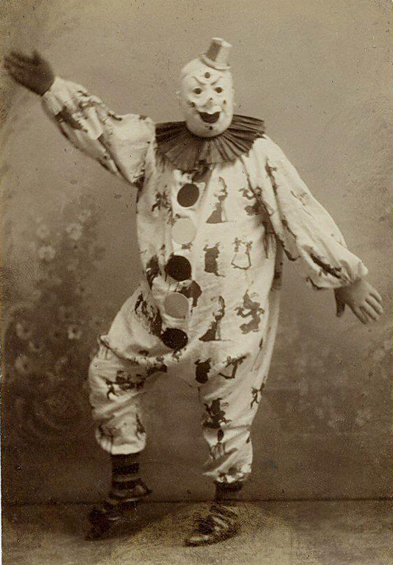
Like everyone (right?) I have a running joke with a friend about how scary and creepy clowns are. It’s just a joke– considering I sleep every night with a Dell’Arte-trained actor, it’s obviously not an indictment of physical theatre professionals, for whom I have enormous respect. It’s not even related to physical theatre at all– it’s about the imagery. The idea that clowns in full makeup are creepy is now a pervasive cultural trope that everyone recognizes, whether they personally agree or not. It’s now more present in our culture than any other trope about clowns. Yet this was not always the case. I’m not interested in getting into why or how this happened (I’m sure someone’s writing a dissertation about this very subject). The point is that it HAS. And that this kind of cultural shift happens ALL THE TIME.

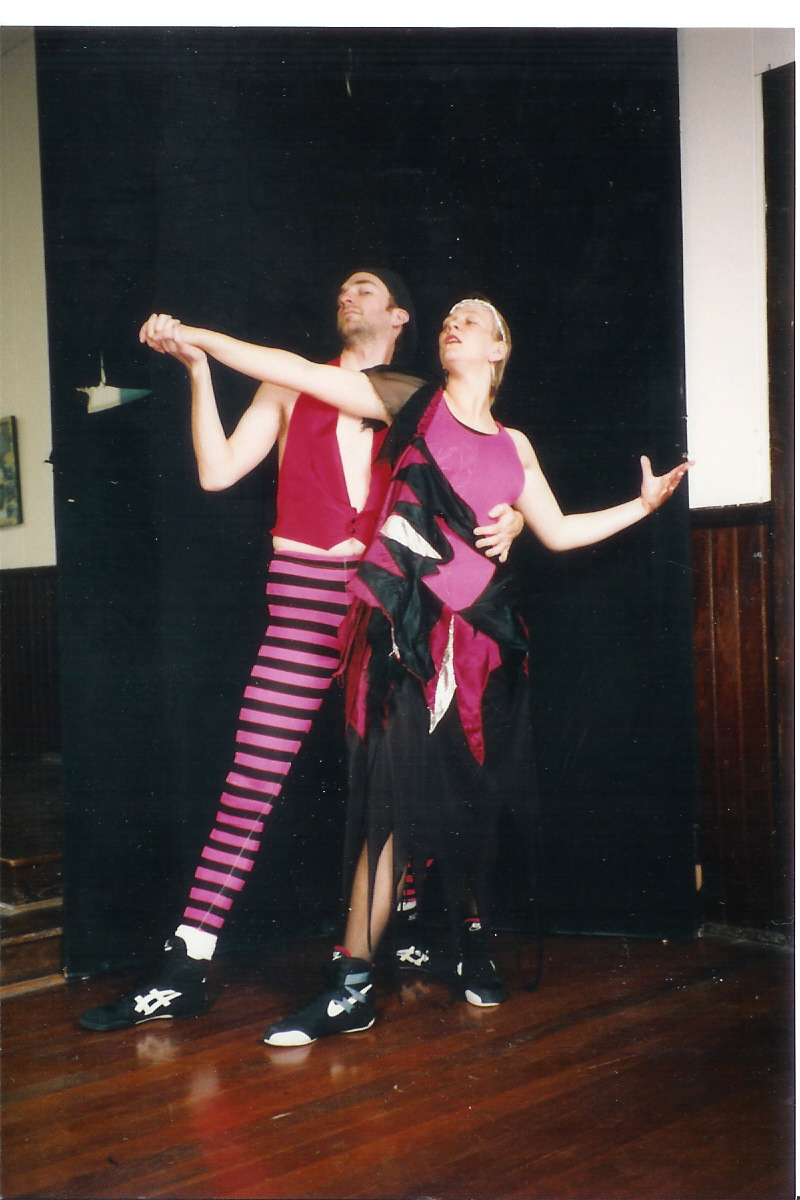
My husband in a student performance at Dell'Arte International with a fellow student.

My husband at Dell’Arte International, performing with a fellow student.

So my friend recently sent me this 2008 BBC article about the University of Sheffield study that surveyed 250 children between the ages of 4 and 16, and found that clowns were “widely disliked,” prompting researchers to urge children’s hospitals to consult with (shocking) ACTUAL CHILDREN before decorating their hospitals. The article goes on to quote a child psychologist:

Patricia Doorbar is a child psychologist in North Wales who has carried out research into children’s views on healthcare and art therapy.

She said: “Very few children like clowns. They are unfamiliar and come from a different era. They don’t look funny, they just look odd. (emphasis mine)

“They are unfamiliar and come from a different era.” OK, she knows clowns do indeed exist in this era. The ACTUAL point she’s making is that the semiotics of the clown– what that imagery means within the context of our culture– has changed dramatically from previous generations to today. In my father’s generation, children’s shows featuring clowns and clown toys were much more common. The trope about the scary clown existed (this Smithsonian article blames it on Grimaldi via Dickens and Deburau via . . . um, child murder), but was far less prominent in popular culture. In two generations, the meaning of that imagery in context changed enormously. When someone creates a clown character in popular culture today, it’s more likely to be something creepy than something lighthearted and fun, because that semiotic has shifted. Clowning for children still exists in popular culture, of course, just usually out of traditional makeup. A picture of a clown on the wall of a hospital, once (evidently) a comforting sight to most children, is now a frightening sight to most children. The “creepy clown” has supplanted the “happy, funny clown” as the primary trope about clowns in full makeup in our culture, and it happened fast. Lights up on a clown in full gear 50 years ago would generate a different audience reaction, and create a different set of expectations, than lights up on a clown in full gear today.

Image

Seriously, what do you think is going to happen next? Balloon animals or murder? From “Top 5 Clown Makeup Ideas” on designsnext.com

And so it goes with imagery, tropes, characters, and narratives throughout the entire history of dramatic lit. When we stage classic plays, we’re looking at material that comes from a world that no longer exists– a world full of symbols and tropes that have shifted meaning. For example, Taming of the Shrew was, in context, taking a bit of a stand. It stood out from the many popular shrew-taming comedies of its day in that it did NOT advocate beating women into submission. It instead advocated isolating them, starving them, gaslighting them, and denying them sleep until they became tractable and obedient. The Christopher Sly framing device demonstrates how well gaslighting works (and it’s inescapably connected that Sly, like Katherine, is in a position of social inferiority and relative powerlessness). You can convince anyone to believe anything as long as you control what they see, hear, and, ultimately, think. While Petruchio’s techniques are horrifying to us today (you can see them all codified in Biderman’s Chart of Coercion, a tool used by Amnesty International and domestic violence organizations to help people define and understand abuse), they were a gentler approach in the context of the time. Check out the scold’s bridle if you’ve never heard of it.

The idea that a woman who isn’t obedient and who speaks her mind is a “shrew” who needs “taming,” while not fully banished from our culture, is no longer mainstream. Petruchio’s techniques are now considered abusive. But understanding the historical context of the play provides a window into the playwright’s intent and opens the possibility of a recuperative staging that preserves that intent. And while Shrew may be an extreme and controversial example that some feel is unrecuperable (I’m honestly not even certain where I land on that myself, although there’s a local production about to open with an amazing team that I’m dying to see– if anyone can do it, it’s these badasses), the point stands. A dramaturg can help you navigate the wily waters of narrative and text in historical context if that’s something you’re not already doing yourself. And even if it is, a dramaturg might have access to resources or knowledge that you don’t possess, bringing in points of view or historical context you didn’t even know to look for.

Theatremakers are divided into three categories: Those who have no idea what a dramaturg does, those who think dramaturgs are for new plays, and dramaturgs. OK, that’s a joke. But I see people approaching classic work all the time with misguided points of view. Either they’re beating the playwright’s intent to death on the rocks of fussy (and ultimately egotistical) purism, or they’re making changes in the name of modernization that don’t make sense in the context of the work, that obfuscate rather than illuminate the work. If you’re not into historical linguistics or history, and/or if you don’t have a clear understanding of the culture and semiotics of your audience, get a dramaturg. Work with her before the first rehearsal. Let her help you conceptualize the work in a way that will preserve the writer’s intent, which means the engine of the play– what makes it kick ass, what makes it endure, what makes it work for audiences for decades or even centuries– remains intact and clearly presented for a 21st century audience. And that’s IMPOSSIBLE to do by just “doing the play” without thought to the distance between the play’s original cultural context and current one. Insisting on a purist interpretation is essentially insisting on changing the meaning of the play. The older a play is, the more this is true.

Image

Vivien Leigh and Marlon Brando in the film version of A Streetcar Named Desire.

Even in plays that are much closer in time to us– Miller, Williams, O’Neill– there are symbols and tropes that either have completely lost their meaning, or whose meaning has shifted. For example, a man enters a living room where his sister-in-law is standing. The man removes his outer button-down shirt and is now just wearing a T-shirt. In 2014, that symbology would likely go completely unnoticed– a T-shirt has become perfectly acceptable public attire. Even an A-line undershirt is acceptable public attire. It’s no longer inappropriate for a man to take off an outer shirt and wear a T-shirt in his own living room in front of his sister-in-law. The original semiotic attached to that moment has been lost. If you want to preserve the intent– a man doing something that most people in the audience would consider inappropriately intimate– you need to do it another way, such as create that feeling through the acting. And if you don’t understand the historical context, the playwright’s intent for that moment is completely lost on you, or you may misread it as something else entirely. If you’re not well-versed in the history– and that’s no shame, plenty of great directors aren’t– a dramaturg will help you find and work with moments like these.

Conversely, a working knowledge of contemporary (and local– geography can change everything) symbology, popular culture, and slang can be crucial to speaking successfully to your audience. Terms change meaning, and the new usage may be obscure. You may think a line or a word means one thing to your audience when it really means another. I once saw a local director post on facebook that the community here is far too supportive and uncritical, so much so that people refer to it as the “Yay Area.” Or take, for example, the way words such as “mod” and “ratchet” have taken on new meanings. Think for a moment: There will be people in your audience who have never heard either term used ANY OTHER WAY. Sure, older people will think first of the Kinks and socket wrenches– but that’s my point. Understanding how meanings change in different contexts is important, and if that’s not your jam, then find a dramaturg, because I assure you, it’s hers.

I’m barely covering the beginning of what a dramaturg can do. A dramaturg is your in-house expert in research, narrative, semiotics, and history. Consider working with one! Wondering where to find a dramaturg in your area? I bet the fine folks at LMDA can help you.

Image

By Jon Wolter, from keepingwolteraccountable.tumblr.com


Tagged , , , ,

Why I Don’t Watch the Tonys


Image

Tony winner and all-around excellent human James Iglehart as the Genie in Disney’s Aladdin. Photo by Cilla von Tiedemann.

Before anyone starts calling me out, Yes, I did watch part of the Tonys for the first time this year. My husband and I went to undergrad with James Iglehart, who may actually be the sweetest man in the world (or a strong contender), and we watched his number and his acceptance speech. It was a moment of pure joy, especially when he thanked Celestine Ranney-Howes, one of our lecturers. It’s always wonderful to see someone you know deserves recognition get it, doubly wonderful to see them thank a teacher, and triply wonderful to see a teacher you KNOW is fantastic get thanked. He sent my husband a beautiful note thanking him as well. It was lovely all around.

But I don’t watch the Tonys.

I don’t care about the Tonys and people give me a surprising amount of shit for it.

Broadway is, for the most part, commercial theatre that exists as a business enterprise to return profits to investors, and, as such, is entirely risk-averse. That’s not even remotely controversial– we all know Broadway is big business where some of the biggest players (like Disney) have set up shop. That doesn’t mean Broadway is “bad,” but it does create some specific outcomes. Broadway has massively high production values with incredible technical innovation, but shies away from anything even a little risky. Broadway is the Harlem Globetrotters of theatre– flashy, fun, technically marvelous, an amazing spectacle, an ambassador for the art, but not where the meat of the American Theatre lies. The risk is too high to do any kind of experimentation apart from tech, so the choices must be safe, tried-and-true. When the risk is 10 million dollars (or more), you’re going to choose a revival starring Hollywood celebrities or a splashy, safe musical almost every time because you have a reasonable assurance they’ll sell tickets and merch by the wagonload. You’re going to take on a new show only when it’s already proven to be a smash hit elsewhere. There are currently 45 Broadway productions with tickets on sale. 70% are musicals, and 42% feature a Hollywood star– and I didn’t count Broadway stars like Kristin Chenoweth and Sutton Foster. If I had, the count would have gone up to 50%. This is the model for Broadway today. It wasn’t always. But it is now.

Image

While Walter Lee’s exact age isn’t given, his sister, Beneatha, is 20 and a college student. Denzel Washington’s daughters are 27 and 23. For producers, his star status overrides the fact that he is far too old for the character. His characterization is far less important than his ability to sell tickets. LaTanya Richardson Jackson, who plays Walter Lee’s mother, Lena, is just five years older than Denzel Washington.

Broadway is a tiny percentage of the theatre that happens in this country, yet we talk about it as if it’s the most important theatre in the country– or the ONLY theatre in the country. I can’t tell you how many times I’ve seen an article about “theatre” only to find that it’s just about Broadway, ignoring 99% of American theatre. Audience trends that apply to an industry where ticket prices are $200 each are not applicable to, for example, the thousands of indie theatres across the nation charging $20 a ticket, where the supposedly non-existent under-40 audience is thriving, or gospel musicals, where the supposedly non-existent African American audience is thriving. I run one of those indie theatres, and my theatre would have to close its doors were it not for the under-40 audience I’m told repeatedly do not exist.

Image

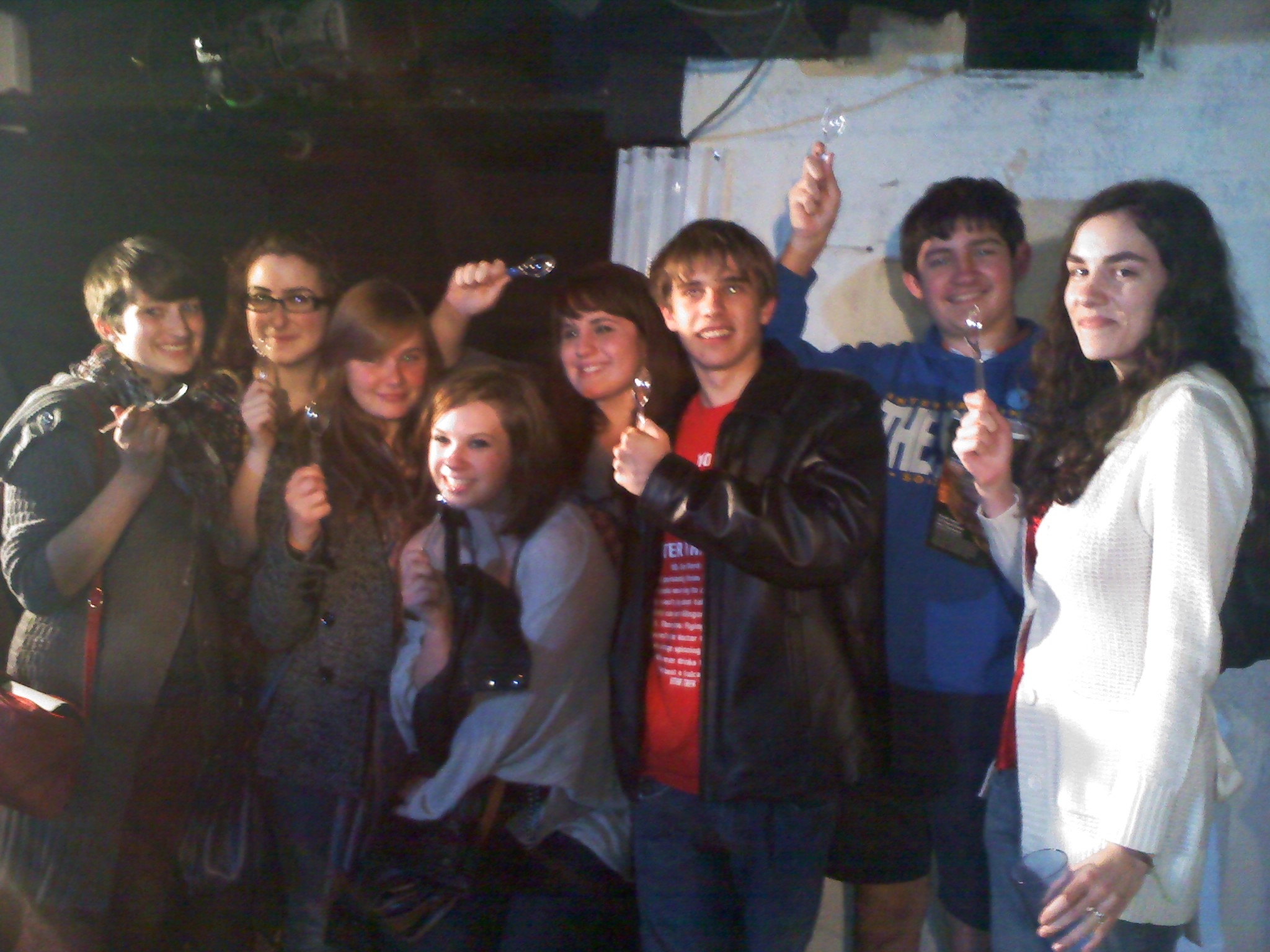
One of my favorite moments in the entire history of my theatre company. This group of high school students brought spoons to Titus Andronicus, and held them up when the pie came out. I snagged them for this picture after the show.

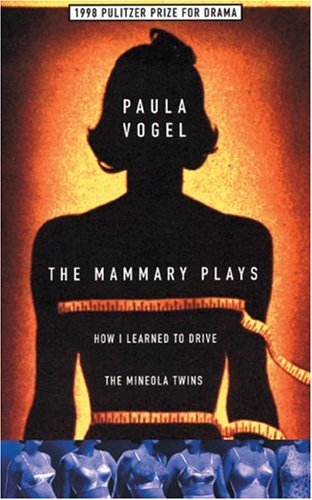
Whenever I talk about the issue of overvaluing Broadway (and the attendant undervaluing of everything else), I get inundated with OUTRAGE!!11! I think, first and foremost, a lot of people grow up with Broadway as their Big Dream, and, as it’s inextricably tied to their personal dreams and identities, they can’t bear to see it discussed as anything other than the Holy Pinnacle of Theatrical Achievement. But what it really is (let’s be honest) is the Pinnacle of Theatrical Employment, which is a very different thing. It’s truly fantastic that there’s a theatre industry that employs so many people. I’m 100% behind that. But let’s not go off the rails and confuse money with quality. Money imparts a certain kind of quality– the kind that comes with technical achievement and jaw-droppingly gorgeous spectacle– but no amount of money can purchase genius, emotional impact, or transformative experience. They’re not mutually exclusive, but neither are they mutually dependent. Money does not automatically equal quality, nor does it automatically eliminate it. Let’s not go off the rails in the other direction and get pissy about corporate theatre. But money is a completely separate consideration from quality.  To equate the most money with the highest quality and the most importance dosn’t make sense. Although Amy Herzog is one of the most produced playwrights in the country, she’s never been produced on Broadway. The legendary Maria Irene Fornes has never been produced on Broadway. Likewise Lynn Nottage, Ping Chong, Tarell McCraney. Paula Vogel has never been produced on Broadway.

Image

Yes, THAT Paula Vogel.

Another point of outrage I’ve encountered about my opinion that Broadway is not the Mothership of All American Theatre is that many people hold Broadway up as one of the most important ways kids get interested in theatre, creating the theatremakers of the future. I deeply question this. First of all, sure, it gets the kids whose parents can afford to drop $600 on tickets for ONE SHOW for the family. And those kids are going to be the actors whose families can support them for several years after they graduate with their MFAs 67K in debt and can only find work at tiny indie theatres paying just enough to cover transportation– if they’re lucky. We know that far too many theatremakers are drawn from those relatively privileged classes, and more open accessibility for people not from the middle and upper classes is a conversation we’ve just begun as a community. But for now, most of Broadway is a closed ecosystem for the privileged. It’s expensive to get there, it’s expensive to stay there, and it’s expensive to see the shows. Sure, there are ways to game it to make it less expensive, but you have to be really driven to find those, and the people we’re talking about here are the NOT driven– the ones who aren’t theatre families, whose kids are potentially about to be awakened for the first time to the magic of live theatre and the possibility of making that magic central to their lives.

Image

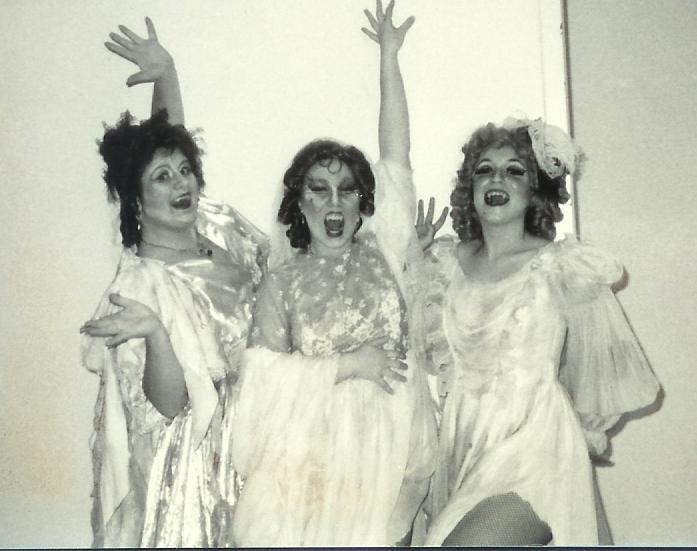
Sarah Ford, Lisa Kass, and me in our college production of Dracula: A Musical Nightmare. I ran around taking pictures in black and white because ART. I can’t remember who I asked to take this one.

Most kids– like me– got into theatre because there were theatre programs at school. There are plenty of kids falling in love with theatre because of a lively theatre program, or a great teacher, or a local youth show that came to their school– many, many more than there are who’ve seen a Broadway show, even on tour. So while I’m not denying Broadway’s ability to excite people, especially kids who are suckers for spectacle, I don’t think it’s anywhere near the primary place this happens. Again: This is one tiny geographical area most people will never step foot in. If you see Broadway as the center of the theatrical universe and the reason you started in theatre: great. I support that. And I could really do without the shock that I do not.

Image

Broadway’s relationship to the rest of the theatre in this country is complicated. We make what they need. We create the playwrights, actors, designers, and techs that they need to survive. They won’t touch a play or an artist unless that play or person has been field tested extensively by the rest of us. They repackage what we make, pump a shitload of money into it, put it in a beautiful dress, and then charge us all a week’s salary to see it. But they take a tiny percentage of us and allow us to make a (often temporary, but still) living at what we do, an elusive dream for most of us. They make it possible for theatremakers to create and play in beautiful, beautiful worlds. They’re theatre ambassadors for a certain segment of the population, and that segment of the population are the same demographic from which donors and subscribers come, and boy do we need those. Their technical innovations are undeniably marvelous. Their corporate backers’ influence that creates so much aggressively inoffensive material and reliance on Hollywood stars is maddening. Their over-reliance on revivals and lack of interest in plays by women and people of color are maddening. Their nonstop repackaging of Hollywood films as slick, bland musicals is maddening. The fact that people go to see these slick, bland musicals and think “this is theatre” is maddening. But everyone connected to that slick, bland musical is EMPLOYED. The tech is spectacular. A sizable percentage of the people in that audience are thinking, “This is theatre AND I LOVE IT.” And the amount of press and public attention these shows get do continue to keep theatre’s existence on the radar. Like any longterm relationship . . . it’s complicated.

The Tonys are an awards show that celebrates the achievements of this one little corner of the world, a tiny percentage of the national theatre community. Most people in the national theatre community have not seen those shows. Most people in the national theatre community are so completely removed from what happens on Broadway that it could fall into the Atlantic and, without any connection to the internet, they wouldn’t find out for months, if ever.

That’s not to say that I begrudge your enjoyment of the Tonys, or of Broadway, or even of a Disney musical. I’m a human. Humans like spectacle. I get it. I actually love Disney. I was married in Disneyland (not even joking). I would happily watch a Disney musical or a star-studded revival of an old chestnut if I didn’t have to blow my entire month’s grocery budget on it. But this insistence that Broadway should be the center of my universe as a theatremaker– of all our universes as theatremakers– is nonsense. This insistence that what happens on Broadway happens to “Theatre”– that Broadway and the American Theatre are equivalent– is now laughably untrue. THERE’S NO SUCH THING AS “AMERICAN THEATRE.” We have many theatres, divided by class, with small indie theatres at the bottom and Broadway at the top– divided by one thing and one thing only: Money. I’ve seen great theatre in tiny houses and I’ve seen great theatre in big houses. We need to stop pretending that those with the most money are the ones producing the most important work.

And that’s why I don’t watch the Tonys unless I know someone nominated. A local awards show, not in my market, has nothing to do with me, and to pretend it does, and express shock at my lack of interest, is nuts. I don’t mind that you take an interest. I don’t mind that you care who wins an award at a regional award show not in your region. Live it up! Have your parties! Post your statuses celebrating the awardees you love and vilifying the awardees you hate! Complain away about the show itself! I support you 100% and will make cupcakes for your party. I will help you with your Antoinette Perry cosplay.

Image

I recommend pin curls.

But likewise allow me my opinion that the Tonys are no more important to me and my work than the Jeffs, Oscars, or VMAs. I have a passing curiosity, and it’s always wonderful to see a worthy friend, colleague, or former student recognized, but it’s not directly applicable to my work.

So let’s hug it out, Tony lovers and Broadway worshippers. There’s room for all of us.

Image

HUG IT OUT

Tagged , , , ,

Our Role in This as Artists

Like pretty much every blogger, the plan I had for my next post got chucked out the window after the violence at UCSB. I’ve been closely following #YesAllWomen on twitter, the news stories, the many, many blog posts, the many discussions on facebook. Like we all have been. Like so many women, I’ve been repeating the truth: This isn’t at all surprising. This is just the extreme example of what women experience all the time.

The reaction to that, honestly, has surprised me far more than the attack itself. I expected some blowback, but I didn’t expect the AMOUNT and TYPE of blowback I got. Things like, “We need to wait for more information because I didn’t believe a word of that manifesto,” “You need to have more compassion for men. We’re sick of this vitriol,” “You’re just making men angry and scared,” “A lifetime of being nice to women down the drain because of one asshole,” and “Man hating is just as destructive as misogyny.”

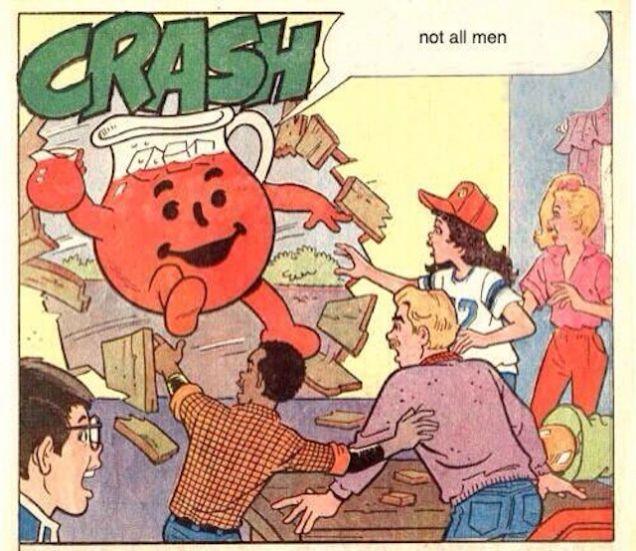
I was shocked, and it’s embarrassing to admit that I still have that much potential for naiveté. I have a husband and two teenage sons, as well as a host of friends I count as male allies in this fight. I’m well aware of “not all men.” I never expected that simply pointing out that cultural misogyny exists, that women experience this kind of violent misogyny regularly, and that the events at UCSB are only exceptional by degree, would cause so many men (and even a few women) to flip so directly out in so many bizarre directions.

feminist-cartoon

I’ve been thinking quite a bit about that. The responses fall into two categories: You’re making men feel bad, and you don’t know what you’re talking about. When a woman is saying “I have, like all women, experienced harassment, abuse and/or violence at the hands of men, so this recent misogynistic violence is no surprise in that context” what makes a man respond with some version of “MY FEELINGS COME FIRST” or “SHUT UP, YOU’RE WRONG”? And of course “NOT ALL MEN,” a combination of both. What makes that small handful of women respond with “STOP MAKING MEN FEEL BAD”?

I’ve read a lot of the excellent blog posts about this issue (examples are here and here), and they all say more or less the same thing: Americans are force-fed a master narrative from birth that describes a man’s place in the world: You deserve access to a woman’s body because you are “nice.” You should be rewarded with a woman (or women) for performing certain tasks and/or succeeding in certain areas. If a woman you want rejects you, just keep trying until you wear her down because you know better than she does what she “wants” or what’s “good for her.” The corollary, of course, is that women who reject a “nice” guy or complain about male harassment, abuse, or violence are committing an act of gross wrongdoing against men as a group.

Image

Enough people have completely bought into these fantasies to make them a pervasively destructive part of our culture. Both men and women have internalized them, perpetuate them, and, when challenged, angrily defend them. They frame anything that might prevent a man from achieving the master narrative as massively unjust. The many Elliot Rodger fan pages on facebook alone attest to that. The conservative backlash that’s working overtime to equate “man-hating” with cultural misogyny is another example. It would actually be funny if it weren’t such a dangerous idea– it’s like equating calling a straight person a “breeder” with a fatal gay bashing.

Where does this destructive master narrative come from? Where is this disseminated in our culture? Film, TV, theatre, books– narrative art. WE MADE THIS. Not alone, but we did, indeed, make this, and we need to start thinking about that. Hard.

Sure, parts of the narrative are thousands of years old. But there are plenty of old ideas we no longer choose to disseminate. We have the choice whether or not we continue to tell this narrative. We have the choice whether or not we continue to reinscribe this into our culture.

I’ve long had the desire to fire every romantic comedy into the sun. I despise romcoms, and I never spent time figuring out why. Now that the answer is in my face, it’s undeniable: they’re one way we disseminate all of the worst ideas about relationships we have as a culture, including (especially) the male master narrative. What was once just an annoyance to me now looks like the worst kind of reprehensible irresponsibility. And that’s just one tiny corner of the art we produce.

It’s easy to say, Oh, it’s just a play; it’s just a movie, etc. But there is no “just.” The narrative art form is POWERFUL. The human brain can experience narrative as if it’s happening in real life. The brain of a person telling a story and a person listening to that story experience neural coupling. Art is where we discuss who we are as a culture; our hopes, our dreams, our fears, our past, our imagined future. It’s the most important aspect of how our culture is created and how it is changed. Stories are the building blocks of culture, and we’re the ones who create and tell those stories.

My feelings about romcoms.

My feelings about romcoms.

I thought a lot about why there are people with relative privilege who can read (for example, this is in no way meant to be comprehensive) “men harass, stalk, rape, and kill women,” “cis people oppress trans* people,” or “white people marginalize people of color” and see the truth in those statements without freaking out, while a whole wagonload of men (and a handful of women) have recently demonstrated they can’t see “men harass, stalk, rape, and kill women” without having a butthurt rodeo and calling it “vitriol” and “betrayal.” Here’s the answer: Some people with privilege are actively committed to social justice, and have been working their asses off. They already know they’re part of the problem and that they contribute to misogyny, transphobia, and racism unwittingly all the time. They’re working hard to root out all the little hidden places where those exist in their psyches. They listen to women, trans* people, and people of color. They’ve committed to the process of figuring it out. They’re not consciously misogynistic, transphobic, or racist, but they’re aware the culture has drilled into them a million little bigotries they’ll always be in the process of locating and squashing.

The people who cannot handle hearing that they, or others of their group, are responsible for systemic cultural injustice or violence are people who are either so protected by their privilege they are truly ignorant of that, and/or who are so invested in their privilege they can’t abide anything that might potentially challenge it. In this case, male privilege is connected to the internalized male master narrative. Women all over the internet have been talking about their experiences with male violence, and the pervasive fear women face every day. The man who responds “NOT ALL MEN” is someone who is far more concerned with how he is being perceived, and his feelings about that, than about her actual experience of violence because from birth he’s been exposed to a culture that has TOLD HIM that anything that impedes his access to her is an injustice TO HIM, including her fear; that he is a better judge of her experience than she is, and that his experience is more important than hers in all cases, even when the match up is rape vs hurt feelings. That’s something we need to change, and because that is, I truly believe, a minority of men now, this change is achievable. I have an idea where to start.

wecandoit

We have to own our part of cultural bigotry if we’re going to be productive adults fighting for social justice, and it’s useless to say “not all men/white/cis people.” Because A. Truckload of duh, everyone already knows that; B. It’s derailing someone else’s story of oppression with your story of butthurt; C. It doesn’t make a damn bit of difference that it’s not all men/white people/cis people because it’s CLEARLY still FAR TOO MANY; and D. Uh, yeah it is. It really is all men, all white people, all cis people, even if you’re trying. Even if you’re trying hard. All you can do is KEEP TRYING. There is no bigotry master cleanse you can go on that will allow you to excrete all the bigotry the culture put into you. All you can do is keep trying. And listen.

We, as artists, however, are uniquely positioned as creators of culture to effect real change. We need to start thinking about all the many ways we create the culture that instills misogyny (and all bigotries against difference) into people.

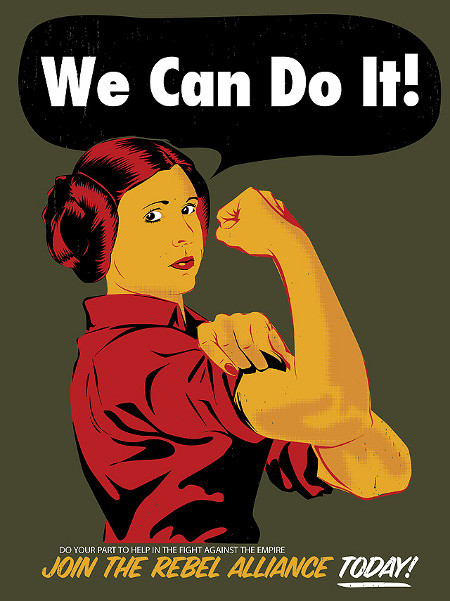
As artists who create culture, we can take the first step by pinky swearing to each other that we will STOP disseminating that male master narrative. Stalking a girl, hitting her boyfriend in the face, or tricking her into having sex will not “win” someone a woman in real life. A woman who rejects a man is not in a “pre-yes” phase of the real-life narrative. (“Just give him/me a chance” is a line that should automatically cause your computer to crash as you type it.) Being the “nice guy” will not automatically “win” someone a woman in real life. (As many have said before me, women are not machines into which you put “nice” coins and sex comes out.)  Winning a contest, landing a great job, or overcoming some kind of adversity will not automatically “win” someone a woman. Women are not prizes granted for achievements. The male master narrative is a destructive lie, and we need to stop using our platforms to tell that lie. Writers and producers: I am looking at you. WE CAN DO BETTER.

interrupt

I’m not saying we need to stop creating male-centered work, or stop showing sexy-looking women in our work, or whatever it is you’re imagining if you’re having the OUTRAGE feels and getting ready to make some tiresome comment about CENSORSHIP or (ughbarfshutup) POLITICAL CORRECTNESS. Make your boob-centered posters. Make your love stories. Make art about men. There’s no need to obliterate every straight male thing. There are straight men in the world, and their stories have as much value as anyone else’s. What I’m saying is: Let’s stop telling straight-up lies about a man’s rights to a woman’s body. Let’s think twice about putting time and money into work that approvingly shows a man “winning” a reluctant woman because he was “nice” or won a ski-off or punched a guy. Let’s think twice about putting time and money into work that positions a woman’s “no” or resistance as meaning “try harder,” and that stalking a woman is romantic rather than terrifying. Let’s think about what we’re putting into the world with our art.

Tagged , , , ,

Why You Didn’t Get Cast

Image

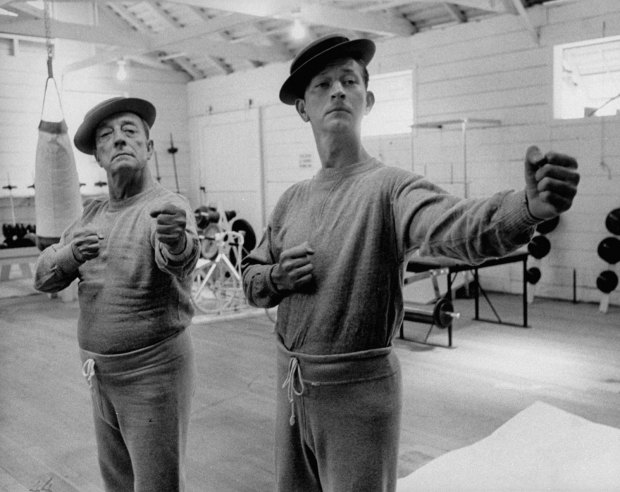
Buster Keaton and Donald O’Connor rehearsing in 1956

A few days ago, I had two conversations almost back-to-back. One was with an experienced and talented actor who believed they were getting the message that their career was over just because they were in a dry spell. The other was with yet another Bay Area actor whose career had stalled the minute they went AEA. While we talked about the many reasons why that happens, this actor said to me, “I want to see if I’m good enough to be an AEA actor.” And my heart just broke because, as someone whose life is always on the other side of the table, I know how seldom casting is purely about who’s “good.” I hate that experienced, talented actors can see whether or not they get cast as a measure of their intrinsic worth as actors.

So here you go, actors of the world. The pure, unvarnished truth about why you didn’t get the role.

Image

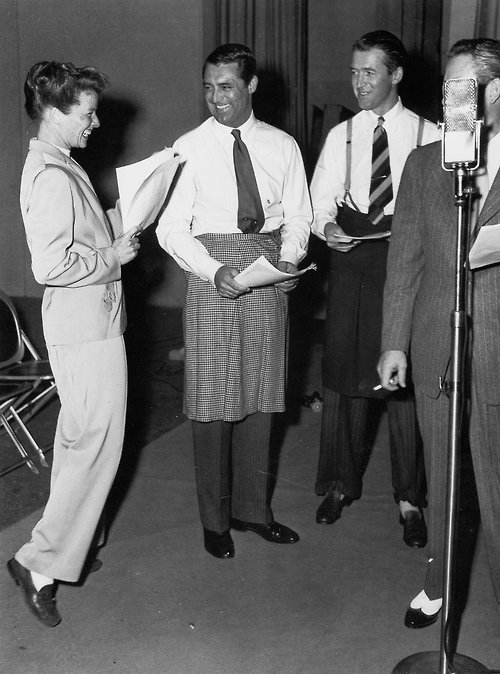
Katherine Hepburn, Cary Grant, and Jimmy Stewart performing Philadelphia Story for Victory Theater, 1942.

1. MOST COMMON: You’re just not right for it. I know this sounds like a massive, shit-eating cliche, but it’s absolutely the truth. A director walks into the room with a character conceptualized in a certain way, and is looking for the person whose type or energy matches the character. The truly amazingly badass Leslie Martinson of TheatreWorks taught me this years ago, when I was first starting out: Every conceptualized character has thirteen adjectives that describe them. Every actor has thirteen adjectives that describe them. Casting is about finding the best match. I pass over actors I flat-out adore all the time because the fit isn’t right. For example, a director might have Orlando conceptualized as a man in his 20s with a gentle, soft-spoken energy, while your audition presents a man in his 30s with a bright, aggressive energy. While your audition might be fantastic, you’re not going to be that director’s Orlando.

2. Your skillset isn’t developed. This is the second most common, and the one people like to think of as “not good enough.” That way of thinking is total bullshit. How do I know? Because year after year, I see actors grow and develop. I see actors go from maaaaybe having the skills to handle a small supporting role to being ready to carry a play in one season. Either they took a class that unlocked something, or worked with a director who stretched them, or went on a spiritual quest in the New Mexico desert, or had mind-blowing sex with Ian McKellen, whatever. But I see it happen all the time, because dedicated actors are constantly working on their skillset.

Image

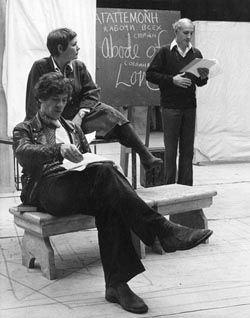
Judi Dench, Ian McKellen, and Joe Melia rehearsing Too True to be Good at the RSC in 1975.

3. The role was precast. Some directors are superstitious and will read people for roles that are already cast. It’s unfortunately common for actors to commit to roles that they later bail on (a better-paying gig, a family emergency, a medical situation), and if you auditioned other actors for that role, you have some go-to options. One casting director told me she was so superstitious that she didn’t get rid of the casting data for a show until it CLOSED. On the flip side, lots of theatres are upfront about which roles are precast. Don’t let that necessarily discourage you. You may want to consider coming in for a show where your dream role is precast– you may end up playing that role after all.

Image

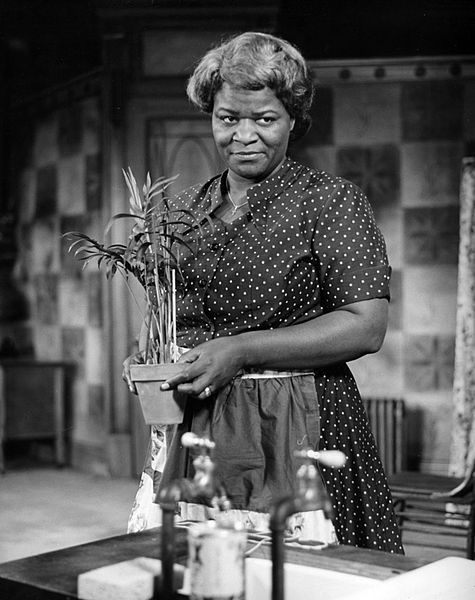
Claudia McNeil in A Raisin in the Sun, 1959

4. The role went to someone they’ve worked with before. This is incredibly common. You know an actor’s work, you have a shared language, you understand how to work together. A known quantity is less of a risk, even if the known quantity didn’t crush the callback like you did. The director knows from past experience that the other actor can give them what the work needs.

5. You’ve had a history of behaving unprofessionally. Luckily, this one is extremely rare, but it does occasionally happen. Violating your contract (coming consistently late or no-showing to rehearsals or shows, for example), treating fellow actors or crew disrespectfully, making unreasonable demands (such as demanding the theatre violate their contract with the playwright so you can change something in the script despite the fact that the playwright declined to allow the change, or demanding the day off during tech because it’s your one year dating anniversary), deciding closing night is the time for GAGS! and IMPROV!, badmouthing the show on social media (“This play is going to be total shit!”). Although I’ve seen every one of these examples firsthand, they are, as I’ve said, pretty rare. The converse, happily, is MUCH more likely to be true– that we take a chance on an actor unknown to us because someone at another theatre is raving about how awesome they are. And believe me, I’m not trying to imply that this doesn’t happen in the opposite direction. I know plenty of directors treat actors in unconscionable ways. But that’s an entirely different blog post. My point is that, in any theatre community, companies share personnel. While we don’t necessarily go out of our way to share that kind of information, the Literary Manager at one theatre is directing a show at another theatre. The actor at one theatre is the Artistic Director at another theatre. What happens in Vegas, so to speak, does not stay in Vegas. But be happy that the converse is also true and much, much more common– we’re raving about how wonderful you are to our friends at other companies. I’ve sent many a “heads up” email to directors to let them know that an actor new to them and about to audition for them is someone I’ve worked with and believe in.

6. Conflicts. You may have been the best person for the role, but since you’re planning to be in Oklahoma for Baton Twirling Nationals during tech, they’re going to go with someone else.

Image

7. You tanked the audition. Oh, man, this one is a heartbreaker, and I see it all the time. It’s one of the reasons I tell my students that the best way to cast is to see as many plays as possible so you’re seeing actors in their natural habitat. Auditions are weird little creatures, artificial and forced. However, if we want to open our theatres to new people and new communities (and we do), we’re stuck with open auditions. Like standardized testing, which only measures how good you are at standardized tests, auditions often measure how well you audition and little else. While callbacks are theoretically meant to correct for that, you don’t always make it to the callback to show them. I’ve seen plenty of actors give me a crap audition and then give a beautiful performance in someone else’s play. They had a bad day, or memorized a new monologue they thought would be “better” for the role the day before, or were too nervous. There are a million reasons why a great actor would tank an audition. Don’t let it discourage you. Take an audition class or work with a coach if this is a common problem for you. Do what you need to do. But KEEP TRYING. Invite artistic directors and casting directors to see your work. Don’t give up! You won’t tank them all.

And that’s my main piece of advice: Don’t give up. If this is your dream, persevere! Nothing is insurmountable. FALL DOWN SEVEN TIMES, GET UP EIGHT.

Image

Tagged , , ,

Playwriting is Storytelling

Image

Maybe this will become a series: “Directing is Storytelling,” “Acting is Storytelling.” Since I’m right in the thick of season planning and reading a ton of plays every day, writing is my current focus.

Playwriting is storytelling. The primary function of a play is to tell a story. It doesn’t have to be a linear narrative, or have realistic characters, or be traditionally structured in any way. But the basic human need to tell, share, hear, and create stories is as old as the human brain itself, and theatre is one of our oldest storytelling tools.

A play’s most basic elements are the story and the characters within that story. I encounter so many clunky, unsuccessful plays that focus on something other than one or both of those.

Plays about “issues” are probably the most prevalent. You have an opinion about something– abortion, the environment, religion. You write a play wherein the central events are all arguments about these things. This is not interesting. For one, we can all have arguments like these on facebook every day. We don’t need to stage or see a play in order to have The Argument Experience. Secondly, argument is not conflict. A play that consists largely of people shouting their opinions at one another is not a story about competing objectives. And while you might want to be the kind of person who thinks conflict isn’t central to dramatic narrative, I do not. I agree that conflict doesn’t have to be violent, or linear, or even interpersonal, but dramatic narrative is created by conflict of some kind– an important choice to be made, competing objectives, a task made difficult, a journey through something challenging.

Image

“The Mullet: My Journey, My Struggle,” a solo performance by John Stamos

Another unsuccessful “issue” play is one that’s predictable. These plays set up a weak, obviously assholic opposition and then eviscerates that opposition with the Magical Truth and Awesomeness of the playwright’s opinion on the issue. A victory over an obviously weak-ass antagonist, argument, or idea is not an exciting victory. Would you rather watch a game that came down to the final three seconds, or would you rather watch a 67-2 rout? If you want to tell the kind of story where one side triumphs over another side, the stronger you make the “losing” side, the more compelling the narrative will be and the more satisfying the conclusion.

Remember when you were an undergrad and you thought plays that insulted, offended, and discomfited the audience were hella cool? Because: EDGY. Now that I’m an adult who relies on the goodwill of my audience and ticket sales, I no longer have a bone to pick with my audience, or with “audiences” as a concept. I don’t see myself in an adversarial relationship with “audience” at all. But my company will still do plays that are extremely boundary-crossing, that often some audience members find uncomfortable or challenging in some way. The difference between a play to which we’ll commit time and money and one we will not is simple: while watching a well-written play that crosses boundaries, audience members who are uncomfortable feel that way because of a relationship they have to the material– to the events or the characters– that comes organically out of the story. That’s a culturally valuable challenge. But when I read a play that’s just randomly insulting or (attempting to be) shocking without any purpose other than to be randomly insulting or shocking, I set it aside. It’s all one big juvenile yawn unless it comes organically out of story. A toddler can rip up a bible and then pee into the shreds, it’s the job of high school sophomores to make semen jokes during lunch, and the internet is paved with hurled insults and “offensive” material. You have to give me something more than that– and the “more” is the kind of context that comes with compelling narrative. If your goal is to “offend,” just make another offensive tumblr. The most offensive aspect of that kind of theatre is charging $30 for something we can get by the wagonload for free online.

Image

Wrong kind of offensive line

Another area where playwrights often lose sight of storytelling is character relationship. Often a playwright will want to draw two people from different backgrounds together, and, instead of taking the time to do this with story, will use a superficial means that only ends up feeling forced. I see this all the time with smoking, pot, and alcohol– like the very fact that someone does one of these has the power to make you take a second look, reframe your opinion of them, and let them into your heart? Hasn’t every human alive done one or more of these things at one time? I’m not inviting John Boehner up to my hotel room just because we’re both drinking scotch. The second most popular approach is the shared superficial like– some song, musician, movie, brand of something, book. “What? You like Spaghetti-Os too? I previously hated you, but now LET’S FALL IN LOVE.” It never rings true. Sure, it’s enjoyable when you discover that someone likes the same underappreciated musician you do, and just as enjoyable to see a moment of connection between characters, but it’s not enough to act as the turning point of an entire relationship.

Image

Not enough beer in the world, Spleen.

Often playwrights will start a play with ten or fifteen pages of throat-clearing– meaningless dialogue that theoretically “introduces” characters and lays down exposition while actually, the play loses nothing and gains real momentum by skipping those pages entirely and diving directly into the narrative. If the first ten pages of your play are characters saying “Remember when [blah]?” “Remember how [a thing]?” “Remember the time [something]?” you should probably take a second look. I don’t know these people. Their reminiscences are of limited interest to me until I have a context within which to put them. Work that exposition into the narrative itself. Does your play start like this? “CRYSTAL: Remember when Mother died four seasons ago, during the worst alfalfa harvest in Cowcatcher County history, right after Father tried to sell the farm to the mysterious Dr. Ballsworth? And remember how we laughed when we discovered that in her will she had left the entire Farthill Valley to you and I? And remember how she used to say ‘A penny saved is a penny that could have been spent on vodka?'” Yeah, you can cut all that.

Image

Or you could just do this.


I recently read a play whose intricate relationships are painstakingly revealed, bit by bit, in a lovingly tended non-linear narrative, until a gut-punch of a fucking gorgeous payoff at the end, and I almost sprained my fingers on the keyboard in a rush to ask for the rights. What is the play “about”? What love means? Sacrifice? I’m still mulling that one over. Is every detail of the exposition laid down? Newp. But the play is so painfully, heartbreakingly, beautifully rendered that the characters and their story has been haunting me ever since. Why did she make that decision? Does she regret it? Was it worth it? What will happen to her after she’s made that final choice? I can’t get these characters out of my head. And *that’s* the impact you want to have on your audience.

Image

Tagged , ,

RANTYPANTS

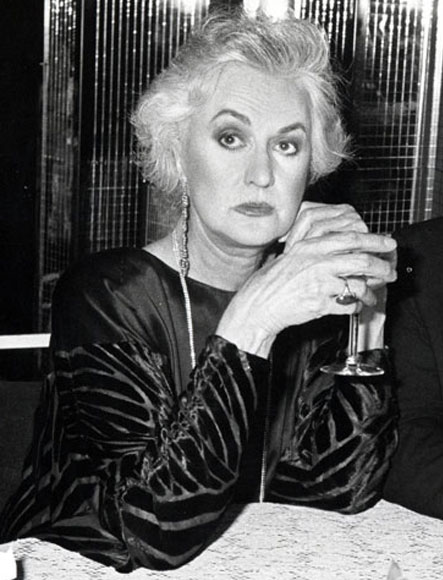
Bea Arthur is my spirit animal.

Bea Arthur is my spirit animal. I will never achieve such epic glare.

Oh, internet. I love you so much. But sometimes, sometimes . . . you work my last available, barely functional nerve.

I have some things I need to get off my chest.

The internet in general and social media in particular are amazing. Now we’re interacting with far more human individuals per day than at any other point in human history. This has one million positives and a handful of ass-clenching negatives. I just really need to get some of these negatives off my chest (SEE ABOVE).

1. Evangelical Atheists and Evangelical Religious People.

Look, I’m glad that you’re excited about what you believe. Truly. I think you have every right to believe it, and every right to talk about it all you please. I think you should make a blog where you write an article a day about how happy you are being an atheist or whatever it is that you are. Decorate that shit with blingee smiley faces and unicorns. SPREAD YOUR LOVE. But can we all agree to stop spreading hate? Atheists and religious people, I know almost all of you are awesome, normal people who have zero shits to give about the beliefs of others. But there are vocal minorities in both groups that are in a constant process of evangelizing– blorking out a nonstop barrage of posts and comments about how they belong to the ONLY belief system in possession of THE FACTS, and therefore everyone else is not only WRONG but STUPID, ignorant SHEEP who believe everything they’re told and have no capacity for rational thought.

You guys . . . knock it off. Have a little compassion. Religious people, atheists are not amoral deviants who are so blinded by hedonistic modern culture that they cannot see the awesome truth of whatever religion you believe is true. They don’t need religion to be good, moral people. Atheists, believers are not mindless sheep whose personal beliefs are worth mocking simply because you do not share them. They don’t need to be atheists to be intelligent, worthwhile people. Is mutual respect too much to ask? Do we need to do a preschool circle time unit about manners? Can we all stop posting memes about how atheists are stupid jerks whose UPPANCE WILL COME or how spiritual belief causes every bad thing ever, from war to erectile dysfunction, and is only followed by DUMB IDIOTS WHO ARE DUMB? You’re both wrong, and impolite to boot.

You see, it's all about being friendly neighbors. These guys look friendly, don't they?

You see, it’s all about being friendly neighbors. These guys look friendly, don’t they?

2. Inability to Cope with the Woes of Friends.

It’s natural to reach out to friends when shit goes down, and now that reaching out includes social media. When a friend posts something like, “Blah happened and I felt bad about it,” saying any of the following is like handing your friend a flaming bag of dogshit instead of a hug and a cupcake. And if you’re saying any of these in response to someone expressing hurt over being the target of bigotry or harassment? Sexism, racism, anti-LGBT, ableism, fat hatred, anti-Semitism, Islamophobia, street harassment? It’s even worse.

“Don’t let it bother you.” OK, thank you for telling me I shouldn’t be feeling what I’m feeling. I’ll just put all my feels back in the box.

“They were just (joking, trying to be polite, asking you a question). You should (laugh it off, take it as a compliment, help them understand).” Yes, my feelings about this are all due to my misunderstanding of the situation. Since this is my very first day on earth (I was recently hatched and flash-trained at the Spaarti Cloning Center), I had no social context within which to interpret my own experience. Thank you, oh wise one, for explaining my experiences to me.

“You think that’s bad? You should hear what happened to ME.”  UNFRIEND.

“You’re too sensitive.” UNFRIEND AND COLDCOCK.

“(Name of group to which you belong) are too sensitive.” UNFRIEND, COLDCOCK, and SEND TO SIX WEEKS OF SENSITIVITY TRAINING BY HIPPIES IN THE WOODS.

“They’re right. (Name of group to which you belong) really are like that. I’m not saying you are since you’re one of the good ones.” DETONATE.

Why is it so hard for some people to say, “Wow, that sucks. I’m so sorry you have to go through that”? It’s an INTERNET MYSTERY.

Let's put this bitch on the case. PROBLEM. SOLVED.

Let’s put this bitch on the case. PROBLEM. SOLVED.

3. Assuming that the first thing they see someone do is the ONLY THING that person has EVER DONE.

Oh, the judgy comments. Video of guy retaliating against his noisy neighbors: “He should have tried talking to them. How annoying.” Online activism: “Why aren’t you donating/going to rallies/volunteering?” Article about a lawsuit: “Ugh, they should have tried mediation first.” I just don’t understand why people assume that we all go into cryosuspension when they’re not looking at us.  HOW DO THEY KNOW we haven’t done/always do/are in the middle of doing EXACTLY what they’re accusing us of not doing?

chewie

4. Spreading hoaxes and nonsense.

So basically it takes under a minute to check Snopes to see if that meme you’re posting about Monsanto or Fukushima or Wal-Mart is accurate. Anything from the “Daily Currant” is satire. Anything on any website trying to sell you something isn’t “scientific proof!!!1!” of the efficacy of the thing they’re trying to sell you.

And it’s cool– we all fall for those sometimes. But when you find out that the thing you’ve posted is inaccurate, WHY DO YOU LEAVE IT UP? You’re like the Johnny Appleseed of bullshit. Worse, when you’re dealing with a company whose business practices have come into question for good reason, you’re weakening the accurate arguments by spreading ones proven to be inaccurate.

WHEW.

OK, my darlings. I promise my next post will be full of positivity, rainbows, chocolate, and puppies.

endtransmission

Speaking from Privilege

I posted the other day on facebook and twitter that white privilege and thin privilege are the toughest scrappers in the game– they’ll throw any kind of punch they can think of to preserve their privilege.

I posted that because there have been a handful of responses in the blogospere to my blog post of the other day, The Weapon of Invisibility, that advocate for “taking a step back” and “approaching these issues with nuance” and “allowing for respectful appropriation.” In other words: Go easy on the privileged when we cross boundaries, because sometimes we do so accidentally, or with respect in our hearts. Not one had a word to say about the thin privilege portion– the point wasn’t even WORTH MENTIONING. Ah, the weapon of invisibility. But I digress.

Listen, I get that you’re frustrated and want activists to go easier on people who cross boundaries of cultural appropriation. I see it all the time. You’re terrified of fucking up– or that you have already massively fucked up in something you wrote, staged, or said. Relax– of course you fucked up. So did I. So has everyone. But that doesn’t mean you get to decide what respect looks like for marginalized people. You have to live with the fact that, if you have privilege and you wish to fight for social justice, you do not create the terms of that and must listen carefully to the people who have been marginalized. If the privileged are the gatekeepers, then nothing has changed.

And yes, I completely understand how scary it is. But you cannot sit from your place of privilege and decide which cultural appropriation has crossed the line and which is respectful because, quite frankly, that is not your decision to make. What does that look like? “Dear people of color, sorry you’re all so pissed, but I believe that production was respectful borrowing, so please calm down”? Privilege cannot decide the terms of this if the goal is social justice. All that accomplishes is preserving privilege.

We all have some types of privilege and we all have some areas wherein we lack privilege. In those areas wherein you have privilege your job is to listen and allow those without privilege to set the terms of the discussion– WHAT crosses boundaries and HOW.

In those areas wherein you lack privilege, you get to set the terms of the discussion. You get to decide when boundaries have been crossed. And when, as so often happens, someone with privilege you lack comes along and tells you that you aren’t approaching the issue with “nuance” or that you should give someone the benefit of the doubt because they were appropriating with “respect” (as if intent erased results, but fine), then you have every right to be outraged at the attempt to silence you, at the attempt of privilege to retain its privilege by seizing control of the terms of the discussion and turning it into a debate.

I understand that we’re all scared. I’m scared, too, both for the areas in which I have privilege– How many times will I get it wrong today?– and the areas in which I don’t– How many times will I be told that my outrage is unjustified today? How many times will my feelings of marginalization be met with “You people are too sensitive” or “I didn’t mean it that way, so relax,” or “It’s just a joke/play/school production/Hollywood film/etc”? Because EVERY SINGLE TIME I speak out, someone with privilege I lack is there within moments to say ALL of those things to me.

Just take a deep breath and listen. When people who lack privilege you have are speaking out about that lack of privilege, and how it looks every day, and how their culture is appropriated, LISTEN. BELIEVE THEM. And use your place of privilege to speak out as an ally.

When you lack privilege and want to speak out, know that there are allies who WILL listen to you, support you, and yes, screw it up, but still keep trying. Don’t let the people who tell you that your outrage isn’t justified silence you. I see you. I stand with you. And I know you stand with me, in my fear, in my outrage, in my strength, in my mistakes, in my triumphs. There are millions of us, and for the first time in history, we’re all saying NO.

Tagged , , , ,

The Weapon of Invisibility

Image

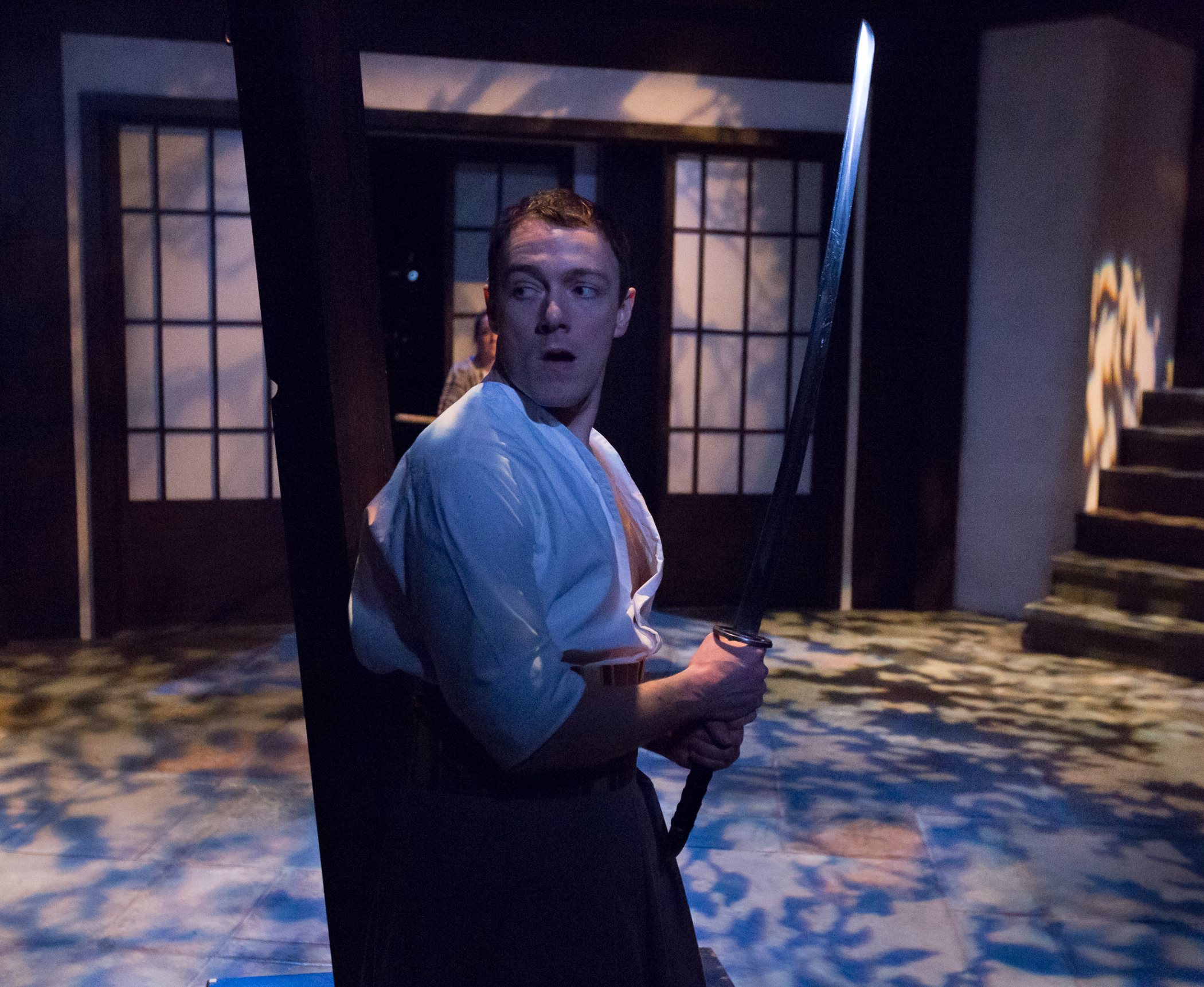
Jered McLenigan in Lantern Theater’s Julius Caesar. Photo by Mark Garvin.

This is a piece about the Wooster Group’s production of Cry, Trojans!, Lantern Theatre’s production of Julius Caesar, the Lean In/Getty stock photography collaboration, and my head finally exploding all over my computer.

Privilege is a squirrelly thing. When your privilege is working for you, it’s undetectable to you. That’s its job: to silently ease your way through life by protecting you from the thousand little (or big, or enormous) roadblocks people without your privilege face every day.

Two examples from my own life on both sides of privilege:

I taught for a long time at a film school. I taught early-career filmmakers about casting, working with actors, and script development. One semester, a young Black man had written a short film script about four young Black men being pulled over. The police officer asked all four for their IDs. I told this young filmmaker that he would need to clean up his narrative– that it didn’t make sense for the officer to ask for the IDs of passengers unless he had some reason, and the script needed to provide that narrative bridge. I had four young Black men in that class and all four were immediately astounded. They had been asked for their IDs as passengers every single time they had ever been in a car that had been pulled over. They believed it was normal. I had never once been asked for mine as a passenger, and had never even heard of such a thing. I had been protected by my privilege so completely that I had had no idea I was even being protected. I began to wonder what else these young men were experiencing that was invisible to me.

When my son was little, he went to a Jewish preschool. I didn’t talk to him much about Christmas or Easter. When he was almost three, we were headed into a supermarket that had just been decorated for Christmas, as they are always an orgy of Christian heritage between September and January. My son pointed at a giant Santa and said, “Look, Mommy! A king!” And I was overwhelmed with unexpected gratitude that my son was, for the moment, protected from the full knowledge of his outsider status in our culture. It wouldn’t take long for him to understand. But for the moment, his lack of Christian heritage privilege was completely unknown to him.

What we know about our own privilege is always a process, and one we have to struggle for, since it involves active curiosity and empathy, two things humans are just abysmal at, despite our constant assurances to each other of the contrary. But an understanding of the shape of one’s privilege, as hard-won as that is, is just the first step if you’re interested in social justice. The second step is, you know, WORKING for social justice. Unfortunately, that involves actively working against your own privilege, and there is nothing humans hate more than that.

So we find subtle ways to fool ourselves (and others) into IMAGINING we’re working for social justice while ACTUALLY reinforcing (in grad school, we called this “reinscribing”) our own privilege and cultural superiority.

Image

Cry, Trojans! Photo by Paula Cort.

The Wooster Group is well known to you if you have a degree in theatre, or were plugged into the theatre community in the 80s. Most people know about it as the New York-based company that gave birth (so to speak) to Spalding Gray. Some people will recall its tradition of experimental deconstructions of classic works and nonlinear, aggressively designed original works in what we once called a “postmodern” style. Headed by Liz LeCompte, Wooster Group has an almost legendary status for what was, for its time, very experimental theatre. Lantern Theater is a company in Philadelphia that’s in its 18th season. A quick glance at their production history reveals a very prosaic aesthetic, featuring unremarkable, utterly safe works such as The Screwtape Letters by C.S. Lewis, The Liar by David Ives, Private Lives by Noel Coward, and The Beauty Queen of Leenane by Martin McDonough, in addition to lots and lots of Shakespeare.

So here comes the part where my head begins to explode:

These two companies, almost at completely opposite ends of the theatrical spectrum, both pulled the exact same stunt at the exact same time: They staged shows featuring non-white characters and cast those characters with primarily white actors. Cry, Trojans!, an adaptation of Shakespeare’s Troilus and Cressida, was originally conceptualized as a collaboration with the RSC and performed in London, and was reconceptualized for an American run. Originally, the Americans played the Trojans and the British played the Greeks, rehearsing the scenes separately until coming together just before opening. Wooster Group played its Trojans as “Native Americans” against the British playing the Greeks as modern soldiers. For the American run, LeCompte decided to make both sides “Native American,” using a fusion of appropriated costumes, props, and other imagery gleaned from books, films, and other materials– and an almost entirely white cast. Lantern Theater, remarkably, staged Julius Caesar in feudal Japan– but without Japanese actors, instead casting seven white people and one Latino, with African American actor Forrest McClendon as Caesar. (I highly recommend looking at actor Makoto Hirano’s letter to Lantern Theater about the cultural appropriation in their production.)

Image

JC Guzman and Forrest McClendon in Lantern Theater’s Julius Ceasar. Photo by Mark Garvin.

At this point, when the national theatre community has been decrying cultural appropriation, yellowface, brownface, and the like loudly and vigorously and at great length, it seems almost a deliberately retrogressive act. But here’s where privilege steps in and allows people to make decisions like these without understanding how deeply problematic they are.

Both Liz LeCompte and Charles McMahon (the director of Julius Caesar) believe they are working for a HIGHER CAUSE.

“Plus it’s not about that. It’s about everything bigger…We love the piece, we love the stories, we love the films, we love the people…We wanted to tell the story in this way and make it so big that this [lack of direct Native American input] wouldn’t be a problem.” — Liz LeCompte, quoted here (emphasis mine)

“’We wanted to get away from all of the clichés and assumptions about classical Rome, with people walking about in togas and looking like statues from antiquity,’ says artistic director Charles McMahon. ‘Our associations with that make it feel like we’re saying, ‘This is old, this is long in the past” . . . McMahon also wanted to avoid the specificity that comes with updating the play to the modern day. ‘We didn’t want to say this play is like Libya, or this play is like Central America or Russia or North Korea, because that’s not the point either. I think there’s something universal about it.‘ McMahon soon realized that the stoicism of Caesar’s Rome had strong philosophical parallels with Japan’s tradition of Zen Buddhism. ‘The ideas in this play of being detached from the results of actions and being emotionally remote from the events of the world are present in the great samurai epics. So these themes all seemed to add up to feudal Japan being a very resonant scenic and thematic environment to put the play in.'”– read Shaun Brady’s  whole article here, emphasis mine

LeCompte clearly thinks that her artistic vision is “bigger,” and therefore more important than issues around cultural appropriation or racism. She believes that the importance– the “bigness”– of her artistic point of view about Shakespeare’s Troilus and Cressida should eliminate the need for an examination of the racial politics she puts onstage. She overtly asserts her artistic vision’s cultural superiority over any issues of race. She has no interest in an artistic exploration of Native American cultures. She’s appropriating various aspects of Native American cultures to make what she overtly states is a more important artistic point.

MacMahon states that the way he could get his (mostly white) audience to associate emotional distance with Julius Caesar was to visually associate the play with SAMURAI FILMS. He has no interest in an artistic exploration of feudal Japan. He’s interested in importing a feeling of stoicism, manliness, and ass-kicking fighters to a mostly white audience, and is appropriating the cultural artifacts of fuedal Japan as an artistic shortcut. He’s appropriating a very specific culture and calling it “universal” because he’s imagining the feeling he gets from watching Kurosawa, not the cultural heritage of a real people whose descendants are alive and marginalized.

Image

Cry, Trojans! Photo by Paula Cort.

LeCompte and McMahon are using artifacts of other cultures– both groups currently marginalized in the US– while shutting out the people of those cultures from the artistic process because they believe their artistic vision is MORE IMPORTANT. They see these cultures as visual art available for their use, not as an inextricable part of the heritage of real, living people. They have reinforced their own privilege and cultural superiority, maintained the invisibility of those marginalized peoples, AND set themselves up as answering to a higher artistic calling– in LeCompte’s case, the “bigger” nature of her artistic vision, and in McMahon’s case, “universality.”

The Lean In/Getty stock photo collaboration is pretty much the same thing, but even more blatant. It purports to be a massive new tool for social justice while instead overtly reinforcing privilege to an almost shocking degree. I SHOULD BE USED TO IT. I knew what to expect. But I was still shocked.

If there's one thing the Lean In/Getty collection has taught me, it's that photographers love to take pictures of young white women running. It's like CATNIP to them.

If there’s one thing the Lean In/Getty collection has taught me, it’s that photographers love to take pictures of young white women running. It’s like CATNIP to them.

The Lean In/Getty stock photography project crashed onto the internet in a loudly self-satisfied manner, proclaiming itself to be a feminist project– a revolution in stock photography that shows women in new, “more empowering” ways, claiming it will change the way women are perceived in America by changing the imagery associated with us. I reviewed all 2763 images. I set aside any containing children, as that’s a discussion for a different day. I also compared the images to the ones you can already find on existing stock photo sites.

One thing that’s immediately apparent, and for which the Lean In/Getty collection deserves a basket of high-fives, is its inclusion of older women. There are many more older women depicted than you would expect to find in such a collection, and it was damn refreshing. I loved the inclusion of photos of older women being active– biking, dancing, swimming. Another thing the collection does right is show pictures of women doing jobs, as opposed to sexy models pretending to do jobs.  Although the vast majority of workplace photos show upscale offices or studios, the few that show blue-collar workplaces do show women who look like they actually belong there, as opposed to a scantily-clad model licking a hammer.

This . . .

This . . .

. . . as opposed to this.

. . . as opposed to this.

On the other hand, exhaustingly, almost ALL of the women in these photos, elderly women included, conformed to traditionally acceptable, thin body types.

getty.elderly

Out of all the images of adult women without children, exactly FORTY-THREE (by my count) of the pictures in which women’s bodies were visible depicted women who were not thin. That’s one and a half percent. Of those 43, only FIVE showed non-thin women performing any kind of fitness activity, although the Lean In/Getty collection is rife with with women performing fitness activities (especially white women, whose workout depictions make up 10% of all photos, compared to 2.2% of all photos depicting women of color performing a fitness activity or in fitness clothing).

Unbelievably, depictions of professional women were even WORSE. Exactly ONE picture (that I could find– maybe you’ll find one more and bring the grand total up to two) depict a non-thin woman in anything that could be remotely construed as a professional or business setting, although the collection features literally hundreds and hundreds of business-oriented pictures. Searching “business” gets over 600 results, while “professional” gets over 800 results, and they are almost all of thin women. Considering 60% of women in the US are not thin, that’s an aggressive shut-out that feels deliberate. It’s just not believable that such a result was entirely accidental. Since the Lean In collection has been non-stop screaming its feminist awesomeness as empowering for all women since even before it dropped, one is left wondering why the only women worth “empowering” are the 40% who already enjoy thin privilege.

The few non-thin women depicted in a workplace are depicted in low-wage blue collar or service industry jobs (factory workers, custodians). There are a few portraits, mostly of older women. Very few young, non-thin women were depicted at all. For the record, there are precisely two pictures of a visibly disabled woman, both of the same very fit athlete.
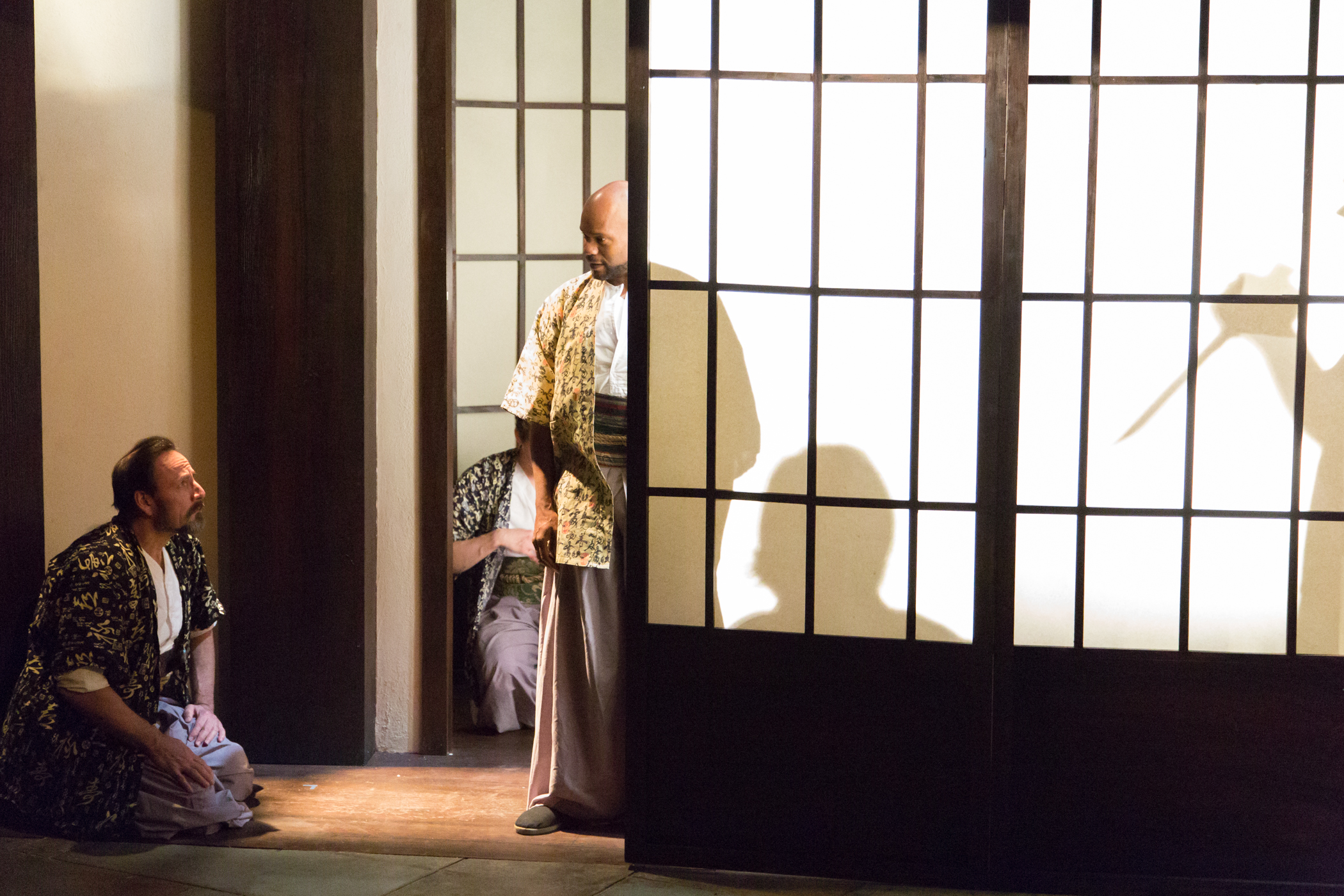
Let’s look at some of these pictures:

Image

From the Lean In/Getty collection, from the first page of images returned from the search “business”

Image

From the Lean In/Getty collection, from the first page of images returned from both searches “business” and “professional.”

Image

From istockphoto.com, from the first page of images returned from the search “business.”

Image

From shutterstock.com, from the first page of images returned from the search “professional.”

Lean In/Getty gets a high five for returning images such as this when searching

Lean In/Getty gets a high five for returning images such as this when searching “professional.”

But most of their images look like this.
But most of their images look like this.

One of a tiny handful of pictures in the collection of almost 2800 depicting a young, plus-sized woman

One of a tiny handful of pictures in the collection of almost 2800 depicting a young, plus-sized woman.

For every picture of a plus-sized young woman, there are literally over 700 of a woman with this body type.

For every picture of a plus-sized young woman, there are literally over 700 of a woman with this body type.

While the Lean In/Getty collection is doing much better with older women than other stock photography sites, it is actively reinforcing the thin privilege the woman behind the Lean In brand, Sheryl Sandberg, and the woman from Lean In who supervised the stock photo project and curated its imagery, Jessica Bennett, currently enjoy, and it can’t be completely irrelevant that Sandberg is now in her mid-forties. What the Lean In project has done, under the guise of “empowering women” through “changing imagery” is reinforce the cultural privilege and dominance of women of Bennett’s and Sandberg’s body type while making an attempt to create more cultural acceptance for women of Sandberg’s age and older, all while blatantly shutting out women without thin privilege, rendering them virtually invisible. While pretending to empower women as a whole, they have instead reinforced their own privilege.

Celebrating with salad! Yes, this was one of the photos the Lean In collection returned when I searched for

Celebrating with salad! Yes, this was one of the photos the Lean In collection returned when I searched for “celebration.”

Invisibility is a weapon, and it’s the one we most often use to reassert or reinforce our privilege and cultural dominance. If THOSE PEOPLE aren’t there, it’s because they aren’t IMPORTANT ENOUGH TO BE THERE, and the project’s focus is on “more important issues” anyway. You only get answers to the questions you ask, so be prepared, if you want any credibility in this fight for social justice, to ask WHO IS MISSING? And WHY?

Not every project needs to have a representative from every single group, but when we appropriate someone else’s culture while keeping them invisible, or when we purport to stand for a group’s empowerment while shutting out over SIXTY PERCENT of them, we have a problem.

Tagged , , , , , ,

Fathering Daughters: You’re Doing It Wrong

Image

I’m choosing to accompany this article with pictures of gorgeous women who don’t conform to the beauty myth. This is Malaysian model Loretta Lucia Kwek Leng Choo. Picture from thestar.com.

I’ve seen several articles about fathering daughters recently, all focused on combating the beauty myth, and they’re all about things dads should SAY to their daughters. This is bullshit. Or, more accurately: It’s less than half of the story.

Most men have only a vague understanding of what it’s like to live as a woman under the constant, unrelenting onslaught of cruelty the beauty and fashion industries deliberately create– an onslaught supported wholeheartedly, and continually reinscribed, by our culture. No matter how much you try to “protect” her from Disney, or the media, or whatever you think sends her the wrong messages, she is getting those messages, all day, every day. That she MUST be unhappy about her body. It’s not lean enough, strong enough, hairless enough, light-skinned enough, shaped properly. That she MUST be unhappy about her face. It’s not pretty enough, “refined” enough, it’s not perfectly even-toned, blemish-free, “flawless.” Unhappiness sells products. Our culture is exceptionally supportive of the idea that women’s bodies are in constant need of some kind of product or procedure to attain acceptability.

Image

Mollena Williams, photographed by Substantia Jones for adipositivity.com. Check out Mollena’s blog, The Perverted Negress, at mollena.com.

It’s inescapable, relentless. It’s so normative that people who speak out about it are slammed for overreacting, or said to be speaking from a position of sour grapes. It starts at birth. You cannot be in public or consume media for more than a few minutes without encountering it. I’ve barely described the tip of the iceberg. There’s a lot to be said about the beauty myth, misogyny, and fathers and sons, or mothers and daughters, or mothers and sons, or parents and their gender non-conforming kids. The existence of those important issues, however, does not erase or even diminish the importance of this one. The father-daughter relationship is powerful.

Rei Bennett Photography - Kitty Creme 07

Clothing Designer Catriona Stewart, photographed by Rei Bennett. Catriona’s blog, Lingerie, Latex & Life, can be found at catrionastewart.blogspot.com, and Bennett’s site can be found at reibennett.co.uk.

So what is your daughter learning from YOU? She sees what you look at, how you look at it, and what you say, especially when you do not want her to. If you think she isn’t silently comparing herself to the pictures, people, and videos to which you react positively, you’re delusional. Before she experiences the male gaze from any other source, she’s experiencing it from you, and she’s learning ALL OF IT. I’m not saying don’t watch porn, or don’t look at women. I’m not here to Carrie Nation your cock. Just remember that everything you say, do, and consume while she is within earshot of you is making an impact on how she sees herself. (Determine how far away you can hear a whisper and add 20 feet if you want to calculate Child Earshot Value.)

Image

Cassie Rosenbrock. Photo by Heather Elizabeth. Check out her work at heatherelizabethphotography.com.

I know you’re not critiquing your daughter’s looks because you’re not a huge jerk. But if you want to have any hope of combating the massive monolith of cultural messaging that tells her that her worth is related primarily to her looks, you have to be deliberate, and relentless. It’s not enough to just tell her she’s beautiful the way she is, or that intelligence or kindness are more important than beauty. She’s watching everything you do and say. If you’re contradicting your platitudes with your behavior every day, she knows which one to believe.

In other words, you have to walk the walk, not just talk the talk. If you tell her that she’s beautiful just the way she is, but she sees you react positively ONLY to pictures of photoshopped skinny young white women, you might as well have never said a word. She sees you define “good” and she is already calculating her distance from it. If you think she’s too young, you’re delusional. Can she walk? She’s old enough to understand your behavior.

plus.amy

Model Amy Marie, photographed by Aug Glamour. See Amy’s portfolio at modelmayhem.com/627470.

The world is a big, messy, unfair place full of contradicting objectives, needs, goals, and desires, and that’s just in one person. Decide which of those you want to privilege in any given moment. The answer doesn’t always have to be the same. All I’m saying is: Don’t tell yourself you’re fighting for your daughter if you don’t understand that she’s watching you ALL the time, not just when you want her to.

From Ladybug Pin Up, a photography project in the Dominican Republic. Check out their work at ladybugpinup.com.

From Ladybug Pin Up, a photography studio in the Dominican Republic. Check out their work at ladybugpinup.com.

Tagged , ,