Tag Archives: feminism

I Don’t Mind Voting for a Man, Just Not THAT Man

Listen, I’m not sexist. I would totally vote for a man. I would vote for that one guy who’s not running (don’t you just LOVE him?) in a heartbeat. The mayor of our town is a man, and I voted for him. Or, I mean, I would have; I was really busy that day. I would, personally, LOVE to vote for a man. Just not THAT man.

First of all, his personality is just abrasive. Who wants to listen to that screech, screech, screech? Ugh, it’s like a nagging tirade every time he opens his mouth. Seriously, his aides should get him a secret shock collar to zap him whenever his voice starts to get screechy. It’s like he’s always yelling at us. His opponent’s passionate speeches are so much better. When she gets going, whew! She gets fiery, amirite? It’s hard to resist that kind of sincere, intense passion. You can just tell she cares by how passionate she is.

And his look, let’s face it, is just frumpy. Did you hear how much he paid for that pantsuit? He’s always wearing those ugly pantsuits. His hair is a catastrophe. Is he trying to look older or younger or what? It’s just embarrassing. He says he cares about the people, but he can’t even handle his own look. Ugh, care about the fact that we have to look at you. Imagine having to watch that for the next eight years, just getting older and frumpier.

Remember that thing he said 30 years ago? Right?! Listen, I know his opponent agreed with him at the time, but she had good reason, and then she evolved on the issue and really fought hard for it ten years later. He only came out for it and fought for it when it was politically expedient for him, like a freaking DECADE later. And we’re expected to trust him?!

I don’t trust him. There’s not an honest bone in his body. I know I was using factchecking sites like snopes and politifact to support my points for the last eight years, but now they’re clearly in his pocket because their hard research and facts don’t support my belief that he’s untrustworthy, which, come on, we ALL know is true. Have you seen that homemade youtube video??? It really shakes my faith in Pulitzer prize-winning factchecking sites. Who can you believe, right? What is he hiding, right? He’s never been indicted, but he *will* be. He could be. He should be. For something. I just feel it in my bones. He’s untrustworthy. Look at him! Listen to his screechy voice. It’s just something about him. No man gets to that level of power without some kind of cheating. I just know it.

Speaking of cheating, his wife. LOL5000! He wouldn’t be where he is without his wife’s fame, power, and influence. And she is shady af. Look at all this shit she said and did! Her behavior clearly indicates he can’t be trusted. Why did he stick by her all these years? Because he needed her for his schemes and plots to grab political power, that’s why. All his success comes from her. Would we even be talking about him if he wasn’t her husband?

He’s just so . . . aggressive, you know? Too aggressive and pushy. Always pushing his point of view. Like, UGH, it’s not all about you. You can just tell he’s power-hungry. And don’t you think it’s kind of, well, unmanly to be so aggressive all the time? So emotional. Do we really want a man like that running the country? He just seems so unsympathetic. It’s not about him being a man; it’s about him being unsympathetic, overemotional, and untrustworthy.

The only reason people vote for him is because he’s a man. What has he actually achieved? No, not the stuff about men’s rights, ugh, that doesn’t count. Of course he does stuff for men. And not the stuff about children’s health; I mean real stuff. No, those doesn’t count, either, because he didn’t support those positions from birth, and why would you trust someone who listens to his constituents and changes his point of view? No, those also don’t count, because they were compromises, not exactly what I wanted, and why would I support a politician who compromises?! Why can’t his supporters find anything good to say about him? I’m listening; I’m waiting. But they can’t. They only support him because he’s a man and they’re voting with their penises.

Listen, like I said, I would vote for a man in a heartbeat, just not THAT man. I would happily support a man if there ever was one who was flawless, pure, and perfect in every deed, word, and thought. Until that day comes– and I welcome it!!!– we’ll just have to stick to the flawed women candidates we have.


Tagged , ,

How We Stop Abuse in Theatre

no

The initial response to the devastating exposé of the abuse at celebrated Chicago theatre Profiles Theatre was swift and decisive: we were all appalled. Nearly everyone in the industry decried the abuse in no uncertain terms. We were appalled that a theatre would continue to allow such actions, even from a founding member and a widely respected (and lauded) artist like Darrell Cox. “How could this happen?” we asked ourselves. “Not in our house,” we repeated, echoing the Chicago group bravely attempting to stem abuse in Chicago theatre.

And then, because we were not the ones accused, we went about our business, which includes hiring abusers and making excuses for them.

When I posted the story on social media in June, I wrote that I would stand by anyone in the Bay Area who needed someone to stand with them. A number of people contacted me privately to share their stories. Not one was willing to come forward publicly for fear of retaliation and public scorn. A few refused to name their abusers, instead providing me with leading clues like, “won X award X year” or “directed a lot of [playwright] during [years].” One mentioned that she initially wanted to file a report to AEA, but was cautioned against it by other women– fear the consequences, she was told. For good reason– our culture is unkind, to say the least, to women who publicly speak out about their abuse, especially at the hands of powerful men. Our first impulse is to call her a liar, out for personal gain. As if anything could be gained that way but scorn, trauma, pain.

I thought long and hard about what to do with these stories. I won’t make public accusations because these aren’t my stories to tell, and I will not violate the consent of these people who bravely shared their stories with me. But I will take this knowledge and create a primer for fellow Artistic Directors and others in positions of power– including board members– at theatres to give them a clear picture of where we have failed our people over the years and how we can do better in the future. I will not name names. But I can point to where we went wrong.

no2

1. Make sure that everyone working in your theatre understands that you have a zero tolerance policy for abuse. I never did this, trusting to our “culture of respect,” and I count it as one of my worst failures as an Artistic Director. Openly state your zero tolerance policy while clearly defining “abuse” and clearly stating consequences. Not in Our House (linked above) is developing a Code of Conduct for non-AEA theatres that they are allowing others to access online, but not to adopt unless they are a designated pilot theatre. They hope to release adoption in 2017. Until that time, it’s a great document to use as a model to create your own basic set of rules. While we cannot yet adopt their code, I feel strongly that we in the indie theatre community cannot continue to run with *zero* code of conduct. If you’re an AEA theatre, do not assume that everyone on your team knows and understands AEA rules of conduct. Make sure everyone knows what you expect, and what you will not tolerate. THEN ENFORCE IT.

2. When people come to you with stories of abuse, complaints that someone is making them uncomfortable, complaints that someone is not respecting their boundaries, LISTEN TO THEM and BELIEVE THEM. Quietly take other members of the team aside and talk to them to get a clearer picture about what’s happening if necessary, but believe me, very few take the risk to come forward without good reason. Then enforce your zero tolerance policy with its clearly stated consequences. Do not protect abusers, minimize abuse, or sweep it under the rug.

3. Pay close attention to the behavior of the people you have on staff. People will not always be brave enough to come forward about bad behavior. Sometimes people gaslight victims by claiming that the abuse is “just the way he is,” “not a big deal,” or “just because he’s a genius and passionate about his work.” Victims begin to second-guess themselves and worry about the consequences of coming forward when others are minimizing or excusing bad behavior. There could easily be problems, even abuse, in your house without anyone coming forward to tell you about them directly. We must be proactive. Think: Has any director in your theatre ever berated an actress in rehearsal until she cried? Has any director in your theatre insisted they could block a fight themselves, despite their lack of training and/or certification, putting your actors at risk? Has anyone in your company publicly derided the work of others on the project as “stupid,” “worthless,” or “idiotic”? Has a choreographer ever told an actor in rehearsal they were “talentless” or “useless”? Has anyone on your team made a racist, antisemitic, sexist, transphobic, ableist, or otherwise bigoted joke? Has a production photographer joked publicly that he was only planning to take pictures of the scantily-clad young actresses in your show? Does someone in a position of power at your company proposition young actors, start affairs with them while they’re under contract, single them out and flirt with them during rehearsal? Has someone in your company threatened to dock someone’s pay for refusing to do something that’s outside the scope of their contract? Has anyone in your company violated any contract (for example, used someone else’s writing or fight choreography without permission) and insisted that others maintain secrecy? Pay attention and nip that behavior in the bud.

no3

4. Stop hiring “geniuses.” As I say above, “he’s a genius and just passionate about his work” has long been used to excuse abusive behavior. We’ve created a mythology around the “auteur” whose passion is so great that he “can’t help” flying into rages, berating people who “aren’t on his level” or who don’t give him exactly what he wants (as it changes from day to day or he fails to be clear about it). Sometimes his affairs with young actors in the show are part of his “passionate” persona. He just can’t help himself! He makes unreasonable demands and insists others work around the clock to satisfy them. When his work is racist or sexist, lavish excuses are made for it. It’s “brave,” “daring,” or “honest.” Asshole “auteurs” are not cute. They are assholes. And more often than not in this collaborative art form, the work suffers for it. No one is doing their best work when their goal is to keep someone from screaming at them. Make “respectful” a more important quality in an artist than “mad genius.” And while I’m using the male pronoun here because the “auteur” mythology is largely white and male, these people come in all types. Stop hiring “geniuses.”

5. Stop perpetuating the mythology that anything should be tolerated because “the show must go on.” This is, in part, a corollary to #4 because it’s trotted out as an excuse for the behavior of the asshole “auteur.” “We just need to get the show up” is a fact, but you don’t “just need to get the show up” at the expense of the health and safety of the people working on it. Your “auteur” does not actually need to behave like a jackass, and only does so because it’s tolerated. You don’t actually need to hold people after the stated end of rehearsal. You don’t actually need to brush off the very real concerns of your actors about working without a fight director. You don’t actually need to brush off the concerns of your actresses about an actor creeping on them backstage. There is always a choice.

no4

I understand these conversations are difficult to have. I understand your “genius” has been a member of your company, or its AD, for years, and contributed wonderful things to it. Perhaps your “genius” is even a founding member, like Darrell Cox, or a personal friend. I understand that your “genius” makes your theatre money and wins it awards, again, like Darrell Cox. I understand that you believe the ends justify the means, because the livelihoods of others are dependent upon the success of your theatre, and that’s a real, palpable burden. I understand that your “genius” likely believes his behavior is totally justified, and will be resentful and angry if called out. I understand– believe me I understand– that even people who aren’t protected by a “genius” status are protected by the fact that you believe you will be screwed without the work they’re doing for your company.

But you do not need to tolerate this behavior. It may be as simple as laying down the law with someone and being clear about what you will not tolerate. It may be that this person refuses to address their behavior, and they need to be let go before they demolish your mission, your reputation, and your company.

You do not need to keep hiring these people. For every “genius” you hire repeatedly despite known bad behavior or even known abuse there are five overlooked artists who are wonderful to work with.There’s no reason to tolerate this behavior.

I have made errors in my career because I believed I “had no choice,” but I did. There is always a choice. And I will carry the shame of those decisions until my dying day. I remember the names of every person I failed to protect, either because I believed wrongly that I had no choice, or because I was ignorant of what was happening in my own house (which is just as much my fault, because if someone wasn’t coming to me, or if I failed to see something, that’s on me). It’s a weight I wouldn’t wish on my worst enemy.

As long as we continue to protect, excuse, and ignore bad behavior, it will continue to happen. As long as we continue to reward bad behavior and even abuse with future employment, prestigious awards, and coveted positions, we’re plainly stating to our community that our people are worthless to us; that people (especially white men) in powerful positions are untouchable; that speaking out will be ignored or punished; that there’s nothing that can stop the abuse.

But there is. WE CAN STOP IT by refusing to continue tolerating this behavior. By refusing to continue protecting and rewarding abusers. By refusing to continue pretending that the bad behavior of “geniuses” isn’t abuse but “passion.”

WE CAN STOP IT. It’s our choice.

Tagged , , , , , ,

Sanders, Trump, and their Angry White Men

This is the Election Cycle of the Angry White Person, Mostly Men. This particular kind of Angry White Person supports either Trump or Sanders, and is defined both by their privilege and by saying they’d rather stay home than vote for anyone else. A surprising number of Sanders supporters have said they will vote for Trump if it’s HRC/Trump. This phenomenon bears examining.

This is a certain type of Angry White Person, not all angry white people everywhere, just in case you’re feeling fragile and need a #notallwhitepeople or #notallmen. Or even a #notallSanderssupporters, because it most definitely is a subset, and a minor one at that, but so vocal, so active, so, well, LOUD, they’re impacting the election cycle as a whole. I may yet vote for Sanders myself, not that it matters, as I’m in California and our primary is like five minutes before the election.

This subset of Angry White People I’m talking about are attracted to either Trump or Sanders, period. Their personal politics will push them in one direction or the other, but the basic exchange between voter and candidacy is exactly the same.

Right now, white people are starting to lose their privilege (or, more accurately, fear they might lose it) as we strive as a culture for equilibrium. White people are being asked to examine their complicity in a system that’s racist, sexist, ableist, transphobic, etc. Many white people, especially men, are upset and angry that they, who believe they are good people– who ARE good people– who believe they are “not racist” and “not sexist,” are still associated with systemic oppression, still asked to examine their privilege. Unjustly accused, they believe, of being “the bad guy.”

Along come two angry white men, both of whom say “America’s problems are not your fault. YOU’RE the victim of an unjust system. You have every right to be angry! The system is rigged against you, so get angry and fight back!”

This is music to the ears of a certain type of white person. Trump lays it at the door of “political correctness” unjustly oppressing white men, and Sanders lays it at the door of an unjust economic system. I agree that economic injustice is a massive problem in the US, but that’s immaterial to the point I’m trying to make.

Many Sanders supporters are baffled when their fellow Sanders supporters say they would stay home and allow Trump to win or even vote for him themselves should the general election be Trump v HRC. Liberal and progressive politics center around championing the vulnerable, and in general, those voters recognize the danger that Trump– and the GOP in general– present to the vulnerable in the US. They understand that the perfect cannot be the enemy of the good when actual lives are at stake. They know that the luxury to pretend that Clinton is the same as Trump only comes with the kind of privilege that insulates one from the consequences of the election. They understand what Sanders’ support of feminism and anti-racism initiatives means.

But, as we’ve seen, not every Sanders supporter actually listens to Sanders, and many are so caught up in the message that they, as white people, are victims of an unjust economic system that they refuse to consider how the consequences of this election might impact people more vulnerable than they, making them “Bernie or Bust.” And while there are indeed “Bernie or Bust” people of color, the vast majority of them are white– the vast majority of Sanders’ supporters in general are white. It’s been a problem dogging the Sanders campaign from the beginning and the reason he’s not likely to win the nomination.

This particular type of Angry White Sanders Supporters are defined by their response when it’s suggested that they should “vote blue, no matter who” in the general election to protect the vulnerable against the real dangers of a Trump presidency. They reject, with angry indignation, the idea that the actual lives of the vulnerable should take precedence over what they’re mistakenly calling their “conscience,” but what is really “my anger is more important than the lives of the vulnerable.” They say, “If I’m Bernie or Bust, don’t blame me, blame Hillary Clinton,” which means exactly same thing: my feelings matter more than, to name just one example, protecting Muslims from the policies of Donald Trump or Ted Cruz. They’re more than willing to sacrifice the safety of vulnerable Americans if they don’t get precisely what they want. They see compromise as a line impossible to cross, no matter the cost– especially when the cost is one they themselves will not have to pay.

This kind of Angry White Person is excited to finally be in a place where they’re back in the center, where they’re The Victim, where they’re no longer associated with The Bad Guy, The Man, The White Male Monolith, The Patriarchy. They finally have a place that tells them that they’re the true victims of injustice.

Of course they aren’t going to vote for HRC; of course they’re going to believe whatever debunked propaganda they can find about her, of course they’re going to disparage her in sexist terms; of course they’re going to demonize her. There’s a certain kind of person who needs to believe the propaganda about her, because he’s enraptured by a world wherein white people, especially men, are the victims of an unjust system, not the architects and enforcers of one. He can’t– or he won’t– entertain the notion that white people can be both simultaneously. “Bernie or bust” = “my worldview at ALL costs.”

(And here it is again, in case you tend to confuse “people who do this” with “all you people do this”: #notallSanderssupporters #notallwhitepeople #notallmen.)

While White Anger is pretty much the alpha and omega of the Trump campaign, it’s only part of the Sanders campaign. Yet it’s such a vocal part that it’s become one of the most persistent negative aspects dogging it, doing Sanders much more harm than good.

There are two kinds of anger dominating Sanders followers: The first is the righteous anger over decades of economic injustice bolstered by every aspect of the oligarchy we foolishly made of the republic we were given. It’s an anger that recognizes that racism, sexism, homophobia, transphobia, ableism, Islamophobia, and every kind of injustice and bigotry are serious problems in and of themselves in addition to, not in opposition to, economic injustice, that recognizes the importance of intersectionality. These are people fighting for the vulnerable, whether their own intersectional identities fall into any of those categories or not. I believe these are the (somewhat silent) majority of Sanders supporters. I hope they are. I would count myself among them, no matter who I vote for in the primary. In the general, I will proudly cast my vote for either Democratic candidate, because these issues– these people– matter to me.

This brings me to the particular kind of White Anger I’m discussing– the second kind of anger dominating Sanders followers. It’s an anger that rejects any consideration of other issues, that rejects any consideration of others, period. The White Anger that revels in its own importance and cannot, even for a moment, entertain the notion of having to return to a place where their white privilege or their male privilege– their association with, and potential complicity with, systems of oppression– becomes important, instead refusing to leave the circle where they can claim that they are the ones against whom the gravest injustice has been committed, everyone else be damned. The people who would throw the vulnerable under the bus to preserve the illusion that they are the ones suffering the gravest injustice, deserving of the most urgent attention, and entitled not just to the front of the line, but to the entire line.


Tagged , , ,

“I’ll Never Vote for Hillary!” Yeah, OK.

hrc.sanders
The latest installment of “The Internet Explodes with Hatred for Hillary Clinton” happened earlier this week, when HRC (whose own record on AIDS research and funding is better than any other candidate) mistakenly said that Nancy Reagan was a lowkey supporter of AIDS research, when Reagan was, in reality, a massive asshole about AIDS in every possible way. Clinton immediately apologized, then apologized again, at length. Yet we’re still seeing a wagonload of “I’ll never vote for her” from progressives, as if her words about Reagan trump (and I’m using that verb deliberately) her actual record on AIDS research and funding. Why?
.
Clinton’s stellar record on AIDS is ignored while people indignantly attack her for making an inaccurate statement. I like Bernie. I really do feel the Bern. But I see Democrats brush aside things he and other male politicians have done while raining fire on Hillary for the exact same thing– or something much less. This happens all the time. Hillary is flamed for being a “career politician” and an “insider” when Sanders has been in political office for much longer than she has. (Hillary was first elected to political office in 2000; Sanders was elected to his first office in 1981 and his first national office in 1991.) People flame Hillary for speaking in favor of the omnibus crime bill in the 90s when she was First Lady– a position with no political power– but Bernie, as a member of Congress, actually had the power to enact it into law, voting in favor of it despite the fact that many of his colleagues did not.
.
I’m not here to argue Hillary vs Bernie. I genuinely like them both. I’m here to say that I’m sick of seeing her reviled for the same things people forgive easily when they’re done by men, and that the stakes are too high this election cycle to indulge that or leave it unexamined. If you’re reviling Hillary for saying something racist and stupid in 1994 in favor of a crime bill that turned out to be a very bad idea, but you’re not reviling Sanders for actually using his political power to make that very bad crime bill law, I want you to take a long, long think about why that is. If you’re reviling Hillary for campaign contributions made by banks, but did not revile Obama for the same thing, I want you to take a long, long think about why that is.
.
Those of us who are old enough to remember what it was like to live under Reagan and the Bushes remember how bad it was. How much better almost everything– including the economy and job growth— got under Clinton and Obama. I lived through it, and I would support half a Snapple as the Democratic nominee rather than go back to the policies of Reagan or (any) Bush.I see people swear up and down their hatred of Hillary isn’t because she’s a woman, or doesn’t stem directly from decades of vicious, lying conservative propaganda— they will swear it!– and then immediately turn around and eviscerate her for something Bernie did (or is) himself, or call her a “crook,” or say nonsense like, “She doesn’t have an honest bone in her body.” Conservative copywriters, whoever you are, I applaud you for your success in taking a complete and total fabrication and successfully integrating it so far into the American consciousness that there are people who agree with nearly every policy position HRC has today, yet will still claim she’s “dishonest.” That’s some impressive chicanery, and I mean that.
.
We should be closely examining all candidates for office, and balanced, honest criticism of a candidate’s record and policies is crucial. Respectful debate about the candidates is necessary and healthy. But supporting Sanders should not be the same as hating Hillary. Too many people are not debating the candidates and their various records or platforms logically, instead viciously reviling Clinton– often in misogynistic terms– for things they routinely excuse in male politicians. And I have to say, the level of unfocused, irrational vitriol feels an awful lot like what conservatives have been doing to Obama for years.

There’s not a thing wrong with choosing Bernie over Hillary, or disliking Hillary’s current policy proposals. However, the out-and-out hatred we’re seeing from some Sanders supporters (and about which I am hardly the first person to write), bears some serious scrutiny. While the Sanders campaign has made real efforts to deal with the worst of it– the “Bernie Bros” acting as a misogynistic mob, attacking Clinton and her supporters Gamergate style; the “Bern the Witch” controversy– there’s still far too much active hatred, and far too much of it is misogynistic or coded misogyny. Far too much of it stems from willing belief in conservative propaganda about HRC that has been debunked over and over.

I think we all expected it, but I did not expect it from our side.

It’s one thing to prefer one candidate over another. That’s healthy. That’s admirable. It’s another to actively HATE a candidate for doing EXACTLY the same things as the last three men you voted for, despite her liberal record.
 .
Let’s think practically about the election in November.
.
If Trump gets elected, how many vulnerable people will be hurt, how many programs cut, how bad will the the economy get under conservative policies? How much damage will be done if Trump, an open racist and misogynist, is empowered to command our military, veto bills, and nominate people to the Supreme Court, impacting life in the US for decades to come? Trump exhorts his followers to attack Black protestors at his rallies (“The next time we see him, we might have to kill him,” a follower said  after punching a Black protestor at a rally earlier this week), excuses his followers who attack Mexicans on the street, claims Mexican immigrants are rapists, refused to distance himself from the KKK, supports banning Muslims from even entering the US, advocates killing the families of terrorists, and is openly sexist. Trump is the worst America has to offer.
 .
How privileged do you need to be to imagine that it’s a good idea to risk the actual lives of vulnerable Americans because you “hate” Hillary so much you vow to stay home if Sanders doesn’t get the nomination? How protected from the consequences of a Trump presidency do you need to be to think your hatred of Hillary constitutes, as I saw someone say earlier this week, an “inviolable principle,” meaning, more important than the actual lives of vulnerable Americans? That all applies equally to anyone saying the same about Sanders. (We have yet to see the full weight of American antisemitism aimed at Sanders, and if he wins the nomination, we most certainly will.)
.
Vote for whoever you like in the primary. But let’s step away from vicious attacks and hatred. Let’s step away from buying into debunked conservative propaganda about Clinton’s trustworthiness. Let’s look at the candidates’ actual proposals and weigh those proposals’ actual strengths and weaknesses. Let’s respect each other’s choices in the primaries.

And whoever becomes the Democratic nominee, the stakes are far, far too high for us to selfishly stay home because we didn’t get our first choice. I will happily, proudly vote for either Clinton or Sanders, and I hope you will do the right thing and join me.

NOTE: The comments for the post are now closed. Thanks for reading Bitter Gertrude!
Tagged , , ,

The Oscars: As Silly and Useless as Ever, and Yet Crucially Important

The Oscars are nonsense. They’re Hollywood’s Homecoming Queen elections, as insular, as clique-ish, and as disconnected from any actual merit as any Homecoming election in any rich white high school. Rich white people congratulating each other for the kinds of achievements attainable only by people sitting atop an obscene amount of money– their own or someone else’s. They ask you to believe that the actual best acting, best directing, best editing, and best design of the year just always happen to be located in the one narrow strip of filmmaking that (entirely coincidentally!) has the most funding.

So the Oscars are more or less the Tonys of the filmworld– limited to a very narrow strip of exceptionally well-funded work while we all pretend the awards somehow represent the best of the nation’s work as a whole.

Most of the artists who receive Oscars or Tonys did a fine, in many cases excellent, job. I begrudge them nothing and honestly wish them nothing but the best. But it’s important to remember that we don’t give awards for the “best” work in theatre or film because we don’t even consider most work, and, most importantly, there’s no objective way to measure whose artistry is “the best” once you’ve eliminated some of the obvious worst– and, let’s face it, when it comes to Oscars for acting, even that’s seldom done.

We give these kinds of awards based on how an artist makes us feel; generally, how an artist makes us feel about ourselves. There’s an old saying: “When the audience cries, it’s not about you; it’s about them.” The people who vote for these awards are no different.

Despite the fact that these awards are meaningless as measures of artistic merit, they contain an immense cultural value. A great deal of that stems from the narrative of artistic supremacy created by Broadway and Hollywood. There are an entrenched group of extremely wealthy and powerful people whose fortunes depend on you continuing to believe that Broadway and/or Hollywood represent the pinnacle of American performative art. They’ve built and expertly marketed a superstructure of dreams and wishes that will make people who’ve never worked in either Broadway or Hollywood defend their artistic supremacy as if they’re defending their own children. I actually admire the way Broadway and Hollywood have controlled that narrative. There’s a terrible beauty to that level of cultural manipulation.

An immense part of that narrative of supremacy is rooted in the cultural supremacy that comes from cultural saturation, something only money can buy. A film like Fifty Shades of Grey–a film of questionable merit on many fronts— had the financial backing to play in theatres all across the country (and the world, but our cultural exports are a story for another blog), saturate the market with advertising, and command enormous press attention, garnering $166 million at the box office ($570.5 globally) and a basket of award nominations for The Weeknd for Best Original Song (Oscars and Golden Globes among them), while literally hundreds of much better films lacked the financial backing to receive such culturally potent– and lucrative– attention. Fifty Shades of Grey becomes, therefore, a permanent part of our culture, attaining a position of influence unrelated to merit, created by the wealth of its backers. People in the BDSM community were largely aghast at the misconceptions about themselves and their lives now lodged like a tick into the national consciousness. Now people who have never met anyone in the BDSM community “know” what “those people” are like, will make decisions about “those people” based on that. The power of cultural saturation coupled with the myth of artistic supremacy is immense. Everyone sees X + X comes from an “important” source = X is truth, even when X is demonstrable bullshit.

This is why, despite the fact that I will laugh in your face if you tell me the Oscars have artistic meaning, I think it’s crucial that we look closely at the messages we’re sending when we shut people of color out of those awards, because those messages have immense power in the real world.

First of all, do not bother to comment that a number of people of color were nominated for the Oscars this year, including Best Director and Best Original Song, mentioned above. I know many people who work behind the camera, and I am keenly aware that the current discourse is limited to the actor awards. It irritates me that tech people, directors, designers, and writers are so easily disregarded, and that the work of actors is regarded as so much more important in a medium where the work of the actor is actually of far less import than the underscoring, cinematography, and editing. The cultural primacy of the film actor exists, whether I like it or not. There’s a culturally important mythology around film actors that just doesn’t exist for most of us behind the camera. They are our mythological figures– our Achilles, our Ajax, our Helen, even our Artemis, Athena, Hermes, Apollo. We create unending mythology about them and their lives. The mythological Jennifer Lawrence is a combination of Artemis and Dionysus in our culture right now. Yet the real Jennifer Lawrence is just a young woman, no different than any other. We have raised her (more accurately, a mythologized version of her) to a mythological height that makes what she eats, what she wears, what she says, what she does, and who she sleeps with a matter of national interest, just as humans once created stories about what their gods ate, wore, said, did, and nailed. Film actors are seen, in essence, as metaphors for Human.

Because the Academy members are nearly uniformly white men over 60, the awards are almost always given to other white people– human metaphors that are emotionally potent for the person voting on the award. When an award is given to an actor of color, these older white men are still voting based on how the artist makes them feel about themselves– in this case, self-congratulatedly “not racist.” Then, satisfied that they got the Good White Person cookie, they go right back to nominating and awarding reflections of themselves.

So when we choose a thin, able-bodied, all-white pantheon to honor for film acting, it says that the people who are the best metaphors for Human are thin, white, and physically “perfect.” Our culture is filled to the brim with negative portrayals of people of color. When children grow up, they look to the culture at large to determine what’s expected of them. Are we really OK with a culture that tells children of color– on the cusp of becoming the largest population of children in this country— that they’re not as worthy as white children? For that matter, are we really OK with telling our girls that their worth is indelibly attached to their attractiveness to men? Because we do both, all the time, and they’ve resulted in a million different kinds of cultural and personal problems.

So I applaud the Academy’s response to the current controversy. I think increasing the amount of women and people of color on the panel is the best thing the Academy can do, since that diversity will result in more diverse choices. What needs to happen concurrently, of course, is better representation of women and people of color across the board in Hollywood, just as there should be on Broadway and across the professional theatre community as a whole.

But let me be clear here: (coughs, turns on mic) NOTHING CHANGES IF ALL THE GATEKEEPERS CONTINUE TO BE WHITE MEN.

The Academy is making the best possible decision. I hope it happens in time to make swift changes, not glacially slow ones, as is too often the case. And our own best possible decision is to increase the number of women and people of color who are in gatekeeping positions of power in the rest of the film industry and in theatre.

It’s a massive problem if the solution to a lack of diversity becomes asking white men to please hire more women and people of color, thank you. We need more women and people of color in these decision-making, content-creating positions of power or all we’re doing is preserving the cultural primacy and power of white men.


I’m not saying that we should fire all white men and give their jobs to women and people of color. I AM saying that when these jobs become available– when it’s time to hire artistic directors, producers, and the like– let’s consider hiring someone other than the white guy every single time. I’ve been watching this for a couple of decades now, and almost every time a position of power opens up, it’s filled by a man, usually white, always able-bodied, usually straight. Out of 70 LORT member theatres, 50 (71.4%) have white male Artistic Directors, 16 (22.8%) are led by white women, 4 (5.7%) by men of color, and zero by women of color. When you consider that white men are just 31% of the population, that’s significant favoritism at play.

It’s nonsense to say that there are just fewer women qualified to produce either theatre or film. The indie world is dominated by women. We just don’t promote them to the high-paid gigs as often as we do the straight white guys because our hiring practices are exactly the same as our awarding practices– the white guys in power are looking for reflections of themselves.

We’re asking the existing people in power who created the lack of diversity in the first place to create the diversity we want. And they will, to a point, if we push hard enough. But as soon as the cultural attention moves elsewhere, those people– straight white able-bodied male people in power– will go right back to making decisions that reflect their own experiences of the world– will go on making decisions that mythologize people like themselves– because they are human, and that’s what humans tend to do. And yes, there are many white men who are committed to diversity in their theatre or film companies, but they are, obviously, the exception or we wouldn’t be here, sitting in the middle of dismal diversity stats.

All I’m asking is that we, who work in these industries, make conscious decisions to include women and people of color when we’re hiring for these gatekeeping positions. We understand the immense cultural power of the actor, but we who work in these industries– most of us behind the scenes– also understand the even more potent gatekeeping power of the people who choose the actors– and everyone else on staff.

There’s nothing wrong with telling stories from a straight white male perspective. They are humans who deserve to have their stories told. But we need to make room for the other 69% of our population as well. The way to do that is to ensure that the people making the decisions about what stories get told, how they’re told, and who tells them are representative of the population as a whole.

In case you’re interested:

Over the course of its history, 66 Black actors have been nominated for an Oscar and 15 have won; 28 Latino actors have been nominated and 9 have won; 17 Asian actors have been nominated and 4 have won. This is the 88th Oscars, meaning 352 awards to actors have been given overall out of 1760 nominees.

Black actors nominated = 3.75% of total nominations; Black actors awarded = 4% of total awarded

Latino actors = 1.6% of total nominations; 2.5% of total awarded

Asian actors = 1% of total nominations; 1.1% of total awarded

For comparison, Black people are 13.2% of the US population; Latinos are 17%, and Asians are 5.6%.


Tagged , , , , , ,

“Peeple,” the Yelp-style app that rates people, is the worst idea ever, even if it’s a hoax. Especially if it’s a hoax.

“Peeple”? No idea. Maude, cancel my 10:30 so I can read this post.

What is “Peeple”?

Perhaps you’ve already heard about this proposed new app, “Peeple,” that’s designed to be a sort of Yelp for people. The premise is that anyone with your cell phone number can create your profile and post a review of you. Yes, you personally. You’re alerted via text message. If you do nothing, Peeple only posts “positive” reviews, meaning reviews of 3 – 5 stars, regardless of written content. If you claim your profile, you receive your negative reviews (2 stars or fewer) via your Peeple inbox. You have 48 hours to try to “work it out with the person” and convince them to “turn a negative to a positive.” If you can’t, the review goes live, and your only recourse is to defend yourself publicly. The founders of Peeple, Julia Cordray and Nicole McCullough, have repeatedly said that there will be no opt-out feature, meaning anyone who has– or who can find– your cell phone number can create a permanent profile for you without your consent, inviting others to post reviews of you, and there’s nothing you can do to stop it.
I don't know . . . sounds like a harassment engine . . .

I don’t know . . . sounds like a harassment engine . . .

Cordray and McCullough have given vague assurances that they will have structures in place to minimize harassment and enable people to contest reviews with misleading or incorrect information. They claim they will personally review all negative reviews (again, not in content, just in star count), and that anyone violating the terms of service, which bans, according to their website, “profanity, bullying, health references, disability references, confidential information, mentioning other people in a rating that you are not currently writing a rating for, name calling, degrading comments, abuse, derogatory comments, sexual references, mention of confidential information, racism, legal references, hateful content, sexism, and other parameters in our terms and conditions” will be booted.

In case you were wondering, these are the people making decisions about what constitutes

In case you were wondering, these are the people making decisions about what constitutes “racism” on Peeple. (Source: forthepeeple.com)

This Can’t Possibly Be Real, Can It?

Peeple is such a spectacularly bad idea that, in addition to the massive online outpouring of WTF, some people began looking a little closer at Cordray and McCullough (pictured above), among them Snopes, and started to float the idea that Peeple is likely “vaporware” (a nonexistent product announced but never produced), a hoax created to underpin a reality show Cordray and McCullough were creating about the development of an app. Peeple’s site features no less than ten “webisodes” entitled “Peeple Watching Documentary– 2 Best Friends Building an App in Silicon Valley in 90 Days.”

Another clue is the app’s website. As a writer who has done some professional copywriting for tech companies in the past, it’s immediately obvious to me that the copy in all sections has been written by an amateur. It’s rife with writing errors. Suspiciously so. Check out the first quote above– it mentions “confidential information” twice in the same list. The site also includes a note entitled “An Ode to Courage” that’s so self-serving and poorly written, it makes me wonder if the entire enterprise is a satire of app developers: “Innovators are often put down because people are scared and they don’t understand. We are bold innovators and sending big waves into motion and we will not apologize for that because we love you enough to give you this gift.”

While bad writing alone doesn’t point to a hoax, it certainly adds to the enormous lack of professionalism that is underpinning much of what’s creating suspicions.
Hmmmm. I was going to pose for this picture, but now that you mention it, that DOES sounds suspicious. Do go on.

Hmmmm. I was going to pose for this picture, but now that you mention it, that DOES sounds suspicious. Do go on.

Their failure to address basic, obvious concerns about privacy, consent, and intrusion demonstrates they have suspiciously low interest in probable legal complications.

They seem to have no understanding of social media harassment, which would be shocking for people creating a social media app. They appear (pretend?) to believe that possessing a cell phone number is proof of personal knowledge, when everyone online knows that to be laughably inaccurate. Their report and review policies are suspiciously weak, as if no one with expertise in the matter was consulted.

Finally, they have no legal right to the name “Peeple,” which belongs to a company that makes smart peepholes for your door (which actually look super-rad; you should check them out). Cordray and McCullough didn’t even bother to check the availability of the brand name before diving in. (Cordray appears to have belatedly– just last night, in fact– created a new twitter handle, @peeplereviewapp, and is offering $1000 for the “best new name.”)

Now that IS suspicious. Archibald, bring the coach around. We're leaving.

Now that IS suspicious. Archibald, bring the coach around. We’re leaving.

If It’s Just a Hoax, What’s the Big Deal?

Whether the app is vaporware or not, Peeple is a Very Bad Thing.

Remember: Cordray and McCullough are clear that reviews with 3 – 5 stars will automatically post, regardless of content, and without your consent. Harassers and stalkers know precisely how to game systems, and it doesn’t take a genius to sort out that a damaging, harassing, or abusive review, carefully worded so it doesn’t violate the ToS, will automatically post if you attach a 5 star rating. There are millions of people out there who understand all too well the potential dangers that Cordray and McCullough have been callously brushing off.

Apart from the ongoing struggle with online harassment of women, there are specific vulnerable populations that are terrified of this app, and for good reason. There are places in this country where a person would be fired if their place of employment discovers they are gay, lesbian, bisexual, or transgender. There are places in this country where transgender people have no legal protections. There are transgender people whose lives are at risk if their identities are discovered, particularly low-income people and people of color. Gay and transgender teenagers have astronomically high suicide rates as it is, exacerbated by bullying. Just asking people to click through a “yes, I am 21” screen does exactly nothing to protect a kid. How long will Peeple’s review process take? Two days? A week? While a profile outing or bullying a teenager remains up?

There are tens of thousands of people hiding from abusive exes or stalkers, and Peeple presents an enormous danger to them, even from well-meaning people. All it takes is a 5 star review from a customer or co-worker detailing the excellent service Name O’Person provides in Specific City, and boom. The damage has been done. Peeple won’t allow the profile to be taken down, and the review can’t be contested because it’s positive. Even if the profile could be taken down, there’s no way for it to be taken down quickly enough to protect people adequately. The internet is forever. There are people who barely escaped murder hiding in cities far from their abusive exes, keeping as low a profile as possible. Peeple has announced, essentially, that it plans to out them all, but LOL, “turn a negative into a positive!” Peeple is “a positivity app!”
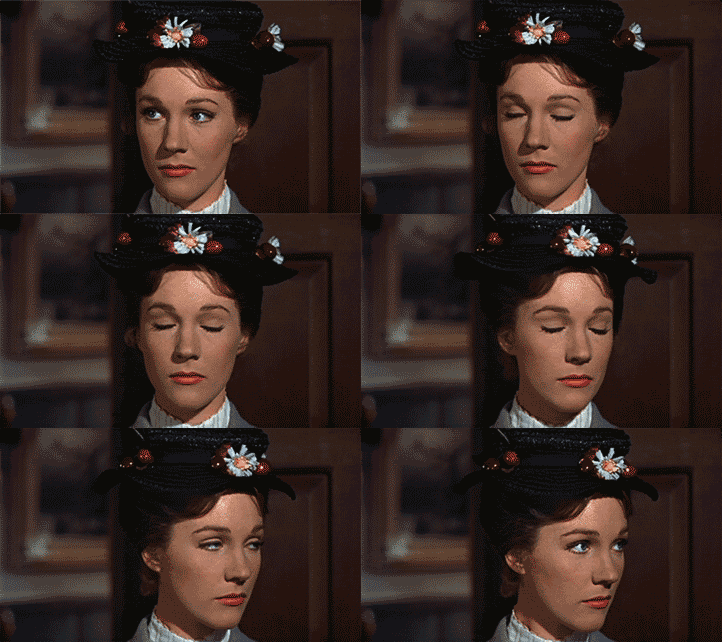
EyeRollMaryPoppins

People all across the country are terrified about what Peeple’s scorn for consent might mean for them and their families. Will I lose my job? Will I lose my children? Will I have to race into hiding, desperately seeking housing and a new job, because the man who swore to murder me will discover where I work? What if I can’t afford to move when I’m outed? Will my transgender college student, away from home for the first time, be bullied into suicide? Will my transgender daughter be killed on the street on her way to work? Will my stalker be able to trace where my children go to school if our location is posted?

And sure, there’s nothing stopping people from outing each other now– and they do– but Peeple is built specifically to aggregate and disclose information about individuals without their consent. Peeple’s sole function is to judge others without their consent, and deny them the right to opt out.

AND DENY THEM THE RIGHT TO OPT OUT.

Unlike other social media sites, Peeple enables others to create a profile for you without your consent, and denies you the right to delete comments on that profile, block harassers, or delete your profile entirely. Cordray and McCullough have decided that they, not you, are the appropriate judges of what constitutes your “confidential information,” as well as what constitutes “harassment.”

Peeple would be one-stop shopping for harassers and abusers, and that is terrifying millions of people while Cordray and McCullough brush off their concerns with casual cruelty.
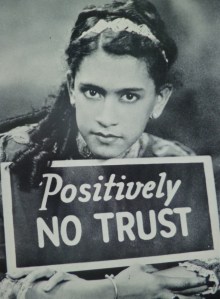
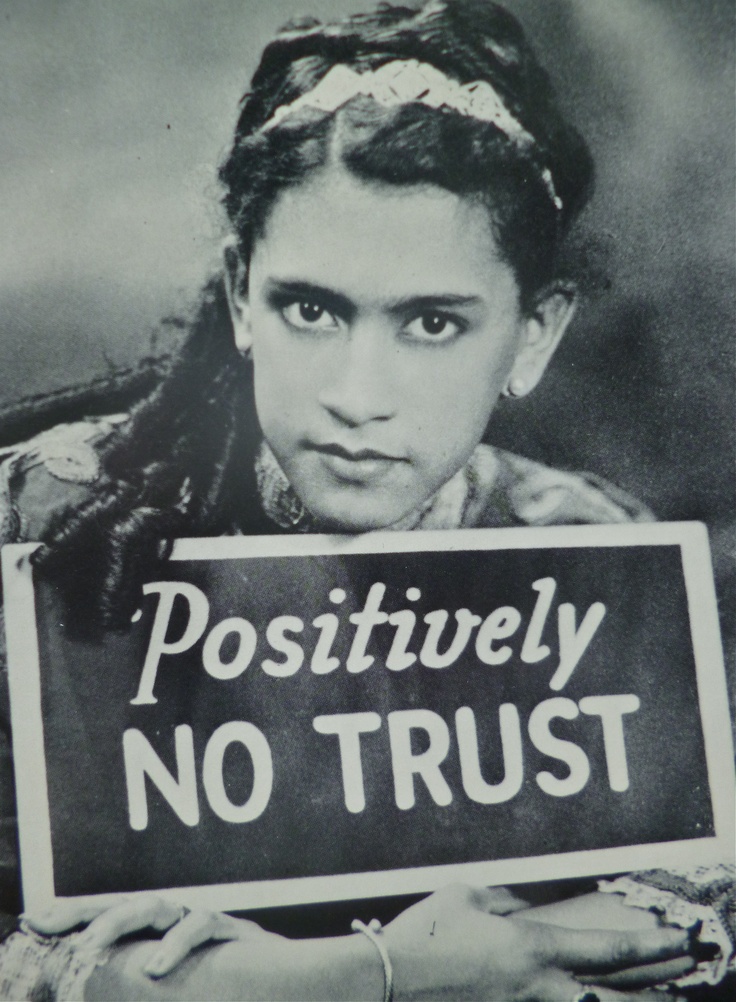
notrust

If Peeple launches, there will be attendant invasion of privacy lawsuits launching, one hopes, in time to shut it down before it can get anyone killed. But the damage it’s doing right now– the terror it’s spreading among vulnerable populations, real people whose lives are on the line– is unconscionable.

I can almost understand wanting to launch a real app, and just lacking the expertise and intelligence to understand that your app is the worst idea ever, and why, and how to address those issues before you destroy your brand, someone else’s brand, several thousand lives, and your professional reputations.

But I CANNOT understand people who would persist in a hoax after being told, repeatedly, that they are scaring the living shit out of millions of people whose lives they would be putting at risk.

A Note To Julia Cordray and Nicole McCullough

Julia Cordray and Nicole McCullough, if this is vaporware, a hoax, and/or a fake premise upon which to launch your web series, you are truly despicable. You have repeatedly demonstrated no concern whatsoever for the personal safety or emotional and psychological well-being of our nation’s most vulnerable people. You’re terrifying people because you desperately want to be rich and famous. Well, you got the famous part all right– I hope infamous is close enough. If your app is real, and if you have one decent cell in your body– either of you– you will make this app opt-in, or you will allow people to pre-emptively opt out and/or delete profiles created for them before they go live.

Finally

I think the best and/or most frustrating part about all of this is how upset Cordray’s been over the criticism, and how ludicrous she looks trying to silence it while denying that right to others. It’s been a banner couple of years centuries for clueless, self-serving, arrogant, basic white girls, (here you go; with my compliments; help yourself; just one more; treat yourself), but this takes the cake.


Tagged , , ,

Celebrating Thin White Women

Sometimes it seems like our whole entire culture is one huge celebration of thin white women. Ogling them, collecting them, advertising products to help other women become more like them, giving them all the awards for everything ever. It’s not just that the pinnacle of American womanhood is seen as thin and white (and cis, and able-bodied). It’s that thin white women are framed as “normal,” “neutral,” and every other woman is measured by her distance from that “norm.” “Black woman,” “transwoman,” “plus-size woman.”

Maybe this is changing, maybe not. Like you, I live on the internet, where one can find pictures of all types of women, from professional shots to vacation snaps, and plus-size (I know, I know, bear with me) women are everywhere. There are plus-size models (both professional and indie, some with huge followings), fashion bloggers (also with huge followings), sex bloggerssingers in various genres, photographers who specialize in gorgeous shots of plus-size people, and, of course, a handful of famous plus-size actors cast in film and television roles. The body positivity movement is extremely popular, and has a significant presence on every social media platform and the internet in general, where it promotes self-acceptance and stands against the shaming, bullying, and body policing with which women (and some men) are victimized every day, as well as the tsunami of relentless backlash the movement itself faces.

Model Tess Holliday (Source: Vogue Italia, vogue.it)

Model Tess Holliday (Source: Vogue Italia, vogue.it)

Nothing brings out the angry, outraged commenters faster than a picture of a woman who’s not rail-thin.

Humans LOVE bigotry. We LOVE grouping together in “us” vs. “them” to shame, disparage, and belittle “them,” shoring up our “us” identity and placating our own insecurities and self-doubts. This makes us feel like we’re part of something larger, something strong, something, above all, superior. This is an intense human impulse that is expressed in things as damaging as racism and as benign as choosing a sports team. When we claim membership to a group, along with that comes shaming, disparaging, and belittling people who are not in that group, either good-naturedly when we have no real power over “them” (“Dodgers suck”) or with devastating consequences when we do. Every single group that ever existed has a list of “known,” “true,” or even “scientifically proven” reasons that people outside their group deserve disparagement. Science has been used to confirm literally every racial bias the west has ever had.

Science only gets answers to the questions it asks. The cultural biases of researchers very often generate results that confirm those biases. Biases lead researchers to create studies or aggregate data in ways that are designed to produce results that confirm their biases. Science understands this and attempts to correct for it with things like double-blind studies and peer review, which are all, of course, still deeply influenced by the culture.

Don’t get me wrong– I’m very pro-science. But I’m also realistic. The well-known cultural trope of “overweight = unhealthy” is being problematized in study after study (after study), while other studies confirm it (as relentlessly reported in every corner of the media). Which studies are “true”? The ones that confirm your pre-existing biases, of course. The rest are “junk science.”

Marie Denee, founder and editor of The Curvy Fashionista-- curvyfashionista.com. (source: Glamour.com)

Marie Denee, founder and editor of The Curvy Fashionista– curvyfashionista.com. (source: Glamour.com)

There’s an enormous amount of conflicting information about what an “ideal” weight is (the ranges were ratcheted lower several times in the 20th century), how people become overweight, lose weight, or maintain weight loss, yet our culture “knows” that overweight people are that way through choice, laziness, gluttony, lack of self-control, or even a lack of moral fiber, thereby excusing and even lauding the bigotry against fat people.

When an image of a woman who is not rail-thin is publicly displayed in any context other than one specifically discussing her weight in a negative light, even if the context has nothing whatsoever to do with weight, people go out of their way to make disparaging comments. The comments fall into two main categories: insults/slurs, and some version of “I’m just concerned about [this total stranger’s] health”/”this promotes an unhealthy lifestyle.”

You can’t determine the health of an individual by looking at a picture. If you look at a picture of a fat person and think, “they’re unhealthy,” you’re engaged in an act of bigotry stemming from cultural bias, not making a medically sound diagnosis. And if you’re not posting similar comments on images of high heels, MMA and boxingbacon, or other well-known public health concerns, then you are a concern troll: someone who uses “concern” as a cover for shaming, belittling, and bullying.

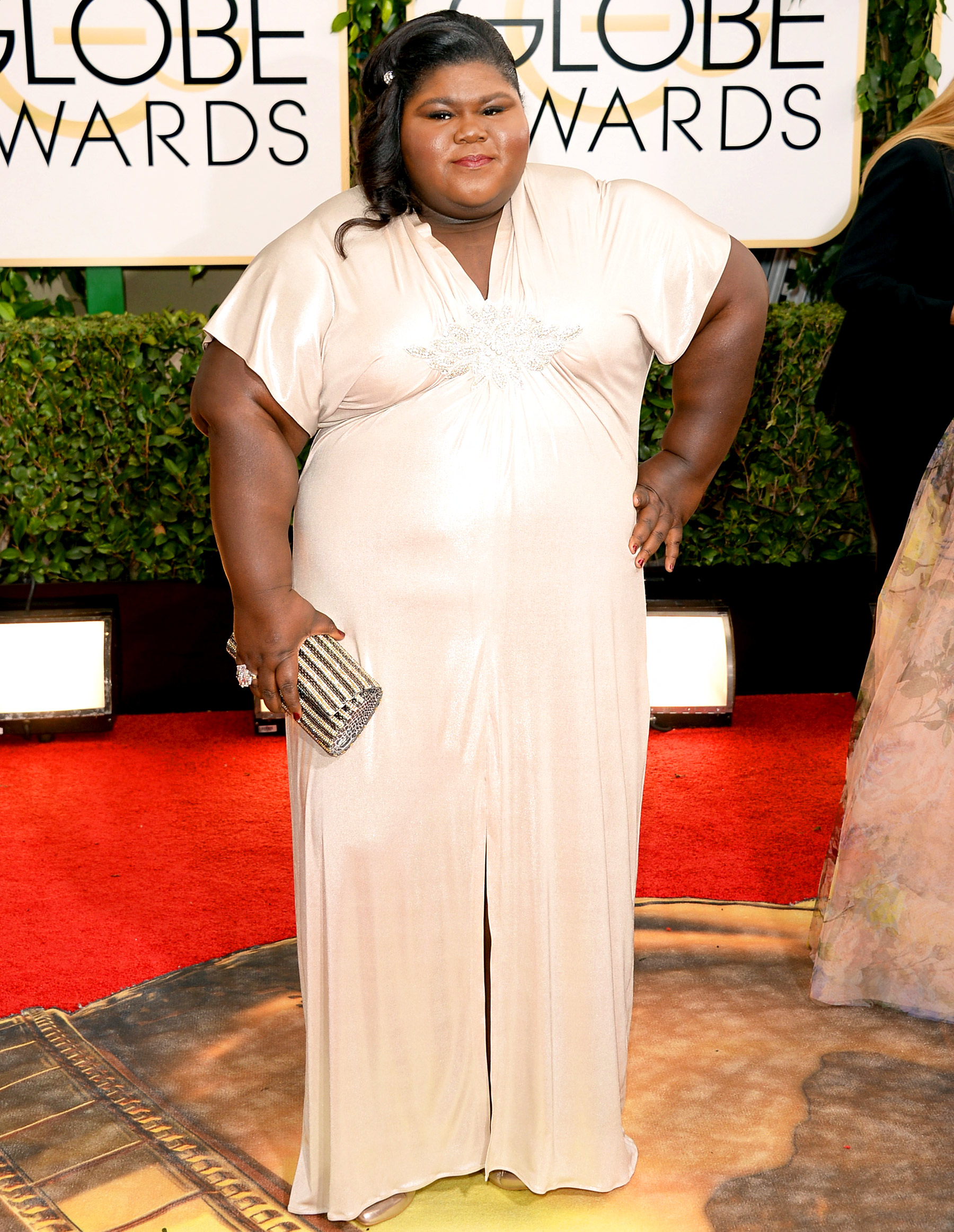
Actress Gabourey Sidibe at the Golden Globes in 2014. ( Jason Merritt/Getty Images)

Actress Gabourey Sidibe at the Golden Globes in 2014. ( Jason Merritt/Getty Images)

Someone cannot “promote” any kind of lifestyle simply by existing. Yet I’ve seen– we’ve all seen– “this is promoting an unhealthy lifestyle” comments on shampoo ads, fashion photography, celebrity profiles, and even photos of fat women working out.

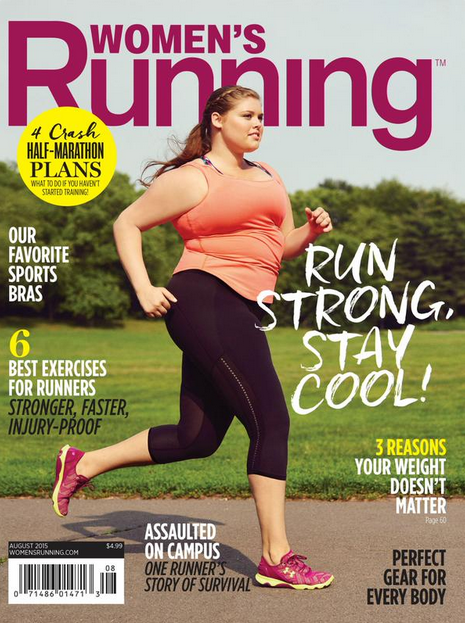
The August 2015 cover of Women's Running featured model and runner Erica Schenk, drawing both widespread praise and criticism. (James Farrell, WomensRunning.com)

The August 2015 cover of Women’s Running featured model and runner Erica Schenk, drawing both widespread praise and criticism. (James Farrell, WomensRunning.com)

And let’s pause for a moment and remember that this issue is intersectional, and that larger women of color are the targets of unfathomable bigotry and hostility. Most people don’t even bother to cover their bigotry with “concern” like they do for white women.

We’re in a cultural moment where people are pushing back against thin privilege, and are being met with culturally-approved, flat-out HATRED. As content creators in the entertainment industry, who impact culture more than any other single source, we need to work against this hatred.

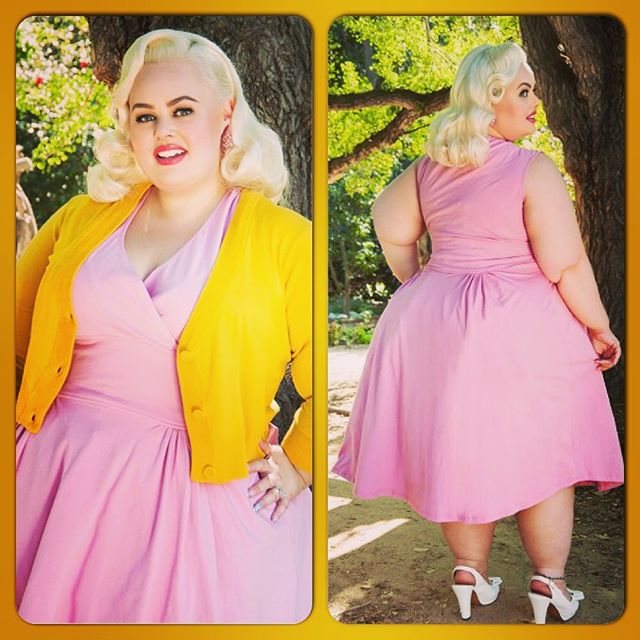
Indie model Sydney Sparkles, from her Instagram account, @aussieplussizebarbie

Indie model Sydney Sparkles, from her Instagram account, @aussieplussizebarbie

We stand up for gender parity, yet the only women our industry feels are worthy of inclusion are thin ones, or women like Robyn Lawley, whose “plus size” (at 6’2″) is 12. We need to stand up for the inclusion of ALL women, which includes stepping away from the constant, constant focus on women who only fit a certain body type unless the script explicitly calls for it. The adamant defense of thin privilege throughout our industries has got to stop, and the only way to get there is to make a conscious decision to stop it. This is our choice to make, and we must make it.

Robyn Lawley is considered a

Robyn Lawley is considered a “plus size model,” the first to be featured in Sports Illustrated. Photo: James Macari/si.com

We need to be realistic about the ways our current fight for gender parity often ignores intersectionality. Here in the Bay Area, there’s been some discussion about adding a marker to theatre listings that indicates which shows have gender parity (cast, crew, and playwright) so people can support them.  This ignores a raft of crucial issues. A show about four thin, white, wealthy women would be starred and therefore recommended and publicly congratulated, yet a show devised and performed by four young Black men speaking the truths about their lives would not.

Of course many (perhaps most) people fighting for gender parity are also fighting for greater racial diversity, but I’ve personally seen industry professionals say things like, “Gender is a more important issue than race, which is basically just a look.” I’ve seen multiple times: “We have to cast beautiful women because actors have to be desirable objects for the audience,” which begs the question: What is “beautiful?” Because I will bet the farm that means thin, white, able-bodied, and cis.

Yet WE CONTROL what “beautiful” is. We change the definition of beauty by creating cultural content. We’ve done it over and over and over, from Gibson Girls to Clara Bow to Marilyn Monroe to Farrah Fawcett to Scarlett Johansson. This is our choice to make.

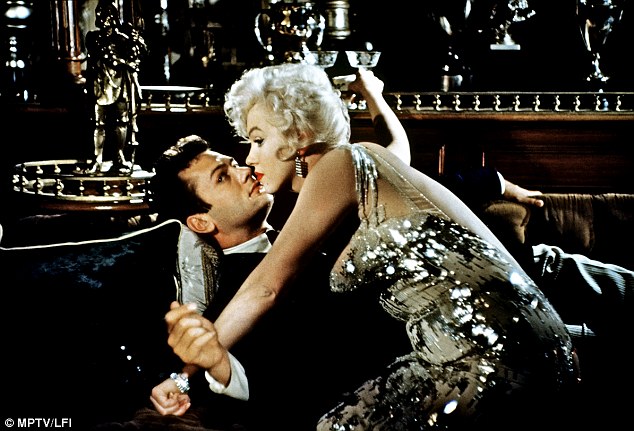
Tony Curtis and Marilyn Monroe in Some Like It Hot.

Tony Curtis and Marilyn Monroe in Some Like It Hot.

There’s no reason we can’t open our definition of “beautiful” to include more diversity– more intersectional diversity that better reflects the women in this country– the people who are buying most of the film and theatre tickets. But first we must open our definition of “woman” to include more intersectional diversity, and cast women who aren’t thin, white, cis, AND able-bodied, because right now, you need all four to be considered “right” for the role of “woman.” If you’re missing even just one of those, you’re only “right” for “Black woman,” “overweight woman,” or “disabled woman.” This is our responsibility to change.

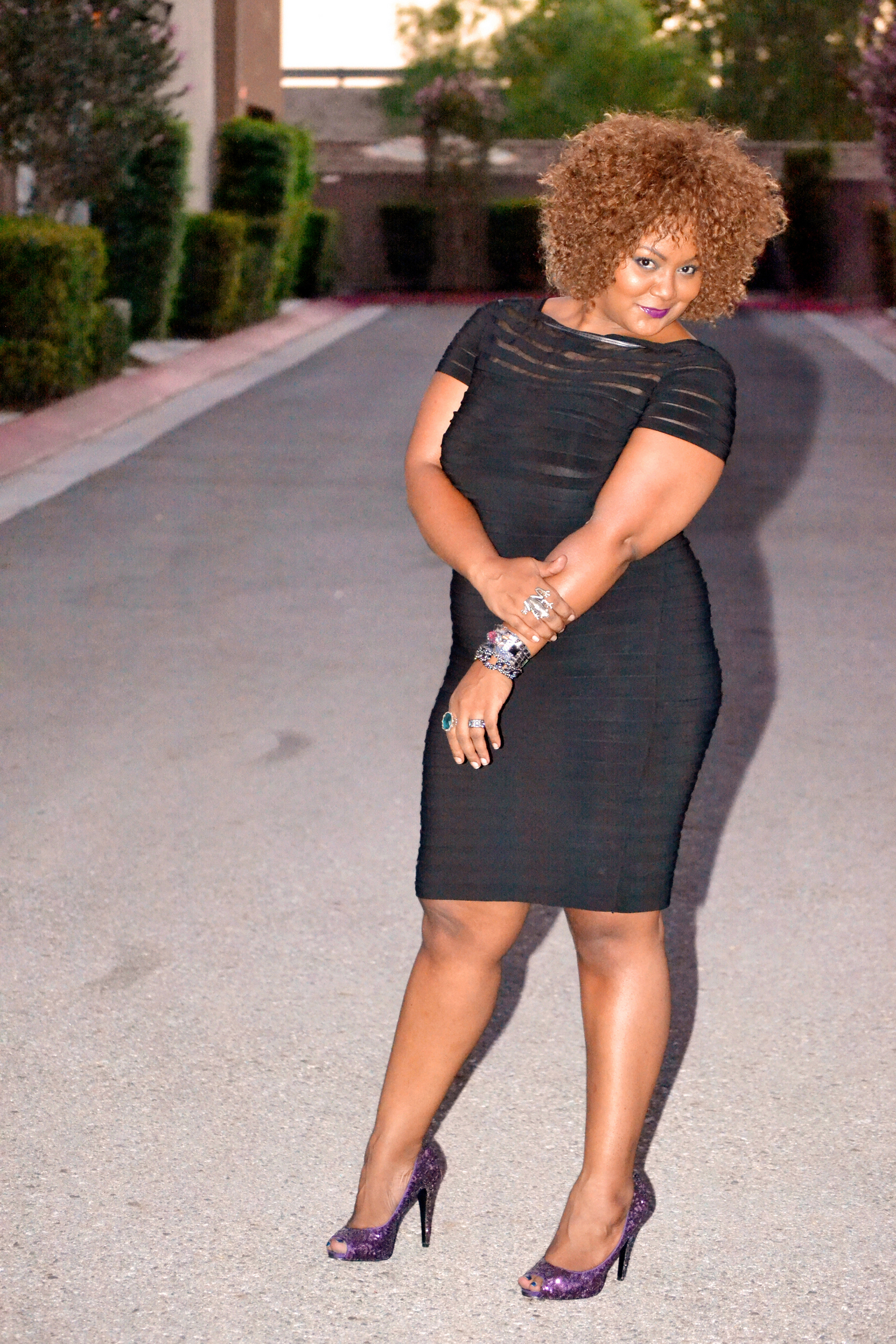
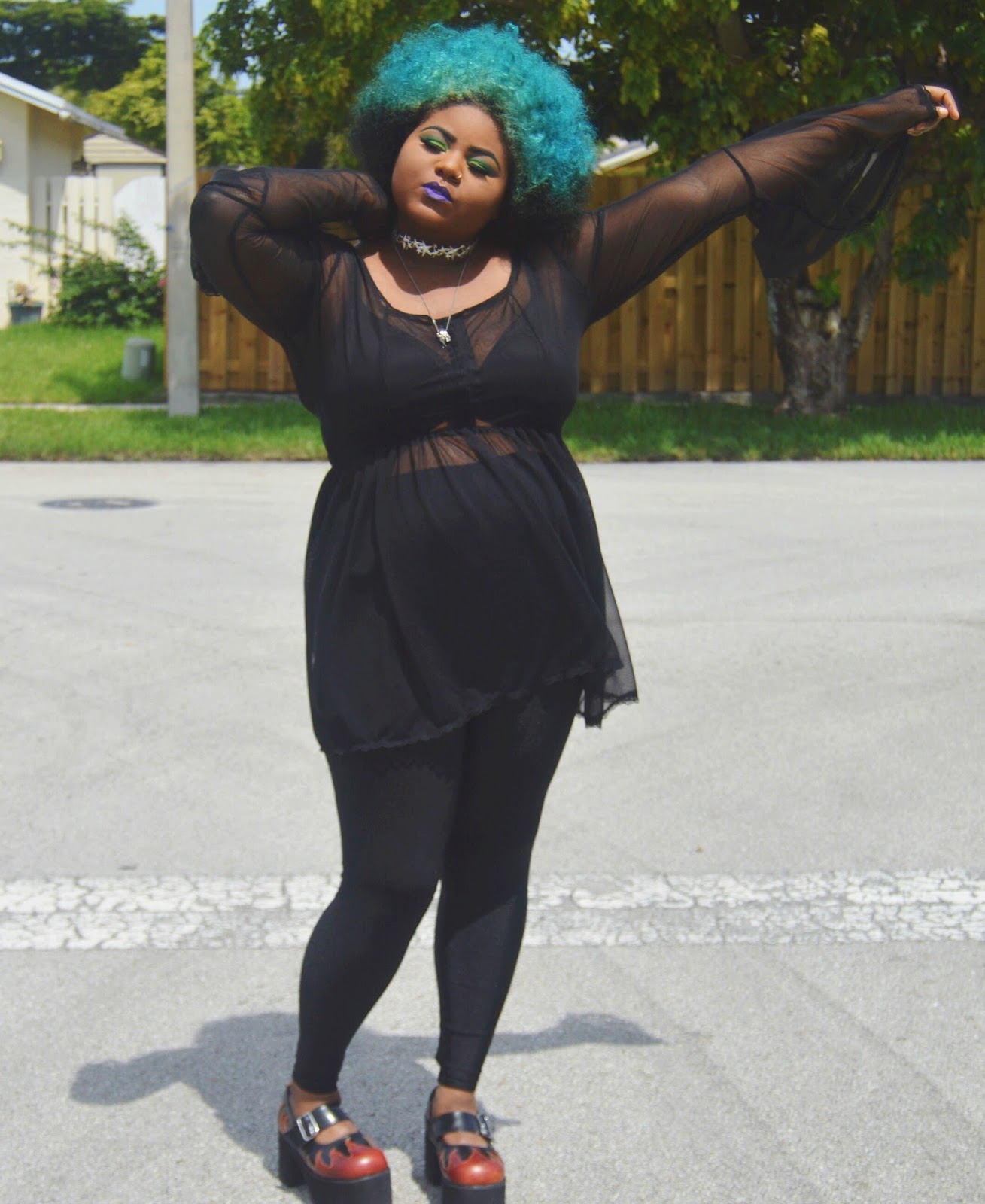
Fashion blogger Stacey from Hantise de L'oubli. Photo: hantisedeloubli.com

Fashion blogger Stacey from Hantise de L’oubli. One of my personal favorites. Her instagram is @hantisedeloubli. Photo: hantisedeloubli.com

If we’re going to push theatre and film companies for gender parity, let’s make sure we don’t enable yet another cultural space that celebrates thin, white, cis, able-bodied women and ignores (at best) everyone else.

Tagged , , , , ,

Time to Retire the Word “Offended”

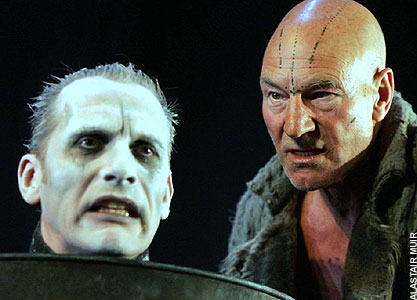
Julian Bleach as Ariel and Patrick Stewart as Prospero in The Tempest at the Novello Theatre in London, 2007. Photo by Alastair Muir. The Tempest has come under fire in certain circles for its implied criticisms of colonialism and racism.

Julian Bleach as Ariel and Patrick Stewart as Prospero in The Tempest at the Novello Theatre in London, 2007. Photo by Alastair Muir. The Tempest has come under fire in certain circles for its implied criticisms of colonialism and racism.

There’s almost constant talk online about what’s “offensive,” or who’s “offended,” and it’s high time we retired this word.

“Offend” means “to annoy, upset, or anger.”  Usually people use it to mean, “This has made me personally uncomfortable.” People use “offended” when they hear someone say “Jesus Timberlake Christ,” see part of a boob on TV, or find out their kids read The Tempest or Harry Potter. In other words, they’re complaining that something they’ve encountered opposes their personal tastes and beliefs. They are having a personal experience that they find upsetting. “Offended” does not extend beyond that– it’s entirely personal. It’s an emotional opinion that doesn’t differ in the slightest from any other emotional opinion, like, “Picard is the best captain,” or “I hate Nickelback.”

Sorry.

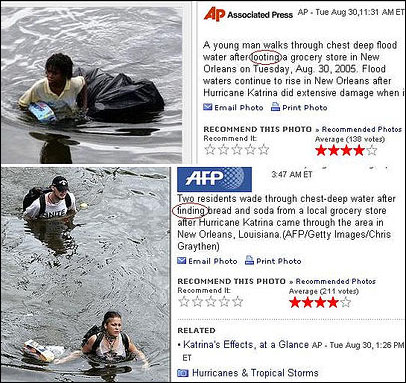
Where the term becomes insidious, however, is when it’s used to belittle the concerns of people fighting bigotry. When someone is objecting to bigotry in, for example, a news item, they are speaking out against injustice. A racist news article hurts real people. It contributes to the very real oppression people of color face every day. It perpetuates an aspect of our cultural mythology that literally kills people. And then someone in the thick of white fragility comes along and says, “I’m sorry you’re offended,” or “you get offended too easily,” or any number of variations. “I know this will offend some people but [racist comment supporting the article].”

racist_news

Black people “loot”; white people “find.”

Resisting bigotry is not the same as being “offended.” Resisting bigotry is to resist injustice against groups of people. It’s far bigger and more important than someone’s personal comfort level, and the people who use that word as a weapon against the fight for social justice understand that completely.

People who are resisting bigotry are often dismissed with the belittling idea that they’re “offended,” as if fighting cultural oppression and the tools with which it creates, disseminates, and preserves that oppression are equivalent to an imaginary schoolmarm shocked at finding the word “fuck” carved into a desk. No, we are not “offended.” We’re fighting bigotry, and it’s belittling to pretend it’s just about offending our personal, delicate sensibilities.

When someone points out an example of racism, misogyny, fat hatred, homophobia, transphobia, ableism, ageism, antisemitism, Islamophobia, or any other kind of bigotry, people with privilege often reduce that act– a call for equality that’s at its core a challenge to privilege– to a matter of someone being personally “offended.” People who are white, male, thin, straight, cis, able-bodied, young, and/or who have Christian heritage (not the same as being a practicing Christian, as you experience all the privilege of your group regardless) will sometimes seek to preserve that privilege by characterizing resistance to bigotry as nothing but “taking offense”– having an easily-dismissable, personal opinion based in emotion. We must call this out whenever we see it.

When we’re talking about a casting practice, a review, or a play, that’s bigoted and perpetuating dangerous, oppressive cultural mythologies that have real-world consequences, we must call out and resist that belittling when it happens, and refuse to be lumped into the same category as people who are upset because they heard the word “fuck.”

We need to watch our own usage of this word as well. Do we really think the most important aspect of a racist play is that the racism is “offensive”– that someone would be upset by it? Shouldn’t we be calling attention to the larger fight– that perpetuating racism in our cultural mythology is dangerous and literally killing people of color? Do we really think the most important aspect of a misogynistic article is that it’s “offensive”– that someone would be upset by it? Continue to extrapolate this– Is the most important aspect of the preponderance of transphobia in our cultural mythology just “offensive”– upsetting individuals? Do we really believe the most important aspect of fat hatred, homophobia, ableism, etc, etc in our cultural mythology is their ability to upset people? Then why are we using that language? Why are we using the language of personal discomfort to describe our resistance to artifacts of our cultural mythology that oppress and even kill people? Why are we using language that makes us easy to dismiss– language people use specifically to belittle resistance?

I don’t mean to imply that people don’t experience personal discomfort with bigotry. But let’s not make the mistake of confusing personal discomfort with the way bigotry makes its targets feel unsafe; or, rather, be reminded of their existing lack of safety in our culture. That’s part and parcel of cultural oppression. When you (for example) target people of color with racial slurs, or otherwise use dehumanizing language about them, you’re not “offending” them– you’re terrorizing them. You’re invoking a cultural mythology that has real, material power at its back. You’re flexing a muscle that you know can harm or even kill. A person of color objecting to a racial slur is a human being resisting real, ongoing, culturally enforced oppression. That’s not personal discomfort caused by offense; it’s a visceral reaction to living through the kind of violence and oppression that lends bigoted speech and cultural artifacts their power. This is why jokes about people in power (“punching up”) are funny, but jokes about oppressed people (“punching down”) are furthering that oppression. You’re not “offending” people of color, women, trans* people, disabled people, fat people, or Muslims. You’re reminding them that our culture dehumanizes them, sees them as lacking worth, and continually devalues and violates their bodies, rights, and property. You’re reminding them that you belong to a group with power over them.

When you see someone using the word “offend” to belittle resistance against bigotry, call it out. Recognize what they’re doing and call it out. Don’t let them equate fighting for justice with primetime side boob ever again.

Tagged , ,

I Wrote a Thing for TCG

The wonderful Edgardo de la Cruz, my undergrad directing teacher/cult leader

The wonderful Edgardo de la Cruz, my undergrad directing teacher/cult leader

I was asked by the wonderful Jacqueline E. Lawton to participate in the latest TCG blog salon, “Artistic Leadership: How Do We Change the Game?” She sent me a series of questions wickedly difficult to answer:

What was the most game-changing production you’ve seen or created, and why?

Who was the most game-changing theatre leader/artist you’ve met, and what do you carry forward from their example?

What is the most significant opportunity—or challenge—facing the theatre field, and how can we address it together?

My answers reference the late Edgardo de la Cruz, African American Shakespeare Company, Lauren Gunderson, Howard Sherman, Annoyance Theatre, and Lawton herself, along with issues of representation, money, and empathy.

Please check it out! You can find it here.

Tagged , , , , , , , , , ,

Adam Sandler, Charlie Hebdo, and “Freedom of Expression”

America has been exploding with issues surrounding the concept of “freedom of expression.” Like many freedoms, “freedom of expression” sounds great in the abstract. In the abstract, pretty much everyone outside of political and religious extremists are for “freedom of expression,” and the very fact that political and religious extremists are most decidedly not in favor of freedom of expression makes a certain kind of person even MORE in favor of it.

In the concrete, the issue of “freedom of expression,” like everything else in the world, is much more complex and nuanced, and if there’s one thing political and religious extremists– and the people who love to piss off political and religious extremists– hate, it’s complexity and nuance.

loren-anthony-adam-sandler-640x400

Adam Sandler on the set of The Ridiculous Six. Photo courtesy of actor Loren Anthony’s Instagram, which you can follow at @lorenanthony


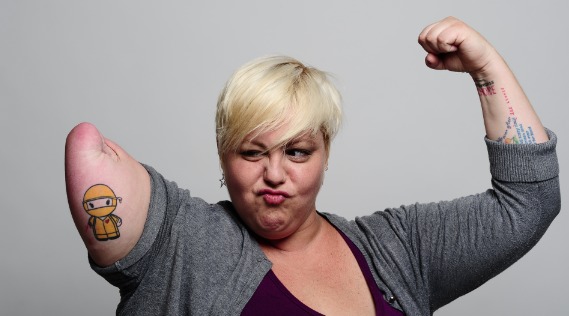
When Native American actors walked off the set in protest over the racism in Adam Sandler’s latest film, the ensuing controversy was unsurprising. The internet exploded with the coverage, and the backlash was instantaneous and fierce. Those who supported the actors were accused of suppressing freedom of expression, and misunderstanding the boundary-crossing nature of comedy. When PEN announced that Charlie Hebdo would be receiving its Toni and James C Goodale Freedom of Expression Courage Award, the ensuing controversy was also unsurprising. When 145 PEN members formally protested (that number has now grown to over 200), they were met with another predictable backlash that included a wealth of BUT FREEDOM OF EXPRESSION scolding. A lesser-known, but equally important, controversy happened earlier this year when stand-up comic Ari Shaffir viciously attacked fellow, lesser-known stand-up Damienne Merlina both for her disability (Merlina lost an arm in a car accident) and her weight, in his Comedy Central special. When Merlina posted a YouTube video calling Shaffir out for the attack, she was met with a barrage of criticism– and even mockery– for daring to speak out against her own attacker. A major part of the backlash Merlina received was centered around the fact that comedy was meant to cross boundaries, and that those attacked should understand that, shut up, and take it.

Damienne Merlina, photographed by Jeff Forney.

Damienne Merlina, photographed by Jeff Forney.

“Freedom of expression” is an emotional issue. It’s difficult to have productive conversations about its complexities. People have knee-jerk emotional reactions around protecting it in the abstract that prevent them from considering its complexities in the concrete. But it’s well worth the effort to at least try.

You may have heard the expression “punching up” and/or “punching down.” It’s fairly easy to understand. “Punching up” means comedy that makes fun of people or groups in power. This is the kind of humor most often used throughout history by progressive political and social movements. Imagine a cartoon making fun of a political figure, or Christianity’s active oppression of LGBT rights. “Punching down” means comedy that makes fun of people or groups who are marginalized, oppressed, and targeted by bigotry. Imagine a film mocking Native Americans. Imagine a cartoon mocking the girls kidnapped by Boko Haram just to make an unrelated political point. Imagine a comedian with a national spotlight attacking a young woman by name– a woman who wasn’t even there and had nothing to do with the event– for her disability and weight.

Comedy that “punches up” has long been a tool for political and social change. Punching holes in the cultural and political power of dominant groups is what people do when they want to call that power and dominance into question, when they want the culture to begin considering how that power and dominance is wielded, and whether such consolidation of power and dominance is, actually, a good idea. “Punching up” requires extreme bravery. “Punching up” is more than speaking truth to power– it’s speaking truth to power while telling power its fly is open. Punching up is dangerous because it challenges power, and power retaliates brutally. Thousands of people have been jailed and executed for punching up. There are people sitting in jail right this moment in many areas of the world for punching up, and they will not be the last.

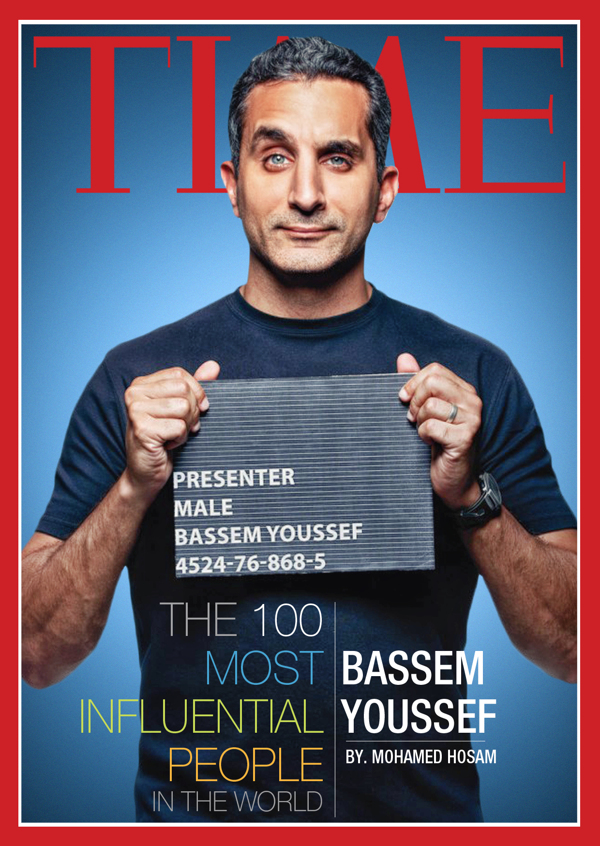
Bassem Yussef, an Egyptian satirist often compared to Jon Stewart, was arrested in March, 2013 for allegedly insulting President Mohammed Morsi and Islam. He was released on bail. In April 2013, he was named one of Time's 100 most influential people.

Bassem Yussef, an Egyptian satirist often compared to Jon Stewart, was arrested in March, 2013 for allegedly insulting President Mohammed Morsi and Islam. He was released on bail. In April 2013, he was named one of Time’s 100 most influential people.

Comedy that “punches down” has long been a tool for political and social oppression. Mocking groups that suffer bigotry and oppression is what people do when they want to solidify that bigotry and oppression, when they want to solidify their own cultural and political power and dominance over that marginalized group. Punching down requires no bravery whatsoever, because it’s done from a place of cultural primacy. Occasionally extremist members of a marginalized group will retaliate in reprehensible ways. Murder is never an acceptable response to comedy, period. But that kind of retaliation is rare. No one in their right mind believes that murdering people who work at Charlie Hebdo is an acceptable response to the content they publish, no matter what it may be. But no one in their right mind believes– or should believe– that Charlie Hebdo’s mockery of Islam in a nation where Muslims are common targets of bigotry puts it in the same position as a North Korean drawing cartoons mocking Kim Jung Un.

Many people are quick to point out that Adam Sandler, Charlie Hebdo, and Ari Shaffir punch both up and down. Charlie Hebdo, apologists are quick to point out, mocks Christianity as often as it mocks Judaism or Islam, and mocks right-wing politics even more. But that argument is the height of intellectual laziness. Punching up does not inoculate you from the effects of punching down. Mocking the powerful is one thing; mocking people who are daily victims of bigotry is entirely another. Despite France’s humanist bent, Christianity still holds enormous cultural power there, while Jews and Muslims suffer routine bigotry and discrimination. (Attacks against Muslims since the Charlie Hebdo attacks have focused primarily on women.) Despite Adam Sandler’s willingness to mock himself and other people in power, Native Americans suffer routine, institutionalized, daily bigotry in America. Despite Comedy Central’s willingness to air comedy that mocks people in power, the disabled suffer enormous daily bigotry in our culture. Punching up is a completely different activity– culturally, politically, and morally– than punching down.

Graves desecrated by vandals with Nazi swastikas and anti-semitic slogans in the Jewish cemetery of Brumath close to Strasbourg, October 31, 2004. Jewish cemeteries have been, and continue to be, targeted as antisemitism rises in France. (photo: Reuters)

Graves desecrated by vandals with Nazi swastikas and anti-semitic slogans in the Jewish cemetery of Brumath close to Strasbourg, October 31, 2004. Jewish cemeteries have been, and continue to be, targeted as antisemitism rises in France. (photo: Reuters)


Muslim cemeteries are similarly vandalized. Notre Dame de Lorette cemetery near Arras, northern France, April 7, 2008.  Photo: Reuters/Sadouki

Muslim cemeteries are similarly vandalized. Although anti-Muslim attacks have skyrocketed in France since the Charlie Hebdo shooting, anti-Muslim bigotry and attacks were well underway beforehand. Notre Dame de Lorette cemetery near Arras, northern France, was vandalized in April, 2008. (Photo: Reuters/Sadouki)

And yet, because power rewards power, PEN granted an award for courage to Charlie Hebdo. Because power rewards power, Netflix continues to give Adam Sandler millions of dollars to make his crappy movie. Because power rewards power, entertainment corporations continue to shower Ari Shaffir with money. And so it goes.

I believe in freedom of expression, both in the abstract and in the concrete. I don’t think we should be censoring bigotry. I am adamantly opposed to censorship. But I also think– because this issue is complex– that we need to be thinking hard about the difference between tolerating the expression of bigotry and rewarding it.

We need to stop pretending that speaking out against the expression of bigotry is “anti-freedom of expression,” when in fact it is the exact opposite– it’s exercising one’s own freedom of expression. Being told your opinion is nonsense is not the same as being denied the right to express your opinion. Being told that your employer is not interested in paying you for expressions of bigotry is not the same as being denied the right to express bigotry at all. And speaking out against giving an award for courage to a magazine that routinely mocks marginalized groups is not equivalent to speaking out against that magazine’s right to print whatever the hell it wants. Supporting your right to freedom of expression need not include rewarding you for that expression, nor need it include freedom from criticism.

I think Adam Sandler, Charlie Hebdo, Ari Shaffir, and anyone else should be allowed to punch down as often and as viciously as they like. And I think those with the power to dole out awards– whether literal awards or financial awards– should stop and think for a moment about whether they actually wish to reward punching down.

We spend millions of dollars on anti-bullying campaigns, initiatives, and education in schools. We’re fooling ourselves that kids can’t see through the hypocrisy of adults telling them bullying is always wrong and then turning right around and rewarding bullying done by adults. What’s the difference between a playground bully mocking a Muslim kid, a disabled kid, an overweight kid, or a Native American kid, and what Adam Sandler, Charlie Hebdo, and Ari Shaffir have done? If the bully says, “But I make fun of everyone,” does that excuse the rest of his bullying? Of course not. So why is that used to excuse adult behavior?

An anti-bullying poster from National Voices for Equality, Education, and Enlightenment. Learn more about them and their anti-bullying initiatives, at nveee.org.

An anti-bullying poster from National Voices for Equality, Education, and Enlightenment. Learn more about them and their anti-bullying initiatives at nveee.org.

And before you even bother posting comments defending any or all of the three I’ve discussed, the principle remains whether I’m right in my analysis of those particular three or not. We punch down in this culture all the time. We reward that kind of bullying with accolades, money, and power. We defend it with “it’s just a joke,” “you’re too sensitive,” and a barrage of like nonsense from privilege stomping its feet and throwing tantrums because their bigoted fun is being spoiled with our dissent. “It’s just a joke” is perhaps the most intellectually lazy argument of them all, as if the presence of humor evacuates its long history of keeping marginalized people “in their place.”

And while I will be the first one to defend your right to punch down– your right to freedom of expression– I’m appalled at the fact that we reward that behavior. It’s long past the time we stopped confusing tolerance with appreciation and reward.

Tagged , , , ,