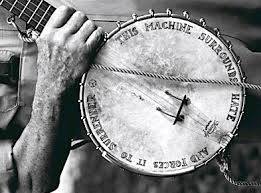
Pete Seeger’s banjo
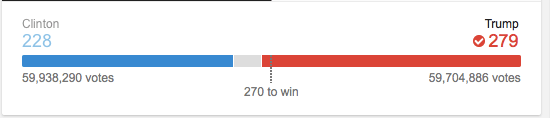
There is no more powerful tool for changing ideas, shifting cultural zeitgeist, and resisting authoritarianism than art. While theatre is not the biggest bat artists wield, our impact on the culture is not nil, especially if you include community theatre and school plays, and we must. Resistance to the Trump regime is the most crucial political battle of our lifetimes because this regime– and the zeitgesit behind it– stands to undo progress in every area of our society. Trump, Pence, McConnell, Ryan et al are actively seeking to impoverish you to enrich themselves, roll back every civil rights and workers’ rights gain of the past 100 years, eliminate every consumer protection, eliminate the social safety net, and pretend you begged them to do it. It’s telling that the very first appointee of the incoming administration was an amoral white nationalist, and the very first act of the new Congress was an attempt to eliminate their own ethical oversight.
One of the most dangerous aspects of this regime for us as artists is its leader’s relentless attacks on free speech. He has always attacked the freedom of expression to the fullest extent of his ability as a private citizen, and has publicly stated his desire to use the power of the office of POTUS to continue to do so.
Trump takes power in just a few days, and we must be ready. The theatre community must form a resistance to this regime and to the cultural zeitgeist that supports it. We have a very specific, very powerful tool, and we must use it effectively.
1. All artificial divisions between theatres need to be dropped. A commercial Broadway offering is no more important to this fight than a community theatre production. Every show, every company, every artist is important. Denigrating shows for being “commercial” or “community theatre” serves no one in the resistance. Brushing off a show because it’s a “college production” or a “kids’ show” demonstrates a complete lack of understanding about what we’re trying to do here. We’re prepping for a long game. This is not just a resistance to one regime; it’s a resistance to the ideas that put that regime in place. From now on, when we say “theatre,” we are consciously including everything from the smallest storefront indie show to Hamilton, from street theatre to Ashland, from the elementary school play to Roundabout. Everywhere our art is practiced is an opportunity for effective resistance.
2. Define for yourself what the goals of your resistance will be. You will not be able to resist everything all the time, and you will burn out quickly if you try. Define for yourself the specific resistance goals you wish to focus on, and understand that those goals can shift from show to show, decision to decision. Here’s a partial list: fighting racism and white nationalism, fighting sexism and misogyny, fighting bigotry against religious minorities (such as antisemitism and Islamophobia), fighting homophobia and transphobia, fighting ableism, protecting and expanding health care, protecting free speech and freedom of the press, protecting consumer protections, protecting public education, protecting workers’ rights, fighting against “post-truth” and misinformation, fighting for action to slow climate change, fighting for voters’ rights and election integrity. Are you a 501c3? You already exist to act in the public interest. Nothing about your mission needs to change in order to incorporate these goals, and “acting in the public interest” over the next four years can only mean doing whatever is in our power to resist this regime and its dangerous goals.
3. All theatre is political theatre and all art is activist art, whether you consciously know what message you’re sending or not. We must consciously consider what messages we’re sending with our art and make decisions that specifically work to further resistance goals. That doesn’t necessarily mean staging overtly political shows. It means you have a critical obligation to assess what you’re saying with the content of your work. It means, “Oh, it’s just a fun comedy” doesn’t cut it any longer, especially considering comedy is one of the most powerful tools any resistance ever has. Examine the content of the work you’re considering. What is it saying? Does it speak honestly to your audience (and to your staff) about our nation? Who we are, who we want to be, who we fear becoming? Does it work to further our goals in any way? Can it be staged to do so? Remember that some of the most effective art is subversive art. The resistance goals you’re meeting with your show need not be overtly political. Creating empathy for transgender people, immigrants, or Muslims in a small, personal show with no overtly political content would be powerful support for resistance goals, for example. You know best how to speak to your audience. Just be conscious of what you’re saying to them.
Artistic directors, the best tool at your disposal is your diverse staff. When they read the plays under consideration for your season, ask them to look at messaging and/or political and social content in addition to the usual things you ask them to look at. If you are white, believe people of color on your staff when they tell you a script is racially problematic. If you are male, believe the women on your staff when they tell you a script is misogynistic. If you are able-bodied, straight, or cis, believe the disabled, queer, or transgender people on your staff when they tell you a script is ableist, homophobic, or transphobic. Actively seek out the opinions of others and believe them. What’s at stake is too important to allow for fragile egos. When a script you love by a playwright you love is, for example, considered misogynistic by the women on your staff, set it aside. You can love the script at home. We have far more excellent scripts than we have slots within which to produce them. Believe your staff.
4. Ensure that your process supports resistance goals. This means hiring a diverse staff and treating them as well as you possibly can. We are long past the point when we can continue to discuss gender parity and diversity and still hire white men for each and every position of power. White men are 31% of the US population. Do they hold 31% of the leadership positions in your organization? They sure as hell make up more than 31% of the AD positions and director positions in the US. How many transgender or genderqueer people do you have on staff? How many disabled people? When you’re hiring, consider diversity a specific desirable characteristic. Living as, for example, a Black woman or a disabled transwoman in the US creates a certain skillset in a person that will enrich your organization in multiple ways, not the least of which is identifying and understanding politically and socially problematic content in plays you’re considering that you will otherwise miss if you do not have that same lived experience. Treat your people as well as you possibly can. I realize that your cash-strapped organization cannot always pay people what you would like to pay them. I realize funding is a massive, industry-wide problem. All I ask is that you ask yourself at every juncture, in every decision, if you are acting in accordance with your goals to the best of your ability.
5. We must set aside making compromises for financial gain. Yes, we must keep our doors open, but we do not need to pull back from our values to do that. More often than not, decisions that are presented as compromises for financial gain do not actually work to increase income; they’re decisions made out of fear of risk where no real risk exists. It’s not financially risky to do a play by a woman or cast people of color. We have a mountain of stats to prove this. There is always a way to act in accordance with your goals. Do not allow the fears of others to push you into poor decisions. Push back. We must prioritize resistance goals over financial ones, which leads me to:
6. We must re-evaluate our funding system top to bottom. Funders, you must work closer to the 501c3 ideal we all say we support. This means going back to the creation of the 501c3 as a way to fund theatres that releases them from needing to rely on ticket sales. The ultimate goal is radical hospitality– free tickets for all who need them– but of course implementing that industry-wide is a long way off. For now, we must step away from consolidating funding at the very top and work to distribute funds in a way that furthers resistance goals. We must keep our flagship theatres open, but we do not need to continue shutting out smaller theatres. Nowhere is this more vital than in initiatives to reach audiences of color. We fund large white theatres when they do an “ethnic” show to reach “under-served” audiences, while we routinely starve theatres– especially smaller theatres– run by people of color that have been serving those supposedly “under-served” communities for decades.
What does this mean in practice? It means living up to our liberal values and initiating a small redistribution of wealth by peeling a small amount of the funding currently going to the top 1% of theatres and using it to fund smaller companies who are able to reach audiences larger companies cannot. It won’t take much. A $20K grant is chump change to a $20 million dollar a year theatre, but it’s lifesaving to a small theatre. We must also re-evaluate the bizarre funding culture that funds projects instead of companies. When we do fund projects, we must look to fund more joint projects between smaller theatres and larger theatres. When you want to fund flagship theatres’ initiatives to do outreach to an “under-served” audience, make that a grant for joint projects between flagship theatres and smaller companies already reaching that target audience. Funders, you are the life-blood of our resistance. You must make your funding more effective for the health of the community as a whole. There are things smaller theatres can do that larger theatres cannot, and vice versa. Every tool at our disposal needs to be supported.
7. Think about what you can do in addition to– or in tandem with– the actual shows that furthers your resistance goals. We’re all strapped for time, money, and energy, but many of the things you can do are fairly low maintenance, and some of them you’re likely already doing. Can you hold a Q&A for audiences after the show that focuses on issues raised within the show? Can you host a panel discussion with local theatremakers about diversity in casting, about an issue discussed in your show, about gender representation? Can you allocate a certain number of tickets for radical hospitality– free tickets for teachers, for members of the local community, for students? Many companies are already doing free student matinees, a radical act that changes lives. Can you provide free workshops for actors, playwrights, designers, admins? Or, if you have a space, can you provide free space to a local theatremaker already giving workshops, enabling that workshop to offer a certain number of scholarship spaces? Can you create a staged reading series for local playwrights of color, LGBTQ playwrights, women playwrights, disabled playwrights, giving them opportunities to develop their voices? These are just a few ideas– there are limitless things you can do.
Remember, though, that self-care is crucial. Don’t take on more than you can handle. There’s no way you can do everything. Delegate– which also provides opportunities for others. We all must get our shows up, and the work we do is grueling. Do what additional things you can, and don’t waste time beating yourself up for not doing more. This is a long game. Protect yourself from burnout. Sometimes you won’t be able to do anything extra, and that’s fine– and that concept should be supported by funders as well. The work on our stages is paramount. We make theatre. That must come first. The art creates the empathy. The extras around the art are excellent and useful, but not critical. Do what you can, but prioritize the art.
8. A lot of these action items are directed at theatre companies, but individual theatremakers are just as important. Use whatever power you have, and never stop using it. When I cast, I call in a diverse group of actors for every role unless the role calls for an actor of a specific race or ethnicity. When I work with actors on audition monologues, I make sure the monologue choices I give them are by a diverse group of writers. When I teach, I make sure my reading lists are diverse. As theatre makers, we are one of the primary audiences for theatre. See shows that are working to further resistance goals. Donate to companies that are working to further resistance goals. Even signal boosting a show on social media is a concrete action you can take that genuinely helps– buzz sells more tickets than anything else. Actors, did your show just lose an actor? Suggest an actor who is a female, of color, transgender, genderqueer, disabled. Directors, are you giving acting workshops? Can you create one scholarship spot for an actor of color, disabled actor, transgender actor, or genderqueer actor? Playwrights, when you have readings, be sure to invite people whose lived experience and intersectional identities differ from yours. Ask for their perspective and listen to them. This is just a tiny taste of what’s possible. You know far better than I do how you can use your power.
9. Listen. Listen. Listen. The artistic director of Theater MadCap here in the Bay Area, Eric Reid, often uses this hashtag: #thelisteningmovement. He’s created a facebook group (linked above) that’s “a place to speak/share/post your personal truths.” He also uses #thelisteningmovement on articles he posts as well as statuses he writes or shares. It’s something that makes me pause every time I see it– I pause and pay closer attention. Partially because I know Eric and know him to be brilliant, so the things he posts are worth my attention, and partially because of the very power of the idea: The Listening Movement. We must commit to listening– truly listening– to each other.
One of the most crucial aspects of resistance for those of us with privilege– and we all have some aspects of privilege in our intersectional identities– is listening. Listening and believing. Listening without challenge, without defensiveness, without fear. Just listening, believing, and learning. It’s not easy to do, to be honest. It takes mindful effort. But it is crucial.
It’s easy to think you understand a situation because you thoroughly understand those aspects of it that you recognize. Privilege, however, blinds you to other experiences. Privilege often means that you aren’t even aware of how much you don’t know. The only cure for this is listening. Listen to your staff. Listen to your friends. Listen to people when they share their lived experience. Listen and believe.
Theatre creates empathy. We know this. Yet we still have trouble listening empathetically to others. This is hard. But it is worth doing. It’s what we ask our audiences to do every day.
10. Your resistance as an individual citizen is also important. This piece is specifically about how we can resist as a community, but your work as an individual is powerful as well.
Read Indivisible: A Practical Guide for Resisting the Trump Agenda. It’s free to read online.
Do what you can, and don’t let anyone make you feel bad for your efforts. Foolish people will condemn social media posts as “meaningless,” but they are deeply incorrect. If a post on social media is meaningless, so is a news article, so is a blog post, so is any form of human communication. Just ensure that the articles you post are accurate to the best of your ability. The list of fake news sites compiled by Professor Melissa Zimdars of Merrimack College remains the best resource available to check the accuracy of your source. Contact your Senators and Representative to encourage them to vote in favor of your goals, or to praise them for having done so. The phone numbers for their local offices are easily found online. Call the offices in your area– not the one in Washington DC– for maximum effectiveness. Save the numbers in your phone so you can call quickly and easily. (Find your Representative here. Find your Senators here.) Donate to theatres and to other causes that further resistance goals. After the election, my family looked for an LGBTQ center in a deeply red state and began donating to them in addition to the causes we have in our regular rotation. We don’t have much money, but we do what we can. Every little bit helps.
These ten points are just the beginning. You know your audience, you know your company, you know your heart. There are surely many things I have left out, and I encourage you to comment with your ideas.
The most important takeaway is that you are not powerless. On the contrary: as artists we have immense power. And with great power, comes great responsibility. (You knew a nerd like me would not be able to resist that one.)
We’re at the beginning of a long, difficult struggle, but, as artists, our voices are critical. Art shapes culture. Art creates empathy. Art has the power to create the kinds of massive cultural shifts that change societies. We can do this. All we need to do is approach our art consciously.
Welcome to the resistance.











 Bitter Gertrude