Tag Archives: actors

Why Forced “Audience Participation” Doesn’t Work

(UPDATE: I tweaked the title a bit due to the number of people confusing me with the recent Chicago Trib article. If you’re here to read something against all forms of audience participation indiscriminately, you’re in the wrong place.)

There’s been a lot of talk in the past few years about “audience engagement.” It’s partially been driven by a few big grantors requiring some form of it, and partially driven by the psychology of trends. Because every new entertainment technology sends people right to the THIS IS THE END OF THEATRE box, frightened by the popularity of the internet and its DIY culture, some grantors and theatremakers have been scrambling to create theatre that borrows some of that mojo in order to glean a portion of that success. The problem is: It doesn’t work.

OK, that’s an exaggeration. It CAN work. For starters, “audience engagement” need not mean “audience participation.” That’s just the most prevalent (and problematic) form. There are other ways to engage your audience. Shotgun Players in Berkeley, for example, has created several excellent theatre pieces based on interviews with members of the local community, telling their stories and telling the story and history of the area. The most recent was Daylighting, for which they set up a recording booth in the lobby for people to tell their own Berkeley stories after the show, which were posted on their website. That’s what I’d call excellent, effective audience engagement that should stand as a national example for how to get it done. Interrupting an otherwise traditionally-structured performance to haul audience members onstage or force actors to put individual audience members on the spot by making them perform actions or engaging them in conversation– not so much. A recent production I saw, otherwise traditionally structured, actually had an actor begin a benign conversation with an audience member at the top of the show and then suddenly verbally attack her, shouting insults. I had enormous sympathy both for the woman being attacked– women are verbally assaulted by male strangers all the time, and it’s an extremely unpleasant experience– and for the actor forced to perform the attack. While that’s an extreme example, that kind of “audience engagement”– audience participation as surprise, forced interaction– is by FAR the most common kind. It just doesn’t work, and I have a theory as to why.

But first let me say that there are very specific ways in which audience participation works very well. One great example is the new trend toward what people are somewhat misguidedly (I’ll get to that in a second) calling “immersive” theatre– the kind of theatre partially based on narrative gaming (especially video games) and partially based on narrative ride-through or walk-through experiences (think haunts or Disneyland’s Pirates of the Caribbean)– which works very well. The most famous example of this is Sleep No More. This is better titled “interactive theatre,” so that’s what I’ll use.

What makes audience participation work has been perfectly described in Jeffrey Mosser’s 2012 Howlround piece, “The Psychology of the Audience: Rules of Engagement.” In it, he describes how this kind of theatre must be conceptualized and constructed with the audience as a participatory element from the beginning, and that the participation must be completely voluntary. In other words, a successful audience participation piece can’t exist without audience involvement, and the degree and type of audience involvement has to be chosen by each individual audience member. This is why interactive theatre pieces work, as well as HOW they work. A video game’s narrative doesn’t exist until you play it, and in most cases now, the narrative changes according to how you play the game. You’re playing the theatre piece like a video game, and/or being taken through an experience that happens around you, and with which you interact on your own terms. You go to that type of theatre (and other types of interactive theatre structured around the concept of voluntary audience participation) specifically for that experience, and it’s a different experience entirely than traditional theatre. Megan Reilly’s excellent article in Howlround about the gamification of theatre is well worth a read for anyone interested in this kind of work. She describes both the ups and downs of the format– both which I’ll get to in a bit.

People who are fired up about the promise of interactive theatre can be very disparaging about traditionally-structured theatre– a show that’s performed for an audience that sits in the dark and watches it. It’s often touted as the “future of theatre,” as if other (both participatory and traditional) models were useless. It’s an enormously disappointing and short-sighted point of view, especially considering the fact that this kind of experience– becoming wholly immersed in a story someone is telling you– works. It works not only in theatre, but also when you’re lost in a novel or a film, or when you’re spellbound by a storyteller, even when that person is just a friend at a party. And let’s stop for a moment and look at that word– SPELLBOUND. We all know what that means– so rapt, so caught up in the narrative we’re consuming that we have a truly singular, magical experience. People aptly describe it as “losing themselves” in a story. It’s something that we’ve all experienced, and that only happens when we’re passively immersed in someone else’s narrative. That’s become a dirty word– “passive.” The “passive” audience is seen as a sack of potatoes sitting there, doing nothing but having something spoon-fed to them, detractors claim. Au contraire, neurology has discovered.

That supposedly “passive” audience, when experiencing what we colloquially call the state of being “spellbound” by a book, film, play, or story, are experiencing hugely active and unique brain states. Researchers have discovered that while “passively” consuming fictional narrative, the human brain not only experiences that narrative as if it’s actually happening, but also improves and expands the consumer’s empathy. A different study found that when an audience is “passively” spellbound by a narrative, their brains experience neural synching with the storyteller (and therefore, in a group setting like a theatre audience, with EACH OTHER), again experiencing the narrative neurologically as if it’s real and again expanding empathy. These studies confirm what theatregoers already know: there’s something magical about being rapt in a story someone is telling you– something unique and undeniably immensely valuable. That’s the kind of theatre I would be more likely to label “immersive.”

When you’re playing through interactive theatre, you’re very much aware of your relationship to it, even more so than in a video game where your hands are manipulating the controller almost involuntarily as you navigate the world on the screen, losing yourself in your avatar’s experience. In interactive theatre, your physical body is in the game, rather than an avatar, and you become the self-aware center of your own narrative, a narrative you create with the tools the production has given you. In the traditional immersive experience, you’re in someone else’s narrative, experiencing their lives and feeling their feelings, which is the theory behind how that kind of theatre creates empathy. Interactive theatre is about having a magical, self-involved, self-aware experience of your own. It’s no less valuable, but it is different, and there are both gains and losses. The gain would of course be the wonder and magic of being surrounded by, and a part of, a fictional world. The loss, I think, is related to the loss of the immersive experience– the loss of that “spellbound” near-trance state, which loses the neurological synching experience that creates empathy.

In fact, I would say that the interactive theatre experience is more likely to deter empathy. As Megan Reilly describes, slower-moving patrons are literally elbowed out of the way as other patrons, people who are on their second or third playthroughs, are pushing their way through the crowd to be in the right place to trigger certain events or be chosen for certain special content. Anyone who’s ever been in an online multiplayer environment knows exactly what that’s like. And while face-to-face contact could lessen the rudeness one encounters in online co-op, it does not entirely eliminate it, especially, as Reilly notes, when patrons are given masks. I wouldn’t bother to see Sleep No More for that very reason– as someone who is short and has some mobility issues, I assume that I will be pushed out of seeing and experiencing a lot of the best content. It’s something I experience all the time in public spaces, so I wouldn’t expect it to be different in a show. I don’t need to spend $100 to have people push ahead of me and block my view when I can experience that for free at Trader Joe’s.

But that doesn’t mean that people, especially people who’ve never experienced it before, can’t be awed by interactive theatre, or can’t have a fun or even emotionally intense experience. The fact that something isn’t disabled-friendly or favors the aggressive player doesn’t make it a shitpile for the people who have what it takes to be high-level players. Additionally, there are interactive shows that better handle those aspects, as Reilly documents, using an “on-rails” rather than open world structure. There’s no question in my mind that some company somewhere is working on an open world interactive theatre piece that creatively corrects for both. (Reilly herself is working on an interactive piece, and I have every expectation that it will kick all of the ass.) Despite the fact that interactive theatre trades the spellbound neurology for a self-focused one doesn’t make it LESS than traditionally immersive theatre, just a different, and no less valuable, experience. Playing through an interactive theatre experience– being literally within the world of a play– can be a wonderful experience. But so can being in the audience in a traditional performance setting.

So let’s take a step back, see interactive theatre as a TYPE of theatre, not as the FUTURE of theatre, and stop disparaging traditional audience experiences as if they don’t work, because they DO. These two types of theatre do two very different things, both valuable. We’re big enough to value both for what they are, without demanding that one is better, more important, or the replacement for the other.

So to bring it all back home, my theory about the reason forced audience interaction doesn’t work in otherwise traditionally-structured theatre is based in the neurology of narrative: If your piece isn’t constructed around audience interactivity, when you force an audience member to participate rather than observe, you disrupt their neurologically synched “spellbound” state, jerking them back into a self-aware state. In most cases, that’s not just a normally self-aware state but a HIGHLY self-conscious, awkward one. It’s a matter of conjecture how long it would take for that audience member (or the audience members nervously wondering if they’ll be next) to recover neural synching with the narrative and the people around her. And of course, this is just a theory as to why forced audience participation so rarely works. When a neurologist is looking for funding for that project, I’ll be the first to contribute to the Kickstarter (award level: brain candle).

I think interactive theatre, while something that has been in and out of favor for centuries, is really hitting its modern stride with the gamification format, and I expect exciting things from it as they work out the kinks. I would love to see forced audience participation fall by the wayside completely as we explore the neurology of the audience more and more. And despite everything, I still think it’s valuable to imagine the ways in which *voluntary* audience participation can work in some forms of traditionally-structured performance (my guess is that it’s much more likely to work in direct address theatre that never establishes a fourth wall, like Always . . . Patsy Cline or in meta-theatrical and camp performance). Emphasis on VOLUNTARY.

All this boils down to: you MUST consider your audience’s experience carefully. We have more tools than ever to understand what their experience will be like. Avail yourself of them and make your decisions with open eyes.

But really, apart from the neurological experience you may want to create and nurture, and apart from the considerations of what may or may not “work,” understand that forcing someone to do something is never OK, and can sometimes even be dangerous. I’ve seen actors force audience members into conversations or physical actions that would feel HUGELY invasive and inappropriate to, say, an abuse survivor, or physically painful for someone like me– you can see the cane, but you can’t see the surgery scars or the areas of injury. I recently saw an actor climb over the seats and into the audience at a huge professional theatre, and all I could think was, PLEASE ALL YOU GODS DO NOT LET HIM COME THIS WAY, as using my shoulder as leverage (as I could see him doing) or bumping into my leg could cause me enormous pain. I stopped watching the play and started strategizing how to block the actor with my cane should he come near me.

I suppose you could sum up my entire post with “Voluntary good, forced bad,” but the REASONS for that are critical. We have more tools than ever to create amazing audience experiences. Let’s use them all to their best advantage.


Tagged , , , ,

Why I Don’t Watch the Tonys


Image

Tony winner and all-around excellent human James Iglehart as the Genie in Disney’s Aladdin. Photo by Cilla von Tiedemann.

Before anyone starts calling me out, Yes, I did watch part of the Tonys for the first time this year. My husband and I went to undergrad with James Iglehart, who may actually be the sweetest man in the world (or a strong contender), and we watched his number and his acceptance speech. It was a moment of pure joy, especially when he thanked Celestine Ranney-Howes, one of our lecturers. It’s always wonderful to see someone you know deserves recognition get it, doubly wonderful to see them thank a teacher, and triply wonderful to see a teacher you KNOW is fantastic get thanked. He sent my husband a beautiful note thanking him as well. It was lovely all around.

But I don’t watch the Tonys.

I don’t care about the Tonys and people give me a surprising amount of shit for it.

Broadway is, for the most part, commercial theatre that exists as a business enterprise to return profits to investors, and, as such, is entirely risk-averse. That’s not even remotely controversial– we all know Broadway is big business where some of the biggest players (like Disney) have set up shop. That doesn’t mean Broadway is “bad,” but it does create some specific outcomes. Broadway has massively high production values with incredible technical innovation, but shies away from anything even a little risky. Broadway is the Harlem Globetrotters of theatre– flashy, fun, technically marvelous, an amazing spectacle, an ambassador for the art, but not where the meat of the American Theatre lies. The risk is too high to do any kind of experimentation apart from tech, so the choices must be safe, tried-and-true. When the risk is 10 million dollars (or more), you’re going to choose a revival starring Hollywood celebrities or a splashy, safe musical almost every time because you have a reasonable assurance they’ll sell tickets and merch by the wagonload. You’re going to take on a new show only when it’s already proven to be a smash hit elsewhere. There are currently 45 Broadway productions with tickets on sale. 70% are musicals, and 42% feature a Hollywood star– and I didn’t count Broadway stars like Kristin Chenoweth and Sutton Foster. If I had, the count would have gone up to 50%. This is the model for Broadway today. It wasn’t always. But it is now.

Image

While Walter Lee’s exact age isn’t given, his sister, Beneatha, is 20 and a college student. Denzel Washington’s daughters are 27 and 23. For producers, his star status overrides the fact that he is far too old for the character. His characterization is far less important than his ability to sell tickets. LaTanya Richardson Jackson, who plays Walter Lee’s mother, Lena, is just five years older than Denzel Washington.

Broadway is a tiny percentage of the theatre that happens in this country, yet we talk about it as if it’s the most important theatre in the country– or the ONLY theatre in the country. I can’t tell you how many times I’ve seen an article about “theatre” only to find that it’s just about Broadway, ignoring 99% of American theatre. Audience trends that apply to an industry where ticket prices are $200 each are not applicable to, for example, the thousands of indie theatres across the nation charging $20 a ticket, where the supposedly non-existent under-40 audience is thriving, or gospel musicals, where the supposedly non-existent African American audience is thriving. I run one of those indie theatres, and my theatre would have to close its doors were it not for the under-40 audience I’m told repeatedly do not exist.

Image

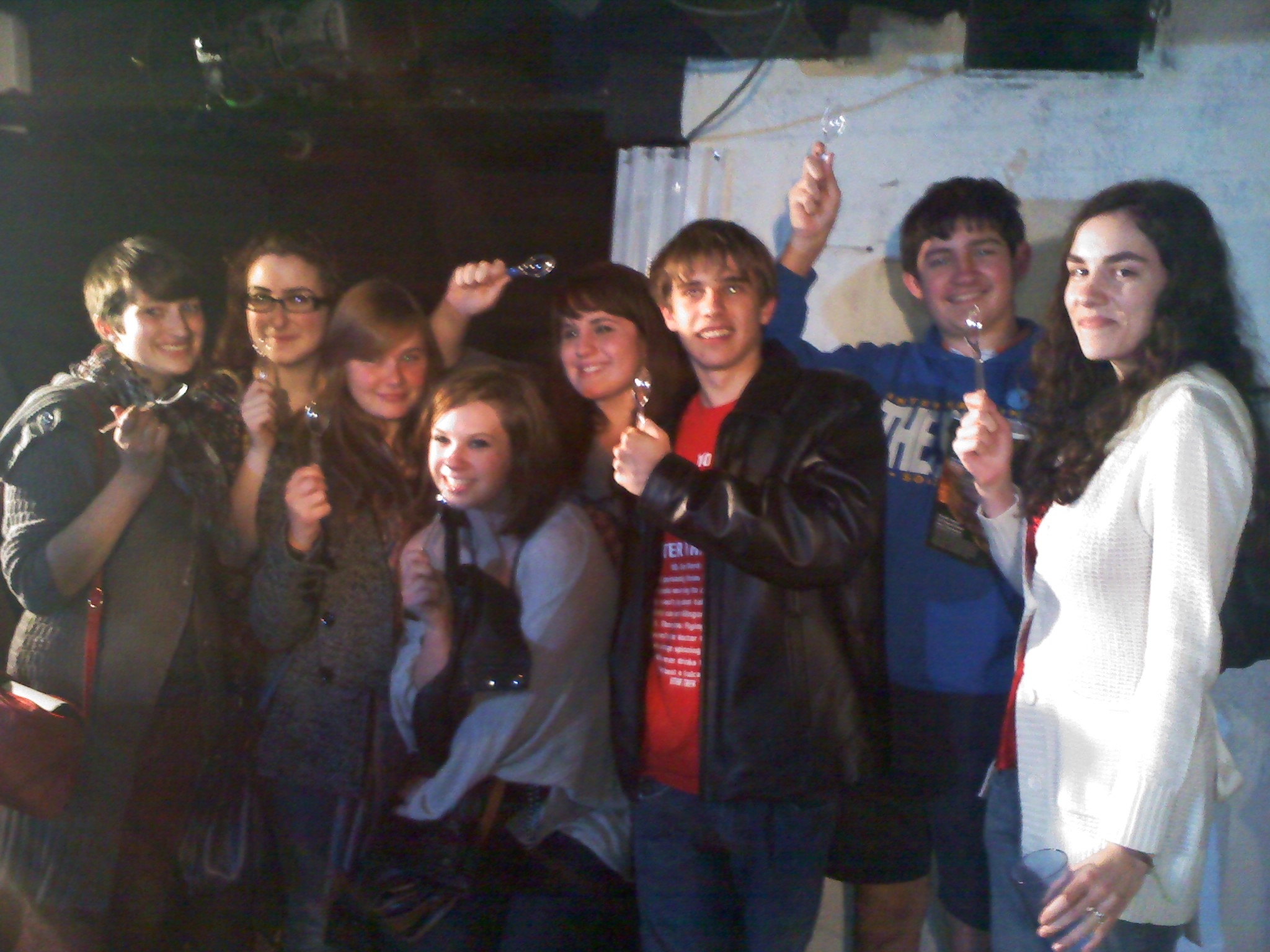
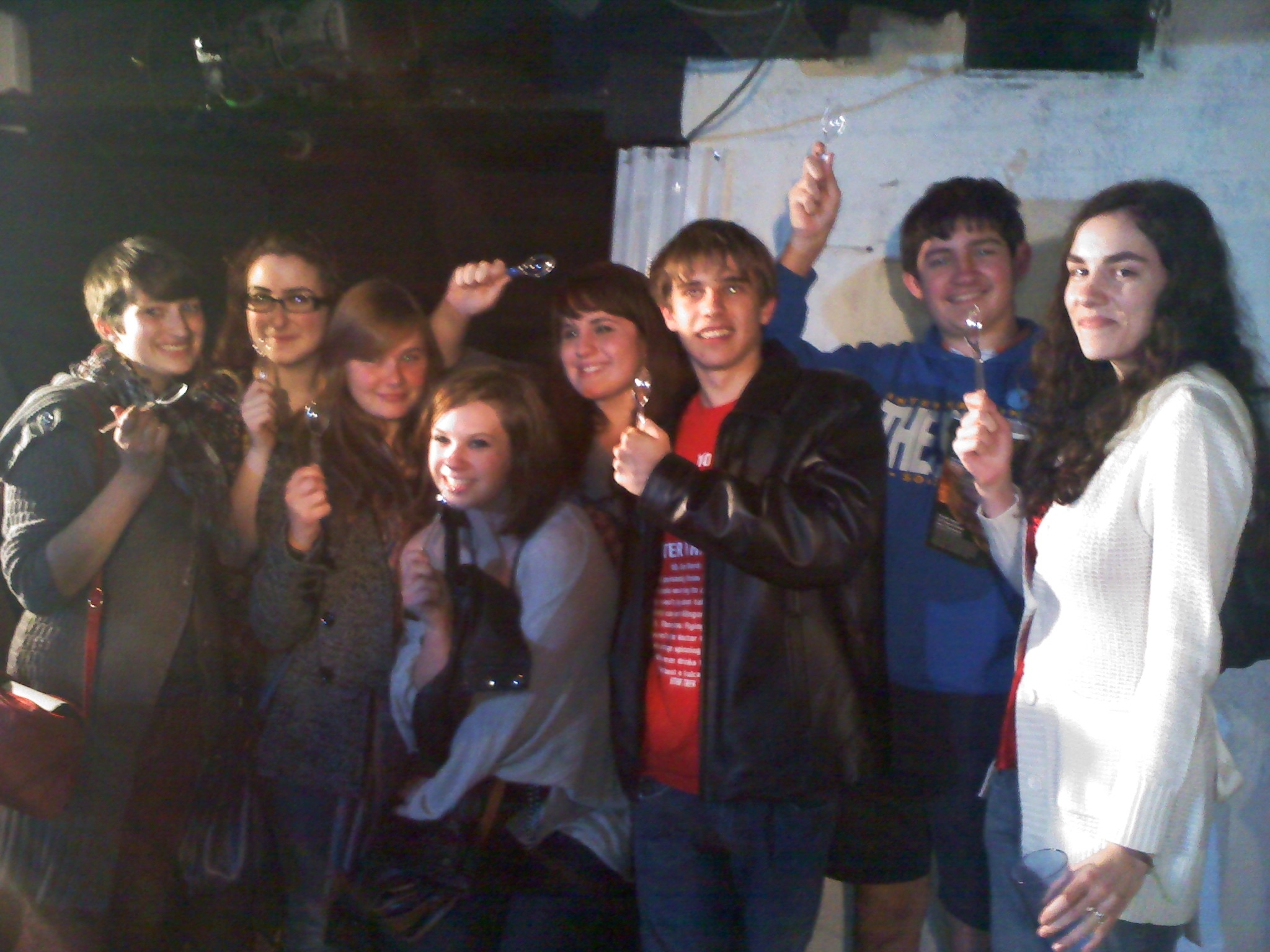
One of my favorite moments in the entire history of my theatre company. This group of high school students brought spoons to Titus Andronicus, and held them up when the pie came out. I snagged them for this picture after the show.

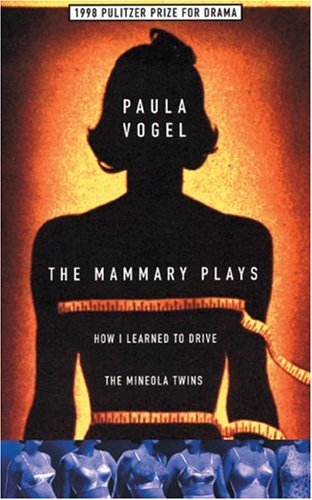
Whenever I talk about the issue of overvaluing Broadway (and the attendant undervaluing of everything else), I get inundated with OUTRAGE!!11! I think, first and foremost, a lot of people grow up with Broadway as their Big Dream, and, as it’s inextricably tied to their personal dreams and identities, they can’t bear to see it discussed as anything other than the Holy Pinnacle of Theatrical Achievement. But what it really is (let’s be honest) is the Pinnacle of Theatrical Employment, which is a very different thing. It’s truly fantastic that there’s a theatre industry that employs so many people. I’m 100% behind that. But let’s not go off the rails and confuse money with quality. Money imparts a certain kind of quality– the kind that comes with technical achievement and jaw-droppingly gorgeous spectacle– but no amount of money can purchase genius, emotional impact, or transformative experience. They’re not mutually exclusive, but neither are they mutually dependent. Money does not automatically equal quality, nor does it automatically eliminate it. Let’s not go off the rails in the other direction and get pissy about corporate theatre. But money is a completely separate consideration from quality.  To equate the most money with the highest quality and the most importance dosn’t make sense. Although Amy Herzog is one of the most produced playwrights in the country, she’s never been produced on Broadway. The legendary Maria Irene Fornes has never been produced on Broadway. Likewise Lynn Nottage, Ping Chong, Tarell McCraney. Paula Vogel has never been produced on Broadway.

Image

Yes, THAT Paula Vogel.

Another point of outrage I’ve encountered about my opinion that Broadway is not the Mothership of All American Theatre is that many people hold Broadway up as one of the most important ways kids get interested in theatre, creating the theatremakers of the future. I deeply question this. First of all, sure, it gets the kids whose parents can afford to drop $600 on tickets for ONE SHOW for the family. And those kids are going to be the actors whose families can support them for several years after they graduate with their MFAs 67K in debt and can only find work at tiny indie theatres paying just enough to cover transportation– if they’re lucky. We know that far too many theatremakers are drawn from those relatively privileged classes, and more open accessibility for people not from the middle and upper classes is a conversation we’ve just begun as a community. But for now, most of Broadway is a closed ecosystem for the privileged. It’s expensive to get there, it’s expensive to stay there, and it’s expensive to see the shows. Sure, there are ways to game it to make it less expensive, but you have to be really driven to find those, and the people we’re talking about here are the NOT driven– the ones who aren’t theatre families, whose kids are potentially about to be awakened for the first time to the magic of live theatre and the possibility of making that magic central to their lives.

Image

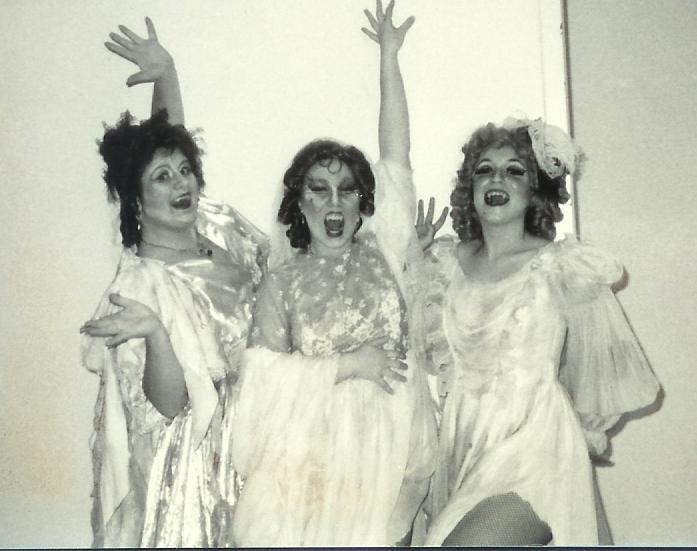
Sarah Ford, Lisa Kass, and me in our college production of Dracula: A Musical Nightmare. I ran around taking pictures in black and white because ART. I can’t remember who I asked to take this one.

Most kids– like me– got into theatre because there were theatre programs at school. There are plenty of kids falling in love with theatre because of a lively theatre program, or a great teacher, or a local youth show that came to their school– many, many more than there are who’ve seen a Broadway show, even on tour. So while I’m not denying Broadway’s ability to excite people, especially kids who are suckers for spectacle, I don’t think it’s anywhere near the primary place this happens. Again: This is one tiny geographical area most people will never step foot in. If you see Broadway as the center of the theatrical universe and the reason you started in theatre: great. I support that. And I could really do without the shock that I do not.

Image

Broadway’s relationship to the rest of the theatre in this country is complicated. We make what they need. We create the playwrights, actors, designers, and techs that they need to survive. They won’t touch a play or an artist unless that play or person has been field tested extensively by the rest of us. They repackage what we make, pump a shitload of money into it, put it in a beautiful dress, and then charge us all a week’s salary to see it. But they take a tiny percentage of us and allow us to make a (often temporary, but still) living at what we do, an elusive dream for most of us. They make it possible for theatremakers to create and play in beautiful, beautiful worlds. They’re theatre ambassadors for a certain segment of the population, and that segment of the population are the same demographic from which donors and subscribers come, and boy do we need those. Their technical innovations are undeniably marvelous. Their corporate backers’ influence that creates so much aggressively inoffensive material and reliance on Hollywood stars is maddening. Their over-reliance on revivals and lack of interest in plays by women and people of color are maddening. Their nonstop repackaging of Hollywood films as slick, bland musicals is maddening. The fact that people go to see these slick, bland musicals and think “this is theatre” is maddening. But everyone connected to that slick, bland musical is EMPLOYED. The tech is spectacular. A sizable percentage of the people in that audience are thinking, “This is theatre AND I LOVE IT.” And the amount of press and public attention these shows get do continue to keep theatre’s existence on the radar. Like any longterm relationship . . . it’s complicated.

The Tonys are an awards show that celebrates the achievements of this one little corner of the world, a tiny percentage of the national theatre community. Most people in the national theatre community have not seen those shows. Most people in the national theatre community are so completely removed from what happens on Broadway that it could fall into the Atlantic and, without any connection to the internet, they wouldn’t find out for months, if ever.

That’s not to say that I begrudge your enjoyment of the Tonys, or of Broadway, or even of a Disney musical. I’m a human. Humans like spectacle. I get it. I actually love Disney. I was married in Disneyland (not even joking). I would happily watch a Disney musical or a star-studded revival of an old chestnut if I didn’t have to blow my entire month’s grocery budget on it. But this insistence that Broadway should be the center of my universe as a theatremaker– of all our universes as theatremakers– is nonsense. This insistence that what happens on Broadway happens to “Theatre”– that Broadway and the American Theatre are equivalent– is now laughably untrue. THERE’S NO SUCH THING AS “AMERICAN THEATRE.” We have many theatres, divided by class, with small indie theatres at the bottom and Broadway at the top– divided by one thing and one thing only: Money. I’ve seen great theatre in tiny houses and I’ve seen great theatre in big houses. We need to stop pretending that those with the most money are the ones producing the most important work.

And that’s why I don’t watch the Tonys unless I know someone nominated. A local awards show, not in my market, has nothing to do with me, and to pretend it does, and express shock at my lack of interest, is nuts. I don’t mind that you take an interest. I don’t mind that you care who wins an award at a regional award show not in your region. Live it up! Have your parties! Post your statuses celebrating the awardees you love and vilifying the awardees you hate! Complain away about the show itself! I support you 100% and will make cupcakes for your party. I will help you with your Antoinette Perry cosplay.

Image

I recommend pin curls.

But likewise allow me my opinion that the Tonys are no more important to me and my work than the Jeffs, Oscars, or VMAs. I have a passing curiosity, and it’s always wonderful to see a worthy friend, colleague, or former student recognized, but it’s not directly applicable to my work.

So let’s hug it out, Tony lovers and Broadway worshippers. There’s room for all of us.

Image

HUG IT OUT

Tagged , , , ,

Why You Didn’t Get Cast

Image

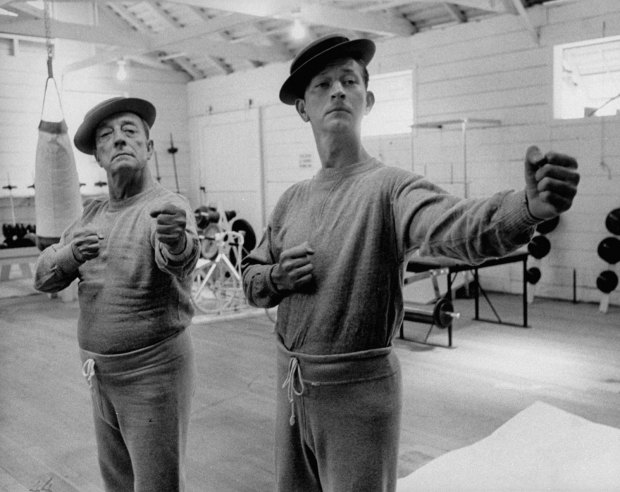
Buster Keaton and Donald O’Connor rehearsing in 1956

A few days ago, I had two conversations almost back-to-back. One was with an experienced and talented actor who believed they were getting the message that their career was over just because they were in a dry spell. The other was with yet another Bay Area actor whose career had stalled the minute they went AEA. While we talked about the many reasons why that happens, this actor said to me, “I want to see if I’m good enough to be an AEA actor.” And my heart just broke because, as someone whose life is always on the other side of the table, I know how seldom casting is purely about who’s “good.” I hate that experienced, talented actors can see whether or not they get cast as a measure of their intrinsic worth as actors.

So here you go, actors of the world. The pure, unvarnished truth about why you didn’t get the role.

Image

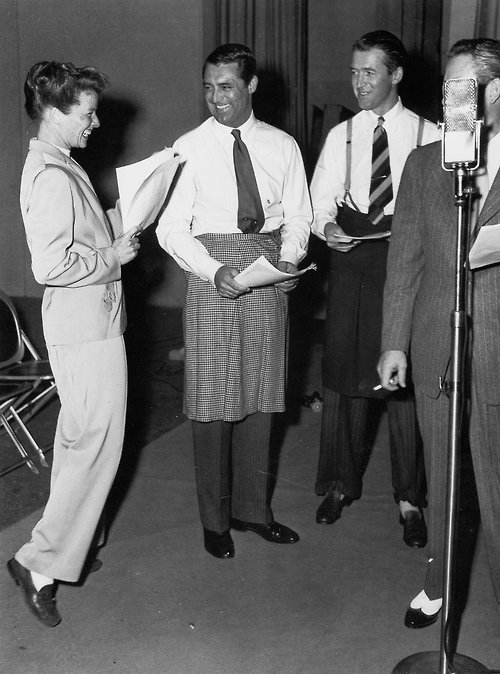
Katherine Hepburn, Cary Grant, and Jimmy Stewart performing Philadelphia Story for Victory Theater, 1942.

1. MOST COMMON: You’re just not right for it. I know this sounds like a massive, shit-eating cliche, but it’s absolutely the truth. A director walks into the room with a character conceptualized in a certain way, and is looking for the person whose type or energy matches the character. The truly amazingly badass Leslie Martinson of TheatreWorks taught me this years ago, when I was first starting out: Every conceptualized character has thirteen adjectives that describe them. Every actor has thirteen adjectives that describe them. Casting is about finding the best match. I pass over actors I flat-out adore all the time because the fit isn’t right. For example, a director might have Orlando conceptualized as a man in his 20s with a gentle, soft-spoken energy, while your audition presents a man in his 30s with a bright, aggressive energy. While your audition might be fantastic, you’re not going to be that director’s Orlando.

2. Your skillset isn’t developed. This is the second most common, and the one people like to think of as “not good enough.” That way of thinking is total bullshit. How do I know? Because year after year, I see actors grow and develop. I see actors go from maaaaybe having the skills to handle a small supporting role to being ready to carry a play in one season. Either they took a class that unlocked something, or worked with a director who stretched them, or went on a spiritual quest in the New Mexico desert, or had mind-blowing sex with Ian McKellen, whatever. But I see it happen all the time, because dedicated actors are constantly working on their skillset.

Image

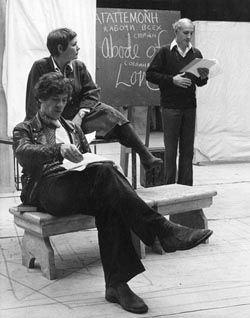
Judi Dench, Ian McKellen, and Joe Melia rehearsing Too True to be Good at the RSC in 1975.

3. The role was precast. Some directors are superstitious and will read people for roles that are already cast. It’s unfortunately common for actors to commit to roles that they later bail on (a better-paying gig, a family emergency, a medical situation), and if you auditioned other actors for that role, you have some go-to options. One casting director told me she was so superstitious that she didn’t get rid of the casting data for a show until it CLOSED. On the flip side, lots of theatres are upfront about which roles are precast. Don’t let that necessarily discourage you. You may want to consider coming in for a show where your dream role is precast– you may end up playing that role after all.

Image

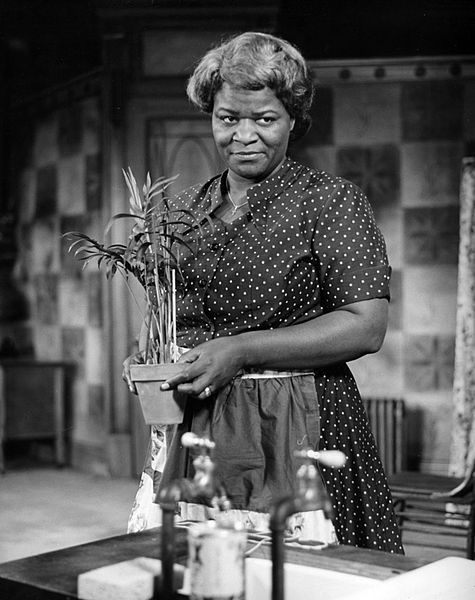
Claudia McNeil in A Raisin in the Sun, 1959

4. The role went to someone they’ve worked with before. This is incredibly common. You know an actor’s work, you have a shared language, you understand how to work together. A known quantity is less of a risk, even if the known quantity didn’t crush the callback like you did. The director knows from past experience that the other actor can give them what the work needs.

5. You’ve had a history of behaving unprofessionally. Luckily, this one is extremely rare, but it does occasionally happen. Violating your contract (coming consistently late or no-showing to rehearsals or shows, for example), treating fellow actors or crew disrespectfully, making unreasonable demands (such as demanding the theatre violate their contract with the playwright so you can change something in the script despite the fact that the playwright declined to allow the change, or demanding the day off during tech because it’s your one year dating anniversary), deciding closing night is the time for GAGS! and IMPROV!, badmouthing the show on social media (“This play is going to be total shit!”). Although I’ve seen every one of these examples firsthand, they are, as I’ve said, pretty rare. The converse, happily, is MUCH more likely to be true– that we take a chance on an actor unknown to us because someone at another theatre is raving about how awesome they are. And believe me, I’m not trying to imply that this doesn’t happen in the opposite direction. I know plenty of directors treat actors in unconscionable ways. But that’s an entirely different blog post. My point is that, in any theatre community, companies share personnel. While we don’t necessarily go out of our way to share that kind of information, the Literary Manager at one theatre is directing a show at another theatre. The actor at one theatre is the Artistic Director at another theatre. What happens in Vegas, so to speak, does not stay in Vegas. But be happy that the converse is also true and much, much more common– we’re raving about how wonderful you are to our friends at other companies. I’ve sent many a “heads up” email to directors to let them know that an actor new to them and about to audition for them is someone I’ve worked with and believe in.

6. Conflicts. You may have been the best person for the role, but since you’re planning to be in Oklahoma for Baton Twirling Nationals during tech, they’re going to go with someone else.

Image

7. You tanked the audition. Oh, man, this one is a heartbreaker, and I see it all the time. It’s one of the reasons I tell my students that the best way to cast is to see as many plays as possible so you’re seeing actors in their natural habitat. Auditions are weird little creatures, artificial and forced. However, if we want to open our theatres to new people and new communities (and we do), we’re stuck with open auditions. Like standardized testing, which only measures how good you are at standardized tests, auditions often measure how well you audition and little else. While callbacks are theoretically meant to correct for that, you don’t always make it to the callback to show them. I’ve seen plenty of actors give me a crap audition and then give a beautiful performance in someone else’s play. They had a bad day, or memorized a new monologue they thought would be “better” for the role the day before, or were too nervous. There are a million reasons why a great actor would tank an audition. Don’t let it discourage you. Take an audition class or work with a coach if this is a common problem for you. Do what you need to do. But KEEP TRYING. Invite artistic directors and casting directors to see your work. Don’t give up! You won’t tank them all.

And that’s my main piece of advice: Don’t give up. If this is your dream, persevere! Nothing is insurmountable. FALL DOWN SEVEN TIMES, GET UP EIGHT.

Image

Tagged , , ,

The Weapon of Invisibility

Image

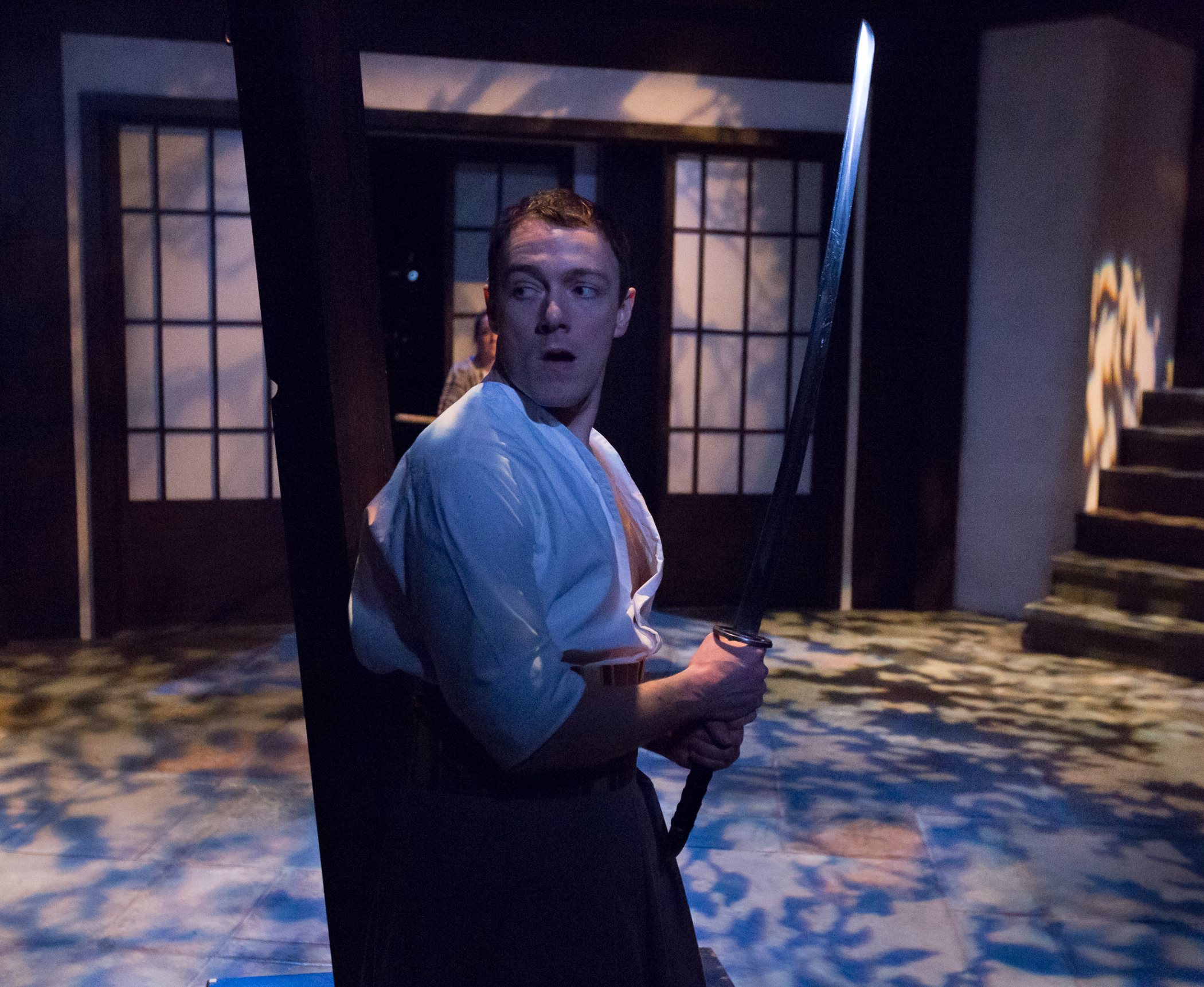
Jered McLenigan in Lantern Theater’s Julius Caesar. Photo by Mark Garvin.

This is a piece about the Wooster Group’s production of Cry, Trojans!, Lantern Theatre’s production of Julius Caesar, the Lean In/Getty stock photography collaboration, and my head finally exploding all over my computer.

Privilege is a squirrelly thing. When your privilege is working for you, it’s undetectable to you. That’s its job: to silently ease your way through life by protecting you from the thousand little (or big, or enormous) roadblocks people without your privilege face every day.

Two examples from my own life on both sides of privilege:

I taught for a long time at a film school. I taught early-career filmmakers about casting, working with actors, and script development. One semester, a young Black man had written a short film script about four young Black men being pulled over. The police officer asked all four for their IDs. I told this young filmmaker that he would need to clean up his narrative– that it didn’t make sense for the officer to ask for the IDs of passengers unless he had some reason, and the script needed to provide that narrative bridge. I had four young Black men in that class and all four were immediately astounded. They had been asked for their IDs as passengers every single time they had ever been in a car that had been pulled over. They believed it was normal. I had never once been asked for mine as a passenger, and had never even heard of such a thing. I had been protected by my privilege so completely that I had had no idea I was even being protected. I began to wonder what else these young men were experiencing that was invisible to me.

When my son was little, he went to a Jewish preschool. I didn’t talk to him much about Christmas or Easter. When he was almost three, we were headed into a supermarket that had just been decorated for Christmas, as they are always an orgy of Christian heritage between September and January. My son pointed at a giant Santa and said, “Look, Mommy! A king!” And I was overwhelmed with unexpected gratitude that my son was, for the moment, protected from the full knowledge of his outsider status in our culture. It wouldn’t take long for him to understand. But for the moment, his lack of Christian heritage privilege was completely unknown to him.

What we know about our own privilege is always a process, and one we have to struggle for, since it involves active curiosity and empathy, two things humans are just abysmal at, despite our constant assurances to each other of the contrary. But an understanding of the shape of one’s privilege, as hard-won as that is, is just the first step if you’re interested in social justice. The second step is, you know, WORKING for social justice. Unfortunately, that involves actively working against your own privilege, and there is nothing humans hate more than that.

So we find subtle ways to fool ourselves (and others) into IMAGINING we’re working for social justice while ACTUALLY reinforcing (in grad school, we called this “reinscribing”) our own privilege and cultural superiority.

Image

Cry, Trojans! Photo by Paula Cort.

The Wooster Group is well known to you if you have a degree in theatre, or were plugged into the theatre community in the 80s. Most people know about it as the New York-based company that gave birth (so to speak) to Spalding Gray. Some people will recall its tradition of experimental deconstructions of classic works and nonlinear, aggressively designed original works in what we once called a “postmodern” style. Headed by Liz LeCompte, Wooster Group has an almost legendary status for what was, for its time, very experimental theatre. Lantern Theater is a company in Philadelphia that’s in its 18th season. A quick glance at their production history reveals a very prosaic aesthetic, featuring unremarkable, utterly safe works such as The Screwtape Letters by C.S. Lewis, The Liar by David Ives, Private Lives by Noel Coward, and The Beauty Queen of Leenane by Martin McDonough, in addition to lots and lots of Shakespeare.

So here comes the part where my head begins to explode:

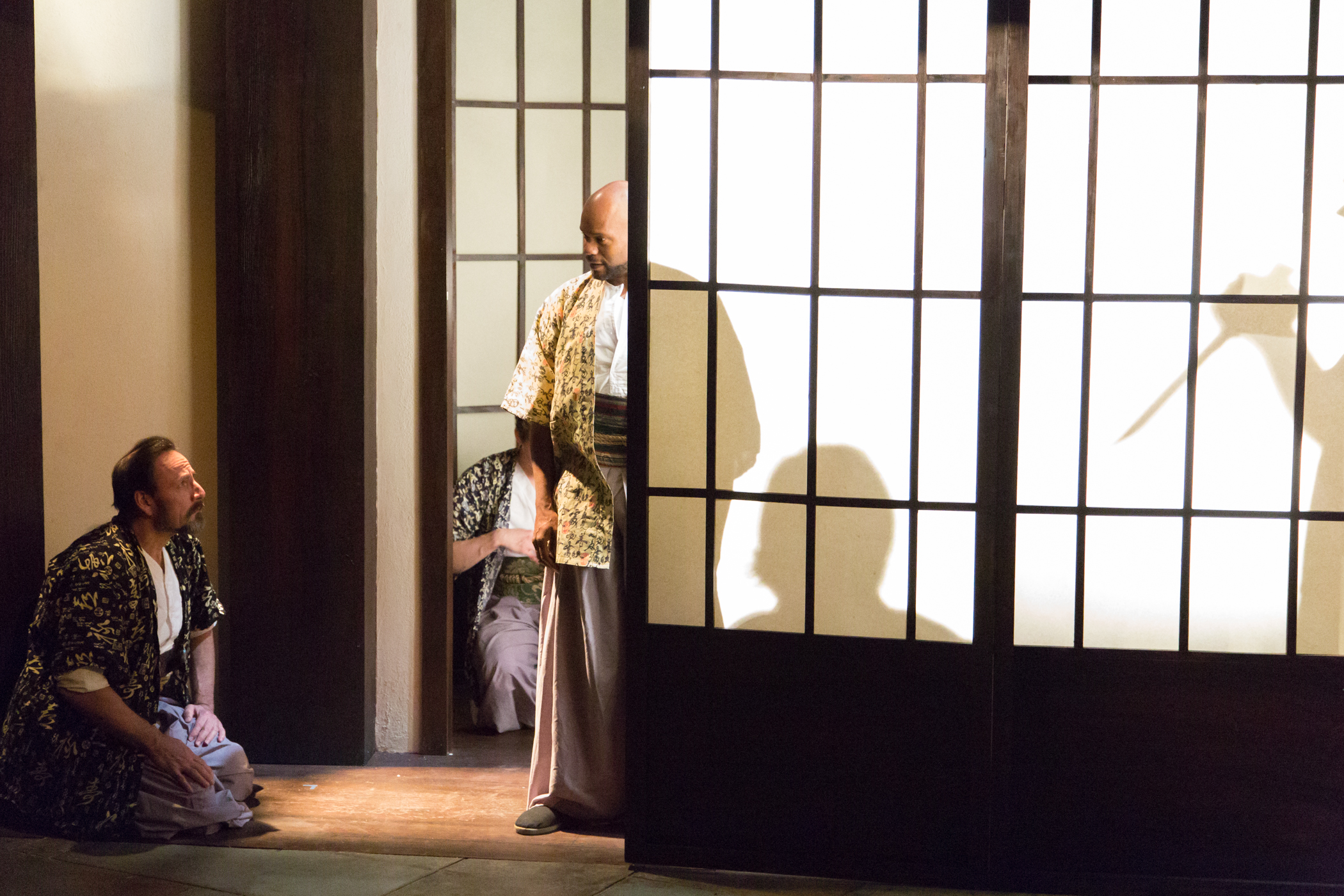
These two companies, almost at completely opposite ends of the theatrical spectrum, both pulled the exact same stunt at the exact same time: They staged shows featuring non-white characters and cast those characters with primarily white actors. Cry, Trojans!, an adaptation of Shakespeare’s Troilus and Cressida, was originally conceptualized as a collaboration with the RSC and performed in London, and was reconceptualized for an American run. Originally, the Americans played the Trojans and the British played the Greeks, rehearsing the scenes separately until coming together just before opening. Wooster Group played its Trojans as “Native Americans” against the British playing the Greeks as modern soldiers. For the American run, LeCompte decided to make both sides “Native American,” using a fusion of appropriated costumes, props, and other imagery gleaned from books, films, and other materials– and an almost entirely white cast. Lantern Theater, remarkably, staged Julius Caesar in feudal Japan– but without Japanese actors, instead casting seven white people and one Latino, with African American actor Forrest McClendon as Caesar. (I highly recommend looking at actor Makoto Hirano’s letter to Lantern Theater about the cultural appropriation in their production.)

Image

JC Guzman and Forrest McClendon in Lantern Theater’s Julius Ceasar. Photo by Mark Garvin.

At this point, when the national theatre community has been decrying cultural appropriation, yellowface, brownface, and the like loudly and vigorously and at great length, it seems almost a deliberately retrogressive act. But here’s where privilege steps in and allows people to make decisions like these without understanding how deeply problematic they are.

Both Liz LeCompte and Charles McMahon (the director of Julius Caesar) believe they are working for a HIGHER CAUSE.

“Plus it’s not about that. It’s about everything bigger…We love the piece, we love the stories, we love the films, we love the people…We wanted to tell the story in this way and make it so big that this [lack of direct Native American input] wouldn’t be a problem.” — Liz LeCompte, quoted here (emphasis mine)

“’We wanted to get away from all of the clichés and assumptions about classical Rome, with people walking about in togas and looking like statues from antiquity,’ says artistic director Charles McMahon. ‘Our associations with that make it feel like we’re saying, ‘This is old, this is long in the past” . . . McMahon also wanted to avoid the specificity that comes with updating the play to the modern day. ‘We didn’t want to say this play is like Libya, or this play is like Central America or Russia or North Korea, because that’s not the point either. I think there’s something universal about it.‘ McMahon soon realized that the stoicism of Caesar’s Rome had strong philosophical parallels with Japan’s tradition of Zen Buddhism. ‘The ideas in this play of being detached from the results of actions and being emotionally remote from the events of the world are present in the great samurai epics. So these themes all seemed to add up to feudal Japan being a very resonant scenic and thematic environment to put the play in.'”– read Shaun Brady’s  whole article here, emphasis mine

LeCompte clearly thinks that her artistic vision is “bigger,” and therefore more important than issues around cultural appropriation or racism. She believes that the importance– the “bigness”– of her artistic point of view about Shakespeare’s Troilus and Cressida should eliminate the need for an examination of the racial politics she puts onstage. She overtly asserts her artistic vision’s cultural superiority over any issues of race. She has no interest in an artistic exploration of Native American cultures. She’s appropriating various aspects of Native American cultures to make what she overtly states is a more important artistic point.
MacMahon states that the way he could get his (mostly white) audience to associate emotional distance with Julius Caesar was to visually associate the play with SAMURAI FILMS. He has no interest in an artistic exploration of feudal Japan. He’s interested in importing a feeling of stoicism, manliness, and ass-kicking fighters to a mostly white audience, and is appropriating the cultural artifacts of fuedal Japan as an artistic shortcut. He’s appropriating a very specific culture and calling it “universal” because he’s imagining the feeling he gets from watching Kurosawa, not the cultural heritage of a real people whose descendants are alive and marginalized.

Image

Cry, Trojans! Photo by Paula Cort.

LeCompte and McMahon are using artifacts of other cultures– both groups currently marginalized in the US– while shutting out the people of those cultures from the artistic process because they believe their artistic vision is MORE IMPORTANT. They see these cultures as visual art available for their use, not as an inextricable part of the heritage of real, living people. They have reinforced their own privilege and cultural superiority, maintained the invisibility of those marginalized peoples, AND set themselves up as answering to a higher artistic calling– in LeCompte’s case, the “bigger” nature of her artistic vision, and in McMahon’s case, “universality.”

The Lean In/Getty stock photo collaboration is pretty much the same thing, but even more blatant. It purports to be a massive new tool for social justice while instead overtly reinforcing privilege to an almost shocking degree. I SHOULD BE USED TO IT. I knew what to expect. But I was still shocked.

If there's one thing the Lean In/Getty collection has taught me, it's that photographers love to take pictures of young white women running. It's like CATNIP to them.

If there’s one thing the Lean In/Getty collection has taught me, it’s that photographers love to take pictures of young white women running. It’s like CATNIP to them.

The Lean In/Getty stock photography project crashed onto the internet in a loudly self-satisfied manner, proclaiming itself to be a feminist project– a revolution in stock photography that shows women in new, “more empowering” ways, claiming it will change the way women are perceived in America by changing the imagery associated with us. I reviewed all 2763 images. I set aside any containing children, as that’s a discussion for a different day. I also compared the images to the ones you can already find on existing stock photo sites.

One thing that’s immediately apparent, and for which the Lean In/Getty collection deserves a basket of high-fives, is its inclusion of older women. There are many more older women depicted than you would expect to find in such a collection, and it was damn refreshing. I loved the inclusion of photos of older women being active– biking, dancing, swimming. Another thing the collection does right is show pictures of women doing jobs, as opposed to sexy models pretending to do jobs.  Although the vast majority of workplace photos show upscale offices or studios, the few that show blue-collar workplaces do show women who look like they actually belong there, as opposed to a scantily-clad model licking a hammer.

This . . .

This . . .

. . . as opposed to this.

. . . as opposed to this.

On the other hand, exhaustingly, almost ALL of the women in these photos, elderly women included, conformed to traditionally acceptable, thin body types.

getty.elderly

Out of all the images of adult women without children, exactly FORTY-THREE (by my count) of the pictures in which women’s bodies were visible depicted women who were not thin. That’s one and a half percent. Of those 43, only FIVE showed non-thin women performing any kind of fitness activity, although the Lean In/Getty collection is rife with with women performing fitness activities (especially white women, whose workout depictions make up 10% of all photos, compared to 2.2% of all photos depicting women of color performing a fitness activity or in fitness clothing).

Unbelievably, depictions of professional women were even WORSE. Exactly ONE picture (that I could find– maybe you’ll find one more and bring the grand total up to two) depict a non-thin woman in anything that could be remotely construed as a professional or business setting, although the collection features literally hundreds and hundreds of business-oriented pictures. Searching “business” gets over 600 results, while “professional” gets over 800 results, and they are almost all of thin women. Considering 60% of women in the US are not thin, that’s an aggressive shut-out that feels deliberate. It’s just not believable that such a result was entirely accidental. Since the Lean In collection has been non-stop screaming its feminist awesomeness as empowering for all women since even before it dropped, one is left wondering why the only women worth “empowering” are the 40% who already enjoy thin privilege.

The few non-thin women depicted in a workplace are depicted in low-wage blue collar or service industry jobs (factory workers, custodians). There are a few portraits, mostly of older women. Very few young, non-thin women were depicted at all. For the record, there are precisely two pictures of a visibly disabled woman, both of the same very fit athlete.

Let’s look at some of these pictures:

Image

From the Lean In/Getty collection, from the first page of images returned from the search “business”

Image

From the Lean In/Getty collection, from the first page of images returned from both searches “business” and “professional.”

Image

From istockphoto.com, from the first page of images returned from the search “business.”

Image

From shutterstock.com, from the first page of images returned from the search “professional.”

Lean In/Getty gets a high five for returning images such as this when searching

Lean In/Getty gets a high five for returning images such as this when searching “professional.”

But most of their images look like this.

But most of their images look like this.

One of a tiny handful of pictures in the collection of almost 2800 depicting a young, plus-sized woman

One of a tiny handful of pictures in the collection of almost 2800 depicting a young, plus-sized woman.

For every picture of a plus-sized young woman, there are literally over 700 of a woman with this body type.

For every picture of a plus-sized young woman, there are literally over 700 of a woman with this body type.

While the Lean In/Getty collection is doing much better with older women than other stock photography sites, it is actively reinforcing the thin privilege the woman behind the Lean In brand, Sheryl Sandberg, and the woman from Lean In who supervised the stock photo project and curated its imagery, Jessica Bennett, currently enjoy, and it can’t be completely irrelevant that Sandberg is now in her mid-forties. What the Lean In project has done, under the guise of “empowering women” through “changing imagery” is reinforce the cultural privilege and dominance of women of Bennett’s and Sandberg’s body type while making an attempt to create more cultural acceptance for women of Sandberg’s age and older, all while blatantly shutting out women without thin privilege, rendering them virtually invisible. While pretending to empower women as a whole, they have instead reinforced their own privilege.

Celebrating with salad! Yes, this was one of the photos the Lean In collection returned when I searched for

Celebrating with salad! Yes, this was one of the photos the Lean In collection returned when I searched for “celebration.”

Invisibility is a weapon, and it’s the one we most often use to reassert or reinforce our privilege and cultural dominance. If THOSE PEOPLE aren’t there, it’s because they aren’t IMPORTANT ENOUGH TO BE THERE, and the project’s focus is on “more important issues” anyway. You only get answers to the questions you ask, so be prepared, if you want any credibility in this fight for social justice, to ask WHO IS MISSING? And WHY?

Not every project needs to have a representative from every single group, but when we appropriate someone else’s culture while keeping them invisible, or when we purport to stand for a group’s empowerment while shutting out over SIXTY PERCENT of them, we have a problem.

Tagged , , , , , ,

The Politics of Accents

Image

This guy.

While I could write plenty about nonsense like Asian actors being asked to do “the accent” in their audition for “Prostitute #3” and “Kung Fu Master Criminal,” or Black actors being asked for a more “urban” accent or audition piece, I’m actually heading in the opposite direction.

There’s a “Shakespeare accent” that American actors are taught to use, or sometimes just pick up on their own through exposure. I’ve seen plenty of teachers throughout the years refer to this as “RP,” “Standard American,” or “Mid-Atlantic” (not to be confused with the actual accent of people in that region– more on that later). The terminology is confused and not always accurate. “RP” stands for “received pronunciation,” which is in actuality a British dialect considered “proper,” and “Standard American” refers to an accent that uses a harder final R than these actors are being taught. But the accuracy of the terminology is not the point.

We all know that accent. It’s slightly faux-British, posh, and its main feature as practiced seems to be the dropped R.

We know from the study of OP (“Original Pronunciation”) that the British accent of Shakespeare’s day was actually nothing like this “Shakespeare” accent American actors use, or than British RP for that matter. Check out this comparison between RP and OP. So why do we teach actors to speak in these faux-British tones? Why do actors adopt this fabricated accent when they do Shakespeare?

The answer can’t be “because the text suggests it,” or “the text sounds better that way due to the way it’s written.” A notable part of OP is its harder final R. This entirely contrived  “Shakespeare accent” is most notable for its soft R. In fact, that’s its main (and often sole) feature as practiced across American stages. So “because Shakespeare” cannot be the answer.

What *IS* the answer? We know that what’s often called the “Mid-Atlantic” accent, popular in pre-1960 America, was a deliberate, acquired marker of wealthy white privilege, and was therefore cultivated by people looking for upward mobility and acceptance in the upper classes of America, or by actors whose careers would be built on playing upper-class roles. In 2013, we still use a version of it to denote “posh” or “privileged” in popular culture– look for it in films, cartoons, video games. It’s everywhere.

excellent

profx

There are some teachers out there now teaching an accent they call “Classical American,” as in, American accents for use in classical theatre.  “Classical American” is a reverse-engineered accent that labels and codifies the semi-British “Shakespeare accent” that has evolved from (and is still sometimes labeled as) Mid-Atlantic or RP. There’s a book originally published in 2005 flogging “Classical American” as “an intermediate option between well-pronounced Neutral American and Standard British. It builds upon Neutral American, blending additional rhythmic and sound elements, which result in more formal or heightened speech without sounding British to an American ear” (emphasis mine). Precisely. I’ve heard this accent referred to innumerable times as “formal,” “heightened,” and “elevated.”

“Formal.” “Heightened.” “Elevated.” “Formal” has long been code for “posh.” But what’s being heightened here? What are we “elevating” when we drop our American accent and move to a semi-demi-faux British accent? CLASS.  That’s what’s being heightened. The appearance of privilege. Poshness.

The “Shakespeare accent” has nothing to do with acting Shakespeare and EVERYTHING to do with acting “posh.”

Those of us in the theatre talk a good game about how Shakespeare is for everyone, and whine a great deal when our audiences are less diverse in race or age than we’d like. Although we have a long way to go, we’re slowly getting better at looking to ourselves for problems with racial diversity in our audiences, but we epic fail with looking to ourselves for problems with age diversity in our audiences, generally blaming lack of swarms of twenty-two year-olds at our productions on their boorishness and lack of interest in “culture.”

Maybe the way we frame Shakespeare is to blame for the homogeneity of its audiences. When people talk about Shakespeare as “lofty poetry,” it makes me cringe. Not because they’re wrong– there’s certainly enough lofty poetry in Shakespeare to keep your lofty poetry needs happy for quite some time before you have to turn to Blake or Donne– but because Shakespeare ON STAGE is less about poetry as such and all about stories– rich, passionate, violent, emotional, heart-ripping stories at that. Shakespeare uses poetry to tell stories, and he will drop the poetry or jack up its rhythmic demands in a hot second to make an emotional point. The poetry is in service to the stories. These stories tell all the secrets of the human heart, and we continue to frame them in popular culture as staid and boring “high culture,” as if Shakespeare is medicine that you must take because it’s good for you rather than ZOMG THESE PLAYS ARE AWESOME.

Part of sequestering Shakespeare into the special, rarefied, and (most importantly) exclusive domain of “high culture” is this pretend, contrived, completely non-regional “Shakespeare” accent; an accent created solely and specifically to denote “upper class.”

This accent is part of the mythology that Shakespeare is “high class” art for the privileged. If we as directors or audience demand that Shakespeare actors adopt an accent that was created specifically to signal “rich and white” and still signals that to this day in popular culture, what are we saying about Shakespeare?

blak.shakespeare

I know an exceptional Black actor with enormous range who was told by one of his college professors (also a Black man) that he would never be able to do Shakespeare because of his “Black accent.” Of course he was wrong. Apart from this particular actor’s massive flexibility, the professor’s own experience as an actor was decades ago, and this is the 21st century in the Bay Area, where that kind of thinking is thankfully now on the wane. However, there are still too many directors out there who will absolutely refuse to cast a Black actor– or ANY actor– who does not adopt the upper class white accent our culture has come to associate with Shakespeare, and too many universities and training programs that teach that as NORMAL. At general auditions for my company last spring, I had a batch of diverse, newly-hatched college grads all from the same Bay Area university (not the same one I discuss above, depressingly) whose actors, each and every one, came in doing the “Shakespeare accent.” I almost wrote to the department. I probably should have. But even more depressingly, there are plenty of teachers and directors who still think that’s necessary.

Let me just say: Balderdash.

BECAUSE we know that Shakespeare’s plays were written for an accent nothing like this contrived “Shakespeare accent,” but an accent no one anywhere today would mistake for “posh,” and BECAUSE we know that Shakespeare’s plays are the greatest plays ever written in the English language and tell all the secrets of the human heart, and therefore belong to everyone, and BECAUSE we recognize that more diversity of all types on our stages and in our audiences is a good thing, and BECAUSE this is almost 2014, FFS, I RESOLVE:

THE DEATH OF THE SHAKESPEARE ACCENT IS AT HAND.

Listen, if that’s how you really talk, then I have no problem with you using that accent when you do Shakespeare. In fact, that’s my entire point. YOU ARE GOOD ENOUGH JUST AS YOU ARE for Shakespeare. Your body, your voice, just as they are, are worthy carriers of these stories, whether your speech is “posh” or straight outta Compton. Talk like you talk. YOU ARE WORTHY OF SHAKESPEARE, just as you are.

And directors? Please stop. Just stop. These stories are yours to tell. You don’t need to overlay fake poshness to prove you’re worthy to enter the club. You’re already worthy.

These stories are part of the human literary heritage. They already belong to you. They’re about you, whoever you are. It’s time to liberate these plays from the mythology of exclusivity.

Tagged , , , , ,

High School Yellowface

Image

I’m not posting pictures of the actual minors in the show. Instead I’m choosing to post pictures from America’s vast yellowface past. This keeps the kids’ identities confidential while also providing some cultural context.

Someone I know recently posted some pictures of her son’s high school performance of A Midsummer Night’s Dream. Of course I’m stoked that the kids are doing Shakespeare instead of Grease or One Direction: The Musical or whatever. And I definitely understand the impulse to want to set these plays in a fanciful place and time, especially if you have hundreds of hours of free parental labor and thousands of dollars at your disposal. I’m not a huge fan of randomly chosen settings, like Love’s Labour’s Lost in an 18th century brothel or King Lear on the Death Star (although I might have to give that last one some serious thought). But I understand the impulse, even if I do not agree with it.

The problem with this play is that it’s set in “Ming Dynasty China.”

Image

I’ve written about race in casting before (this and this). But I’ve been thinking about this issue all day, for two reasons: One, the fact that this is educational theatre; and two, that half the kids in the cast are Asian American, but the faculty director is white.

There’s a reason theatre education belongs in schools. It teaches kids about the challenges and joys of creating art collaboratively. It helps kids learn how to extract meaning from text in very concrete ways. It teaches kids how to work under an utterly unforgiving deadline. It teaches kids about the massive, gorgeous, messy pile of dramatic literature available to us in the 21st century, which are all windows open to different places, times, experiences, and points of view. Theatre education is a life-changing, mind-expanding experience.

This is precisely why this is so disappointing to me. These kids are being taught that it’s acceptable for white people to play characters of color. It’s nowhere near acceptable in the professional world, where a mistake like that can create national controversy. If you don’t have an all-Asian cast at your disposal, you shouldn’t be doing a play set in Ming Dynasty China, and to place high school kids into such a situation is to do them a huge disservice. There’s a reason why I’m not posting pictures of these kids. This is not their fault, and I’m not holding them up to global mockery. It’s easy to say, “What does it matter? It’s just high school theatre.” If that’s the case, then what does ANY educational activity matter? Why not blow it all off and let them all play CoD: Ghosts instead of reading Catcher in the Rye or doing those calculus problems? I guarantee you that the skills theatre kids are learning are more likely to be useful to them in their future day-to-day lives as adults than calculus will be. If you believe education is important, then it follows that teaching kids that something highly controversial and racially problematic is just fine is shockingly irresponsible. Either education matters or it does not.

Image

Midsummer is a play people love to set in various places, and it can be quite successfully done that way. Bindlestiff Studio in San Francisco did an all-Filipino Midsummer using Filipino folklore tropes, with Tagalog-speaking mechanicals that was so fantastic I saw it TWICE. Which is insane, since I rarely get out of my own theatre. But this was a Filipino production, headed by a Filipino director, with an all-Filipino cast, at a Filipino theatre. This was about taking ownership of a classic story, coming from a deep, authentic positionality. A white director setting Midsummer in Ming Dynasty China with a half-white cast is not the same (especially when that cast are all teenagers working under an adult authority figure who makes the bulk of the creative decisions). It doesn’t have a deep message that comes from the center of Chinese or Chinese American culture. Instead, it’s a white director using a non-white culture as WINDOW DRESSING. And no matter how much research was done, or how many accurate renderings of period costumes or sets there were, this was using a culture as decoration, not marginalized people telling a story from within that cultural positionality. It’s deeply problematic.

Image

When I first started discussing this issue, I was told that half the cast is Asian, some of the techs are Asian, and the faculty choreographer is Asian. I was told that the Asian families coming to see their kids in the show weren’t complaining about the yellowface (out loud). I was told that the performances weren’t “stereotypical,” and that someone was playing traditional Chinese music during the show. I was told that the casting was “multicultural.” These were all held up to me as reasons it’s OK for white kids to play people of color. I actually gave it some thought. After all, the kids were in traditional Beijing Opera makeup, not actual yellowface . . .  did that matter? And I wondered for a bit if the presence of Asians working on the show changed the equation at all.

Image

Oh, right. No, it doesn’t. Not even an Asian director makes a difference in the ensuing controversy apart from: “He should have known better.”

It’s just not acceptable for white people in America to play people of color at all. Race has meaning. And although I suppose it could be argued that a half-white cast isn’t as egregious as a fully-white cast, or one wherein all the leads are white, race still carries narrative that cannot be erased. The meaning of a white person playing an Asian person is culturally problematic in profound, complex ways attached to a lengthy history of appropriation, erasure, and oppression. It’s a common misconception that “multicultural casting” means that white people should be able to play characters of color because we cast people of color in roles originally written for white actors. To pretentiously quote my own damn article that I linked to above (see, now you don’t have to click on it):

Using a white actor as [a character of color] has a very different impact on the narrative than casting a person of color in a traditionally white role. It erases the physical presence of the person of color and substitutes it with blackface/yellowface, imperialism and cultural appropriation. The West has a long history of casting white actors in racist portrayals of people of color, of appropriating the narratives of people of color and reshaping them through a white lens, and of shutting artists of color out of positions of importance. An American audience viewing a white person portraying a person of color will be reminded of all of these, and of blackface, of yellowface, of the history of racism with which we still struggle. These are all present in any production wherein a white actor is cast as a person of color because they are so palpably present within our culture. Again, race is always part of the narrative.

Maybe it’ll change some day, and we will be so many hundreds of years past the issues that make yellowface culturally unacceptable that it truly will not matter any longer, because race will no longer carry the same narratives it does now. Perhaps it’ll carry new, better narratives, less painful, less difficult. But that day is not today, and both yellowface and whitewashing remain culturally unacceptable.

Image

I’m not going to reveal the location of this production, and I won’t approve any comments that do, because at its heart, this is about protecting those kids. They should be taught right from wrong, and yellowface is wrong, just as all whitewashing is wrong. In our current cultural context, it’s never OK for a white person to play a person of color, even in a high school. ESPECIALLY in a high school. And claiming that it’s OK because there are Asians in the room is like the guy who says “My Black friend LOVES my racist jokes.” Whether it’s true or not, the jokes are still racist, and there is a much larger cultural context to consider.

Tagged , , , , ,

Stop Complaining that Young People Don’t Like Shakespeare

Janette Penley and Will Hand in Lauren Gunderson's Toil and Trouble. Photo by Cheshire Isaacs. 2012.

Jeanette Penley and Will Hand in Lauren Gunderson’s Toil and Trouble. Photo by Cheshire Isaacs. 2012.

Once upon a time, I was ALL ABOUT the new plays. I wrote my dissertation on appropriating and subverting canonical narratives around gender, sexuality, and race in theatre by young artists.  I helped found a theatre, the one I head today, whose initial stated goals were all about new plays for an under-40 audience. New plays by emerging playwrights were going to be my life, and, for the most part, they are. I’m hip deep in the new plays community, and I wouldn’t have it any other way.

Alyssa Bostwick in the PR shot for Impact's 2002 production of Scab, by Sheila Callaghan. Photo by Cheshire Isaacs.

Alyssa Bostwick in the PR shot for Impact’s 2002 production of Scab, by Sheila Callaghan. Photo by Cheshire Isaacs.

Even though we were focused primarily on new plays, early on at Impact we started talking about what an Impact Shakespeare would look like. We all loved Shakespeare and we wanted to be able to convey that to our audience, who we believed felt alienated from his work solely due to how it was framed and staged. Founding Artistic Director Josh Costello was very focused on the story of Prince Hal as being analogous to the stories of many young people– working very hard to live up to the scorn and underestimation of the older generation, but able to throw down when the need arose. We began to develop a script that took a little of Richard 2, a lot of Henry 4 Part 1, and a little of Henry 4 Part 2. I was slotted to direct, and we went forward with our first Impact Shakespeare: Henry IV: The Impact Remix. This was 2002.

Falstaff and the tavern dwellers surround Prince Hal in our production of Henry IV: The Impact Remix. Photo by Cheshire Isaacs.

Falstaff and the tavern dwellers surround Prince Hal in our production of Henry IV: The Impact Remix. Photo by Cheshire Isaacs.

It was how we always did things back then, and still do now: We did something we thought *we* would want to see. Honestly, I wasn’t sure how people would take it. I have a theory about Shakespeare: Because there were no period costumes or period sets as such in the Renaissance, making Shakespeare’s mise en scene essentially contemporary, and because no matter where or when the plays are set, they’re riddled with contemporary references, the plays are written to be staged in a manner contemporaneous to the audience viewing them, and are at their most effective in that staging. I’m not saying that your 1887 staging of Merchant is crap– I’m saying that a period setting adds an additional roadblock to the audience finding a point of entry into the play, and I believe the plays are at their most effective when as many roadblocks as possible are removed.

Our Hamlet PR shot by Cheshire Isaacs. That's Patrick Alparone, Cole Alexander Smith, and me. That shutter speed was crazy slow, so my back was killing me holding this pose. Cheshire said I bitched more than anyone he's ever shot except Olympia Dukakis. 2005.

Our Hamlet PR shot by Cheshire Isaacs. That’s Patrick Alparone, Cole Alexander Smith, and me. 2005.

Whenever I talk about this, there are always plenty of angry remarks from people who consider themselves “purists” and believe the plays need to be staged in some kind of period. But I maintain that I’m a purist– I’m preserving Shakespeare’s intent. He staged his work with contemporary sets, costumes, props, music, acting style and conventions. I’m doing precisely the same thing. I’d also like to point out that almost none of these “purists” are staging these plays anything like they were originally staged– in Renaissance dress, with Renaissance accents, Renaissance acting styles (as far as we can reconstruct them), all-male casts with ingenues played by underage boys, Renaissance set and props, Renaissance music played live. Such an experience, while historically exciting and thoroughly badass, is prohibitively expensive, not to mention problematic for other reasons– staging lark and nightingale with a young man and an underage boy in drag could get you arrested now.

In my experience, most “purists” are pleased enough when a play is set in any period of the past, as long as it isn’t contemporary. However, a production set in 1887 is no different than one set in 2013 as far as difference from Renaissance norms goes. In fact, in many ways, we’re closer to the earthy Renaissance in taste and customs than the (at least publicly) prudish Victorians. A production of Lear set in 768 BCE makes very little sense within the context of the play’s narrative (for one thing, the play assumes the main characters can read and write), references, and language, even though the play is ostensibly set then, in Britain’s pagan prehistoric past. Lear is set in 8th century BCE Britain in name only, and the culture of 2013 is much closer to the English Renaissance, where the play’s social structure, references, and narratives were originally located, than prehistoric Britain’s is. So unless they’re advocating for a full-on Renaissance reconstruction, “purists” have no leg whatsoever on which to stand when bitching about modern-dress productions. Let’s leave them aside to work on their production of Coriolanus in Napoleonic dress and move on.

Macbeth. Harold Reid, Skyler Cooper, Pete Caslavka, and Casey Jackson. Photo by Kevin Berne. 2003.

Macbeth. Harold Reid, Skyler Cooper, Pete Caslavka, and Casey Jackson. Photo by Kevin Berne. 2003.

Henry IV: The Impact Remix was an enormous success for us, and was a life-changing event for me personally. I had approached this play with respect, love, and admiration, but without reverence. I believed that my main duty was to tell this story in a way my audience would find exciting and emotionally powerful. It was life-changing for me because it was the first time someone said this to me:

“I hated Shakespeare until I saw this play.”

Jonah McClellan in what will eventually be our Troilus and Cressida poster image. Photo by Cheshire Isaacs.

Jonah McClellan in what will eventually be our Troilus and Cressida poster image. Photo by Cheshire Isaacs.
I’m in the middle of rehearsals for Troilus and Cressida, so, counting that and Henry, I’ve directed 10 plays by Shakespeare at Impact, along with one other classic play (Tis Pity She’s a Whore by John Ford). Every single time we’ve done one of these, at least one person, usually many people, and almost all under 40, say the same thing: “I hated Shakespeare until I saw this play.”

Romeo and Juliet. Pictured: Joseph Mason, Mike Delaney, Reggie White, Jonah McClellan, and Seth Thygesen. Photo by Cheshire Isaacs. 2011.

Romeo and Juliet. Pictured: Joseph Mason, Mike Delaney, Reggie White, Jonah McClellan, and Seth Thygesen. Photo by Cheshire Isaacs. 2011.

Am I just a genius director who wields my personal genius to create once-in-a-lifetime Shakespeare experiences? Hahaha no. Not at all. I’m a solid director, but I’m no standout genius. I don’t have LORTs scrambling to fly me out to lay down some King Lear on them. I don’t have some kind of cult following. I’m just a regular director.

The heart of my point here is that ANYONE can do what I do.

It’s exhausting to listen to person after person after person bemoan how few young people like Shakespeare. They blame it on their lack of culture and general boorishness. They blame it on the language. They blame it on the internet, iphones, and video games. They blame it on hip hop. They lay the blame everywhere but where it lies: In boring, lifeless productions.

All of these off-base theories result in “solutions” that are ultimately, of course, unsuccessful. They result in things like that abomination, No Fear Shakespeare. They result in a massively unpopular Romeo and Juliet with “updated” language that was provided as a “translation” of the Shakespeare by Julian Fellowes. “I can do that because I had a very expensive education, I went to Cambridge,” says Fellowes. They result in poorly conceptualized productions that cram popular markers of “youth” such as hip hop or live feed cameras into the production without any regard to the storytelling or any attention paid to the acting style.

But here’s the thing: You don’t need ANY OF THAT to get young people to like your Shakespeare production. A stiff, formal production that doesn’t know what it’s about and privileges poetry over storytelling is not going to be compelling just because you used a hip hop soundtrack or “multimedia” or let people tweet during the show.

I get asked all the time how I get so many young people into our Shakespeares. And again, I want to reiterate that I’m no genius by a longshot, which I think is key to my point that ANYONE can do what I do. The trick is wanting to.

Carlos Martinez and Vince Rodriguez in Titus Andronicus. Photo by Cheshire Isaacs. 2012.

Carlos Martinez and Vince Rodriguez in Titus Andronicus. Photo by Cheshire Isaacs. 2012.

Here’s what I do. Use it or ignore it as you will, but this is the answer to “How do you get so many young people to see Shakespeare?”

I refuse to allow my actors to put on fake British accents or use RP. If you’re actually British, fine. My point is: use the accent you use everywhere else in your life. I don’t scan in rehearsal unless I absolutely have to, and you’d be amazed at how little that is. Unless your actors have deep experience with scansion, it results in stiff, formal dialogue that becomes rote recitation of poetry and loses all sense of storytelling, especially if you make your actors scan all their lines on the first day. I love codes as much as the next nerd, but it’s just not productive if what you’re trying to produce is relevant, passionate, narrative-based storytelling in a six week rehearsal period.

“Talk like you talk; act like you act” is what I tell my actors. “You’re modern people with access to heightened language. Approach this in the same way you’d approach Sarah Ruhl.” When I edit, I privilege narrative over poetry. I find contemporary analogues for every character and situation and stage to that. Staging and costuming provide context that takes care of the language barrier. I approach the  plays as if they’re living, relevant stories that tell all the secrets of the human heart in glorious, heart-stopping language instead of historical artifacts or holy writ. Most importantly, I approach the plays as if they’re both FOR and ABOUT the people sitting in my audience.

One of my favorite moments as a director. This group of high school students came to see my Titus. They all brought spoons with them and held them up when the pie came out. I collared them after the show for this picture.

One of my favorite moments as a director. This group of high school students came to see my Titus Andronicus. They all brought spoons with them and held them up when the pie came out. I collared them after the show for this picture.

It’s not difficult. In fact, it seems to me to be a lot easier than forcing actors into some kind of separate “SHAKESPEARE” space instead of allowing them to just fucking act like they would in any other play. This is part of the reason why I’m mystified by classes in “Acting Shakespeare.” There’s no such thing, or there shouldn’t be. It’s all just ACTING. There’s no need to get precious about it. Shakespeare’s just about the least precious playwright who ever wrote in English. Are these plays the best things ever written in the English language? YES. Do any of the characters know that? NO. Othello has no idea he’s one of the most important characters ever written. All he knows is that his heart is breaking.

If we’re going to go out of our way to teach “Acting Shakespeare,” then what we should be teaching is how to step away from the idea that it’s any different than any other play that uses heightened language. It should be a detox class more than anything else. You’re discovering the language as you say it; it’s the only way you can express what you need to say, focus on your objectives rather than the poetry or states, make your characters real, complex people. Make sure you know the meaning of every single thing that comes out of your mouth, and why you’re saying it. You know: acting.

Marissa Keltie as Desemona and Skyler Cooper as Othello. Photo by Cheshire Isaacs. 2004.

Marissa Keltie as Desdemona and Skyler Cooper as Othello. Photo by Cheshire Isaacs. 2004.

If you get out of the way, you can give young people the opportunity to love Shakespeare. You have to allow them, though, to love it on their own terms. You’re never going to force someone to love something exactly the same way that you do. Once you hook someone on Shakespeare, it’s a lifelong addiction, and the plays will change for them as they progress through their various life stages. When I first read R&J at 14, I identified strongly with Juliet and was crushing hard on Mercutio– my very first literary crush. Now, as a mother of two teenage sons, the character who resonates the most for me is the nurse, the only person in the entire play who truly loves Juliet for who she is, and therefore the person with the most to lose.

Jon Nagel as Lord Capulet, Bernadette Quattrone as the Nurse, and Luisa Frasconi as Juliet. Photo by Cheshire Isaacs. 2011.

Jon Nagel as Lord Capulet, Bernadette Quattrone as the Nurse, and Luisa Frasconi as Juliet. Ara Glenn-Johanson in the background as Lady Cap. Photo by Cheshire Isaacs. 2011.

I don’t think I have the one definitive answer to what under-40 audiences will like in their Shakespeare. This modern, story-focused approach has worked really well for us, and I’ve seen stiff, scansion-focused, stand-and-declaim productions fail with younger audiences time after time. That’s really all I’ve got for you. I have no doubt that there are directors out there who are working on genius approaches that will excite younger audiences in ways I’ve only dreamed about, approaches that are neither of the two above. All I can say is what I’ve seen fail, and what has worked for me.

If your taste differs, that’s fine. If you want a very poetry-focused, static Shakespeare set in some distant period, that’s great. But don’t bemoan the fact that younger people aren’t flocking to something made to YOUR TASTE.

Tim Redmond as Oberon and Pete Caslavka as Puck. Photo by Cheshire Isaacs. 2009.

Tim Redmond as Oberon and Pete Caslavka as Puck. Photo by Cheshire Isaacs. 2009.

I want to address one last thing before I head off to the grocery store while the I WILL MURDER YOU WITH MY RIVERSIDE comments roll in (probs not going to approve those, guys). We get a sizable chunk of OVER-40 people in our audiences as well. Modern stagings won’t push your subscribers out the door. Some of my favorite audience members are retirees. We used to have a group from a local retirement community that regularly came to see our shows and loved what we did. I adored them. They all had a deep knowledge of Shakespeare and honored me with the best discussions after the show. Older people are given the shaft as audience members these days. Everyone complains about them and no one seems to value them. I *LOVE* having them in our space. They’re smart, sophisticated viewers who have been seeing shows since before we were born, and have insights and opinions well worth listening to. People who look down on older audience members don’t know what they’re missing. And bear in mind that 75 isn’t what it used to be– that 75-year-old woman in your front row was in her 20s, naked, at Dionysus in 69. So don’t judge.

Marilet Martinez as Mercutio with Miyuki Bierlein as Balthasar underneath. Photo by Cheshire Isaacs. 2011.

Marilet Martinez as Mercutio with Miyuki Bierlein as Balthasar underneath. Photo by Cheshire Isaacs. 2011.

But honestly, I don’t think younger people like Shakespeare or hate Shakespeare or are indifferent to Shakespeare in any sizably different proportions than any other demographic. The issue is that we believe that young people SHOULD like Shakespeare, because it’s “good for them,” but we are much more likely to leave older people and their tastes alone. There’s no question that the average American middle-aged man would rather watch football or porn (especially in Utah— high five, Mormons) than Shakespeare. However, we don’t, by and large, bemoan the fact that that football-loving, porn-watching BYU facilities manager doesn’t like Shakespeare in the same way that we bemoan the fact that those football-loving, porn-watching BYU students don’t. For some reason, their disinterest is posited by the culture as dire, while the facilities manager’s disinterest is seen as his due– just his taste.

Dennis Yen as Adam and Miyaka Cochrane as Orlando. Photo by Cheshire Isaacs. 2013.

Dennis Yen as Adam and Miyaka Cochrane as Orlando. Photo by Cheshire Isaacs. 2013.

I wouldn’t worry about young people not loving Shakespeare. Shakespeare is unstoppable. Those stories and that language contain an irrepressible power and beauty, and there are plenty of young people who will find them, especially if you don’t hide them behind a screen of fake accents and stiff delivery. Let them breathe. They will reward you.

Tagged , , ,

What Theatre is For

Arisa Bega in Monica Byrne's What Every Girl Should Know at Impact Theatre. Photo by Cheshire Isaacs.

Arisa Bega in Monica Byrne’s What Every Girl Should Know at Impact Theatre. Photo by Cheshire Isaacs.

I’ve been thinking a lot lately about what theatre is and why we do it. It sounds like an easy thing to think about until you actually start thinking about it.

Someone I know recently referred to himself as a “provocateur” in how he creates his art, and that it’s not enough for him to just “do theatre.” I’ve known quite a few people who see themselves primarily as something along those lines– trying to “awaken” people, or provide some kind of “transformative experience.” And I think those can be laudable goals, to a certain extent. But what does it mean to “just do theatre”? Is being a “provocateur” more than “just doing theatre”?

I’m not sure if the “provocateur” approach can be, ultimately, a successful starting point all on its own.  Provoke them to do what? Rush Limbaugh and Anne Coulter are two of the best provocateurs in the game. So are middle-schoolers. Provoking people isn’t a laudable goal in and of itself. Awakening people to what? Transforming them from what to what? This is unspecific language that is ultimately self-serving, focusing more on our personal importance to the process than on the work itself. That’s not to say artists aren’t important– that bears repeating, especially now as our importance to culture is under constant attack– but that, if our goals are audience-focused, we’re going to need to think more deeply about what we’re doing.

Dennis Yen, Mike Delaney, and Seth Thygesen in Twelfth Night at Impact Theatre. Photo by Cheshire Isaacs.

Dennis Yen, Mike Delaney, and Seth Thygesen in Twelfth Night at Impact Theatre. Photo by Cheshire Isaacs.

In the ensuing discussion with the “provocateur,” we both discovered that he meant so much more than what that word implies. He meant something for which there is no single word. He wants to engage his audience’s hearts, minds, souls, and bodies. He wants to reach down past the dross of the everyday and into a place of deeper meaning, deeper connection. And now we’re getting somewhere.

This type of engagement is about communion; it creates community. It’s one of the deepest, oldest human impulses. Hell, it’s a primate impulse. Be with me. See me. Hear me. Know me. Share this experience with me.

Chris Quintos in Joshua Conkel's The Chalk Boy at Impact Theatre. Photo by Cheshire Isaacs.

Chris Quintos in Joshua Conkel’s The Chalk Boy at Impact Theatre. Photo by Cheshire Isaacs.

I’ve had hundreds of discussions with hundreds of theatremakers, and when you dig deep enough, it all hits this same foundation: engagement, communion. How do we accomplish this communion? How do we, in the context of what we do as theatre artists, engage others in a way that creates communion?

Anyone who tells you that what we now call “audience engagement” is the pathway to this is just completely wrong. It *can* be, but just providing ways for your audience to interact with your work will not mean they’re automatically engaged with it in a meaningful way. Anyone can write on a wall, stand on a stage, sing a song, or tweet while being bored out of their minds and wishing they were at home playing Mass Effect. The techniques we use to “engage” audiences will not, in and of themselves, work. They can be very powerful, and they can be boring as all fuck.

How we make “audience engagement” techniques work is the same way we make theatre work: narrative. We’re storytellers.

Luisa Frasconi and Maria Giere Marquis in Joshua Conkel's The Chalk Boy at Impact Theatre. Photo by Cheshire Isaacs.

Luisa Frasconi and Maria Giere Marquis in Joshua Conkel’s The Chalk Boy at Impact Theatre. Photo by Cheshire Isaacs.

When I say “narrative,” I don’t mean any one kind of narrative. A narrative doesn’t have to be linear. It doesn’t have to be traditionally structured in any way. Theatre is a narrative art form, and if you create an “audience engagement experience” without any kind of compelling narrative, you’re not going to successfully engage them.

While some people are quick to denigrate the term “storyteller” because it doesn’t sound important to them, theatre is, at its heart, about stories. How we choose to tell those stories differs from artist to artist and genre to genre, but the human brain understands the world through narrative. It’s why religion is conveyed primarily through narrative. Narrative and poetry are how we convey all the mysteries of our existence; narrative and poetry are how we convey all the secrets of the human heart. To be a storyteller is to be both the keeper of and the maker of our culture– past, present, and future. HOW you choose to tell those stories is up to you. But we’re all storytellers in this art.

In theatre, “poetry” can be what we usually mean by the word– unexpected juxtapositions of language that create an insightful, emotional impact– but we also have the luxury of creating it in the physical world– movement, sound, sets, lights, costumes, props, the bodies of the actors, the way those bodies tell the story being told. Poetry works in service to the narrative. It illuminates it or cracks it open or reframes it or explains it or even problematizes it (Shakespeare in particular loves that last one).

Mike Delaney in Lauren Gunderson's Toil and Trouble at Impact Theatre. Photo by Cheshrie Isaacs.

Mike Delaney in Lauren Gunderson’s Toil and Trouble at Impact Theatre. Photo by Cheshire Isaacs.

We start with something we want to say– a story we want to tell– and then we decide how we need to tell that story. The audience comes in the door and sits with us while we tell the story in the way we need to tell it. Maybe they participate in the telling; maybe not. But we– like an old woman sitting at a paleolithic campfire and every other storyteller in between that woman and us– create a world, open that world, and throw it like a blanket around our audience. Be in this world with me, feel its joy, its pain, its magic.

And through that ritual of storytelling– whether we’re creating a traditional, linear narrative or an experimental, non-linear movement piece, or anything in between— we’re attempting to engage, to create communion. When we’re successful, when we achieve that (because of course we don’t always, and we have to make room for failure if we ever wish to succeed), that engagement, that communion, can be provocative, transformative, or awakening. It can raise political consciousness. It can create an emotional journey. It can change minds, heal hearts, elevate souls. It can do ANYTHING, because a group of people fully engaged in a narrative is one of the singlemost immensely powerful tools available to the human experience.

Jonathon Brooks in Cameron McNary's Of Dice and Men. Photo by Cheshire Isaacs.

Jonathon Brooks in Cameron McNary’s Of Dice and Men. Photo by Cheshire Isaacs.

There’s a wealth of information about the neurology of storytelling– how the human brain experiences narrative and is enriched by it is especially interesting. Our brains see the world, and other humans, as a collection of narratives. When we say we’re “storytellers,” we’re saying we engage other humans through the deepest, most primitive, most mysterious means possible. We’re talking soul to soul when we tell stories. What binary is to computers, narrative is to humans.

And this is what I think theatre is for: gathering a group of people to enter into a world wherein a story can be created, shared, and fully experienced in real, physical space and time by both creators and audience. Our stories contain all the mysteries of our existence, all the secrets of our hearts, all our hopes and fears and dreams and longing and joy and pain and everything that makes us who we are, who we were, who we fear becoming, who we want to be, what we dream we can be, at the deepest, most meaningful level our brains can comprehend.

So don’t shy away from the term “storyteller.” It’s one of the most meaningful labels we have for ourselves as theatremakers. It contains within it everything we’re trying to do with audience engagement, everything we’re trying to do when we say we want to “take risks” or “provide a transformative experience.” Everything we are and everything we will be are made of narrative. Theatre is the most powerful expression of the intensely human magic that is narrative.

Tagged , , ,

What Actors Aren’t Telling You

Recently I posted on The Book of Faces that I was considering writing a post about audition tips for theatres, and I was deluged with responses from actors: horror stories, pet peeves, constant annoyances, along with gratitude for moments of kindness, special consideration, and respect. I had comments both publicly, on the post itself, and privately, in messages and emails, by the tankful.  Actors shared with me their ups and downs about the entire process, not just auditions, and it was quite an education. Going through them all, one thing stuck out to me immediately: No one is telling anyone else the truth about any of these things.

This is where I always come in, right? My brother likes to call this “career-limiting behavior.”

Career limiting behavior. Part of JD Hancock's awesome Stormtroopers series.

Career limiting behavior. Part of JD Hancock’s awesome Stormtroopers series.

So here you go. The things actors are thinking but don’t ever tell you.

Note: I invented exactly none of this. Everything you see below comes directly from the actors themselves. And while I’m certain there will be actors who disagree (“What? I LOVE having to come in for 6 callbacks for a show that pays $250.”), I only included issues mentioned by multiple actors.

Also: This is for producers and directors, and I include myself in that (obviously). I’m in no way perfect and make mistakes all the time, so don’t think I’m castigating you from on high. I am but the messenger. I have many posts with advice for actors (this one, also this one, here’s another one, yet one more), so don’t worry– I’m an equal opportunity meddler.

AUDITIONS:

Directors, we need to be realistic about callbacks. If you’re directing for a LORT and have big AEA contracts to give out, yes, you are entitled to three callbacks. If you’re working for a small theatre paying a $500 stipend for the whole shebang, you can bring the same actor back to see the same people once. You get a second callback if it’s significantly different from the first in the material covered or in the approach to it, or if the actors are there to be seen by different people (for example, a dance callback on a different day than the vocal callback). However, if you’re asking actors to come in for a second or third callback to do basically the same things for the same people they saw in the initial audition and first callback, some actors are starting to think you just don’t know what you’re doing, you don’t know what you want, or both. They start to wonder if working with you will be a good experience. You might want to address with actors specifically why you need to see them do the same stuff over again. Maybe having to articulate it will help you understand what the issue is, and might even guide you to making your decision without additional callbacks.

Another oft-cited problem with auditions in general and callbacks in particular is poor organization. This takes two forms: Disrespect for the actor’s time and disrespect for the actor’s preparation. When our callbacks are poorly organized, we run behind and end up making actors wait– sometimes even for hours– past their slot. Actors have time commitments just like anyone else– they need to get to work or pick their kids up from school or meet friends for dinner. If you told them they’d be there from 7-7:30PM and they’re still there at 9PM, you blew it. But wait! All is not lost! Did you apologize profusely for blowing it, or did you act like an entitled jerk? A sincere apology goes a LONG way.

Disrespect for the actor’s preparation often stems from running out of time. If you ask an actor to prep five sides, that’s a HELL OF A LOT OF SIDES. Actors will spend a significant chunk of time prepping that massive callback for you. If they get into the space and only get through 1 and 1/2 of those sides before you send them on their way, they are not happy. So be realistic about the amount of time you’ll need for each audition and the amount of material you’re giving each actor to prep. And again, a sincere apology when you blow it really goes a long way. Let’s face it: We all blow it sometimes.

bob.ross

Another pet peeve actors have about auditions is when directors ask them to perform material they haven’t been asked to prep. Again, a sincere apology goes a long way here, and there are always exceptions. An actor’s not going to get cross with you if you call him in to read for a small role and decide on the fly to have him read for the lead. But actors WILL get cross with you if you ask them to perform “something” from a show you see on their resume (“You mean the one I did five years ago? In college?”). Another pet peeve of actors is when directors ask for outlandish adjustments, such as asking them to perform the monologue they just did for you, but this time as a spider. If you know you’ll want actors to do improv work or extreme, unusual adjustments, tell them in advance. If you decide on the fly you want to see something unusual, be cool about it and understand that you’re asking a lot.

Cold reads are so problematic I’ve given them their own post. Send your sides out in advance.

What actors love about your audition: Being treated with respect and kindness. Free snacks (a simple bowl of mini Reese’s peanut butter cups was mentioned as an especially nice touch). Available water, bathrooms, and seating.  Directors who pay attention during the monologue rather than text or eat. Directors who respond to an actor after the audition either way. An offer is always nice, but a timely release is appreciated as well, as difficult as they are to send.

We’re auditioning for the actor as much as the actor is auditioning for us. Think of it as a blind date.

Your blind date is less likely to end in happily ever after if you text through the whole thing.

Your blind date is less likely to end in happily ever after if you text through the whole thing.

REHEARSALS:

Directors, you should probably know that a lot of actors don’t want to pretend their characters are animals, especially experienced actors who already have their own character creation processes developed over years of trial and error. Being forced to choose an animal seems twee to many actors. It works for some, but not (from what I’m hearing) most.

guinea-pig---tan

“Now is the winter of our discontent made glorious summer by this son of York. Squeak.”

The most popular complaint, though, was time-related. “Mind if we stay late tonight?” I’m hearing that directors ask actors to stay late in the middle of rehearsal, or even at the end. The actors who pointed this out as a pet peeve fell into two basic categories: people who use public transportation and people who have early morning jobs. If you hold actors until 11:30, it makes it difficult for them to get home using public transportation (in the Bay Area, at least. Sigh.). Actors who have early morning jobs are already stealing from sleep to be at your rehearsal and are not at all excited about going in to work tomorrow on 4 hours of sleep, especially since you’ve scheduled another rehearsal that next night. No one wants to be the one who has to say, “Yes, I mind.”

Another issue is lack of concern for safety. This includes things like refusing to bring in a fight director and making untrained actors stage their own fights; making an actor perform blocking they feel is unsafe; making actors wear a restrictive costume that makes them feel unsafe (such as restricting vision). I’ve already blogged about why you need to hire a fight director. Otherwise, we need to remember to listen carefully and respectfully to actors when they tell us they feel uncomfortable or unsafe, and check in with actors when we’re asking them to do things that might be difficult or uncomfortable.  And actors, if you’re reading this, please be honest with us. Lying to directors about your comfort level serves no one.

Lack of respect and hostile work environment. Just because you’re the director does not mean you can yell at an actor until she cries. You can’t throw fits, scream at your tech people, call your staff names, or make racist. anti-Semitic, or misogynistic comments. Learning how to direct by watching movies about directors is ill-advised. I understand there’s cultural support for bad behavior by directors (the auteur being SUCH A GENIUS that he is allowed to be horrible to everyone around him) but it’s actually not OK. Producers: WHY WHY WHY do you hire these people? There are brilliant directors all over. Give someone else a chance. You really don’t need to allow someone to treat your people poorly.

WATCH ME! IT'S SO SIMPLE! GIVE ME THE PLAYBACK!

WATCH ME! IT’S SO SIMPLE! GIVE ME THE PLAYBACK!

What actors love about your rehearsal process: Respect. Being treated as collaborators. Having a clean, safe rehearsal space with bathrooms and nearby, easily accessible places to get food and beverages. Having a detailed rehearsal schedule sent out in advance.

DURING PERFORMANCES AND AFTER:

Refusing to do maintenance. Yeah, you kind of have to make sure the laundry gets done, props get repaired or replaced, etc. It’s not the actor’s job to do any of that. It’s our job as producers.

That's what I get for doing another blood show . . .

That’s what I get for doing another blood show . . .

Refusing to honor contracts. I’m not going into details here, but I’ve personally seen contract violations of both AEA and non-AEA contracts, in addition to the people who added this to their list of pet peeves. Honor your agreements.

What actors love about performances and after: Being allowed to use PR shots for their websites; producers who are accessible and approachable; a reasonable comp policy (no one expects 100 comps, but no one expects zero either); staying in touch after the show closes; recommending an actor to other companies; being paid on time with a check that doesn’t bounce.

We will not make our processes as magical as Batman riding a robot unicorn, BUT WE CAN TRY, DAMMIT.

We will not make our processes as magical as Batman riding a robot unicorn, BUT WE CAN TRY, DAMMIT.

Of course we all screw up from time to time. I’m no exception. I make 12 mistakes every day before breakfast. The overriding message I’m getting, though, is not that actors expect you to be perfect, but that they want to be treated with respect and dignity, and are happy to forgive you if you apologize sincerely for your mistakes.

Also of course, every actor is different. What one actor finds odious is perfectly fine for another actor. Talk to your actors and listen to what they have to say. Do your best to create an environment where your actors aren’t afraid to come to you with issues. Ask questions. Use your actor friends as a resource if you’re unsure. Communication is key.

Tagged , , ,

Stand Like You Mean It!

I don’t know a lot about Lena Dunham or her work. And this post isn’t about her specifically. My point is the fact that in this major portrait of a powerful young woman shot by Annie Fucking Leibovitz, the photographer who shows up to tell you you’ve ARRIVED– she is posed like THIS.

cn_image.size.lena-dunhamThis familiar, infantilizing, pigeon-toed stance that is one of the ways we pose young women to make them look hapless and charming and harmless. The semiotics of that pigeon-toed stance are clear and culturally very well-defined. And of course everything in this photo is deliberate. Leibovitz is a master photographer, not your aunt shooting holiday snaps. Both of these women know what they’re doing, and deliberately chose a pose with a specific cultural meaning.

As I’ve said, I don’t know much about Lena Dunham and I’ve never seen Girls (because I suck at watching TV) but I’m fairly certain that this woman who is well on her way to heading a media empire is, if anything, sure of herself.

Why does it matter? Why do I have any fucks to give about a person I’ve never met and the pose she’s throwing in her Annie Leibovitz portrait?

Because: How we portray powerful women MATTERS. This is a portrait of a young woman who is newly very, very powerful, and she is posed in such as way as to ameliorate that power. Lena Dunham is a very powerful, very young, very wealthy woman now, and whether she herself chose to ameliorate that by using a childlike pose and Leibovitz agreed, or whether Leibovitz posed her that way deliberately and Dunham agreed, it sends exactly the wrong message.

We have a lot of trouble with powerful women in our culture, and even more trouble with powerful young women. We pose young, powerful men in ways that celebrate their power (this, this, this, this, this, and this). We pose young, powerful women in ways that sexualize or infantilize them (or–ick–both). See this, this, this, this, this, and this.

I understand that Lena Dunham’s character in Girls is all about straddling the line between adolescence and adulthood. I get that. But this is not a portrait of her character. It’s a portrait of a powerful writer, producer, and actor.

I understand that it’s her choice to pose how she likes, and Leibovitz’s choice to shoot what she likes. I understand that Dunham is likely considering her branding in this image, and uses the helplessness and winsomeness she’s portraying here to aid her success in an industry that’s famously skittish around powerful women. I understand the “don’t mind me; I’m harmless” branding choice. I understand branding yourself that way makes powerful men in the industry less nervous, and makes potential audience feel protective and charmed.

Understanding all this is part of what makes me so frustrated with it. We only ask women to ameliorate their power in this way. Only women need to soft-sell their power. This is gendered branding.

What would make it suck a lot less for me, personally (because this whole blog is, of course my personal opinion, and YMMV)

DID YOU JUST READ THAT?

DID I JUST TYPE THAT?

OK, I’m stopping myself. I have a blog that’s read by more people than I ever imagined possible. I’m in the middle of a post about the portrayal of women, and how it sucks that we’re encouraged to soft-sell our power. AND I JUST MITIGATED MY OWN OPINION IN THE MIDDLE OF WRITING IT. This training runs deep.

In the facebook discussion leading up to this post, I was told by an older man that my “style of criticism” was “over the top.” Whenever women speak out, whenever women claim our own power, whenever women voice an opinion without a meek “Well, it’s just my opinion,” someone is there to tell us we’re wrong for it. Often, we do it ourselves. This training runs deep.

I’m choosing to own my power. This is my critical read of this image and this branding. Full stop.

Deep breath.

What would make this a lot less frustrating for me would be if the imaging and branding of men and women were less gendered. There’s nothing wrong with a woman posing for a portrait in an infantilized way in and of itself, but at this cultural moment we’re faced with the hard, cold reality that women– young women especially– are instructed to present ourselves in ways that mitigate our power, and are met with a wagonload of disapproval if we do not, while men are encouraged to do exactly the opposite. This kind of gendered branding sucks for women AND men.

I’ve spent quite some time this morning looking through images of young, powerful men and women. I’ve flipped through hundreds of images of dozens of people. And the one that seems to sum it all up is this:

scarlett-johansson-and-keira-knightley-gallery

This photo of Tom Ford, Scarlett Johansson, and Keira Knightly, shot by Leibovitz for a Vanity Fair cover in 2010, sums it all up nicely. The parody shot Leibovitz did later also speaks volumes about how we portray powerful men vs. how we portray powerful women. It’s funny because of the ironic juxtaposition.

comedians0904pp01

It’s the same kind of humor we get from this bit of awesomeness:

Created by Theamat on Deviant Art

Created by Theamat on Deviant Art

and this:

What is all the Avengers posed like artists draw female superheroes?

What if all the Avengers posed like artists draw female superheroes?

And this:

Vicious Grace - Jim

The man in the above photo is fantasy author Jim C. Hines, who has an entire series of photos of himself posing the way women are drawn on book covers. It’s glorious, so check it out here.

There are numerous examples of men posing or dressing the way women are posed and dressed, all creating humor out of the ironic juxtaposition and all (hopefully) highlighting the sexualized and infantilized ways we create images of women. Check this out, and this, and this.

Lena Dunham is a powerful young woman, and an Annie Leibovitz portrait is a potent, lasting statement of one’s celebrity. I just wish they had chosen to frame her within that power, rather than mitigating it.

UPDATE: To my astonishment, 3000 people read this post within the first 48 hours it was up. So far I’ve read and/or received dozens of comments on it in various venues. The people who agree with me are a mixed bag of genders. The people who disagree with me are, so far, 100% men. That was, I must say, completely unexpected. I assume there will eventually be women who disagree (or, more accurately, voice their disagreement to me), but the fact remains that it’s gone this long with only male voices telling me I’m wrong, scolding me for “reading too much into it,” or taking me to task for “attacking” Lena Dunham. Interesting, right?

Tagged , ,