Author Archives: melissahillman

What Actors Aren’t Telling You

Recently I posted on The Book of Faces that I was considering writing a post about audition tips for theatres, and I was deluged with responses from actors: horror stories, pet peeves, constant annoyances, along with gratitude for moments of kindness, special consideration, and respect. I had comments both publicly, on the post itself, and privately, in messages and emails, by the tankful.  Actors shared with me their ups and downs about the entire process, not just auditions, and it was quite an education. Going through them all, one thing stuck out to me immediately: No one is telling anyone else the truth about any of these things.

This is where I always come in, right? My brother likes to call this “career-limiting behavior.”

Career limiting behavior. Part of JD Hancock's awesome Stormtroopers series.

Career limiting behavior. Part of JD Hancock’s awesome Stormtroopers series.

So here you go. The things actors are thinking but don’t ever tell you.

Note: I invented exactly none of this. Everything you see below comes directly from the actors themselves. And while I’m certain there will be actors who disagree (“What? I LOVE having to come in for 6 callbacks for a show that pays $250.”), I only included issues mentioned by multiple actors.

Also: This is for producers and directors, and I include myself in that (obviously). I’m in no way perfect and make mistakes all the time, so don’t think I’m castigating you from on high. I am but the messenger. I have many posts with advice for actors (this one, also this one, here’s another one, yet one more), so don’t worry– I’m an equal opportunity meddler.

AUDITIONS:

Directors, we need to be realistic about callbacks. If you’re directing for a LORT and have big AEA contracts to give out, yes, you are entitled to three callbacks. If you’re working for a small theatre paying a $500 stipend for the whole shebang, you can bring the same actor back to see the same people once. You get a second callback if it’s significantly different from the first in the material covered or in the approach to it, or if the actors are there to be seen by different people (for example, a dance callback on a different day than the vocal callback). However, if you’re asking actors to come in for a second or third callback to do basically the same things for the same people they saw in the initial audition and first callback, some actors are starting to think you just don’t know what you’re doing, you don’t know what you want, or both. They start to wonder if working with you will be a good experience. You might want to address with actors specifically why you need to see them do the same stuff over again. Maybe having to articulate it will help you understand what the issue is, and might even guide you to making your decision without additional callbacks.

Another oft-cited problem with auditions in general and callbacks in particular is poor organization. This takes two forms: Disrespect for the actor’s time and disrespect for the actor’s preparation. When our callbacks are poorly organized, we run behind and end up making actors wait– sometimes even for hours– past their slot. Actors have time commitments just like anyone else– they need to get to work or pick their kids up from school or meet friends for dinner. If you told them they’d be there from 7-7:30PM and they’re still there at 9PM, you blew it. But wait! All is not lost! Did you apologize profusely for blowing it, or did you act like an entitled jerk? A sincere apology goes a LONG way.

Disrespect for the actor’s preparation often stems from running out of time. If you ask an actor to prep five sides, that’s a HELL OF A LOT OF SIDES. Actors will spend a significant chunk of time prepping that massive callback for you. If they get into the space and only get through 1 and 1/2 of those sides before you send them on their way, they are not happy. So be realistic about the amount of time you’ll need for each audition and the amount of material you’re giving each actor to prep. And again, a sincere apology when you blow it really goes a long way. Let’s face it: We all blow it sometimes.
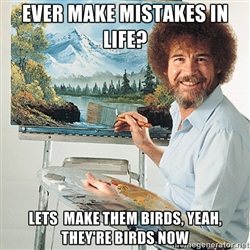
bob.ross

Another pet peeve actors have about auditions is when directors ask them to perform material they haven’t been asked to prep. Again, a sincere apology goes a long way here, and there are always exceptions. An actor’s not going to get cross with you if you call him in to read for a small role and decide on the fly to have him read for the lead. But actors WILL get cross with you if you ask them to perform “something” from a show you see on their resume (“You mean the one I did five years ago? In college?”). Another pet peeve of actors is when directors ask for outlandish adjustments, such as asking them to perform the monologue they just did for you, but this time as a spider. If you know you’ll want actors to do improv work or extreme, unusual adjustments, tell them in advance. If you decide on the fly you want to see something unusual, be cool about it and understand that you’re asking a lot.

Cold reads are so problematic I’ve given them their own post. Send your sides out in advance.

What actors love about your audition: Being treated with respect and kindness. Free snacks (a simple bowl of mini Reese’s peanut butter cups was mentioned as an especially nice touch). Available water, bathrooms, and seating.  Directors who pay attention during the monologue rather than text or eat. Directors who respond to an actor after the audition either way. An offer is always nice, but a timely release is appreciated as well, as difficult as they are to send.

We’re auditioning for the actor as much as the actor is auditioning for us. Think of it as a blind date.

Your blind date is less likely to end in happily ever after if you text through the whole thing.

Your blind date is less likely to end in happily ever after if you text through the whole thing.

REHEARSALS:

Directors, you should probably know that a lot of actors don’t want to pretend their characters are animals, especially experienced actors who already have their own character creation processes developed over years of trial and error. Being forced to choose an animal seems twee to many actors. It works for some, but not (from what I’m hearing) most.

guinea-pig---tan

“Now is the winter of our discontent made glorious summer by this son of York. Squeak.”

The most popular complaint, though, was time-related. “Mind if we stay late tonight?” I’m hearing that directors ask actors to stay late in the middle of rehearsal, or even at the end. The actors who pointed this out as a pet peeve fell into two basic categories: people who use public transportation and people who have early morning jobs. If you hold actors until 11:30, it makes it difficult for them to get home using public transportation (in the Bay Area, at least. Sigh.). Actors who have early morning jobs are already stealing from sleep to be at your rehearsal and are not at all excited about going in to work tomorrow on 4 hours of sleep, especially since you’ve scheduled another rehearsal that next night. No one wants to be the one who has to say, “Yes, I mind.”

Another issue is lack of concern for safety. This includes things like refusing to bring in a fight director and making untrained actors stage their own fights; making an actor perform blocking they feel is unsafe; making actors wear a restrictive costume that makes them feel unsafe (such as restricting vision). I’ve already blogged about why you need to hire a fight director. Otherwise, we need to remember to listen carefully and respectfully to actors when they tell us they feel uncomfortable or unsafe, and check in with actors when we’re asking them to do things that might be difficult or uncomfortable.  And actors, if you’re reading this, please be honest with us. Lying to directors about your comfort level serves no one.

Lack of respect and hostile work environment. Just because you’re the director does not mean you can yell at an actor until she cries. You can’t throw fits, scream at your tech people, call your staff names, or make racist. anti-Semitic, or misogynistic comments. Learning how to direct by watching movies about directors is ill-advised. I understand there’s cultural support for bad behavior by directors (the auteur being SUCH A GENIUS that he is allowed to be horrible to everyone around him) but it’s actually not OK. Producers: WHY WHY WHY do you hire these people? There are brilliant directors all over. Give someone else a chance. You really don’t need to allow someone to treat your people poorly.
WATCH ME! IT'S SO SIMPLE! GIVE ME THE PLAYBACK!

WATCH ME! IT’S SO SIMPLE! GIVE ME THE PLAYBACK!

What actors love about your rehearsal process: Respect. Being treated as collaborators. Having a clean, safe rehearsal space with bathrooms and nearby, easily accessible places to get food and beverages. Having a detailed rehearsal schedule sent out in advance.

DURING PERFORMANCES AND AFTER:

Refusing to do maintenance. Yeah, you kind of have to make sure the laundry gets done, props get repaired or replaced, etc. It’s not the actor’s job to do any of that. It’s our job as producers.
That's what I get for doing another blood show . . .

That’s what I get for doing another blood show . . .

Refusing to honor contracts. I’m not going into details here, but I’ve personally seen contract violations of both AEA and non-AEA contracts, in addition to the people who added this to their list of pet peeves. Honor your agreements.

What actors love about performances and after: Being allowed to use PR shots for their websites; producers who are accessible and approachable; a reasonable comp policy (no one expects 100 comps, but no one expects zero either); staying in touch after the show closes; recommending an actor to other companies; being paid on time with a check that doesn’t bounce.

We will not make our processes as magical as Batman riding a robot unicorn, BUT WE CAN TRY, DAMMIT.

We will not make our processes as magical as Batman riding a robot unicorn, BUT WE CAN TRY, DAMMIT.

Of course we all screw up from time to time. I’m no exception. I make 12 mistakes every day before breakfast. The overriding message I’m getting, though, is not that actors expect you to be perfect, but that they want to be treated with respect and dignity, and are happy to forgive you if you apologize sincerely for your mistakes.

Also of course, every actor is different. What one actor finds odious is perfectly fine for another actor. Talk to your actors and listen to what they have to say. Do your best to create an environment where your actors aren’t afraid to come to you with issues. Ask questions. Use your actor friends as a resource if you’re unsure. Communication is key.

Tagged , , ,

Stand Like You Mean It!

I don’t know a lot about Lena Dunham or her work. And this post isn’t about her specifically. My point is the fact that in this major portrait of a powerful young woman shot by Annie Fucking Leibovitz, the photographer who shows up to tell you you’ve ARRIVED– she is posed like THIS.
cn_image.size.lena-dunhamThis familiar, infantilizing, pigeon-toed stance that is one of the ways we pose young women to make them look hapless and charming and harmless. The semiotics of that pigeon-toed stance are clear and culturally very well-defined. And of course everything in this photo is deliberate. Leibovitz is a master photographer, not your aunt shooting holiday snaps. Both of these women know what they’re doing, and deliberately chose a pose with a specific cultural meaning.

As I’ve said, I don’t know much about Lena Dunham and I’ve never seen Girls (because I suck at watching TV) but I’m fairly certain that this woman who is well on her way to heading a media empire is, if anything, sure of herself.

Why does it matter? Why do I have any fucks to give about a person I’ve never met and the pose she’s throwing in her Annie Leibovitz portrait?

Because: How we portray powerful women MATTERS. This is a portrait of a young woman who is newly very, very powerful, and she is posed in such as way as to ameliorate that power. Lena Dunham is a very powerful, very young, very wealthy woman now, and whether she herself chose to ameliorate that by using a childlike pose and Leibovitz agreed, or whether Leibovitz posed her that way deliberately and Dunham agreed, it sends exactly the wrong message.

We have a lot of trouble with powerful women in our culture, and even more trouble with powerful young women. We pose young, powerful men in ways that celebrate their power (this, this, this, this, this, and this). We pose young, powerful women in ways that sexualize or infantilize them (or–ick–both). See this, this, this, this, this, and this.

I understand that Lena Dunham’s character in Girls is all about straddling the line between adolescence and adulthood. I get that. But this is not a portrait of her character. It’s a portrait of a powerful writer, producer, and actor.

I understand that it’s her choice to pose how she likes, and Leibovitz’s choice to shoot what she likes. I understand that Dunham is likely considering her branding in this image, and uses the helplessness and winsomeness she’s portraying here to aid her success in an industry that’s famously skittish around powerful women. I understand the “don’t mind me; I’m harmless” branding choice. I understand branding yourself that way makes powerful men in the industry less nervous, and makes potential audience feel protective and charmed.

Understanding all this is part of what makes me so frustrated with it. We only ask women to ameliorate their power in this way. Only women need to soft-sell their power. This is gendered branding.

What would make it suck a lot less for me, personally (because this whole blog is, of course my personal opinion, and YMMV)

DID YOU JUST READ THAT?

DID I JUST TYPE THAT?

OK, I’m stopping myself. I have a blog that’s read by more people than I ever imagined possible. I’m in the middle of a post about the portrayal of women, and how it sucks that we’re encouraged to soft-sell our power. AND I JUST MITIGATED MY OWN OPINION IN THE MIDDLE OF WRITING IT. This training runs deep.

In the facebook discussion leading up to this post, I was told by an older man that my “style of criticism” was “over the top.” Whenever women speak out, whenever women claim our own power, whenever women voice an opinion without a meek “Well, it’s just my opinion,” someone is there to tell us we’re wrong for it. Often, we do it ourselves. This training runs deep.

I’m choosing to own my power. This is my critical read of this image and this branding. Full stop.

Deep breath.

What would make this a lot less frustrating for me would be if the imaging and branding of men and women were less gendered. There’s nothing wrong with a woman posing for a portrait in an infantilized way in and of itself, but at this cultural moment we’re faced with the hard, cold reality that women– young women especially– are instructed to present ourselves in ways that mitigate our power, and are met with a wagonload of disapproval if we do not, while men are encouraged to do exactly the opposite. This kind of gendered branding sucks for women AND men.

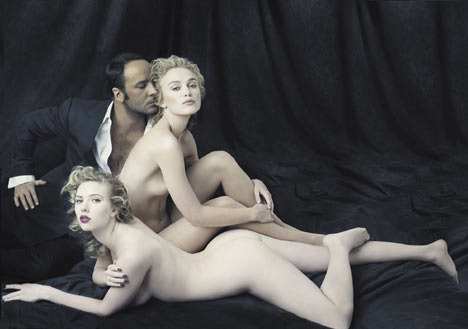
I’ve spent quite some time this morning looking through images of young, powerful men and women. I’ve flipped through hundreds of images of dozens of people. And the one that seems to sum it all up is this:

scarlett-johansson-and-keira-knightley-gallery

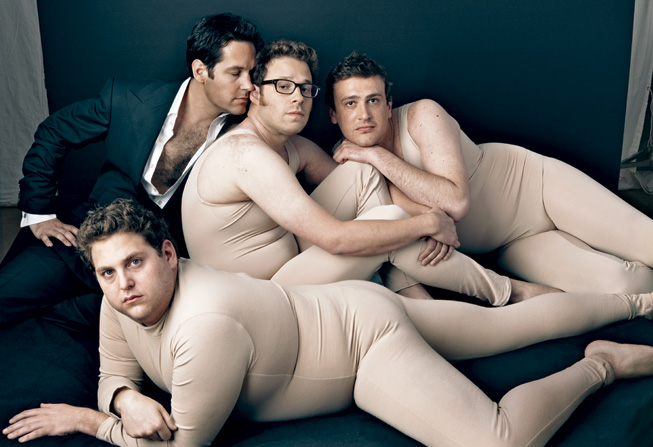
This photo of Tom Ford, Scarlett Johansson, and Keira Knightly, shot by Leibovitz for a Vanity Fair cover in 2010, sums it all up nicely. The parody shot Leibovitz did later also speaks volumes about how we portray powerful men vs. how we portray powerful women. It’s funny because of the ironic juxtaposition.

comedians0904pp01

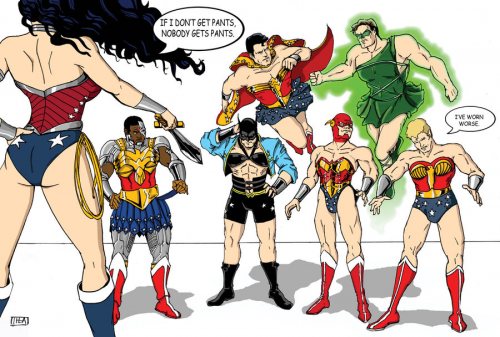
It’s the same kind of humor we get from this bit of awesomeness:

Created by Theamat on Deviant Art

Created by Theamat on Deviant Art

and this:

What is all the Avengers posed like artists draw female superheroes?

What if all the Avengers posed like artists draw female superheroes?

And this:

Vicious Grace - Jim

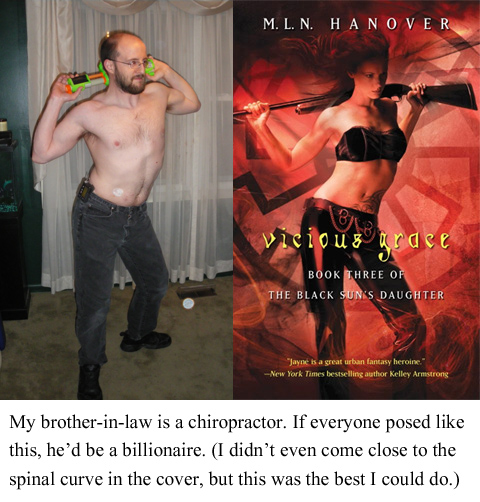
The man in the above photo is fantasy author Jim C. Hines, who has an entire series of photos of himself posing the way women are drawn on book covers. It’s glorious, so check it out here.

There are numerous examples of men posing or dressing the way women are posed and dressed, all creating humor out of the ironic juxtaposition and all (hopefully) highlighting the sexualized and infantilized ways we create images of women. Check this out, and this, and this.

Lena Dunham is a powerful young woman, and an Annie Leibovitz portrait is a potent, lasting statement of one’s celebrity. I just wish they had chosen to frame her within that power, rather than mitigating it.

UPDATE: To my astonishment, 3000 people read this post within the first 48 hours it was up. So far I’ve read and/or received dozens of comments on it in various venues. The people who agree with me are a mixed bag of genders. The people who disagree with me are, so far, 100% men. That was, I must say, completely unexpected. I assume there will eventually be women who disagree (or, more accurately, voice their disagreement to me), but the fact remains that it’s gone this long with only male voices telling me I’m wrong, scolding me for “reading too much into it,” or taking me to task for “attacking” Lena Dunham. Interesting, right?

Tagged , ,

My Friends Are Awesome: Part One

For some reason I will never understand (Maybe they just like slumming it? Maybe it’s the cupcakes?), I have friends who are doing truly incredible things out in the world. I’ve decided that every so often, I’m going to point to one.

Oh, look! NICOLE GALLAND.

Nicole Galland. Photo by Eli Dagostino.

Nicole Galland. Photo by Eli Dagostino.

I’ve known Nicole since we went to grad school together. After grad school, she became a very successful writer of historical fiction. Her research is insanely deep, her characters are detailed, and, even better, I can’t predict the narrative from page one, which is saying a lot since narrative is where I live. Her books include the incredible I, Iago, a must-read for anyone working on Othello, The Fool’s Tale, Crossed: A Tale of the Fourth Crusade, and Revenge of the Rose.

Her latest book, Godivajust came out. I asked Nicole a few questions about it, and about writing in general.

godiva

It seems most people think women in medieval Europe had far fewer freedoms than they actually did. Is this what attracts you to writing about women in this period? What were some surprising discoveries you’ve made about medieval women throughout your research for your books?

This gets complicated. In Britain, Anglo-Saxon women were better off than the general impression we have of “medieval women.” Things went downhill for them after the Norman Invasion. There is a bit in The Fool’s Tale addressing this from the other border: Welsh women, too, had more rights in that era than did Anglo-Norman women. But since the Normans were the victors and the victors write history, the sense we have of all women’s fates in medieval England comes from a selective reality. Women other than women-known-to-Norman-writers had freedoms we would not expect. Some of their rights are shocking, by modern standards. My favorite example: in Wales, a woman who caught her husband with a mistress could legally kill the mistress as long as she did it herself, not via a third person. Men did not have the same rights – a man who caught his wife in infidelity had to follow a more conventional judicial process.

So the discovery is less about how well women fared, and more about the discrepancy between the official story and the underreported ones. We all know a well-spun “master narrative” can brainwash or mislead. It happens that women’s roles in medieval Britain are a dead-easy example.

Or example, the traditional Godiva legend falls apart when you question the source. The original story is based on a Norman monk’s depiction (more than a century after the fact) of Norman property laws, in which Godiva’s husband, by virtue of being both her husband and her lord, had the power to impose a tax on Coventry. But actually, Godiva was Anglo-Saxon and under the laws of her time, her husband had no such power. So obviously if she really made the ride (and OK, maybe she didn’t) something else was going on– something other than “husband is lord while wife is feisty but compliant chattel.”

And that’s just Britain. It gets even more complicated when you move into various parts of Europe, Constantinople, the Jewish population, the nobility vs the commoners, etc.

I love that you’ve retold the Godiva story in a way that’s so empowering (ugh, I hate that word, but there it is) for women. What drew you to the story, and was that your plan from the beginning, or something that naturally grew out of exploring the narrative?

No plan, really. Godiva surprised me as much as she surprises most people she introduces herself to. I was drawn to her almost accidentally and had no idea where the interest would lead. The original story was about Edgiva, the Abbess of Leominster. When I realized that Lady Godiva has been the patroness of Edgiva’s abbey, I just wanted to add her for some background color.

But that meant having a very clear idea of who Godiva was and why she would have made her ride, and once I was (excuse the term) on that horse, I went full-tilt. As I said above, the original legend doesn’t hold up historically, and I needed something that did, so suddenly I was deeply invested. In terms of simple research, the deciding factor was my realizing, “Hey, these Anglo-Saxon women kicked butt. I better step up to the plate and honor that about them.”

I see so many writers create very bland, generic relationships that exist as a thoroughly uninteresting backdrops for their narratives. The relationship between Godiva and Leofric felt very real to me, and was rich with specificity and detail. Likewise, the relationship between Emilia and Iago in I, Iago felt absolutely real, although completely different in almost every way from the Godiva/Leofric relationship. How do you approach creating these romantic relationships that are so richly realistic and detailed?

A truthful but sappy answer is that the Emilia/Iago relationship was finessed, and the Godiva/Leofric relationship was created, while I was falling in love with Billy [Galland’s husband, actor Billy Meleady], with whom I have the best relationship of my life. I don’t mean to imply you need to experience something personally to write about it of course, I’m just saying sometimes it’s easier to sketch an image when you have a model to draw from.

Shakespeare gets some credit for Iago and Emilia, although the relationship is tricky to interpret; I’ve seen it played vastly different ways. In fact on the book tour for I, Iago, I’d have friends perform the handkerchief scene between the couple, twice– first with Emilia as a playful, almost cheeky wife, and then a terrified, deeply abused one. Same text, same actors, completely different story. It’s all in the details. Choose quirky specifics and invest in them; the payoff is very satisfying.

I know a lot of aspiring writers read this blog. Do you have any words of advice for them?

It’s so cliched but: don’t give up. Just keep on keeping on, even when you believe you suck and have no chance of success. Especially then. My first novel came out the year I turned 40; I’d started it in college. Along the way I was a (not untalented, and yet not successful-enough) actor, director, screenwriter. As a screenwriter, when I got the largest single paycheck of my life, I had $52 left in my bank account. 36 years old, Harvard grad, 52 bucks. Don’t give up.

Another cliché, but just as true: don’t compare yourself to anyone else, regarding talent, success, or circumstances. Ever. Period. It’s a waste of time and energy. End of discussion.

And finally: disregard the hot new mantra to “Find your voice,” because I’ve been hearing that a lot lately and it doesn’t help; in fact, it makes me horribly self-conscious; I feel like I am being told to brand myself (another big concept these days). Just do what makes your heart feel good, even if that means you use many different voices.

I’ve provided links above to purchase Nicole’s books online, but both of us urge you to check out your local independent booksellers! Hell, we urge you to check out your local independent EVERYTHING.


WOMEN PLAYWRIGHTS: I Challenge You

Image

Arwen Anderson and L. Peter Callender with Marissa Keltie, Julia Brothers and Robert Parsons in Circle Mirror Transformation by Annie Baker, at MTC

Marin Theatre Company, a LORT here in the Bay Area (and let’s give them a round of applause for how much local talent they hire, shall we? YAY) has two prizes they’re giving out for new plays. No submission fees, and the submission process is simple and online.

Here’s the deal: No matter what the thing is– prizes, contests, festivals, open calls– plays by men make up between 65% and 75% of the submissions. I’ve experienced this personally, seen it measured in studies, and had it quoted to me anecdotally by other ADs.

While I’m sure there are some contests out there somewhere achieving 50/50 submissions, the norm is nowhere near parity. If we want 50/50 productions, the first step is to make sure everyone has 50/50 submissions.

Start with MTC.

Image

Bowman Wright (Lincoln) and Biko Eisen-Martin (Booth) in Topdog/Underdog by Suzan-Lori Parks, at MTC. Photo by DavidAllenStudio.com

I’ve issued my challenge on my facebook. All you need to do is submit to one of the two prizes MTC has going and then comment “DONE” on my facebook note. I want to see 100 women submitting to these contests.

If 100 women comment on my facebook note that they’ve submitted, I’ll do profiles of three playwrights, randomly selected from the list, on this blog. I’m no Adam Szymkowicz, but still.

Here’s the link to the facebook note. LET’S DO THIS.

Image

Tagged , ,

No, I Will Not Smile

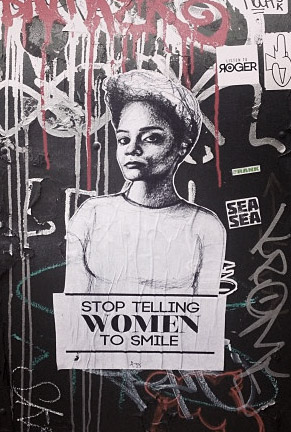
Art by Tatyana Fazlalizadeh. More of her awesome work at: http://www.tlynnfaz.com

Art by Tatyana Fazlalizadeh. More of her awesome work at: http://www.tlynnfaz.com

So lots and lots of people who are cooler than I am have written about street harassment. Whenever I post about street harassment on facebook, I get dogpiled with comments– always from men– defending the behavior, or saying things like (and I quote):

“You should take it as a compliment!”

“That doesn’t happen in [city name].”

“That never happens in [type of place, such as subway, mall, universities].”

“I’ve never seen that happen.”

“Only men of certain ethnicities do that.”

“How else are we supposed to meet women? Give us a break!”

…….and the like. I have been told by men, in no uncertain terms, just how wrong I am every single time I’ve ever spoken up about this issue. Every. Single. Time. I see you, men who are limbering up your fingers to tell me I’m just a dumb girl, or a feminazi, or that I just don’t understand, or that I’ve made the entire issue up because duh women do that all the time. Hold up. Read the rest of the article, click on the hyperlinks and read those, and if you still feel like telling me what an asshat I am, I promise you I will read your comment with a serious look on my face THROUGH THE WHOLE THING.

This is what my serious face looks like . . . IN MY IMAGINATION. And please stop telling me I'm Simon, not Zoe. I ALREADY KNOW.

This is what my serious face looks like . . . IN MY IMAGINATION. And please stop telling me I’m Simon, not Zoe. I ALREADY KNOW.

The small area of the Street Harassment Monster I want to tackle right now is the, “Smile, baby! Why don’t you smile? You’d look so much prettier with a smile on your face.”

If you are approaching a stranger with any variation of the above, you are behaving like the human embodiment of painful rectal itch. Here’s why.

Accosting strangers on the street is uncool. In addition to being fucking annoying, it makes women feel unsafe. We have no way of knowing what you’re going to do. I was pushed, HARD, to the ground, at an ATM because I refused to acknowledge a strange guy who was demanding that I smile at him. If our responses to your demands for attention are not to your liking, many of you immediately escalate the encounter to verbal or even physical abuse. We have no way of knowing whether you’re just going to walk away or whether you’re going to follow us down the street yelling, “Fuck you, you stuck-up bitch. Who do you think you are, fat bitch? Don’t you ignore me, bitch,” grab us by the arm, pin us up against a wall, or surround us with jeering companions who threaten to rape us. WE DON’T KNOW WHAT YOU WILL DO. It’s scary. Stop it.

Is it unfair that you, who believe you are a Nice Guy, have to curtail your behavior because other men are behaving like worthless chumpbuckets? Maybe, maybe not, but it’s MUCH more unfair that you’re forcing a woman into an interaction that she knows has a very real chance of ending in verbal or physical abuse.

You have no idea why she’s not smiling. Did she just get the news of a death in her family? Lose her job? Is she having painful menstrual cramps? Did she just kill a strange man who harassed her on the street and is worried about doing it again now that she’s tasted blood? Demanding that a woman construct a cheerful look on her face simply because you demand it is to ignore the fact that she is a person with a life, just like you are. You know NOTHING about that life, and therefore, you know NOTHING about her emotional state. Back off. Actually, back off and read this.

You are not entitled to cheerful interactions with women on demand. Why do you think it’s OK to make random demands of women on the street? You are not our toddlers. Do not demand juice boxes, smiles, or attention from women you do not know. This is what toddlers do. This is why mothers are exhausted: constant demands for attention. Before you demand that the woman you see walking towards you (or are following, ew) force a smile on her face, remember that you are the third man who has demanded her attention in the last 20 minutes. She just wants to walk down the damn street. If she wanted a toddler, she’d have one. If she has a toddler and you harass her with “Smile for me! Don’t forget to smile!” she is now, thanks to Olympia Snowe and her outgoing gift to American women everywhere, The American Patriot Mothers for American Patriotic Heritage Act,  legally entitled to give you a roundhouse kick to the temple.

No, your attention is not flattering. I’m just going to leave this here in case you’re wondering what women think of your commentary and/or demands.

do_not_want2

If you think this behavior is OK, remember that there are quite literally millions of men all over the world who agree with you, and many of them will start harassing your daughter once she hits middle school. They harass your wife. They harass your little sister.

All we’re asking is that you remember that women are people. All we’re asking is that you treat women on the street with the same respect you’d treat your daughter, your mother, or a heavily armed level 20 dwarf fighter.

Did I just hear you demand that I smile? I will smile over your bloody corpse, human.

Did I just hear you demand that I smile? I will smile over your bloody corpse, human.

Tagged , , ,

Why Cold Readings Are Almost Always Useless

My Troilus and Cressida auditions

My Troilus and Cressida auditions

I’ve been steadily working on a post about auditions for directors and producers (what drives actors crazy, what they love, what works, what doesn’t) and I keep getting hung up on specific issues that end up taking on lives of their own. The homogeneity of the women on our stages was the first one, and now this. Eventually I’ll have a post for you (PINKY SWEAR) but I think we all need for it to be less than 38,000 words long, so I’m breaking these larger issues out into posts of their own.

So, cold reads, amirite? They’re almost always completely useless. Let me count the ways.

1. The information a cold read gives you is beside the point. When you hold an audition, especially a callback, you’re attempting to obtain a specific set of answers to a specific set of questions about an actor. Chiefest among them are how the actor makes choices, shapes narrative, engages with scene partners, handles the language, physicalizes choices, and takes direction. You need to know how the actor inhabits the character for which she’s auditioning. You need to see her make emotional and physical choices within that, and make thoughtful adjustments to those choices. You need to see what her style is– does her approach to the material fit with your own well enough to ensure a productive rehearsal process? An actor who has not had adequate time to prepare will be able to show you almost none of that, because that work is complex and takes time– which is why we have a rehearsal process instead of just having actors memorize the script on their own and show up to tech to get their blocking. We expect actors to come into rehearsal prepped, and it’s without a doubt that auditions, as artificial as they are, will provide you with the most accurate information about how your actor will rehearse (and, therefore, perform) if they can replicate as closely as possible the conditions of rehearsal.

A cold read is a completely different experience than either rehearsal or performance in almost all cases. What a cold read shows you is whether an actor can make choices QUICKLY and how adept the actor is at reading aloud. While either of those skills can be useful in some very limited situations (soap opera acting and voice over work spring to mind), they are of limited use in casting your production of, say, Hamlet or Eurydice, where creating a space for the actor to show you her talent, skill, and craft will be of much better use than seeing how good she is at pulling something out of her ass on the spot that will be, of necessity, superficial.

In case you needed any more evidence that cold reading skills are only loosely related (at BEST) to acting skills, I am an EXCELLENT cold reader and LOVE to cold read. Ahem. ‘Nuff said.

OK, I'm not THAT bad.

OK, I’m not THAT bad.

2. An actor who lacks the time to prepare is an actor glued to the script. Of course no one expects an actor to come into callbacks with the sides memorized, but a prepared actor is an actor whose head isn’t constantly buried in his script. If he’s unfamiliar with the lines, the basic narrative of the scene, or the emotional narrative of the character for which he’s auditioning, he’ll be unable to connect with his scene partners as his head will be glued to his script trying to piece together what comes next and what he’s going to do about it. If being able to engage scene partners is an important skill to you (SPOILER ALERT: it is), then you want that kid’s head out of his script as much as possible. Giving him the opportunity to look it over in advance is the way to do that.

3. Dyslexic actors are more common than you think. While many mildly dyslexic actors have found ways to work around a cold read situation, you’d be surprised at how often incredibly talented actors are so severely dyslexic they have to turn down your callback because you can’t be arsed to send sides in advance. When I posted about this on facebook, I was deluged with grateful responses.

“I’m literally crying as I type this. You have no idea how many auditions I have had to turn down because I didn’t want to look like an idiot, stumbling over words, and sounding them out in front of the auditors.”

“Many dyslexics are incredibly expressive and artistic people, which is what makes them such brilliant performers. I am one of these people. Thank you so much for seeing us in a world that often doesn’t.”

“Yes! Thank you. I have this issue so frequently.”

Personally, I learned firsthand how useless cold read auditions were years ago when I worked with an incredibly talented actor who was so severely dyslexic he could not read aloud at all. However, he was almost always the most talented actor in the room. People can succeed if you give them the tools they need to succeed, and all a severely dyslexic person needs is a little time.

If I could just have a few more minutes with the script . . . No?

If I could just have a few more minutes with the script . . . No?

4. When is a cold read audition appropriate? If you’re directing a film or TV show wherein you know the actors will be receiving new pages regularly and will need to be able to prep and perform those pages almost immediately, a cold read audition is a useful tool in addition to an audition that allows for more in-depth work. Similarly, many commercials and music videos require on-the-spot preparation. (Not that you need six hours of rehearsal to prep a 30 second Valtrex ad or the character “Hot Girl Dancing near Lamborghini.”) If you’re directing a play and cold read skills are required as part of the performance, such as an audience engagement piece where the actors perform material the audience has written on the spot, you’ll want information about an actor’s cold reading skills.

"Thank GOD for my RADA training or I'd never be able to get through this"

“Thank GOD for my RADA training or I’d never be able to get through this”

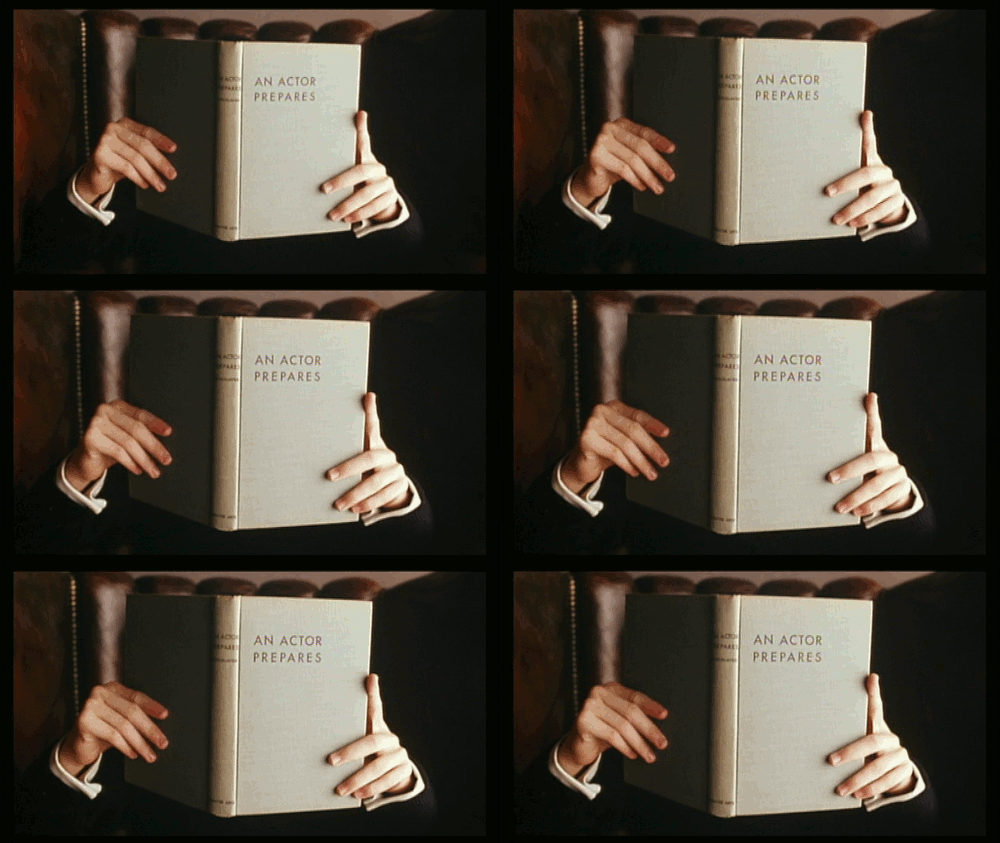
You might be able to get the information you need from a cold reading if you’re not the kind of director who is focused on in-depth work with actors. There are some directors who are more visually-focused, storytelling through visual imagery rather than focused on storytelling through acting and the actors’ emotional narratives, and for those directors, simply seeing an actor talk and move through space may be enough. If you’re not going to do in-depth acting work, there’s no need to see how the actor approaches in-depth acting work, right? So a cold read, which by necessity cannot ever be in-depth, could give you the information you require.

actorprepares


But for the rest of us, the information we get from a cold reading is just beside the point of the information we need to make informed casting choices, and marginalizes severely dyslexic actors (whose numbers are much greater than you think) to boot. So eliminate cold reading auditions unless you really need to test the actor’s cold reading skills specifically. You’ll get better information AND be more inclusive.

Tagged , , , ,

Skinny White Girls are Exhausting My Eyes

I have nothing against skinny white girls. I really, really do not. I know and love many of them. I cast them all the time, which is not surprising, since the nonunion acting pool anywhere in the US is made up of something like 65% skinny white girls. And even lumping them all together in one group is needlessly reductive– they are as varied as any other group of humans.

But but but.

My eyes are exhausted from looking at skinny white girls and ONLY skinny white girls.

In nearly every representational context, “female” = “skinny white girls.” We, as a culture, are forcing the female experience, in all its variety, to be almost ALWAYS represented by and contained within the body of a skinny white girl. Skinny white girls are not seen as particular; they are seen as general, as “the female.”

In our culture, we posit the stories of straight able-bodied white people, especially of straight able-bodied white men, as universal, and the stories of everyone else as marked by difference. A romantic comedy starring a straight, white, able-bodied couple is just a romcom; but change any one of those characteristics and it becomes a genre film: a Black film, a gay film, a disability “issue” film. You wouldn’t need to change a single word of dialogue to change the perception of the film– just the casting.

What is considered “universal” in representational media is actually reflective of a particular experience– the experience of privilege, usually straight white able-bodied male privilege. Those of us who do not share that experience are always expected to translate– to find and relate to the humanity within the experiences of people unlike us. But those privileged people are rarely expected to do the opposite. Men are rarely expected to relate to plays or films about women, but women are ALWAYS expected to relate to plays or films about men. A film centered around the story of a white man is just a film culturally positioned with the expectation that all will enjoy it in its universality, but a film centered around the story of a Black woman is culturally positioned with the expectation that only Black women will relate to it.

This is a potent issue resulting in a paucity of variation in the portrayal of women. In American mainstream film, TV, and, unfortunately, theatre, what’s positioned as a “normal” and “universal” portrayal of a woman is skinny and white.  All women everywhere are expected to see ourselves, find our humanity, and relate our experiences to the experiences of skinny white girls, most of whom (let’s be realistic) are under the age of 40. AND WE DO. We do it all the time. We do it so well we don’t even think about it most of the time.

I didn’t even realize how exhausted I was by this until I started going to shows at African American Shakespeare Company. As I was watching Merry Wives of Windsor, it slowly dawned on me that I had a level of buy-in to the three lead female characters in the show that I hadn’t had in quite some time. I found myself wondering why. Was it the fantastic acting? Well, sure, but I see fantastic acting all the time. Was it the solid directing or the midcentury costumes (I’m such a sucker for vintage)? I turned it over and over in my mind. And then I realized: Because the three lead women were not all skinny white girls, I felt a level of comfort with them and, by extension, with the narrative, that I hadn’t experienced in a long time. By seeing women who were outside the circle of mainstream privilege, even though they were outside it in a different (and, I would say, more deeply meaningful) way than I am, I felt . . . welcomed. I felt like I could relax. I felt like there was a level of implied judgment that was left outside.

So what does this mean? I’m not saying we should stop casting skinny white girls. Of course not. They’re talented, wonderful human beings who deserve roles and love and cupcakes and all the good things in life, just like anyone else. But clearly we need to step away from the formula “normal = skinny and white.”

I think we all, as a culture, need to look at the ways in which we portray women. While we always portray men in specific ways (the attorney, the action hero, the troubled scoundrel, the cop, the bad guy), we all too often portray women in generalized ways (“the woman”) connected only to their relationship with the men, or to the male-driven narrative. When we step out of that, we fear scaring away potential audience by stepping outside of the “universal” when we step outside the portrayal of privilege.

If you’re a skinny white woman, or a white man, you represent an ever-shrinking segment of the population, but the bulk of representational media still posits you as “normal” and everyone outside of you as marked by difference– the further the difference, the deeper the marking.

Here’s what you can do– here’s what we ALL can do– to have the greatest impact on creating real diversity in our representational media.

If you ever find yourself thinking, “That play/film/show/book isn’t for me,” STOP YOURSELF and ask yourself why you think that. Is it because it has a central female character? A central non-white female character? What is it about her experience or humanity that you find so foreign to your own human experience you feel like her story ISN’T EVEN POSSIBLE TO UNDERSTAND? Yes, you will need to do some work to find YOUR humanity in HER story, but I promise you that you can do it, because SHE does it for YOUR stories every day of her life.

I have heard, dozens and dozens of times, smart, educated, awesome men say about plays with female-driven narratives, “I think this play is well-written, but I don’t get it.” They see the difference and stop there, because they’ve never learned to translate. They’ve never had to.

This is a learned skill. You have to TRY to do it if you don’t already know how. It has to be a conscious choice to step over your privilege and learn to translate the experiences of people who do not share your privilege, finding your own humanity within them. Will you understand every nuance? Of course not. I don’t understand every nuance of every play about the male experience. I’ve never been a closeted boy on a chicken farm, I’ve never been kicked in the balls, I’ve never been on a professional sports team. BUT NEITHER HAVE YOU. Well, maybe the balls part (sorry, that must have sucked), but certainly not the other two. Yet, because the protagonists of Joshua Conkel‘s MilkMilkLemonade and Richard Greenberg’s Take Me Out (both wonderful plays) are male, I’ve seen men relate to those characters and effortlessly see their own humanity in them, even while claiming not to understand plays with female central characters whose stories more closely match their own experience.

I firmly believe that being able to have a theatre community that  stages work with female protagonists– or, hell, even with female supporting characters– who are as diverse in as many ways as women actually are RELIES on having translation buy-in from the resistant members of our potential audiences AND from the resistant members of our own community– two groups, by the way, with significant overlap.

Skinny white girls are cast in almost all our female roles, and have become associated with “normal woman,” because our culture equates whiteness and thinness with beauty (an extremely problematic notion in and of itself), and the body of the actress is there to be looked at– the actress is all too often there to be “the female” in a man’s story rather than there to inhabit a particular story about a particular woman. We can change this in two ways: by expanding the concept of desirable beauty to include more types of women (good) and (even better) we can stop positioning women all the damn time as “desired object,” start staging work that features stories about different kinds of women, and stop pretending that any play that doesn’t conform to “normal woman = skinny white girl as object of desire” is some kind of crazy deviation from the norm.

In order to do this, to achieve diversity, especially a realistic diversity of women on our stages, those who are unused to translating must make a commitment to learn how to translate the experiences of others unlike themselves and see their own humanity therein. But this must be a conscious CHOICE and an ongoing process, or it’s not going to happen.

I know this is not only possible, but happening right now, because I see it myself. Not every white guy is mystified by translation. We’re in a cultural moment where everything is shifting, and our kids are growing up in a world that values diversity in ways never before seen in the history of the world. This is an achievable goal. But we must consciously CHOOSE to achieve it.

Once that choice is made, we’ll start to see more work wherein women aren’t there as decorative objects and events in the lives of men, and we’ll start to see more women on our stages who do not conform to mainstream images of beauty, because their primary function will be telling a story, a story the entire audience will be able to relate to, empathize with, see themselves in because they have chosen to. Our stages will still have room for skinny white girls, but they will also have room for every other kind of woman, and, for that matter, every other kind of man.

We just have to all make the choice, together, to see the humanity in others.

Tagged , , , , ,

The Parents from the Preschool Across the Street from My House Are the Worst People in the Whole Entire World

That may be a slight exaggeration. BUT ONLY SLIGHT.

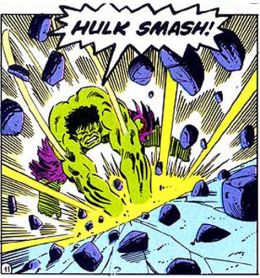
For some reason, the people whose children attend the preschool across the street from my house think it is perfectly acceptable to block my driveway during pick-up and drop-off. At first, we were irked but took it relatively in stride. However, after being blocked either in or out of my driveway dozens and dozens and dozens of times, I’ve reached my wit’s end, then passed my wit’s end, then reached BLINDING RAGE.

hulksmash

One thing you might not know about me is that I’ve had four surgeries on my hips and pelvis, and I have a degenerative condition in my back. Walking can be extremely painful for me. I can’t just park around the corner, as I can’t walk up the hill, even on a good day, without the pain of a thousand flaming suns.  I need access to my driveway. But of course, for the parents of this children’s center, my ability to get into my house is insignificant compared to the CRUCIAL IMPORTANCE of them saving the 17 seconds it takes to drive one house down and around the corner, where there is always ample parking.

We’ve tried discussing it with the school director (repeatedly). We’ve tried talking nicely to parents. We’ve tried talking sternly to parents. We’ve tried yelling angrily at parents. We’ve tried calling the police to ticket the offending vehicles. We’ve contemplated taking sledgehammers to cars and/or laying down caltrops. (I still have not ruled these last two out.)

When confronted, they hand me one of two reactions:

EXCUSES. “It’s the very first time I’ve ever done this!” (Evidently 400 kids go to that one preschool.) “I was only there for a second!” (I’ve been sitting here for ten minutes waiting for you to get your ass out of the school, into your vehicle, and out of my life.)

BELLIGERENCE. “Fuck you, lady!” “Who do you think you are? I can park where I want!” or my absolute favorite, delivered to me by a man whose size and height dwarfs my own, “GET OUT OF THE CAR AND SAY THAT AND SEE WHAT HAPPENS.” It takes a special kind of horrible man to physically threaten a mom in front of her own house while blocking her driveway, but it takes epic balls to do so while you’re driving a car with personalized plates, doesn’t it, Mr. Calhoun?

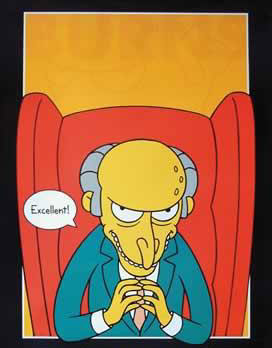
excellent

I’ve finally taken to blocking my own damn driveway, which prevents them from blocking me IN, but I do have to leave the house occasionally, and if I return during drop off or pick up hours, it’s almost a certainty my driveway will be blocked by one of these fine, fine citizens.

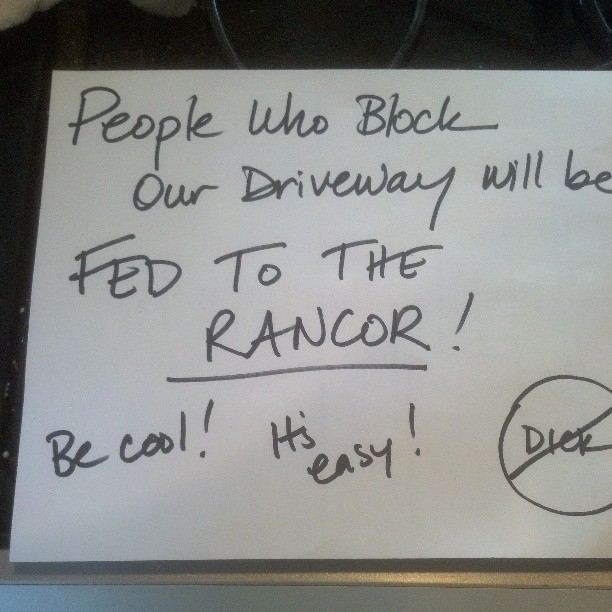
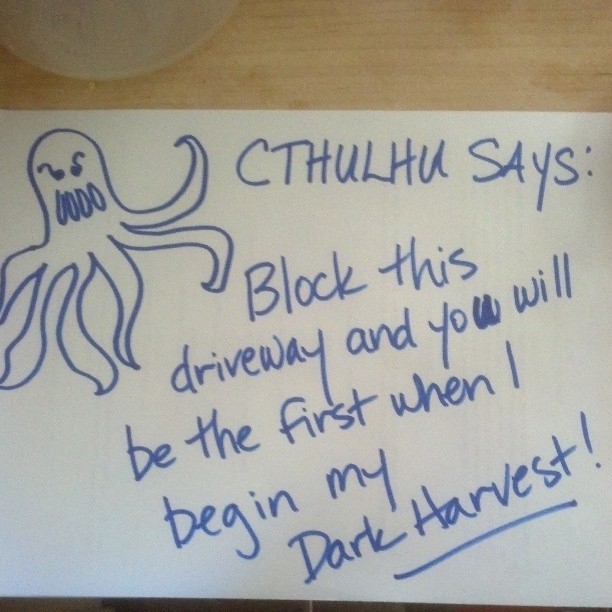
So this is my latest solution:

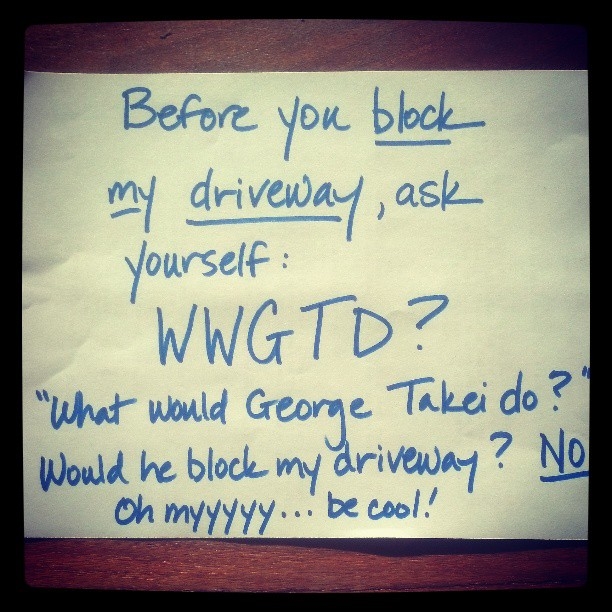
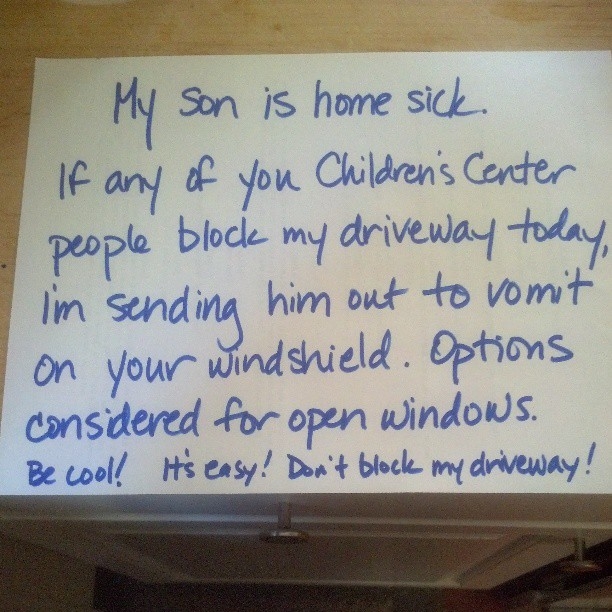
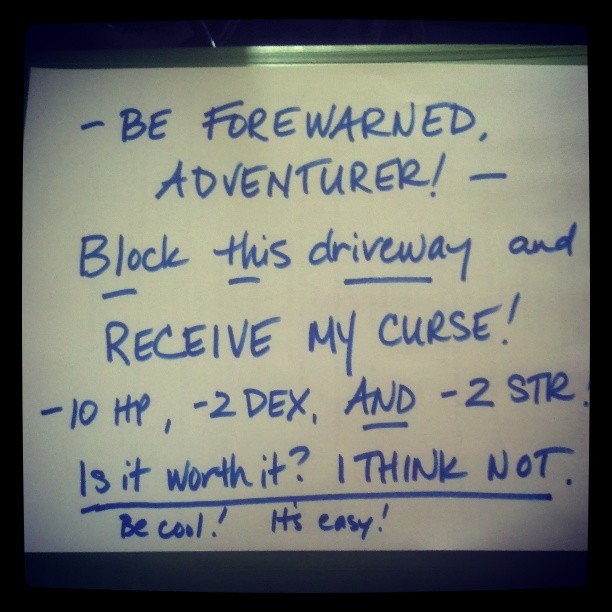
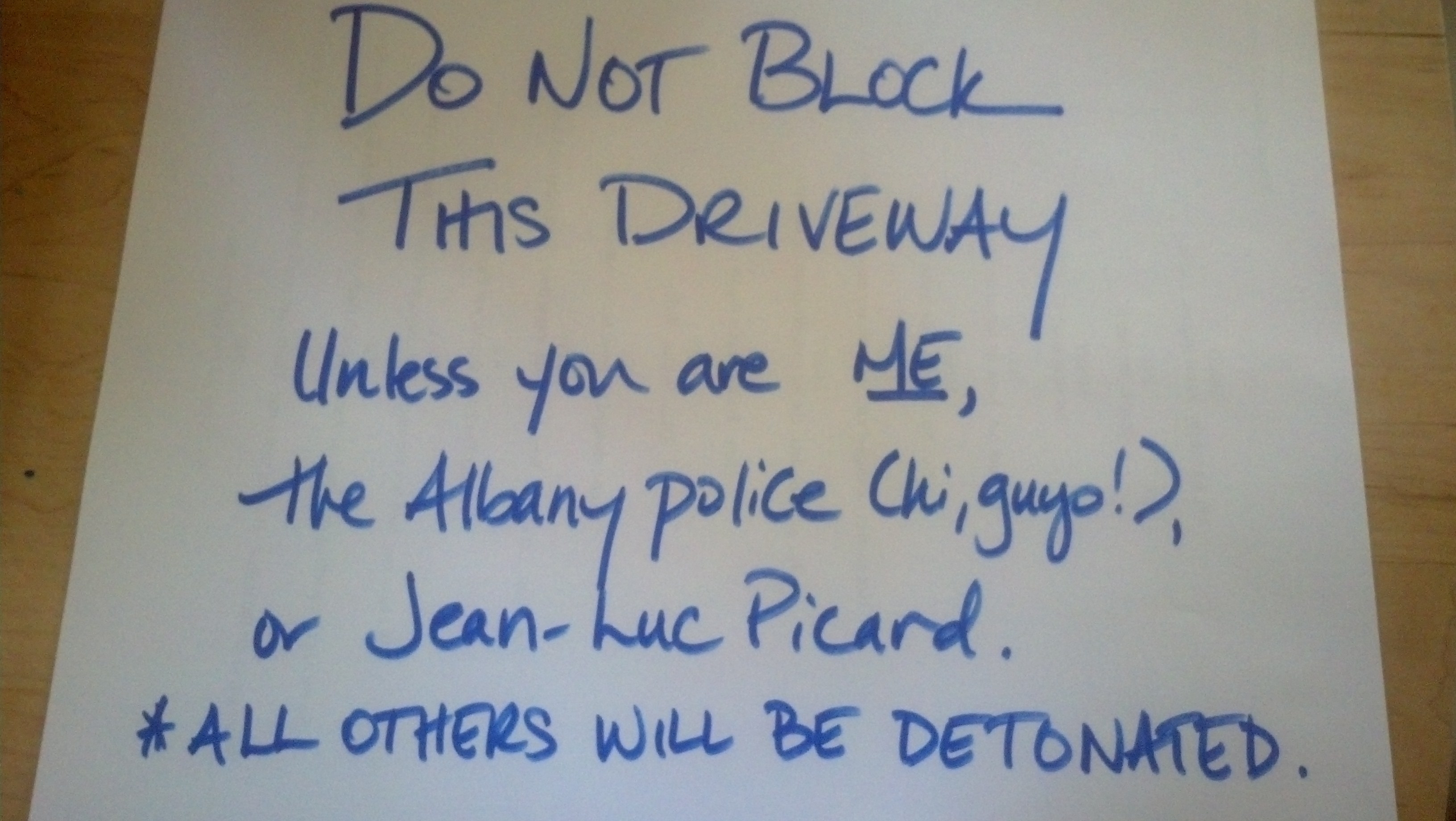
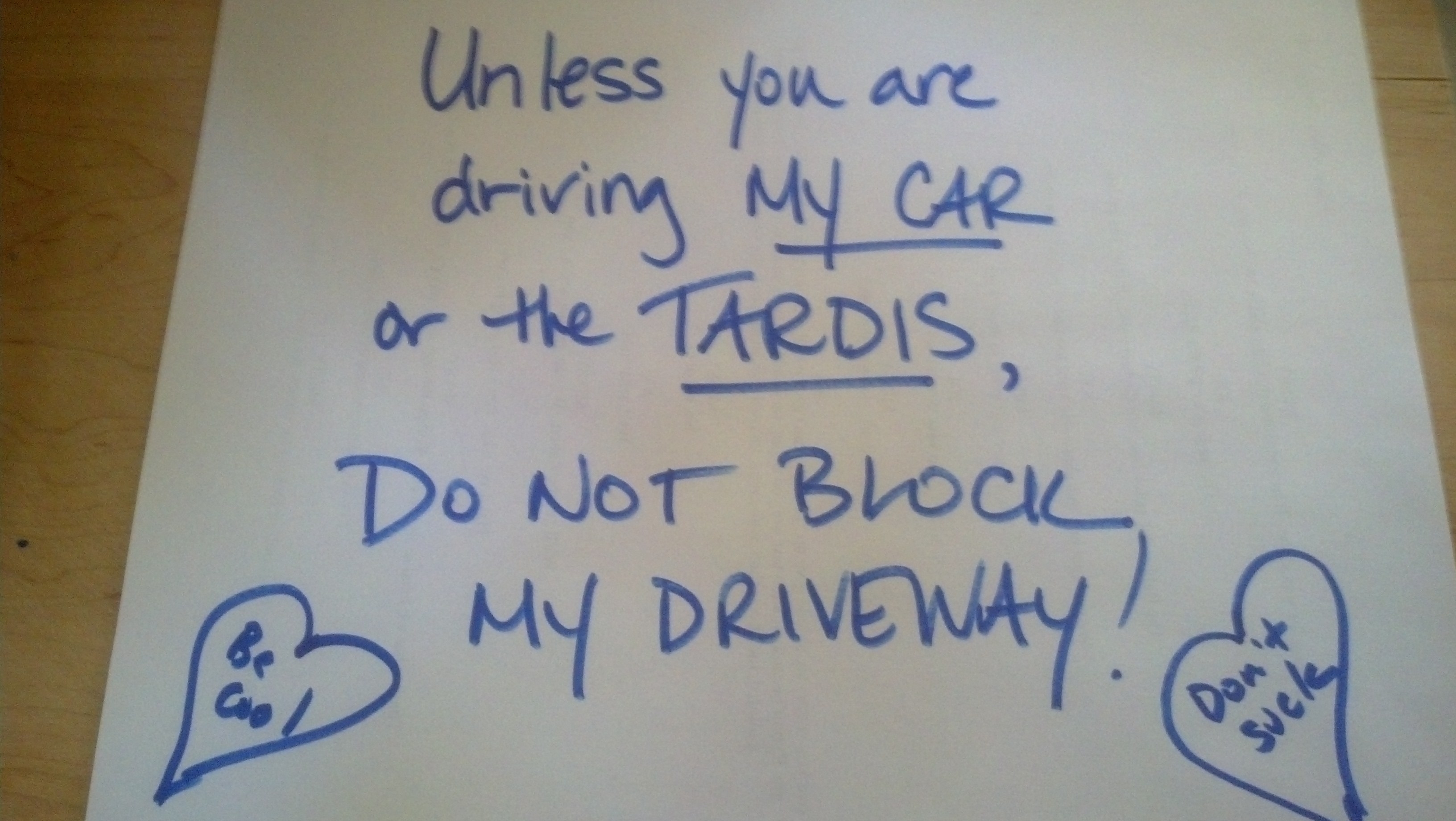
Every time I leave the house, I put up one of these signs. So far, it’s working! I’m SO glad, too, because I’m not entirely sure caltrops are legal.

drivewaysign.rancor

drivewaysign.cthulhu

drivewaysign.takei

drivewaysign.barf

drivewaysign.dex

drivewaysign.picard

drivewaysign.tardis

Tagged

Absolute Core Truths of Theatre Personnel Management

Image

My husband and I out in front of our theatre. Photo by Cheshire Isaacs.

This is something I wrote for Theatre Bay Area‘s Chatterbox blog in 2011. If you’re a Bay Area theatremaker or theatre company, you need to be a member of TBA!

You can see this post in its original setting here. I recommend going there to click around the blog. There are some really excellent articles there. Velina Brown‘s posts with advice for actors are particularly excellent.

********************************************************************************

THE ABSOLUTE CORE TRUTHS OF THEATRE PERSONNEL MANAGEMENT

This season marked my 10th anniversary as artistic director of Impact Theatre, and my 15th with the company as a founding member. When I became Impact’s AD, I quickly became aware of the fact that there’s no AD boot camp. There’s no Handbook for New ADs. Some local people were very helpful—Patrick Dooley at Shotgun Players was especially generous. Now that I’m more established, people who are planning to start their own theatre companies, or who are in their first few seasons, come to me for advice and I do my best to pay it forward.

I always give a lot of practical advice—how to handle auditions, how to get insurance, why you should join Theatre Bay Area, how to write a playwright contract, etc. One thing that’s struck me recently, however, is something I’ve never discussed in these situations: How much time we spend in the theatre finessing personnel management. I’m sure it’s the same in every field, but since theatre is where my managerial experience lies, I’m going to speak specifically to that.

Here’s what I’ve learned are the Absolute Core Truths of Theatre Personnel Management. These are probably all already printed in some management book, so feel free to tell me if I’m boring you by repeating something you had to read in business school, and I’ll go back to the ranting and inappropriate jokes you’ve come to expect from me. Here’s what I learned in the School of Hard Knocks™.

Image

R-E-S-P-E-C-T

1. You don’t buy loyalty with a paycheck. You earn it by treating people with respect.
This doesn’t mean complimenting their work. “Great job!” or “You’re so good at this” only go so far with your staff if you treat their opinions dismissively and if you routinely override their expertise. Your marketing director, your lighting designer, and your box office manager all know more about their areas than you do. It’s their job to know more about it than you do. Listen to their opinions. Allow them to disagree with you. Take their opinions very, very seriously, because if they’re disagreeing with you about their area of expertise, it’s almost certain that they’re right and you’re wrong. Respect their knowledge and experience, and they will reward you in 100 ways.

2. Give your staff ownership of the company and the work.
Allow your staff the freedom to make decisions. Don’t interfere with their decisions or their processes unless absolutely necessary. Does the set design violate fire code? Necessary. Does the rehearsal schedule violate the terms of your AEA contract? Necessary. Did no one tell the director the script is a comedy? Necessary. Do you think the backdrop should be light green instead of blue? Unnecessary. Do you think the sound designer should use “Bittersweet Symphony” instead of Sigur Ros? Unnecessary. Obviously you should make your opinions known, but putting your foot down and requiring a designer, development director, or stage manager to make unnecessary changes to their products or to their processes creates disgruntled, unhappy, underappreciated staff. Give your opinion or guidance, and back off unless the matter truly requires intervention.

Image

Wearing authority with ease. Art by Michael Fleming.

3. Wear your authority with ease.
Nothing says “I’m insecure in positions of authority” like someone yelling at staff or refusing to allow staff to voice their opinions. A strong leader engages staff as equals, respecting their expertise. This doesn’t mean you should cede authority. Allowing your staff to make their own decisions and create their own processes doesn’t result in an authority drain. Step in when it’s necessary to step in. Put your foot down, respectfully, when it’s important. But have the strength to recognize when it’s important and when it’s not. And when mistakes happen or disaster strikes—because it will, trust me—blaming staff or yelling at people or otherwise losing your cool is the worst thing you can do.

4. Admit when you’re wrong.
Because they all already know it. Bluffing makes you look foolish.

Image

The error makes it delicious. Admit my wrong what, Uncle Sam?

5. Don’t be afraid to make the hard decisions.
Sometimes people need to be let go. This is the hardest thing for me personally and something I’ve bitched out on doing a number of times, hoping for the best. Learn from my mistakes. Be gentle, be respectful, but get rid of the people who can’t do their jobs. Again, everyone else already knows, and they’re sick of covering for that person.

Image

Keep your techs happy. You can’t see it, but he’s carrying a case of Newcastle.

6. Do whatever you have to do to keep your tech people happy.
While all theatre personnel are equally important, too often techs get treated poorly, blamed for mishaps, and left out of the glory. Happy techs make a show sparkle with awesomeness, like a magical lighting and sound unicorn flew over the theatre. Happy techs can build a gorgeous set out of popsicle sticks and coffee filters. Happy techs call 427 cues without breaking a sweat. Unappreciated, yelled-at techs will still do their jobs perfectly—they’re professionals—but they will withhold the awesome and take someone else’s gig next time around. Or worse—continue taking your gigs and talk shit about you in the community.

7. Relax. It’s theatre.
This isn’t brain surgery. No one will die if the director casts Actor X instead of the actor you liked best at callbacks. No catastrophe will ensue if your lighting designer went with a different gobo. It’s not fuckpocalypse if your marketing director thought one show was on the weak side. Breathe. Creating art is about both process and product. Don’t beat your process to death with your image of the perfect product. Nothing is going to be perfect, but it’s within your power to make it awesome.

Tagged

Happy Mother’s Day

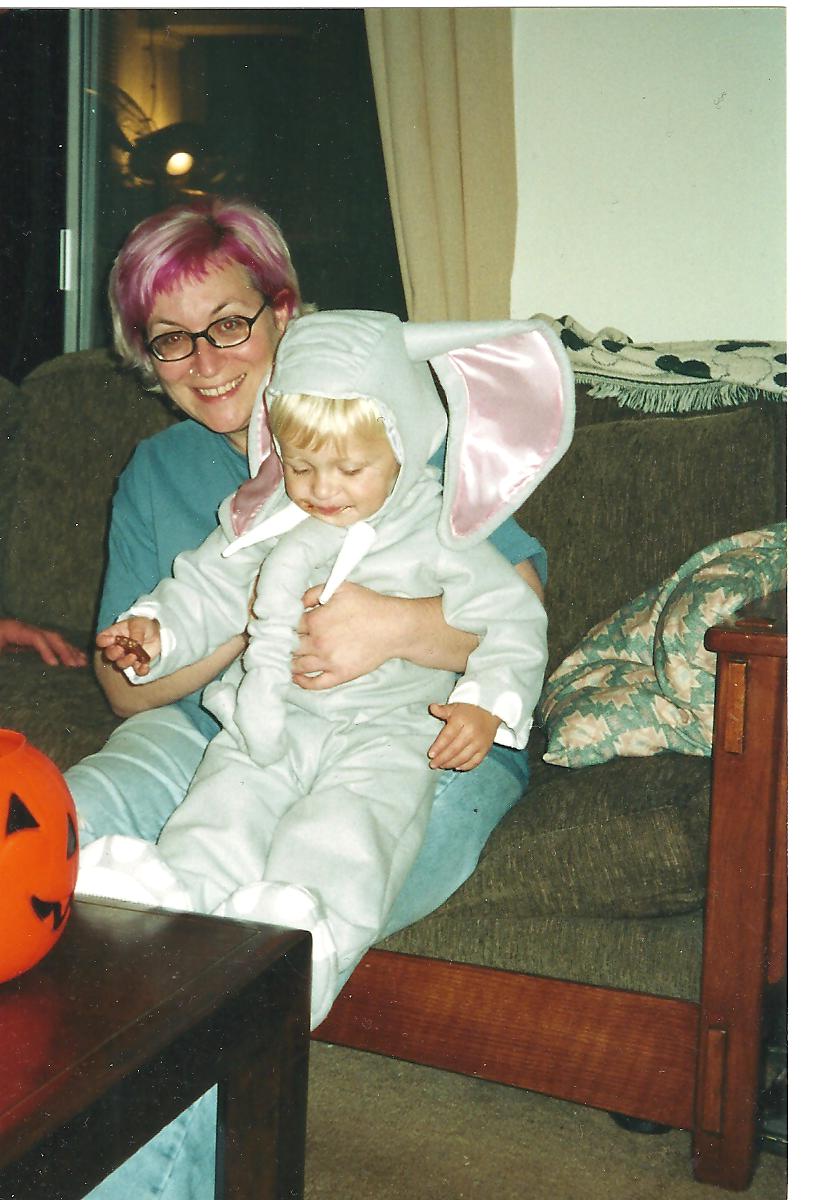
Me and Jonah, Halloween 2001

Me and Marian, Halloween 2001

I’m a mom, but I’m not one who gets all demandy and weird about Mother’s Day. I don’t need cards and flowers. My kids and my husband are wonderful, and that’s truly enough for me. Although I *do* appreciate the Xbox Live points I get from them from time to time, not gonna lie. Once my daughter spent her allowance on Xbox Live points as a gift to me. I basically exploded with joy.

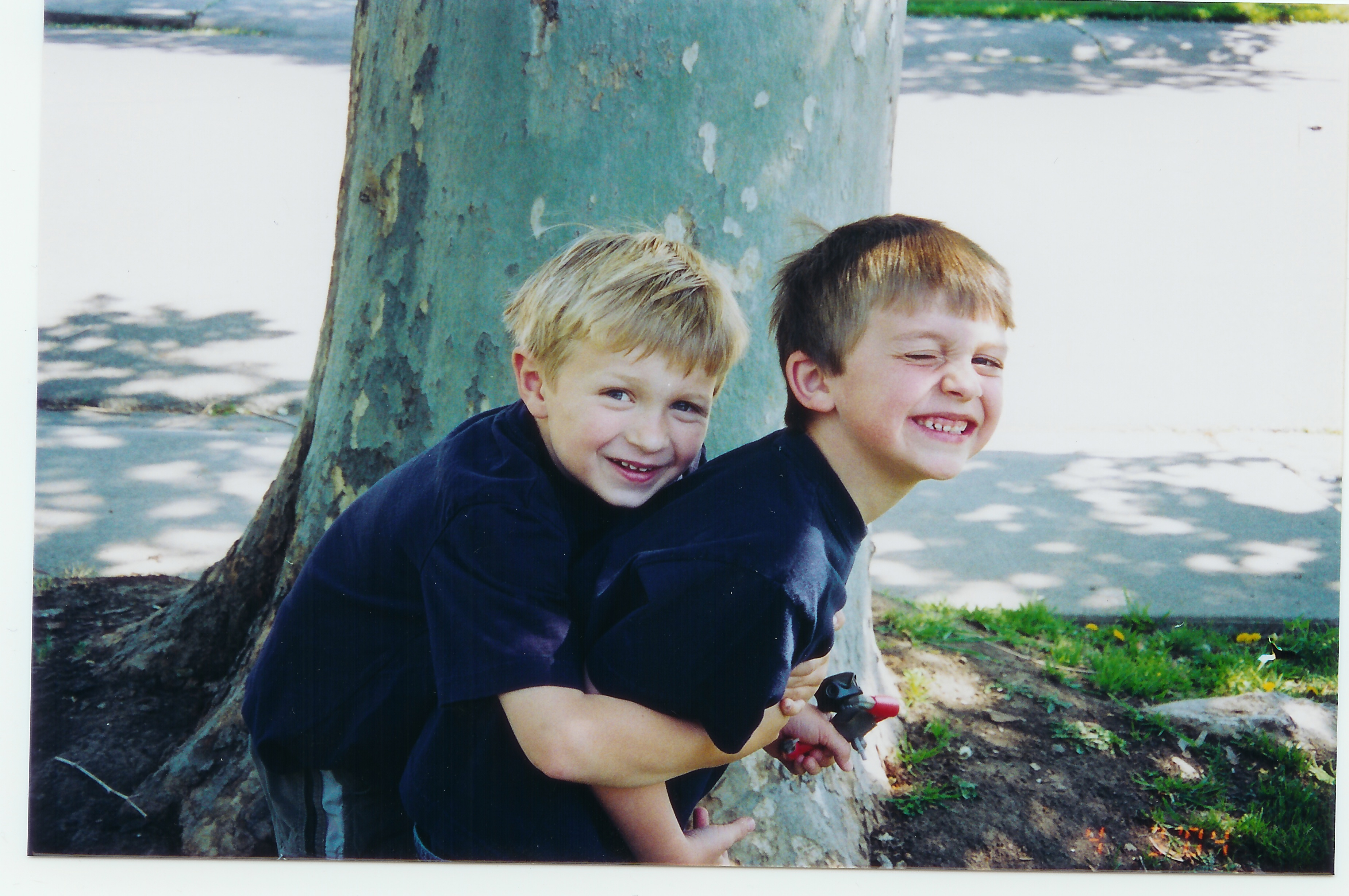
My favorite picture of the boys. 2004.

My favorite picture of my kids. 2004.

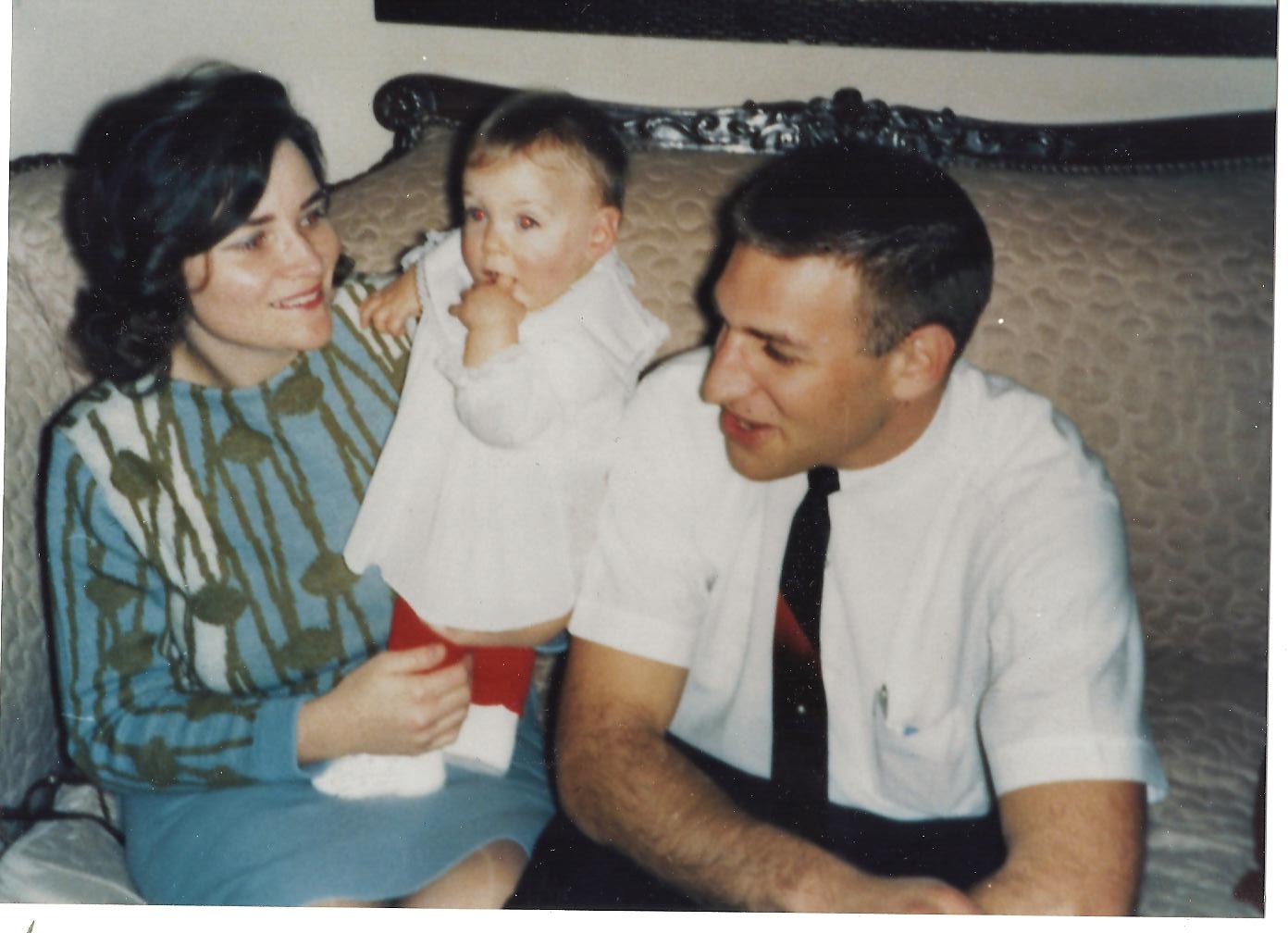
My own mother was . . . difficult. She had a complicated childhood, and struggled with depression her entire life. She would veer recklessly from extravagant affection to vicious lashing out without warning. She refused treatment every time it was brought up. By the time we were teenagers, she was so deep into her depression she was barely functioning. She kept up appearances in public, and with the rest of the family, but at home, things were rough for all of us. We begged her to get help and she refused. When my brother landed his first big job and was making piles of money, he told her he would come pick her up, drive her to therapy, pay for it, and drive her home, and she refused. She wasn’t interested in stepping out of her depression. She believed that leaving it behind would mean she was no longer honoring the difficulty of her life experience.

My mother.

My mother.

She had stopped taking care of herself in every way that phrase has meaning, and would only take her blood pressure medication off and on. Eventually it caught up to her. Stroke, hospital, and a death that should have had the respect to come more quickly. She would have hated every second if she had known where she was.

Me and my parents

Me and my parents.

My father is a good man, in every way that phrase has meaning. He left my mother when I was 12 and I was devastated. My mother lavishly excoriated him in front of me, daily, and instructed me to hate him. I did my best to comply. I was too young to understand that my father was escaping an impossible situation. They were 34 and 35. Babies. My mother decided she was too old to start over and that her life had ended. She deteriorated from that day forward until her death at 62. SIXTY-TWO. At the time, a friend of mine was dating a man a year older than that (who would eventually become his husband). It’s a shockingly young age to die.

The tragedy is that my mother was brilliant and beautiful, with a razor-sharp, irreverent wit and a lavish warmth. The monster that was her depression took most of that away much of the time. She never fully disappeared– the monster could never conquer her completely– but she was clouded over far too often with the person who felt she was the victim of a world designed specifically to hurt her. And so it went.

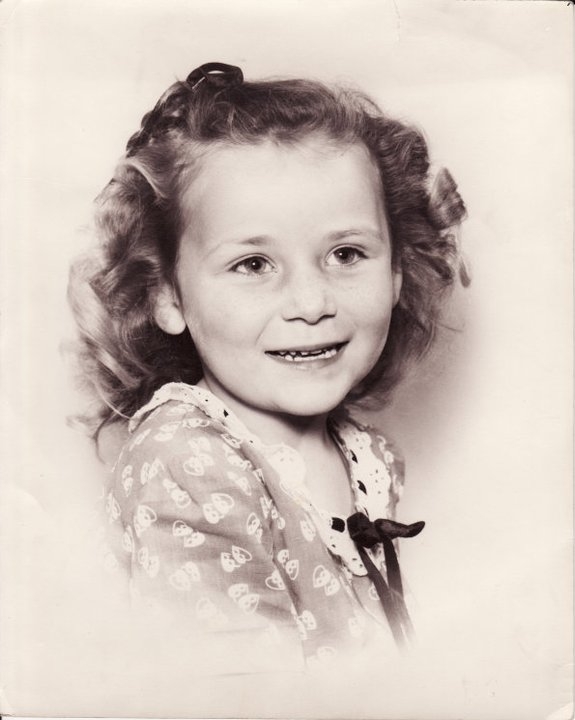
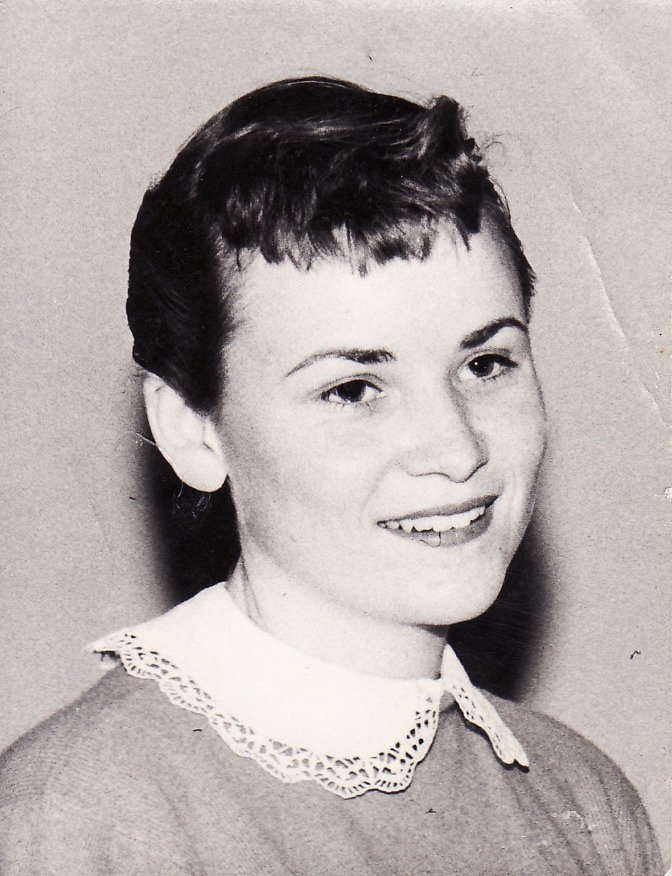
My mother as a high school sophomore.

My mother as a high school sophomore.

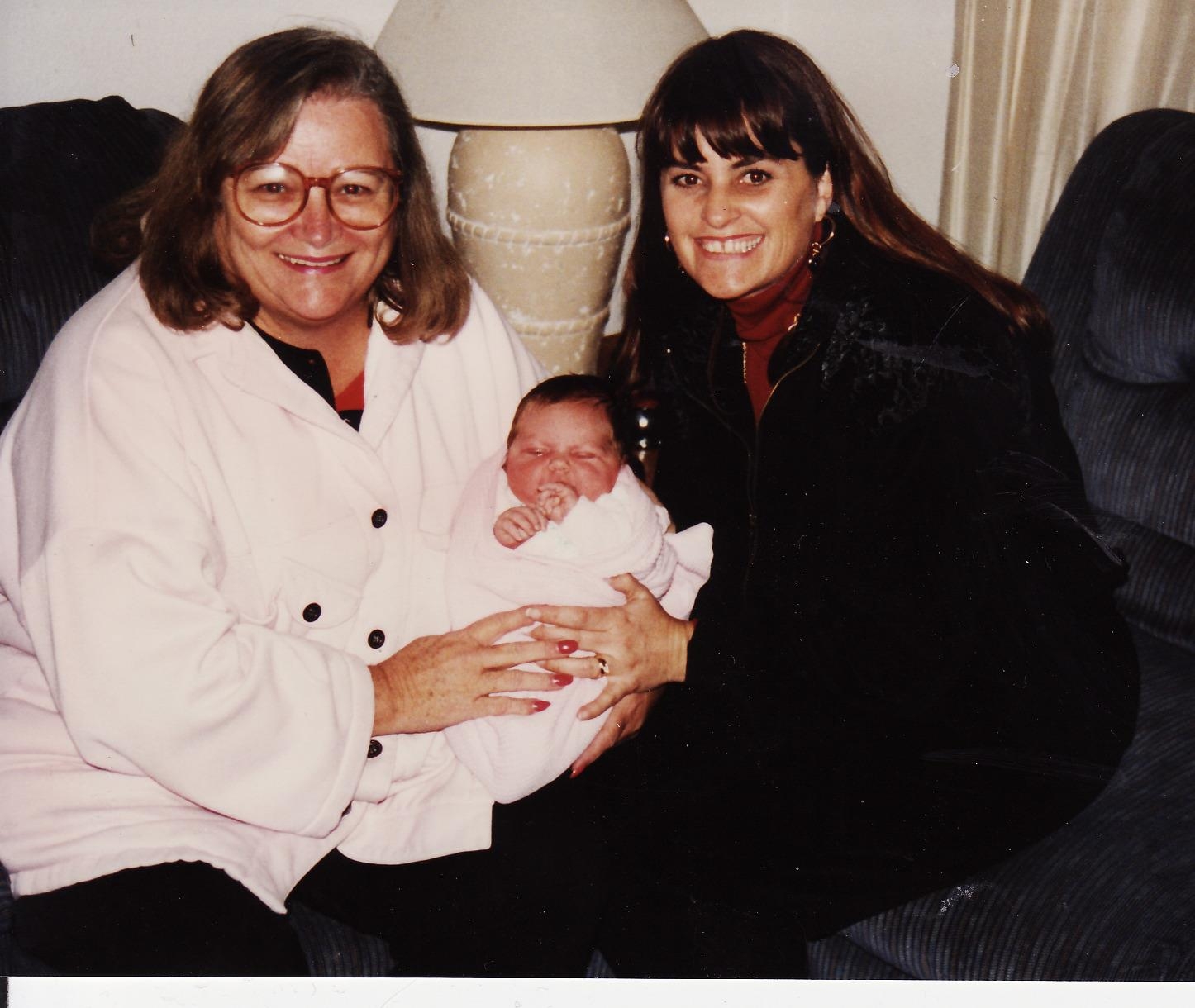
My mother, Charlene, and my newborn niece, Bayley, 1994.

My mother, Charlene, and my newborn niece, Bayley, 1994.

My father went straight into a new life with a new woman. My mother instructed me to hate her, and I did. For years. And of all the selfish, horrible things I’ve ever done in my life (and there are plenty, I assure you), this one hurts the worst. I know I was a child under the influence of a strong but very troubled woman I adored, but I still feel that I should have somehow known better, and understood who this new woman was.

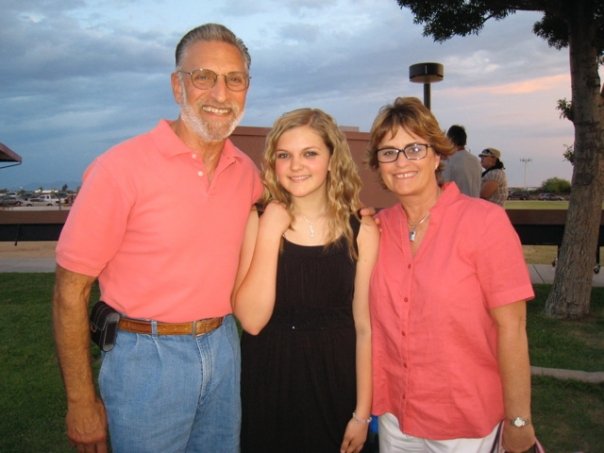
My father and Charlene at my niece's 8th grade graduation.

My father and Charlene at my niece Bayley’s 8th grade graduation, 2009.

My stepmother, Charlene, is– I’ve tried to type this sentence five times now, and I can’t get it out. I’m crying as I type this.

My stepmother, Charlene, is the best woman in the world, an enormous positive healing influence on me, a constant gift to my father, the linchpin of this entire family, and the most important woman in my life.

She sat patiently and waited until we figured it out on our own. She and my father never said a single negative word about my mother in my presence. My father to this day has not, and answers my direct questions evasively. Charlene is more forthcoming, but is still circumspect. But I know. Oh, man, I know.

Instead of giving up on us (a perfectly reasonable idea) and focusing on her own child (my awesome stepbrother who is awesome), she just . . . waited. She waited and she loved us. And that was all she did– loved us, and never stopped loving us, and waited for us to figure it out.

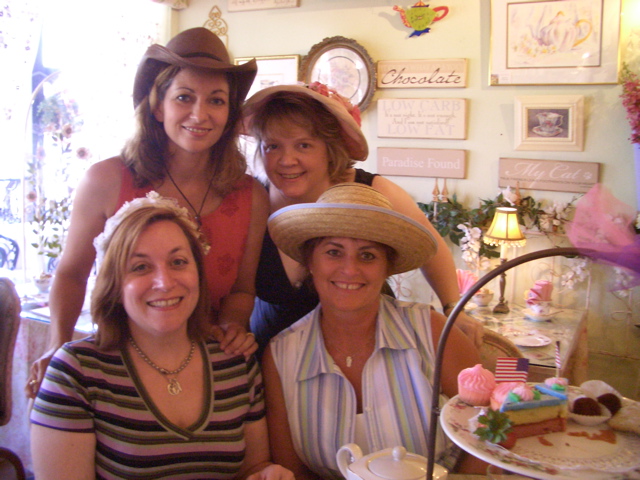
Me, my sister, my sister-in-law, and beautiful Charlene.

Me, my sister, my sister-in-law, and beautiful Charlene, 2006, goofing off in hats at high tea.

And we all did, eventually, one by one as we got into our 20s. As you do. My mother was wrong. She was trapped in a hellish fantasy of her own making. We had believed her. And we were WRONG.

The fact that it took me YEARS to figure this out is the worst thing I can say about myself. It feels like the worst kind of failure and stupidity. But I figured it out. It was like being struck by lightning. I remember the DAY, even, that it finally dawned on me as I sat, stretching out and talking to a friend before a dance class. Her mother was getting remarried, all three kids were flying out for the wedding, her parents had divorced when she was twelve, the new guy is such a sweetheart. And something about that conversation made everything finally click into place. It’s deeply humiliating to even talk about. I should have known years before, but the mythology I was taught at a young and vulnerable age was stronger than observation, stronger than logic. Still. I should have known.

My sister Becky and Charlene, 2013.

My sister Becky and Charlene, 2013.

There’s no way for me to enumerate all the things Charlene is to me, has done for me, and means to me in this blog without it becoming tedious, because it would take all damn day to list them. All you need to know is that whenever I reached my hand out for her, she was there. She’s one of the few people I know loves me unconditionally, because I was a SHIT to her as a teenager, and her response was to love me. I deserved a swift kick in the ass, and instead, she gave me everything she had to give.

Now that I’m a stepmother, I am overwhelmingly grateful that Charlene taught me how to be a good one. My stepson Jacob came into my life when he was 5, and I went through many of the same things Charlene did when she married my father. Charlene handheld me through it, without ONCE MENTIONING, “Well, at least your stepson isn’t a shit to you like you guys were to me.” She’d have every right. But that’s not who she is.

Charlene with my niece, Maddy. 2013. I love her smile.

Charlene with my niece, Maddy. 2013. I love her smile.

This is the paragraph where I should describe her in detail, right? And I can’t do her justice. She is wonderful. She is loving, and warm, and funny, and wise, and an AMAZING cook, and can fold a fitted sheet COMPLETELY FLAT (which is some kind of witchcraft, I think), and is everything I want to be. She can swear creatively and simultaneously make an elegant dinner party for 12 using nothing but an onion, a shoelace, and a Mr. Coffee. She was at Altamont, and my brother’s Bar Mitzvah, and the birth of my daughter. When my mother was dying, she and my father picked me up at the airport and shepherded me back and forth to the hospital, sitting for hours in that crappy hospital cafeteria waiting for me. Every single time I’ve ever reached out for her, she’s been there for me.

You learn how to love from your mother, I think. My mother taught me how to love lavishly, openly, and wholeheartedly. It’s a good way to love. But Charlene taught me how to love unconditionally, and what it means to love someone enough to know that sometimes you put their needs ahead of your own.

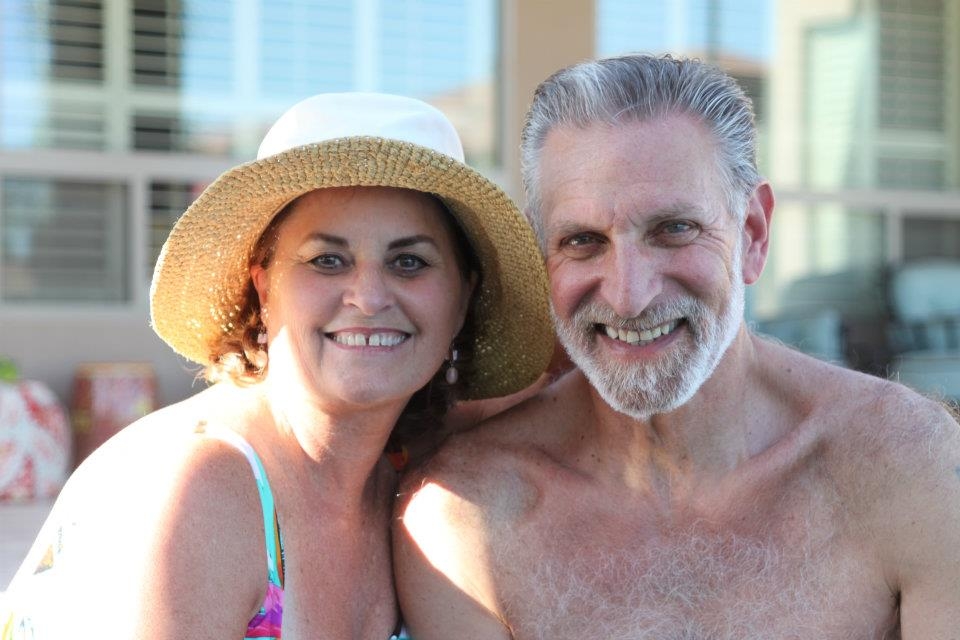
Hanging out at the pool with my dad, 2012.

Hanging out at the pool with my dad, 2012.

Not that she neglected herself– she made time for herself and time for my father. She gave us an excellent example of what it means to take care of yourself and your marriage while still taking care of your family. To have balance. I had never heard of such a thing. I didn’t know what it looked like until she showed me.

She taught me how to be a mother, how to be a stepmother, how to be a strong woman. I’m still trying to live up to her example, every day.

So Happy Mother’s Day, Charlene. I can’t imagine what my life would be like without you. You came into my life and made EVERY SINGLE aspect of it better.

Another one with my niece, Maddy. 2012.

Another one with my niece, Maddy. 2012.

Tagged