Tag Archives: racism

The Politics of Accents

Image

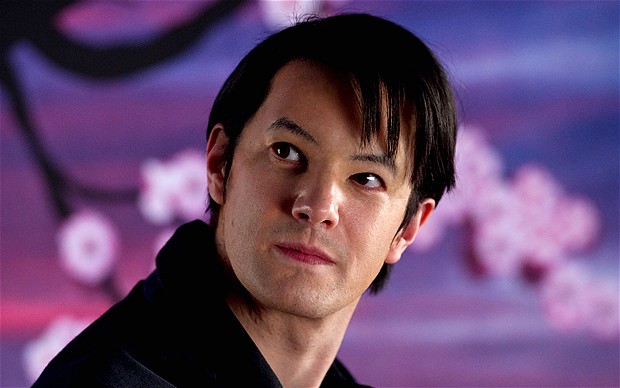
This guy.

While I could write plenty about nonsense like Asian actors being asked to do “the accent” in their audition for “Prostitute #3” and “Kung Fu Master Criminal,” or Black actors being asked for a more “urban” accent or audition piece, I’m actually heading in the opposite direction.

There’s a “Shakespeare accent” that American actors are taught to use, or sometimes just pick up on their own through exposure. I’ve seen plenty of teachers throughout the years refer to this as “RP,” “Standard American,” or “Mid-Atlantic” (not to be confused with the actual accent of people in that region– more on that later). The terminology is confused and not always accurate. “RP” stands for “received pronunciation,” which is in actuality a British dialect considered “proper,” and “Standard American” refers to an accent that uses a harder final R than these actors are being taught. But the accuracy of the terminology is not the point.

We all know that accent. It’s slightly faux-British, posh, and its main feature as practiced seems to be the dropped R.

We know from the study of OP (“Original Pronunciation”) that the British accent of Shakespeare’s day was actually nothing like this “Shakespeare” accent American actors use, or than British RP for that matter. Check out this comparison between RP and OP. So why do we teach actors to speak in these faux-British tones? Why do actors adopt this fabricated accent when they do Shakespeare?

The answer can’t be “because the text suggests it,” or “the text sounds better that way due to the way it’s written.” A notable part of OP is its harder final R. This entirely contrived  “Shakespeare accent” is most notable for its soft R. In fact, that’s its main (and often sole) feature as practiced across American stages. So “because Shakespeare” cannot be the answer.

What *IS* the answer? We know that what’s often called the “Mid-Atlantic” accent, popular in pre-1960 America, was a deliberate, acquired marker of wealthy white privilege, and was therefore cultivated by people looking for upward mobility and acceptance in the upper classes of America, or by actors whose careers would be built on playing upper-class roles. In 2013, we still use a version of it to denote “posh” or “privileged” in popular culture– look for it in films, cartoons, video games. It’s everywhere.
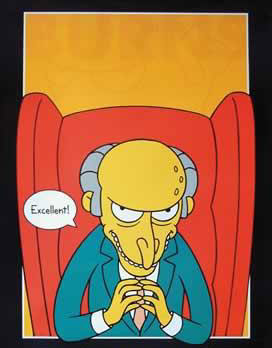

excellent

profx

There are some teachers out there now teaching an accent they call “Classical American,” as in, American accents for use in classical theatre.  “Classical American” is a reverse-engineered accent that labels and codifies the semi-British “Shakespeare accent” that has evolved from (and is still sometimes labeled as) Mid-Atlantic or RP. There’s a book originally published in 2005 flogging “Classical American” as “an intermediate option between well-pronounced Neutral American and Standard British. It builds upon Neutral American, blending additional rhythmic and sound elements, which result in more formal or heightened speech without sounding British to an American ear” (emphasis mine). Precisely. I’ve heard this accent referred to innumerable times as “formal,” “heightened,” and “elevated.”

“Formal.” “Heightened.” “Elevated.” “Formal” has long been code for “posh.” But what’s being heightened here? What are we “elevating” when we drop our American accent and move to a semi-demi-faux British accent? CLASS.  That’s what’s being heightened. The appearance of privilege. Poshness.

The “Shakespeare accent” has nothing to do with acting Shakespeare and EVERYTHING to do with acting “posh.”

Those of us in the theatre talk a good game about how Shakespeare is for everyone, and whine a great deal when our audiences are less diverse in race or age than we’d like. Although we have a long way to go, we’re slowly getting better at looking to ourselves for problems with racial diversity in our audiences, but we epic fail with looking to ourselves for problems with age diversity in our audiences, generally blaming lack of swarms of twenty-two year-olds at our productions on their boorishness and lack of interest in “culture.”

Maybe the way we frame Shakespeare is to blame for the homogeneity of its audiences. When people talk about Shakespeare as “lofty poetry,” it makes me cringe. Not because they’re wrong– there’s certainly enough lofty poetry in Shakespeare to keep your lofty poetry needs happy for quite some time before you have to turn to Blake or Donne– but because Shakespeare ON STAGE is less about poetry as such and all about stories– rich, passionate, violent, emotional, heart-ripping stories at that. Shakespeare uses poetry to tell stories, and he will drop the poetry or jack up its rhythmic demands in a hot second to make an emotional point. The poetry is in service to the stories. These stories tell all the secrets of the human heart, and we continue to frame them in popular culture as staid and boring “high culture,” as if Shakespeare is medicine that you must take because it’s good for you rather than ZOMG THESE PLAYS ARE AWESOME.

Part of sequestering Shakespeare into the special, rarefied, and (most importantly) exclusive domain of “high culture” is this pretend, contrived, completely non-regional “Shakespeare” accent; an accent created solely and specifically to denote “upper class.”

This accent is part of the mythology that Shakespeare is “high class” art for the privileged. If we as directors or audience demand that Shakespeare actors adopt an accent that was created specifically to signal “rich and white” and still signals that to this day in popular culture, what are we saying about Shakespeare?
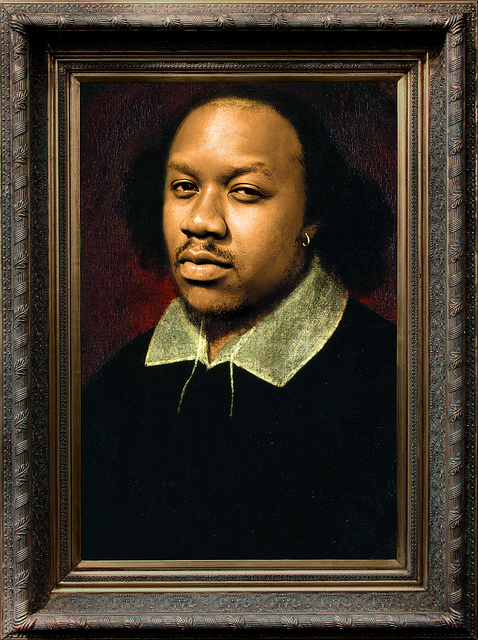
blak.shakespeare

I know an exceptional Black actor with enormous range who was told by one of his college professors (also a Black man) that he would never be able to do Shakespeare because of his “Black accent.” Of course he was wrong. Apart from this particular actor’s massive flexibility, the professor’s own experience as an actor was decades ago, and this is the 21st century in the Bay Area, where that kind of thinking is thankfully now on the wane. However, there are still too many directors out there who will absolutely refuse to cast a Black actor– or ANY actor– who does not adopt the upper class white accent our culture has come to associate with Shakespeare, and too many universities and training programs that teach that as NORMAL. At general auditions for my company last spring, I had a batch of diverse, newly-hatched college grads all from the same Bay Area university (not the same one I discuss above, depressingly) whose actors, each and every one, came in doing the “Shakespeare accent.” I almost wrote to the department. I probably should have. But even more depressingly, there are plenty of teachers and directors who still think that’s necessary.

Let me just say: Balderdash.

BECAUSE we know that Shakespeare’s plays were written for an accent nothing like this contrived “Shakespeare accent,” but an accent no one anywhere today would mistake for “posh,” and BECAUSE we know that Shakespeare’s plays are the greatest plays ever written in the English language and tell all the secrets of the human heart, and therefore belong to everyone, and BECAUSE we recognize that more diversity of all types on our stages and in our audiences is a good thing, and BECAUSE this is almost 2014, FFS, I RESOLVE:

THE DEATH OF THE SHAKESPEARE ACCENT IS AT HAND.

Listen, if that’s how you really talk, then I have no problem with you using that accent when you do Shakespeare. In fact, that’s my entire point. YOU ARE GOOD ENOUGH JUST AS YOU ARE for Shakespeare. Your body, your voice, just as they are, are worthy carriers of these stories, whether your speech is “posh” or straight outta Compton. Talk like you talk. YOU ARE WORTHY OF SHAKESPEARE, just as you are.

And directors? Please stop. Just stop. These stories are yours to tell. You don’t need to overlay fake poshness to prove you’re worthy to enter the club. You’re already worthy.

These stories are part of the human literary heritage. They already belong to you. They’re about you, whoever you are. It’s time to liberate these plays from the mythology of exclusivity.
Tagged , , , , ,

High School Yellowface

Image

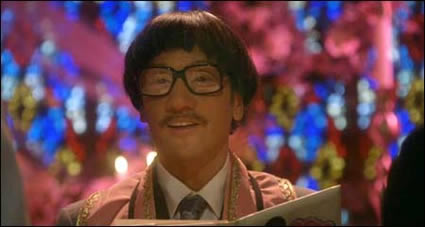
I’m not posting pictures of the actual minors in the show. Instead I’m choosing to post pictures from America’s vast yellowface past. This keeps the kids’ identities confidential while also providing some cultural context.

Someone I know recently posted some pictures of her son’s high school performance of A Midsummer Night’s Dream. Of course I’m stoked that the kids are doing Shakespeare instead of Grease or One Direction: The Musical or whatever. And I definitely understand the impulse to want to set these plays in a fanciful place and time, especially if you have hundreds of hours of free parental labor and thousands of dollars at your disposal. I’m not a huge fan of randomly chosen settings, like Love’s Labour’s Lost in an 18th century brothel or King Lear on the Death Star (although I might have to give that last one some serious thought). But I understand the impulse, even if I do not agree with it.

The problem with this play is that it’s set in “Ming Dynasty China.”

Image

I’ve written about race in casting before (this and this). But I’ve been thinking about this issue all day, for two reasons: One, the fact that this is educational theatre; and two, that half the kids in the cast are Asian American, but the faculty director is white.

There’s a reason theatre education belongs in schools. It teaches kids about the challenges and joys of creating art collaboratively. It helps kids learn how to extract meaning from text in very concrete ways. It teaches kids how to work under an utterly unforgiving deadline. It teaches kids about the massive, gorgeous, messy pile of dramatic literature available to us in the 21st century, which are all windows open to different places, times, experiences, and points of view. Theatre education is a life-changing, mind-expanding experience.

This is precisely why this is so disappointing to me. These kids are being taught that it’s acceptable for white people to play characters of color. It’s nowhere near acceptable in the professional world, where a mistake like that can create national controversy. If you don’t have an all-Asian cast at your disposal, you shouldn’t be doing a play set in Ming Dynasty China, and to place high school kids into such a situation is to do them a huge disservice. There’s a reason why I’m not posting pictures of these kids. This is not their fault, and I’m not holding them up to global mockery. It’s easy to say, “What does it matter? It’s just high school theatre.” If that’s the case, then what does ANY educational activity matter? Why not blow it all off and let them all play CoD: Ghosts instead of reading Catcher in the Rye or doing those calculus problems? I guarantee you that the skills theatre kids are learning are more likely to be useful to them in their future day-to-day lives as adults than calculus will be. If you believe education is important, then it follows that teaching kids that something highly controversial and racially problematic is just fine is shockingly irresponsible. Either education matters or it does not.

Image

Midsummer is a play people love to set in various places, and it can be quite successfully done that way. Bindlestiff Studio in San Francisco did an all-Filipino Midsummer using Filipino folklore tropes, with Tagalog-speaking mechanicals that was so fantastic I saw it TWICE. Which is insane, since I rarely get out of my own theatre. But this was a Filipino production, headed by a Filipino director, with an all-Filipino cast, at a Filipino theatre. This was about taking ownership of a classic story, coming from a deep, authentic positionality. A white director setting Midsummer in Ming Dynasty China with a half-white cast is not the same (especially when that cast are all teenagers working under an adult authority figure who makes the bulk of the creative decisions). It doesn’t have a deep message that comes from the center of Chinese or Chinese American culture. Instead, it’s a white director using a non-white culture as WINDOW DRESSING. And no matter how much research was done, or how many accurate renderings of period costumes or sets there were, this was using a culture as decoration, not marginalized people telling a story from within that cultural positionality. It’s deeply problematic.

Image

When I first started discussing this issue, I was told that half the cast is Asian, some of the techs are Asian, and the faculty choreographer is Asian. I was told that the Asian families coming to see their kids in the show weren’t complaining about the yellowface (out loud). I was told that the performances weren’t “stereotypical,” and that someone was playing traditional Chinese music during the show. I was told that the casting was “multicultural.” These were all held up to me as reasons it’s OK for white kids to play people of color. I actually gave it some thought. After all, the kids were in traditional Beijing Opera makeup, not actual yellowface . . .  did that matter? And I wondered for a bit if the presence of Asians working on the show changed the equation at all.

Image

Oh, right. No, it doesn’t. Not even an Asian director makes a difference in the ensuing controversy apart from: “He should have known better.”

It’s just not acceptable for white people in America to play people of color at all. Race has meaning. And although I suppose it could be argued that a half-white cast isn’t as egregious as a fully-white cast, or one wherein all the leads are white, race still carries narrative that cannot be erased. The meaning of a white person playing an Asian person is culturally problematic in profound, complex ways attached to a lengthy history of appropriation, erasure, and oppression. It’s a common misconception that “multicultural casting” means that white people should be able to play characters of color because we cast people of color in roles originally written for white actors. To pretentiously quote my own damn article that I linked to above (see, now you don’t have to click on it):

Using a white actor as [a character of color] has a very different impact on the narrative than casting a person of color in a traditionally white role. It erases the physical presence of the person of color and substitutes it with blackface/yellowface, imperialism and cultural appropriation. The West has a long history of casting white actors in racist portrayals of people of color, of appropriating the narratives of people of color and reshaping them through a white lens, and of shutting artists of color out of positions of importance. An American audience viewing a white person portraying a person of color will be reminded of all of these, and of blackface, of yellowface, of the history of racism with which we still struggle. These are all present in any production wherein a white actor is cast as a person of color because they are so palpably present within our culture. Again, race is always part of the narrative.

Maybe it’ll change some day, and we will be so many hundreds of years past the issues that make yellowface culturally unacceptable that it truly will not matter any longer, because race will no longer carry the same narratives it does now. Perhaps it’ll carry new, better narratives, less painful, less difficult. But that day is not today, and both yellowface and whitewashing remain culturally unacceptable.

Image

I’m not going to reveal the location of this production, and I won’t approve any comments that do, because at its heart, this is about protecting those kids. They should be taught right from wrong, and yellowface is wrong, just as all whitewashing is wrong. In our current cultural context, it’s never OK for a white person to play a person of color, even in a high school. ESPECIALLY in a high school. And claiming that it’s OK because there are Asians in the room is like the guy who says “My Black friend LOVES my racist jokes.” Whether it’s true or not, the jokes are still racist, and there is a much larger cultural context to consider.

Tagged , , , , ,

Just Out of Curiosity, WHAT THE HELL IS WRONG WITH YOU, Commercial Costume Companies?

Image

For little girls. But it’s OK because all police uniforms include a miniskirt, right?

This is the time of year when Concerned Citizens, such as MYSELF, like to point out how uncomfortably sexualized Halloween costumes have gotten, especially for little girls, and how the sexualization of Halloween costumes for girls and women of all ages is a symptom of the way in which women are positioned in our culture as containers for “sex,” and are valued primarily– and I mean that literally, as in, first and above all else– on how well we inhabit that role. Women are judged on how well they contain “sex” no matter how much wealth or power they have, and no matter what else they happen to be doing at the moment. You could be accepting the Nobel Prize for Physics and you would still be judged primarily on how well you are enacting the role of sex toy.

Image

A costume for little girls that Spirit calls “Major Flirt.”

While the sexualization of children needs to be stopped, I’m not sure what the answer is to the overall sexualization of women, especially as regards Halloween– the human brain responds to visual sexual stimuli, and this dance of display/observe is older than humans are– but working towards a major cultural shift that opens up the way women are perceived so that perception can contain both sexuality as well as other things– every scrap of humanity we allow men– should be the goal here. To be clear, sexualized costumes for adult women are not the problem in and of themselves, and women should be able to display their sexuality whenever they like. I’m not here to slut shame.

In fact, I’m not here to discuss Sexoween at all. I think most people are aware of the Sexoween issue to some degree. In prepping for this article, I dove into the many Halloween costume websites, and while there were plenty of the expected “sexy plumber” and “sexy branch manager” and “sexy ball peen hammer” costumes, I was floored by the massive amount of racist costumes for sale at major costume retailers JUST SITTING THERE ONLINE AS IF THEY’RE NOT COMPLETELY INSANELY JAW-DROPPINGLY RACIST. Many of them have the extra-added bonus of being sexist AND racist. Of course I knew racist costumes exist, but the flat-out, overtly racist, fuck-it-it-might-as-well-be-1954 straight-up racism in both these costumes and their accompanying text descriptions surprised me. Not that I believe retailers have a single fuck to give about racism, just that I would imagine there would have been public outcry long before now about this. And yet.

While Spirit was the big winner, there were plenty to be found all over. I could have done this quite literally all day long. The costumes, along with their accompanying text, I present to you without comment. OR EDITING, although it pained me.

Party City’s “Old School Tight Afro Wig.”

Image

“Want a ‘fro that’s totally tight? Pull on our Old School Tight Afro Wig for a look that’s all right. This Tight Afro Wig features larger-than-usual black afro curls in a slightly disorganized mop of hair that reflects your carefree attitude towards life. No job, no problem! ”

Party City: “Hey Amigo Mexican Costume.”

Image

“Hey amigo, this Mexican Costume is bound to be noticed! Hey Amigo Mexican Costume features a fringed poncho, long moustache, red trimmed sombrero, and pants with an attached plush donkey and rider legs, which create the illusion that you’re riding said plush donkey.”

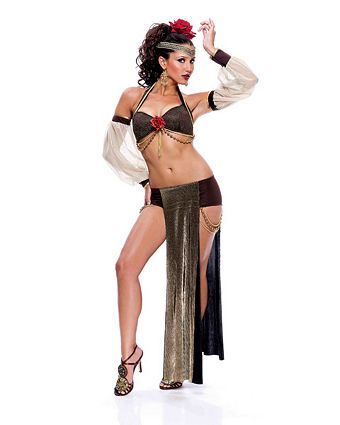
Anytime Costumes: “Arabian Seductress”

Image

“Cool Arabian nights will be blazing like in the daytime when you wear the Sexy Arabian Seductress Halloween Costume. It features a halter bikini top with a rose accent and beaded chain trim, matching mini-shorts with an attached panel skirt and gold chain trim. Sheer arm sleeves also come included to make your dances more seductive and mysterious and a gold headband and rose head comb remind your significant other why royalty has everything the best. If you’re getting into belly dancing and want to put on a show, you’ll be instantly prepared to add the sultry component that makes these dances a marvel to watch. Put on a spectacular show and become the head courtesan of the harem. Stop by our accessories page to add some jewelry accessories to add some lively noise to the dances that will keep him wanting.”

Spirit: “Reservation Royalty”

Image

“There’s no need to send smoke signals to get your point across when you wear this Reservation Royalty adult womens costume. The fringed, microsuede mini dress comes complete with a matching feathered headband. You’ll be a smokin’ hot site in this sexy womens costume.”

Spirit: “Pimpin Da Hos”

Image

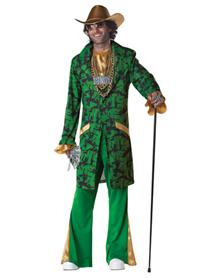
“Show me da money! Be a hustler on Halloween when you don this outrageous Pimpin’ Da Hos adult mens costume. It’s all flash so be ready to talk the talk and walk the walk in this over the top ensemble. Great couples or group costume…”

Spirit: “Asian Empress”

Image

“Explore the mysteries of the East when you don the Asian Empress adult womens costume. The satiny black dress of this seductive and sexy womens costume features purple trim and comes complete with a pair of chopsticks for your hair. Add some mystery to Halloween!”

Spirit: “Mexican Style”

Image

“Grab a bag of tortilla chips, open a can of salsa, and show off your spiciness in this Mexican Style mens costume. This funny costume comes with a colorful sarape, traditional sombrero, and giant mustache–sure to get you laughs both north and south of the border.”

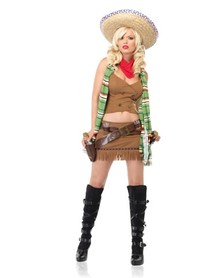
Spirit: “Sexy Bandita”

Image

“Spice things up with some south of the boarder heat when you wear this smokin’ hot, Sexy Bandita adult womens costume. The brown, vest-like top comes complete with a matching low-rise fringed mini skirt, a serape-inspired striped scarf, a red bandanna and a belt with shot glasses.”

Finally, deserving its own category of TAKE A SEAT wrongness, I give you:

Spirit: “Phat Pimp Child Costume.”

Image

“Be the big money when you trick yourself out in this Phat Pimp child costume. The purple, polyester jumpsuit of this pimp costume features zebra print trim, attached fake money, a PVC waist loop and a matching zebra print hat.”

Like I said, I could have done this literally all day long. It stands to reason that companies wouldn’t be selling this nonsense if people weren’t buying it. There are an infinite variety of costumes you can choose that do not involve racism. Seriously. Do us all a favor and choose one.

Tagged , , ,

Racism for Breakfast

Because my cosplay article has been kinda going crazy the past few days, people are tagging me all over the book of faces in discussions of various cosplay and cosplayers. I’ve been ignoring most of them (because I can’t spend all day commenting on facebook, despite evidence to the contrary), but I’ve commented on a few, usually because they were posted by a personal friend or professional connection.

One of these happened this morning. Someone tagged me in a post about some rando cosplaying as Hitler at Dragon*Con, asking what I thought. I responded that, although I’d love to tell him to eat a platter of dick tacos because he’s cosplaying a symbol of real-life violent racism against me and my family, I don’t agree with the calls to ban his costume from future cons. I don’t think costume censorship leads anywhere useful.

And then all hell broke loose.

I can boil “all hell” down to a few sentences: I was evacuating all credibility I had in my stance against shaming cosplayers for race, size, age, or gender identity because I was “shaming” cosplay Hitler. My call for acceptance of cosplayers of all races and body types should naturally extend to an acceptance of someone’s choice to cosplay Hitler. Expressing my discomfort with cosplay Hitler is bullying and victimizing him.

Image

Now, first of all, this is probably an academic distinction, but I did not actually tell cosplay Hitler to eat a platter of dick tacos. I speculated that I might do such a thing were I to ever see him in person. The chances, however, of me actually having the nards for such a face-to-face confrontation are precisely equal to the chances of me being elected the next Mormon prophet. That said, I do admit that I said in writing that I would like to invite him to such a dining experience. So the distinction is academic. But it exists.

But here’s my point (and I know you’re all relieved that I actually have one): Expressing discomfort at a costume that embodies real-life violent racism against me and my family– and I have living Holocaust survivors in my family– does not make me the bully.

Those of us who fight racism and speak out against the symbols of racism are used to being told that we’re the problem. “Toughen up,” we’re told. “Freedom of speech,” “You’re too sensitive,” “Get over it,” “Stop taking everything so seriously.” But the worst, by far the worst, is being told that we’re the ones oppressing and victimizing by speaking out against racism, its symbols, and its tools. I think it’s very difficult for people who have never personally experienced bigotry to understand what it means for people who have been violently oppressed to be confronted with symbols of that oppression. It’s flabbergasting, though, when they refuse to even attempt understanding and instead blame the victim for speaking out.

This isn’t about the principle of “accepting all cosplay no matter what.” Only the inexperienced think all principles should be taken to their furthest extreme and still hold. There’s always a line. And being able to see that line is almost always about experience and always about understanding. Sometimes it’s the experience of age, sometimes it’s the experience of bigotry and marginalization, sometimes it’s education. There’s no freedom that isn’t curtailed at some extreme expression of it. Freedom of speech, for example, ends at libel, slander, and copyright violation. Generally a given freedom is curtailed when the exercising of that freedom harms someone else, and surely the freedom to wear whatever costume you want without being told by someone, “What the actual fuck are you doing? This is not OK” ends at the moment you choose a costume that is aggressively racist.

I know it’s hard to have compassion for people who have experienced bigotry when you haven’t experienced that bigotry yourself. My son and I are confronted with anti-Semitism in real life all the time. There are people who absolutely believe we don’t deserve to live because of who we are. And Hitler is one of their main symbols. Making a choice to dress as Hitler is making a choice to bully, to victimize, to hurt. People at Dragon*Con posed with that person while making the Heil Hitler salute. This is aggressive, deliberate racism.

Cosplay Hitler is the BULLY, not the VICTIM. It does not undermine my stance against bullying to express that I am personally uncomfortable with a costume that bullies ME DIRECTLY, and the implication that HE is somehow the victim of MY bullying is nonsense-flavored nonsense, especially considering that I am defending his right to wear that costume despite everything wrong with it.

It’s super-common for people who fight against bigotry to be told they’re the ones being the oppressors, that it’s somehow violating someone’s constitutionally-protected freedom of speech to say, “Hey, that’s racist,” as if freedom of speech protected them from the consequences of that speech. So I should have known better. I should have been able to predict what would happen, because it happens all the damn time. But frequency doesn’t lessen the pain.

I went back into that discussion and deleted all of my comments. I’ve been trying to shake the hurt, anger, and deep, deep disappointment all day. My husband came home and I cried all over again just telling him the story. Racism fucking hurts. Being told that you’ve lost credibility and that you’re the bully because you expressed personal discomfort with a racist act FUCKING HURTS.

Part of the pain and disappointment is being ashamed of myself. I should have stood my ground, but I wasn’t strong enough this time, and for that, I’m ashamed.

So this is what I ask, from the center of my pain and my shame: The next time you see someone say “That’s racist and hurtful to me,” don’t tell them they’re wrong. Don’t tell them it undermines their opinions or their credibility. Don’t tell them that their outcry victimizes the racist. Ask them why it hurts. Stand with them. Apologize. Try to understand. You do not get to decide whether or not bigotry, its symbols, or its tools are hurtful to their targets, or how hurtful they are. Listen, learn, and comfort rather than accuse, blame, or belittle.

We all fuck up, all the time. We all make stupid, bigoted remarks out of ignorance or carelessness, or sit by in silence while others make them. But we have to KEEP TRYING. We have to stop ourselves from saying stupid, hurtful shit like, “toughen up,” or “You’re the bully for shaming the racist.” We have to keep asking ourselves the difficult questions. We have to try hard to understand the bigotry others face. It’s a choice we have to consciously make.

It CAN get better if we CHOOSE to make it better, and that has to be a conscious choice we all make as individuals.

I stand by my opinion that cosplay Hitler should be allowed to wear his costume to whatever con he likes, because I can’t side with costume censorship. And I stand by my opinion that it’s an aggressively racist act to costume yourself as a real-life violent racist murderer and torturer whose victims are still living. And I stand by my opinion that he deserves whatever blowback he gets for his public display of racism. And I stand by my opinion that people who shame cosplayers for their race or size are being colossal jerks. I stand by all of it.

But most of all, I stand by my pledge to try my best to understand the experiences of others and to have compassion for those experiences.

Tagged ,

I Ain’t Shit

I read Questlove’s article about Trayvon Martin and how Black men are perceived in America (which also had the byproduct of teaching me who Questlove is) while it was making the rounds of twitfacetagram in July. I thought a lot about it, and what it means to walk around in a body that others perceive as threatening. I’ve been told stories in the past about hearing the sound of car doors locking as you walk by, of women clutching their purses a little tighter. I’ve wondered at that, at what it must feel like. When I read Questlove’s elevator story, it really hit me hard, as things do when privileged people suddenly become aware of a piece of their privilege previously invisible to them. It had never occurred to me that anyone would think that they had to be on their guard around me, fearing MY POSSIBLE FEAR OF THEM and its potential disastrous outcomes.

Soon after that, I went to Kaiser and parked on the 5th floor of the garage. I always park on the top floor of every garage ever because I can never remember where my car is. I stood alone and waited for the elevator to arrive. When it finally did, it was empty save one person: an older Black man with graying hair and a neatly-trimmed graying beard, in work coveralls, who had been cleaning the elevator. He was finishing a wipe as the door opened. We looked at each other and he instantly said, “I’ll leave the elevator to you,” holding the door as he stepped out. Time slowed. I knew he had no reason to leave that elevator since there wasn’t a damn thing on the top floor of that garage save a handful of parked cars: no office, no storage closet, no nothing. I knew he was doing it because he was nervous about frightening ME, about what I might say or do or accuse him of. Without thinking, I smiled and started teasing him, “You’re not riding with me? Is it me? I’m not good enough for you?” He smiled back and got back into the elevator, smiling and flirting with me the entire way down, calling me “good eye candy.” In one respect, it was one of the best elevator rides of my life (nothing will beat 33 floors with Malcolm McDowell), because who doesn’t want to be called “good eye candy” by an older gent? But I think about this man over and over and over, and I feel sick. I feel sick that he felt nervous around me. I feel sick that our culture has given him good reason to be on his guard around me. I feel sick that I had so much power in this exchange. HE’S the elder; HE should be the one deferred to, the one with the power. Who am I? I’m NO ONE. I have no power. But the racial dynamics in the US being what they are, I have power I do not deserve.

Whoever you are, elevator cleaning guy at Kaiser Richmond, you made my day with that “good eye candy” comment. You gave me the second best elevator ride of my life. And I’m so, so sorry.

Tagged

Rethinking the Conversation Around “Diverse Audiences”

There’s a lot of handwringing over the dismal stats released on a regular basis about audience diversity in the theatre. I’m not going to retrieve the stats for you– you’re already on the internet and can find the eleventy brazillion articles about it on your own– but suffice it to say, they are dismal, even in ethnically diverse communities like the Bay Area.

Scholars are insistent that theatre will “die” if the industry can’t diversify its audiences. Because the country’s ethnic makeup is getting more and more diverse, so the thinking goes,  theatre will eventually die unless it can make its audiences more diverse.

It’s true that people of color do not attend THE THEATRES THAT WE MEASURE in numbers representative of their percentage of the population. But we only measure certain types of theatre. We measure Broadway. We measure large nonprofit theatres. We measure theatres that exist within the models we deem relevant.

We do not measure small theatres, indie theatres, or any theatremaking that exists outside of the mainstream models. For example, despite the fact that it’s a multimillion dollar industry, we do not measure gospel musicals.

I think what directs that thinking is that traditionally white-dominated artistic endeavors are labeled “high culture” and everything else is “popular culture.” Then, from there, we worry about why people of color aren’t participating in the art forms and styles we’ve decided are “best” or “important.” We laud the Latino who plays the violin in an orchestra and discount the Latino who plays the violin in a mariachi band. We see this within theatre all the time– what’s “serious” theatre “counts” and everything else exists in semi-visible strata beneath that.

My classes are extremely diverse, and you’d be surprised how many of my students have participated in performance-based activities. Those activities don’t always conform to what white America thinks they should. Many people have lives that are inundated with art, but mainstream culture very often believes that that art just doesn’t “count.” We put ballet dancers in a class above Polynesian or flamenco dancers. When I tell people I used to sing opera, they react as if I’d done  something remarkable and worthy of respect. Tell someone you rap, and the reaction is completely different. I could be the worst opera singer in history standing next to the best rapper who ever lived, and I would still be accorded a measure of respect the rapper will not get. Someone who’s been to 20 church plays is not considered a theatre-goer.

We need to stop discounting performance forms that don’t conform to our expectations of “importance” or “high culture.” People of color are participating in enormous numbers in arts of all kinds, but we’re upset because not “enough” are attending the arts events we want them to attend.

In addition to opening our eyes to other theatre forms, we need to check ourselves, all of us. More than one person of color has mentioned to me that this desperation to get people of color into “our” theatres smacks of paternalism- that we’ve decided what people of color “should” be doing and we’re handwringing over the fact that they’re not choosing what we have to offer them in the numbers we want. (WE DID FENCES, WHAT MORE DO YOU WANT?)

Personally, I’ve become deeply uncomfortable with the fetishization of people of color in our audiences. It’s uncomfortable to me to hear people bragging about or complaining about their audience diversity, like people of color are pogs. And I get, deeply, that much of this anxiety comes from funders who are demanding to see an increase in the number of people of color in all theatre audiences, which is a whole different discussion.

My audience is diverse because we market to young people in the Bay Area, and that demo is diverse. I don’t feel like it’s some particular achievement that we staged world premieres by Enrique Urueta or Prince Gomolvilas. But I’m as susceptible as anyone else to this conversation, and I DO talk about these things as if they’re achievements, all the time. And it’s starting to make me feel awful.

I’m getting more and more uncomfortable with the way this dialogue goes. It always ends up with talking about people of color like they’re collectible lunch boxes. We need to start examining our underlying assumptions, starting with this idea that people of color “should” be attending “our” theatres.

I’m not saying we should ignore issues of diversity. Theatremakers of the future will be more diverse and include more women in part because we insist that it be so. We need to be vigilant about creating equal opportunity for people of color and for women at all levels of theatre. When theatremakers are more diverse, theatre audiences will be more diverse, partly because of the programming they will create and partly because the entire population will be more diverse.

What I’m saying is: Theatre’s never going to die. The multimillion dollar nonprofit model might die (and it might not), but there will always be people doing theatre, always. There always has been and there always will be. We need to step away from claiming so much definitional authority over its terms and processes. We need to step away from this desperation to “save theatre” by enticing more people of color into certain doors while ignoring other doors, and realize there’s more theatre in heaven and earth than in our philosophy.

UPDATE:

The brilliant Cindy Im, former Impact resident actor and current AEA actor whom you should hire for ALL THE SHOWS, had this to say:

“After my mostly white school took me to see a play, my parents told me I couldn’t be an actor because theatre was for white people. This was not because they had other cultural outlets, but because they felt excluded. Once I dragged them to the theatre so I could see plays, they felt more comfortable and started attending on their own. Who knows how many thousands of people there are who would love to attend the theatre but don’t feel comfortable or don’t know anything about it, who might love it if they had the exposure?”

I think the issues around access and diversity are incredibly complex. While it’s true that we’re just not measuring the cultural outlets that are dominated by people of color in the same way that we measure traditionally white-dominated activities, and while it’s true that we accord traditionally white-dominated activities a level of respect that we do not accord activities traditionally dominated by people of color, the fact remains that creating avenues of access for diverse audiences is still a crucial consideration for the theatre community.

Open dialogue about these issues is the key, I think. We need to listen to each other and find a way forward, together.

Tagged , , , ,

In the Land of the “Color-Blind”

Jai Sahai as Spango Garnetkiller in Impact Theatre's production of Of Dice and Men, by Cameron McNary

Jai Sahai as Spango Garnetkiller in Impact Theatre’s production of Of Dice and Men, by Cameron McNary. Photo by Cheshire Isaacs.

I wrote an article linked above for Theatre Bay Area Magazine’s Jan/Feb issue, and now that it’s no longer available online, I’ll post it in its entirety here.

I’ve really come to dislike the term “color-blind” casting, because it implies that the highest good is to be “blind” to race and ethnicity, and I just reject that out of hand. The highest good, in my opinion, is to both SEE difference and CELEBRATE it. Not “accept” or “tolerate”– those weak words can take a seat.

While the point of this article is race and ethnicity, I think we also need to start thinking of diversity in terms of body size, age, disability, and gender– and not just gender as in “male/female,” but recognizing the true range of gender, gender expression, and the 1000 ways in which cisgender people enjoy privileges that trans* people do not. As a cisgender woman, this was invisible to me until fairly recently. Over the past ten years (after the death of Gwen Araujo, practically in my childhood backyard), I’ve paid a lot of attention to how trans* people are treated in our culture, and while the cisgender can never truly understand, it’s crucial for us to try.

My own company is in no way perfect. Far from it. We have a long way to go with all of these issues. But it’s something I think about literally every day of my life.

UPDATE 5/20/13: Please read this account of a Filipino American actor who auditioned for a character of color, made it to the second callback, and then discovered the “Big New York Theatre” (his generous psuedonym) cast a white actor instead. It’s a great read for a ton of reasons.

“In the Land of the ‘Color-Blind'”

Theatre Bay Area Magazine, Jan/Feb 2013

As someone who‘s been producing and casting for nearly two decades, I’ve been following the recent casting controversies with keen interest.

The latest occurred at La Jolla Playhouse this past July. Duncan Sheik and Steven Sater’s The Nightingale, an adaptation of the Hans Christian Andersen tale, directed by Moisés Kaufman, was set in China but cast with mostly non-Asian actors, including white actor Bobby Steggert in the lead role of the Emperor of China. The cast of twelve included but two Asian actors in supporting roles. The backlash, led by Asian American theatre artists, was immediate and intense. La Jolla Playhouse’s Artistic Director, Christopher Ashley, eventually apologized, but initially defended the casting as “color blind.” Kaufman defended the “color blind” casting by asserting that the play was never meant to depict a “literal” China, but a “mythological” one.

During this controversy, I saw in several online discussions heated defenses of the casting of The Nightingale as ideally “color blind” and as an example of “artistic freedom.” I was flabbergasted by the initial controversy, by the defense offered by the Nightingale team, and by the arguments in favor of the casting from other theatremakers. I had assumed that the term “color blind casting” was no longer in use, and I had assumed that my own opinions about what it means to cast a white actor as a nonwhite character were nearly universal in the theatre community. I knew I needed to dig deeper, and to that end, I spoke with directors Mark Jackson, Michael Gene Sullivan, Ellen Sebastian Chang, and Alan Quismorio about their approach to this issue.  I began with the term “color blind casting.”

When we cast, we consider many things: type, skill set, approach to the role, chemistry with other actors. Are we not also considering race? Are we ever truly “blind” to race? Would we even want to be?

Michael Gene Sullivan takes issue with the concept of “color blindness”: “Sometimes people will say ‘I don’t see you as Black.’ If you don’t see me as Black, you think you’ve elevated me. Somehow it’s better not to see me as Black. Why? What’s so wrong with being Black? By wiping it away, you’ve made it ‘better,’ but all you’ve done is make yourself more comfortable.”

Ellen Sebastian Chang agrees: “We can’t say ‘I don’t see color.’ Well, why don’t you see color? I see it! What does it mean to you? I see what color I am. I see what color my kid is. I see it, I deal with it all the time. Why can’t you in your casting? Why are you choosing to be blind? Even the term ‘color blind casting’—Why choose blindness? There’s something about it that has the stink of white liberal guilt.”

“I find ‘color blind’ casting to be weirdly naïve,” says Mark Jackson. “Nobody is blind to race, because race matters, and pretending like it doesn’t is no way to deal with it. That makes ‘color blind’ casting an absurd proposition, not to mention kinda racist in a cowardly liberal way.”

“Color blind” casting just doesn’t exist. Of course we see color, and when white directors assert that color doesn’t “matter,” it seems to me that they’re asserting nothing but their own white privilege. In the US, only white people can live in a reality where race “doesn’t matter.”

Race is not invisible, nor should we want it to be. Race– like gender, like size, like age– contains narrative. When we cast, that choice, whatever it is, brings layers of meaning to the production as a whole. “The audience brings a lot of connotations to the event,” says Quismorio. “If you see a white man playing a Chinese man, and we all know that a lot of imperialism happened in the past, you can’t help but look at it from that point of view.”

When a white actor is cast as a non-white character, it contains a very specific cultural meaning, and a different meaning than an actor of color cast in a role written for a white actor.  A white man in the role of the Emperor of China, whether you believe it’s a “mythological China” or not, intertextualizes narratives of cultural appropriation, erasure of difference, colonialism, Asian invisibility, and “yellowface.”

“I always assume that race and gender matter, and try to make choices accordingly,” says Jackson. “The [all white] casting of God’s Plot was deliberate because it was about Puritan characters. They were culturally specific characters in 1665. Doing non-traditional casting made no sense in that context. . . . Salomania and [The Death of] Meyerhold as well—having an Asian Stanislavski or a Black Chekhov would be saying something, but I don’t know what we would be saying.”

Alan Quismorio disagrees. “I would cast a Black actor as Stanislavski, or I would cast a female as Chekhov. I’d have to ask myself why I would do it, because I’d be asked about it. It can’t just be because it was cool. If we were to do a prologue for A Pinoy Midsummer, I would cast a Filipino actor as Shakespeare. It would be saying that Shakespeare, his works, transcend color, transcend nation. It really speaks to the world population.”

Why even consider casting actors of color in roles written for white actors? “We have to be thoughtful about what ‘color blind casting’ is trying to achieve,” says Quismorio. “It’s an attempt to provide actors of color an opportunity to be cast in roles they traditionally haven’t been cast in.” Sullivan says: “Non-traditional casting isn’t about making the audience more comfortable, and that shouldn’t be the reason you came down to the theatre in the first place. The idea is to create the world onstage the way we’d like it to be. Wouldn’t it be nice if this were the way things were and everybody could be cool with it?”

Two of the main ideas behind non-traditional casting are to provide actors of color with opportunities they have traditionally been denied, and to start to approach representing them on our stages in numbers equal to their numbers in the community. There’s a third important idea as well: Casting in a way that’s conscious of color and sensitive to it is a way to frame possibilities for inclusion in the real world. So many of our steps forward as a culture in the areas of race, gender, and sexuality have been led by the arts. An emotionally profound narrative event like a play or a film can have more cultural impact than a protest, article, or lecture.  “There’s a television show called ‘Once Upon a Time,’” says Quismorio, “that cast an African American actor in the part of Lancelot.  When we think of Lancelot, we imagine a ‘white knight.’ Not only are we challenging what’s happening in the real world but also what’s happening in our imaginations. Ten, fifteen, twenty years from now the kids who are growing up today will know of a Black Lancelot. There are other ways of perceiving a character.” Imagining fictional characters in new ways and creating artistic space for the full range of human characteristics people of color possess, not just the stereotypical characteristics we too often see in roles written for people of color, are healthy for us both as artists and as people living in a diverse community.

Casting actors of color in roles written for white actors, however, is not without complications. “Color blind casting too often means that European-based work is reinvented so that people of color are supposed to identify their humanity with that work,” says Sebastian Chang.  “’Color blind casting’ affirms that universality is in the white perspective. Why can’t we just keep developing playwrights of color? Color blind casting too often denies cultural difference.”

Sullivan says, “I would put more pressure on the playwrights. Why do you keep writing plays that deal with four white people on the upper West Side?”

“I don’t have any problem with casting actors of color in European-American plays,” adds Sebastian Chang, “I am so for artistic freedom that way and artistic imagination that way.”

What  about the “artistic freedom” argument? What is the difference between casting an Asian American as Hedda Gabler and a European American as the Emperor of China?  Why is “color blind casting” such a problem and “non-traditional casting” lauded? The reason is because race has meaning. It has an undeniable cultural context that must be considered when we cast. We must consider creating productions that reflect the diversity of our audiences if we want to stay culturally relevant, creating opportunity for underrepresented actors if we want a thriving theatre community, and the effect our casting choices will have on the narrative of the piece if we want to have an understanding of how our work fits into the cultural context and how it will likely be received by audiences.

When I was casting Romeo & Juliet at Impact two seasons ago, our newest resident actor, Reggie White, who is African American, wanted to do the show. I had two open roles at the time: Paris and Tybalt. Reggie is an actor with an abundance of “nice guy” energy, who exudes likeability from every pore, and captures audience sympathy the minute he steps on stage. I didn’t want an unsympathetic Paris—I believe he’s a nice guy caught in a bad situation. Reggie would have been a perfect choice for that role.  Hotheaded Tybalt, on the other hand, is a stretch for an actor whose home base is “the sweetheart.” But given that both my Romeo and Juliet were white (Michael Garrett McDonald and Luisa Frasconi, respectively), how could I cast an African American as Paris? How could I stage a play where the female lead is desperate not to be married off to the Black guy? Reggie’s race would change the Paris narrative to something unpalatable. I cast him as Tybalt, and, of course, he was more than up for the stretch and his talent and versatility made his performance a huge success with both critics and audiences. In making that choice, I also considered that the party scene, wherein Lord Capulet, played by a white actor in our production (Jon Nagel), calls Tybalt “boy” several times, would take on a new, more hard-hitting meaning, and would show even more explicitly why Tybalt’s anger carries over the next day into his challenge of Romeo.  In a play with so much violence from so many characters, I didn’t feel that an African American Tybalt would make a racist statement about Black male violence, but that possibility had to be considered before I could move forward with the choice. Race is always part of the narrative, and it’s our job to be cognizant of that, to consider the cultural context of our choices, and weigh, to the best of our ability, how audiences will read those choices.

Using a white actor as Othello, or as the emperor of China, on the other hand, has a very different impact on the narrative than casting a person of color in a traditionally white role. It erases the physical presence of the person of color, and intertextualizes cultural narratives of imperialism, appropriation, and invisibility. The West has a long history of casting white actors in racist portrayals of people of color, of appropriating the narratives of people of color and reshaping them through a white lens, and of shutting artists of color out of positions of importance. An American audience viewing a white person portraying a person of color will be reminded of all of these, and of blackface, of yellowface, of the history of racism with which we still struggle. These are all present in any production wherein a white actor is cast as a person of color because they are so palpably present within our culture. Again, race is always part of the narrative.

With all this complexity, how do we approach race and ethnicity in casting in the 21st century? I think the answer is that there is no one-size-fits-all solution. Yes, we should be increasing access for actors of color to roles in which they have not been traditionally cast. African American Hamlets and Rosalinds, Asian American Noras and Heddas, Latino Bricks and Estragons: we should continue to encourage these. And, at the same time, we need to actively work to develop voices from across the entire cultural spectrum and ensure that these voices get the kind of attention they deserve. All too often playwrights of color are developed to death: awarded reading after reading, but few mainstage productions at major houses. We need to continue to work towards inclusion of women and people of color in decision-making positions at larger nonprofits and in the commercial theatre.

Finally, we must continue open and honest dialogue across racial, ethnic, and cultural divides. Sebastian Chang says, “Color matters. Class matters. We wish it didn’t, but it does. It does. And it’s the human condition that’s filled with all these contradictions that we struggle with. If we would be willing to get past our fear of racism, which is a real thing, we could sit down and discuss our cultural differences, which isn’t a bad thing. So many things are just missteps of cultural difference.”

Impact's Macbeth. Pictured: Steven Epperson, Skyler Cooper, Pete Caslavka, and Casey Jackson. Photo by Kevin Berne.

Impact’s Macbeth. Pictured: Andy Pelosi, Skyler Cooper, Pete Caslavka, and Casey Jackson. Photo by Kevin Berne.

Tagged , , , ,

WalMart and Anthropologie Go Batshit Insane

What WalMart thinks I'm wearing

What WalMart thinks I’m wearing

I didn’t think there could be any more WTFery coming out of major retail corporations than WalMart’s recent listing of “Jewish costumes” for children. Dress your child like a Jewish Grand Rabbi! What we imagine to be a not-so-grand Jewish Rabbi! A Jewish High Priest! Jewish Mothers! (I dress NOTHING LIKE THAT, but I imagine you can’t sell a costume that’s just a Star Wars T-shirt, yoga pants, and a pair of Chucks.)

Just in case you need evidence (and I TOTALLY UNDERSTAND if you do, because WHAT) here: WalMart’s Insanity

Do I need to explain the racism here? No? Are we good? OK, moving on.

Now the geniuses at Anthropologie are under the impression that someone will pay $398 for a two-foot-tall candlestick with a Mammy and JFK on it.

Seriously.

Seriously.

I’m not offended, I’M PERPLEXED.

The hell is going on? I’ve already resigned myself to the fact that America is much more racist than my Bay Area-born, liberal-raised ass wants to believe, but I question the judgment of execs who think they can sell “Jewish” costumes (WHO WOULD BUY THESE?) and I am doing even more questioneering about the judgment of retail execs who think thousands of people would be willing to spend $398 on a stack of racist, hotglued crap.

But hold the phone. The “Trinket and Treasure Candlestick” is unique! Each piece is different! EVEN MORE WTFERY. This means that Anthropologie had to specifically select a candlestick with racist nonsense on it out of a box of less-racist candlesticks. Someone with a degree in Marketing had to purposely select, photograph, and cause to be posted online the candlestick with the Mammy on it. WHAT COULD POSSIBLY GO WRONG? Sounds like a legit marketing tactic, right?

And you just KNOW they’re going to get complaints when people open their boxes and discover their candlesticks were LESS RACIST THAN ADVERTISED.

If the world is going to insist on confusing the fuel-injected fuck outta me within an hour of waking up, I’m going back to bed.

See Anthropologie’s nonsense for yourself.

Tagged ,