Tag Archives: diversity

Whiteness Is a Disease

I’ve been sitting on this essay for months, because I’m a coward. I’ve been through so many attacks this year for writing about race and for writing about the Democratic primary that I was afraid to post this, despite how deeply I believe in it. And then the events of the past few days– the extrajudicial executions of Alton Sterling and Philando Castile– happened and I could no longer live with my cowardice. Our Black brothers and sisters are taking their lives in their hands every time they leave their houses, and I’m afraid to post *an article* because I’ll be sent more attacks and threats. I was ashamed by my desire to protect myself with privilege and silence. So here is my essay.

 

Whiteness.Jessica.Rath

“Whiteness” by Jessica Rath

We use the phrases “white people,” “white America,” and the like all the time. I say that I’m “white.” I experience “white” privilege routinely. But how do we define “white”? What is “whiteness”?

While the usage of the term “white” has been used for millennia as a physical descriptor (along with “black” and similar descriptors) often attached to various cultures or groups, the term “white” was first applied as a cross-ethnic racial category in the late 17th century, created specifically around the racialization of slavery. (I hate to use wikipedia as a source, but this isn’t a bad summary.) “White” was created to mean “not Black, therefore, culturally superior and not subject to slavery or racial discrimination.” This meaning has never substantially changed.

Jews, the Irish, and southern Italians were not widely considered “white” when the first large waves of immigrants came here in the late 19th century. They slowly became “white” over the 20th century, through a process of assimilation that, in some cases, involved assimilating “white” America’s anti-Black racism. It’s important to note there’s no consensus about that process. There’s a great deal of academic discussion about who was considered “white,” when it happened, and what regional differences there may have been. But just the fact that there’s room for argument, the fact that there are differences of opinion even amongst experts, proves that there is no essential “whiteness.” “Whiteness” is a constructed social category that means nothing but “accorded cultural superiority.”

Irish American. Swedish American. French American. English American. Ashkenazi Jewish American. Scottish American. Greek American. Polish American. These are legitimate ethnic identities tied to proud cultures, traditions, heritages. These are identities and heritages of which one can (and should) be proud. Being “white,” however, has no intrinsic meaning. It means nothing but “accorded cultural superiority over people of color, especially Black people,” and, as such, the only heritage, culture, and traditions of “whiteness” are slavery, lynching, racism, oppression. “Whiteness” was conceptualized as a weapon to use against Black people, and as such, it’s spawned an extraordinary amount of social ills. When you raise children to understand their proud Greek, French, or even American heritage, that means something specific about your family, its past, and its connections to a long and storied culture and history. When you raise children to understand they are “white,” that means literally nothing but which position they occupy within a deliberately created system of racial hierarchy. “Whiteness” is a disease from which an enormous amount of our social ills have sprung. It’s time to dismantle the concept of whiteness.

I’m not calling for the dismantling of the concept of “Blackness” because Blackness is completely different. Blackness is an ethnicity, a culture with many subcultures. Black culture developed in this country because we ripped people from an enormous variety of different cultures (research shows that most Black slaves came from one of 46 different ethnic groups), threw them all together, often isolating them from anyone who spoke their native language, told them they were now “Black” instead of Ibo or Temne, told them they were now Christian instead of Muslim or adherents to their traditional tribal faiths, and tortured them the second it looked like one might be considering disobedience. Faced with an unimaginably traumatic disconnection from their cultures of origin, Black people in America together created a vibrant, strong, detailed culture with multiple subcultures, and with multiple linguistic and artistic traditions, influenced by their cultures of origin but crafted into something unique that would have (and continues to have) an enormously disproportionate impact on American culture as a whole. Black people make up just 13% of this nation. Yet how much of American music, language, and art comes from Black culture? This culture, with all its subcultures, miraculously created like a fucking phoenix from the ashes of one of the worst human rights atrocities in human history, is so powerful, so rich, so potent, it has, despite being the culture of just 13% of our people, invented just about everything you love about America. A Black woman invented rock and roll, Black people invented every piece of slang you use (I’m not even going to link that because we all know), Black people invented nearly every form of music we label “American” (jazz, blues, hip hop, gospel). Black inventors have revolutionized multiple industries. A Black man invented the home video game console. Black culture is so rich and influential, it makes America American, and spreads far beyond the borders of America to influence cultures all over the world.

When all is said and done, and America has joined the ranks of Great Dead Societies, Black American culture will have been as globally influential as Greece or Rome. To say that an American is “Black” is to tie them to a very specific, robust culture that is intrinsically tied to race because “white” Americans forcibly grouped them as such. It means something culturally specific in the way that “white” does not. (BTW, this is why I capitalize “Black” but do not capitalize “white.”) I’m sure Black people would have loved to have had the luxury of coming here (or not) by choice, and identifying as Nalu American or Ewe American, or, as many modern immigrants do, Nigerian American, Ethiopian American. That choice was denied to them, and they created a unique, robust culture of their own.

“White” Americans, on the other hand, nearly all came here by choice– even the indentured servants— and had the luxury to preserve their culture, or not, as they chose. I don’t mean to denigrate the enormous pressure for late 19th/early 20th century immigrants to assimilate, or the racism some (including my own ancestors) faced. But they came here by choice, and, despite those pressures were able to retain much of their cultures of origin.

“White” people didn’t put together a “white” culture with “white” traditions that became an entirely new ethnic identity. People from varying ethnic traditions identified as “white” for the sole purpose of oppressing Black Americans, then navigated back to their specific ethnic, regional, or religious identities at will.

Each and every one of the people who fall under the category “white American” have a more potent, more meaningful, more, let’s face it, real culture than the constructed racist identity of “whiteness.”

If your family has been here so long it’s lost all connection to its culture or cultures of origin, you have multiple options to move past your “whiteness.” You can reclaim a heritage identity; you can identify as “American,” you can identify with your region or religion. You have numerous options, many of which, I would wager, you already use. There’s no reason to cling to a label that was created specifically to be deployed as a weapon of  oppression.

If we can step away from the concept of “whiteness,” we can step towards equity. I’m not naive enough to believe that people will magically lose their racism when they start identifying as “Finnish American” instead of “white.” But I do believe that language shapes thinking, and that what we call something– or someone– shapes how we think of them. If you call yourself, and people who look like you, “white,” that will have an impact on how you think about yourself and others. Restructuring how we understand “white” people into various ethnic categories that are not definitionally hierarchical is a step, one step, in the right direction towards eliminating the many structures and systems of racism that exist in American culture, American minds, American hearts. Eliminating the concept of “whiteness”– seeing ourselves and each other in terms that are not specifically defined by who is accorded cultural superiority– is a step toward eliminating that cultural superiority and building equity.

I’m not naive enough to think that whiteness is something I can unilaterally renounce for myself, and step out of the white privilege that exists as a prominent part of my intersectional identity. But I do think that all of us living as “white” people together taking responsibility for the impact of “whiteness” on people of color, renouncing that label and hierarchical concept, and claiming identities not based in deliberate cultural hierarchy as a tool for oppression, is one first necessary step towards dismantling white privilege. White privilege will always exist as long as we reinforce the racist concept of “whiteness.” This will take generations, so we better get cracking.

Refuse your whiteness. It’s a disease that feeds on Black lives. Claim identities that speak to your truth, not to a history of oppression.

Tagged ,

Sanders, Trump, and their Angry White Men

This is the Election Cycle of the Angry White Person, Mostly Men. This particular kind of Angry White Person supports either Trump or Sanders, and is defined both by their privilege and by saying they’d rather stay home than vote for anyone else. A surprising number of Sanders supporters have said they will vote for Trump if it’s HRC/Trump. This phenomenon bears examining.

This is a certain type of Angry White Person, not all angry white people everywhere, just in case you’re feeling fragile and need a #notallwhitepeople or #notallmen. Or even a #notallSanderssupporters, because it most definitely is a subset, and a minor one at that, but so vocal, so active, so, well, LOUD, they’re impacting the election cycle as a whole. I may yet vote for Sanders myself, not that it matters, as I’m in California and our primary is like five minutes before the election.

This subset of Angry White People I’m talking about are attracted to either Trump or Sanders, period. Their personal politics will push them in one direction or the other, but the basic exchange between voter and candidacy is exactly the same.

Right now, white people are starting to lose their privilege (or, more accurately, fear they might lose it) as we strive as a culture for equilibrium. White people are being asked to examine their complicity in a system that’s racist, sexist, ableist, transphobic, etc. Many white people, especially men, are upset and angry that they, who believe they are good people– who ARE good people– who believe they are “not racist” and “not sexist,” are still associated with systemic oppression, still asked to examine their privilege. Unjustly accused, they believe, of being “the bad guy.”

Along come two angry white men, both of whom say “America’s problems are not your fault. YOU’RE the victim of an unjust system. You have every right to be angry! The system is rigged against you, so get angry and fight back!”

This is music to the ears of a certain type of white person. Trump lays it at the door of “political correctness” unjustly oppressing white men, and Sanders lays it at the door of an unjust economic system. I agree that economic injustice is a massive problem in the US, but that’s immaterial to the point I’m trying to make.

Many Sanders supporters are baffled when their fellow Sanders supporters say they would stay home and allow Trump to win or even vote for him themselves should the general election be Trump v HRC. Liberal and progressive politics center around championing the vulnerable, and in general, those voters recognize the danger that Trump– and the GOP in general– present to the vulnerable in the US. They understand that the perfect cannot be the enemy of the good when actual lives are at stake. They know that the luxury to pretend that Clinton is the same as Trump only comes with the kind of privilege that insulates one from the consequences of the election. They understand what Sanders’ support of feminism and anti-racism initiatives means.

But, as we’ve seen, not every Sanders supporter actually listens to Sanders, and many are so caught up in the message that they, as white people, are victims of an unjust economic system that they refuse to consider how the consequences of this election might impact people more vulnerable than they, making them “Bernie or Bust.” And while there are indeed “Bernie or Bust” people of color, the vast majority of them are white– the vast majority of Sanders’ supporters in general are white. It’s been a problem dogging the Sanders campaign from the beginning and the reason he’s not likely to win the nomination.

This particular type of Angry White Sanders Supporters are defined by their response when it’s suggested that they should “vote blue, no matter who” in the general election to protect the vulnerable against the real dangers of a Trump presidency. They reject, with angry indignation, the idea that the actual lives of the vulnerable should take precedence over what they’re mistakenly calling their “conscience,” but what is really “my anger is more important than the lives of the vulnerable.” They say, “If I’m Bernie or Bust, don’t blame me, blame Hillary Clinton,” which means exactly same thing: my feelings matter more than, to name just one example, protecting Muslims from the policies of Donald Trump or Ted Cruz. They’re more than willing to sacrifice the safety of vulnerable Americans if they don’t get precisely what they want. They see compromise as a line impossible to cross, no matter the cost– especially when the cost is one they themselves will not have to pay.

This kind of Angry White Person is excited to finally be in a place where they’re back in the center, where they’re The Victim, where they’re no longer associated with The Bad Guy, The Man, The White Male Monolith, The Patriarchy. They finally have a place that tells them that they’re the true victims of injustice.

Of course they aren’t going to vote for HRC; of course they’re going to believe whatever debunked propaganda they can find about her, of course they’re going to disparage her in sexist terms; of course they’re going to demonize her. There’s a certain kind of person who needs to believe the propaganda about her, because he’s enraptured by a world wherein white people, especially men, are the victims of an unjust system, not the architects and enforcers of one. He can’t– or he won’t– entertain the notion that white people can be both simultaneously. “Bernie or bust” = “my worldview at ALL costs.”

(And here it is again, in case you tend to confuse “people who do this” with “all you people do this”: #notallSanderssupporters #notallwhitepeople #notallmen.)

While White Anger is pretty much the alpha and omega of the Trump campaign, it’s only part of the Sanders campaign. Yet it’s such a vocal part that it’s become one of the most persistent negative aspects dogging it, doing Sanders much more harm than good.

There are two kinds of anger dominating Sanders followers: The first is the righteous anger over decades of economic injustice bolstered by every aspect of the oligarchy we foolishly made of the republic we were given. It’s an anger that recognizes that racism, sexism, homophobia, transphobia, ableism, Islamophobia, and every kind of injustice and bigotry are serious problems in and of themselves in addition to, not in opposition to, economic injustice, that recognizes the importance of intersectionality. These are people fighting for the vulnerable, whether their own intersectional identities fall into any of those categories or not. I believe these are the (somewhat silent) majority of Sanders supporters. I hope they are. I would count myself among them, no matter who I vote for in the primary. In the general, I will proudly cast my vote for either Democratic candidate, because these issues– these people– matter to me.

This brings me to the particular kind of White Anger I’m discussing– the second kind of anger dominating Sanders followers. It’s an anger that rejects any consideration of other issues, that rejects any consideration of others, period. The White Anger that revels in its own importance and cannot, even for a moment, entertain the notion of having to return to a place where their white privilege or their male privilege– their association with, and potential complicity with, systems of oppression– becomes important, instead refusing to leave the circle where they can claim that they are the ones against whom the gravest injustice has been committed, everyone else be damned. The people who would throw the vulnerable under the bus to preserve the illusion that they are the ones suffering the gravest injustice, deserving of the most urgent attention, and entitled not just to the front of the line, but to the entire line.


Tagged , , ,

White People: Shut Up About Beyoncé

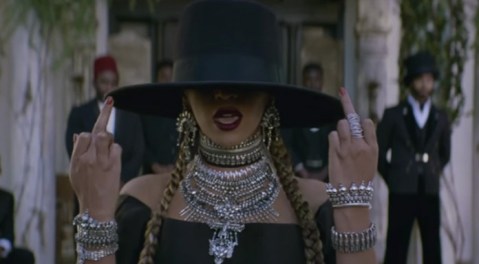
After the release of her game-changing, brilliant video, Formation, and the stir her Superbowl halftime show caused with dancers dressed like Black Panthers, Beyoncé is blowing up everyone’s feeds everywhere. And one thing I am shocked/notshocked to see is white outrage about both.

Let me begin by saying that I’m not a Beyoncé fan. I’m not a fan of any of the pop divas. I don’t have anything against them; it’s just not music that interests me. So Lady Gaga, Beyoncé, Madonna, Mariah, Adele, I apologize, but I’m sure you and your massive success could not possibly care less that I would rather be listening to punk or classical. The only reason I’m pointing this out is to make sure you know I’m not a Beyoncé fan. This is not about defending a beloved star.

Let me tell you what it IS about.

The vast majority of Black people in the US are descended from people who were dragged here against their will and forced to live in a culture that shut them out completely from mainstream artistic production for 400 years. For 400 years, Black people were living in a culture where their pain, their culture, and their art were appropriated and sanitized for white consumption, or, more often, shut out of the narrative entirely, replaced by racist caricatures or rendered invisible. For 400 years, the stories of Black people on this continent were untold, belittled, or made the tools of white narrative and white profit.

Now we’re in a cultural moment where there are powerful, mainstream Black artists telling Black stories that may or may not include white people, may tell uncomfortable truths about white people in Black lives, or may use white people as metaphors. For 400 years Black people were used as metaphors in white art, so my sympathy for “not all white people” and “that’s not fair” is somewhere at the bottom of a pile of Magical Negroes, Gone with the Wind, and token Black friends.

In this cultural moment where powerful, mainstream Black artists like Beyoncé are telling their stories on their own terms, the white people who controlled the narrative– including how and when Black stories have been told– for the past 400 years need to sit back, shut up, and listen, listen, listen. You don’t like how white people are being portrayed? Spend some time thinking about why Black artists are portraying white people that way instead of demanding they adjust their stories to conform to your self-image as “the good guy.” We are not the heroes in these stories. We are not the intended audience. We are irrelevant, and there’s nothing people in power hate more than to be made irrelevant, but the fact remains that these are Black stories, by, for, and about Black people. You don’t like it? Don’t watch. But I recommend that you do, and give it some real thought. This is their truth. You do not get to dictate how Black artists see or portray their own lives.

And if the image of the tiny child dancing in front of a line of police officers, who then surrender to him, does not move you after little Tamir Rice (and so many others), you have no soul.

Formation-surrender

The line of riot police surrendering to the power of a beautiful dancing child is not “anti-white” or “anti-police.” It is pro-hope, pro-life, pro-art, and pro-Black. If you don’t like the metaphor of the line of white police officers here, I suggest you spend some time thinking about why Beyoncé chose it.

The Formation video and the Superbowl show are examples of a powerful Black woman at the top of her game brilliantly telling Black stories for Black people, brilliantly seizing the narrative and asserting the beauty, power, and truth of a people who have been stringently and deliberately silenced for centuries in this country.

The call for Black women to get in formation, get information, and celebrate their power gave me chills. You hear a lot about “Black excellence,” and Formation is a potent reminder that Black excellence isn’t something created by white people congratulating themselves for bending down to hand out opportunities. Too many of us define “white ally” as “someone who is desperately needed by Black people to help them, and therefore deserves all the cookies.” Black excellence is already there, has always been there. It doesn’t need white validation, and the lack of fucks Beyoncé has for white validation from the center of her Black power is giving some white people fits.

beyonce-formation-video-696x385

Beyoncé, I hope you’re bathing in a marble tub full of white tears this morning.

My fellow white people: Listen. Listen. Listen. This is a Black moment, rarer than rare in this culture. If you don’t like the way Black artists portray white people, work on changing the impact of white people in Black lives, not on telling Black people they’re wrong about their own lives.

SIGNAL BOOST: “We Slay, Part I” by New South Negress is an excellent analysis of Formation.

IN ANSWER TO YOUR QUESTIONS:

  1. No, the title is not meant literally.
  2. No, I am not an angry Black lady, but thank you for the compliment.
  3. No, capitalizing “Black” does not reveal a secret plot for racial superiority. Capitalizing the word “Black” in reference to people is a linguistic thing. “White people” has a squidgy definition and refers to a hodgepodge of people from varied ethnic groups, all of which are capitalized, such as “Celtic people” or “Swedish people.” “Black” as shorthand for “The people of the African Diaspora living in the United States” is rightly capitalized as “Black people” in the same way we say “French people.” “African American” is linguistically and historically troubled because “Africa” is a continent with thousands of disparate cultures, and the people we label as such were forcibly separated from most aspects of their cultures of origin when they got to the US, creating an entirely new, coherent culture best described as “Black.” Of course, the word as an ethnic descriptor has other applications (“Black people in Germany,” for example), but this is the one I’m using in the article. Not all linguists agree, but that’s my position.


Tagged , ,

The Oscars: As Silly and Useless as Ever, and Yet Crucially Important

The Oscars are nonsense. They’re Hollywood’s Homecoming Queen elections, as insular, as clique-ish, and as disconnected from any actual merit as any Homecoming election in any rich white high school. Rich white people congratulating each other for the kinds of achievements attainable only by people sitting atop an obscene amount of money– their own or someone else’s. They ask you to believe that the actual best acting, best directing, best editing, and best design of the year just always happen to be located in the one narrow strip of filmmaking that (entirely coincidentally!) has the most funding.

So the Oscars are more or less the Tonys of the filmworld– limited to a very narrow strip of exceptionally well-funded work while we all pretend the awards somehow represent the best of the nation’s work as a whole.

Most of the artists who receive Oscars or Tonys did a fine, in many cases excellent, job. I begrudge them nothing and honestly wish them nothing but the best. But it’s important to remember that we don’t give awards for the “best” work in theatre or film because we don’t even consider most work, and, most importantly, there’s no objective way to measure whose artistry is “the best” once you’ve eliminated some of the obvious worst– and, let’s face it, when it comes to Oscars for acting, even that’s seldom done.

We give these kinds of awards based on how an artist makes us feel; generally, how an artist makes us feel about ourselves. There’s an old saying: “When the audience cries, it’s not about you; it’s about them.” The people who vote for these awards are no different.

Despite the fact that these awards are meaningless as measures of artistic merit, they contain an immense cultural value. A great deal of that stems from the narrative of artistic supremacy created by Broadway and Hollywood. There are an entrenched group of extremely wealthy and powerful people whose fortunes depend on you continuing to believe that Broadway and/or Hollywood represent the pinnacle of American performative art. They’ve built and expertly marketed a superstructure of dreams and wishes that will make people who’ve never worked in either Broadway or Hollywood defend their artistic supremacy as if they’re defending their own children. I actually admire the way Broadway and Hollywood have controlled that narrative. There’s a terrible beauty to that level of cultural manipulation.

An immense part of that narrative of supremacy is rooted in the cultural supremacy that comes from cultural saturation, something only money can buy. A film like Fifty Shades of Grey–a film of questionable merit on many fronts— had the financial backing to play in theatres all across the country (and the world, but our cultural exports are a story for another blog), saturate the market with advertising, and command enormous press attention, garnering $166 million at the box office ($570.5 globally) and a basket of award nominations for The Weeknd for Best Original Song (Oscars and Golden Globes among them), while literally hundreds of much better films lacked the financial backing to receive such culturally potent– and lucrative– attention. Fifty Shades of Grey becomes, therefore, a permanent part of our culture, attaining a position of influence unrelated to merit, created by the wealth of its backers. People in the BDSM community were largely aghast at the misconceptions about themselves and their lives now lodged like a tick into the national consciousness. Now people who have never met anyone in the BDSM community “know” what “those people” are like, will make decisions about “those people” based on that. The power of cultural saturation coupled with the myth of artistic supremacy is immense. Everyone sees X + X comes from an “important” source = X is truth, even when X is demonstrable bullshit.

This is why, despite the fact that I will laugh in your face if you tell me the Oscars have artistic meaning, I think it’s crucial that we look closely at the messages we’re sending when we shut people of color out of those awards, because those messages have immense power in the real world.

First of all, do not bother to comment that a number of people of color were nominated for the Oscars this year, including Best Director and Best Original Song, mentioned above. I know many people who work behind the camera, and I am keenly aware that the current discourse is limited to the actor awards. It irritates me that tech people, directors, designers, and writers are so easily disregarded, and that the work of actors is regarded as so much more important in a medium where the work of the actor is actually of far less import than the underscoring, cinematography, and editing. The cultural primacy of the film actor exists, whether I like it or not. There’s a culturally important mythology around film actors that just doesn’t exist for most of us behind the camera. They are our mythological figures– our Achilles, our Ajax, our Helen, even our Artemis, Athena, Hermes, Apollo. We create unending mythology about them and their lives. The mythological Jennifer Lawrence is a combination of Artemis and Dionysus in our culture right now. Yet the real Jennifer Lawrence is just a young woman, no different than any other. We have raised her (more accurately, a mythologized version of her) to a mythological height that makes what she eats, what she wears, what she says, what she does, and who she sleeps with a matter of national interest, just as humans once created stories about what their gods ate, wore, said, did, and nailed. Film actors are seen, in essence, as metaphors for Human.

Because the Academy members are nearly uniformly white men over 60, the awards are almost always given to other white people– human metaphors that are emotionally potent for the person voting on the award. When an award is given to an actor of color, these older white men are still voting based on how the artist makes them feel about themselves– in this case, self-congratulatedly “not racist.” Then, satisfied that they got the Good White Person cookie, they go right back to nominating and awarding reflections of themselves.

So when we choose a thin, able-bodied, all-white pantheon to honor for film acting, it says that the people who are the best metaphors for Human are thin, white, and physically “perfect.” Our culture is filled to the brim with negative portrayals of people of color. When children grow up, they look to the culture at large to determine what’s expected of them. Are we really OK with a culture that tells children of color– on the cusp of becoming the largest population of children in this country— that they’re not as worthy as white children? For that matter, are we really OK with telling our girls that their worth is indelibly attached to their attractiveness to men? Because we do both, all the time, and they’ve resulted in a million different kinds of cultural and personal problems.

So I applaud the Academy’s response to the current controversy. I think increasing the amount of women and people of color on the panel is the best thing the Academy can do, since that diversity will result in more diverse choices. What needs to happen concurrently, of course, is better representation of women and people of color across the board in Hollywood, just as there should be on Broadway and across the professional theatre community as a whole.

But let me be clear here: (coughs, turns on mic) NOTHING CHANGES IF ALL THE GATEKEEPERS CONTINUE TO BE WHITE MEN.

The Academy is making the best possible decision. I hope it happens in time to make swift changes, not glacially slow ones, as is too often the case. And our own best possible decision is to increase the number of women and people of color who are in gatekeeping positions of power in the rest of the film industry and in theatre.

It’s a massive problem if the solution to a lack of diversity becomes asking white men to please hire more women and people of color, thank you. We need more women and people of color in these decision-making, content-creating positions of power or all we’re doing is preserving the cultural primacy and power of white men.


I’m not saying that we should fire all white men and give their jobs to women and people of color. I AM saying that when these jobs become available– when it’s time to hire artistic directors, producers, and the like– let’s consider hiring someone other than the white guy every single time. I’ve been watching this for a couple of decades now, and almost every time a position of power opens up, it’s filled by a man, usually white, always able-bodied, usually straight. Out of 70 LORT member theatres, 50 (71.4%) have white male Artistic Directors, 16 (22.8%) are led by white women, 4 (5.7%) by men of color, and zero by women of color. When you consider that white men are just 31% of the population, that’s significant favoritism at play.

It’s nonsense to say that there are just fewer women qualified to produce either theatre or film. The indie world is dominated by women. We just don’t promote them to the high-paid gigs as often as we do the straight white guys because our hiring practices are exactly the same as our awarding practices– the white guys in power are looking for reflections of themselves.

We’re asking the existing people in power who created the lack of diversity in the first place to create the diversity we want. And they will, to a point, if we push hard enough. But as soon as the cultural attention moves elsewhere, those people– straight white able-bodied male people in power– will go right back to making decisions that reflect their own experiences of the world– will go on making decisions that mythologize people like themselves– because they are human, and that’s what humans tend to do. And yes, there are many white men who are committed to diversity in their theatre or film companies, but they are, obviously, the exception or we wouldn’t be here, sitting in the middle of dismal diversity stats.

All I’m asking is that we, who work in these industries, make conscious decisions to include women and people of color when we’re hiring for these gatekeeping positions. We understand the immense cultural power of the actor, but we who work in these industries– most of us behind the scenes– also understand the even more potent gatekeeping power of the people who choose the actors– and everyone else on staff.

There’s nothing wrong with telling stories from a straight white male perspective. They are humans who deserve to have their stories told. But we need to make room for the other 69% of our population as well. The way to do that is to ensure that the people making the decisions about what stories get told, how they’re told, and who tells them are representative of the population as a whole.

In case you’re interested:

Over the course of its history, 66 Black actors have been nominated for an Oscar and 15 have won; 28 Latino actors have been nominated and 9 have won; 17 Asian actors have been nominated and 4 have won. This is the 88th Oscars, meaning 352 awards to actors have been given overall out of 1760 nominees.

Black actors nominated = 3.75% of total nominations; Black actors awarded = 4% of total awarded

Latino actors = 1.6% of total nominations; 2.5% of total awarded

Asian actors = 1% of total nominations; 1.1% of total awarded

For comparison, Black people are 13.2% of the US population; Latinos are 17%, and Asians are 5.6%.


Tagged , , , , , ,

Fellow Jews: Are We Going to Let Innocent People Go Through What We Went Through?

Thousands Of Syrian Refugees Seek Shelter In Makeshift Camps In Jordan

Syrian refugees in Zaatari refugee camp, Jordan, in February. (Photo by Jeff J Mitchell/Getty Images)

I’ve been in tech this week, so I’m behind on the news, and this will be a short one. It certainly won’t take long to say what needs to be said here.

Ahem.

As a Jew, I firmly denounce the stigmatization of Syrian refugees, along with all the GOP proposals for surveillance of Muslims, including a national database and closure of mosques. Fellow Jews, if you are not loudly and firmly denouncing this as well, I am ashamed of you.

Hudea_3252752b

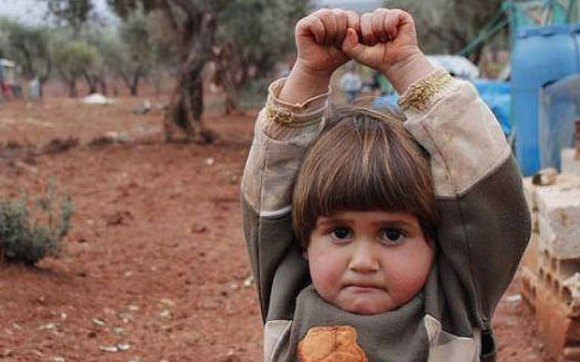
A four-year-old girl named Hudea mistakes photojournalist Osman Sagirli’s telephoto lens for a gun and surrenders to him at the Otmeh refugee camp in Syria last December.

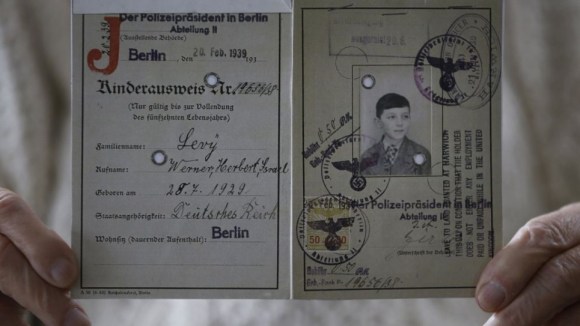
A national database? You know where registering people for being part of an ethnic group leads, right? And even if you don’t believe it could happen in America, you and I know what that kind of registration was used for even before the camps. You don’t know? You don’t remember? Talk to your grandmother. Pick up a book.

Kindertransport-Memor_Horo-965x543

The identity card of Herbert Levy, marked “J” for “Jude” (Jew). Levy was brought to England through the Kindertransport program in 1939. Activists successfully lobbied Britain to loosen immigration restrictions to allow 10,000 Jewish children– but children only– into the UK, taken in by foster families. Most never saw their parents again. (Photo: AP Photo/Kirsty Wigglesworth)

Proposing the closure of mosques should scare the living daylights out of you. For one thing, we have this little document called the US CONSTITUTION, and are we truly going to allow our hate, fear, and racism enable us to shred it? Are we going to mistreat our citizens? Or people looking for our legendary Land of Opportunity? The “opportunity” for what, virulent racism?

three-boys_sm

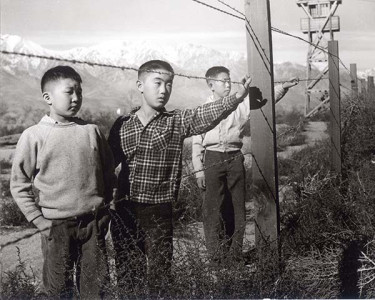
Three Japanese American boys stand at the perimeter fence at the Manzanar internment camp near Independence, California in this iconic photo by Toyo Miyatake. Japanese Americans were forced to live in internment camps 1942 – 1945. (Source: blog.janm.org, courtesy Alan Miyatake)


Probably the most heartbreaking, however, is the heartless turning away of refugees. It’s no surprise to me that there are so many conservative American Christians shrieking “No room at the inn” and slamming the door against Syrian refugees. They did the same to us. This was expected. But you and I? Our families? Not one of us, not one, should refuse these people a place AT OUR TABLES, let alone in our country. We know better.

jewishrefugees

These Jewish refugees from Nazi Germany fled to the US aboard the “St. Louis” and were forced to return to Europe after both Cuba and the US denied them entrance. 1939. Look at the hope in their faces. They believed they were safe. They believed they were among the lucky. How many of the children in this picture survived after we turned them away? (Source: ushmm.org)

Radical right-wing white men are the most dangerous terrorists in the US today (also see this and this). If you’re in favor of refusing Muslim refugees escaping extremist violence, if you’re in favor of (unconstitutionally) curtailing the rights of American Muslims, but you’re not in favor of tracking and/or limiting the rights of American far-right extremists, you’re not trying to protect America from terrorist attacks. You’re just a racist.

lesbos

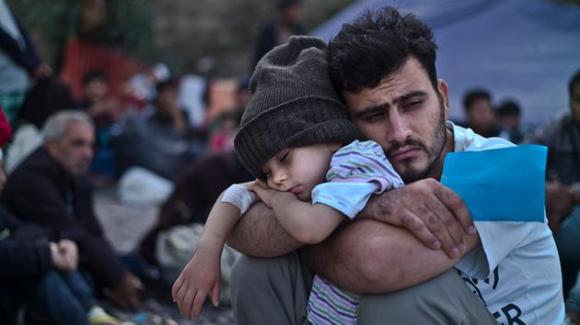
A Syrian child sleeps in his father’s arms after arriving on a dinghy from the Turkish coast to the Greek island of Lesbos in October. (Photo: Muhammed Muheison/AP)


UNI177414

Syrian refugees struggled to keep warm during the snowstorms that hit the Middle East last February. Too many died of hypothermia. This was taken at a refugee camp in Lebanon. (source: UNICEF)

We’re talking 10,000 Syrian refugees here. That wouldn’t even sell out Madison Square Garden. You’re willing to shitcan everything America stands for because you’re afraid of a group of victimized innocents that number fewer than 1/50th of the people who saw the last Rush concert tour?

American Jews, please join me in denouncing, loudly and vociferously, the terrifying, all-too-recognizable treatment of Syrian refugees seeking shelter here, as well as our fellow Americans who happen to be Muslim. Join me in lifting the lamp beside the golden door, even if we have to wrench it from the hands of the racists seeking to hide it from them.

American Muslim Pride

(photo: Joel Gordon)

(NOTE: This is my personal blog, not CNN. While I approve all respectfully dissenting comments, I am under no obligation to approve comments I deem racist, disrespectful, derailing, or trollish. If you want to blame “the Jews” for government actions in nations to which most of us have never been, or “the Muslims” for criminal actions most of them have roundly condemned and in which many innocent Muslims have perished, I advise you to pick up your racism and move along. It truly pains me to have to include this, but bitter experience has taught me well.)


Tagged , ,

The Real Story of Clarion and Lloyd Suh

I don’t have any insider information. But I’ve been both teaching theatre in the university system and producing professional theatre for over 20 years, and I’m sick of the articles being written about this that have no understanding of what we do or how we do it.

Marilouise Michel of Clarion University wanted to produce Lloyd Suh’s Jesus in India, but never completed the licensing agreement, or responded to the agent when asked about casting. Michel cast with all white actors, including the roles written for East Indian actors. The rights, having never been granted, were denied.

Here’s what happened: In January, Clarion asks for a copy of the play. In May, they inform Lloyd they’re adapting it into a musical. For those of you unfamiliar with IP copyright, this is illegal if done without author permission. Lloyd generously tells Clarion that’s fine if it’s just a classroom exercise, but he (obviously) has questions if it’s for public performance. The director never responds. Meanwhile, she’s begun negotiations with the agent, who has asked her about casting. The director does the paperwork required for the university to disburse a check to the agency, but never completes the actual rights negotiations or licensing agreement. On October 30, five months after Lloyd asked about the musical adaptation, the director emails Lloyd asking if he would be able to skype with the actors who are currently in rehearsals. Lloyd, thinking WTF? heads over to google and sees that the production (still without the legal permission to adapt or even perform the work) has been cast with all white actors. He emails his agent. The agent emails the director. The director says LOL, we couldn’t cast it any other way, and I forgot you even asked. Lloyd discovers from his agent that the licensing agreement was never completed. He clearly restates what the agent was (obviously) trying to discuss with the director five months earlier: the Asian characters need to be played by Asians, or the rights will not be granted. The director says no. The rights were not granted.

And the world goes nuts BLAMING LLOYD.

The coverage of this has been enraging, painting Lloyd and his agent (the marvelous and wonderful Beth Blickers) as bullies, when nothing could be further from the truth. Clarion is completely to blame, even if you believe white people should be allowed to play people of color. 

The director maintains the agent never mentioned race in her email. That may very well be true. The email may have said something along the lines of, “Before we release the rights, how do you plan to handle the specialized casting in this play?” or even just “How do you plan to cast the play?” It’s disingenuous to assert that a question like that doesn’t, at the very least, make clear that casting is an important consideration in rights negotiations. I’m willing to bet Michel didn’t complete the licensing agreement because she didn’t want to have to confess to Beth that she had an all-white cast, knowing full well that would be a problem. I’m willing to bet Michel, who had a provisional yes and had already sent the paperwork required for the university to disburse a check, believed she was far enough along in the process that she wouldn’t get caught if she kept her head down.

I have had innumerable conversations with people in education about paying performance rights, rewriting scripts, or violating the playwright’s express instructions, and invariably I’m trying to convince someone that Yes, you WILL get caught, because internet. (I’m of course also discussing Ethics, and IP rights, and OMG are you even kidding me with this?) It’s depressingly common for my fellow educators (and even more so for administrators) to believe they won’t get caught violating contract or performing without rights, so I have no trouble believing that this director believed a little of both.

The people out there howling that Lloyd shouldn’t have cashed the check are spurred by misrepresentative coverage. First of all, Lloyd didn’t even see the check. The agency deposited the check along with every other one they received that day, and would eventually disburse payment to Lloyd for all the shows for which they’d contracted. It’s not at all uncommon to send a check before all the details of an agreement have been finalized. If the agreement isn’t completed for whatever reason, the agent returns the money. Cashing the check is not a tacit way of saying “I would love for you to violate my IP rights and do whatever you like with my play.”

Playwrights, agents, and publishers pull the rights for ALL SORTS of reasons. Beckett’s estate famously won’t allow women to be cast in Waiting for Godot (with some notable exceptions). Tams Witmark once shut down a production of Anything Goes because the company wanted to use a drag queen Reno Sweeney. MTI shut down a Bay Area production of Godspell— with a C&D!!–because the company changed the lyrics. Neil Simon refuses the rights to schools and companies that want to edit out his swear words. Lloyd owns his play. If he wants to refuse rights unless a production agrees to put a full-page elegy to Mr. Jingles the Sock Monkey in the program, he has that right. He sets the rules, just as you set the rules for who uses your property.

Clarion is in the wrong here, period, even if you believe white people should be allowed to play people of color. Which, in 2015, is just nonsense.

I’m sick of the mainstream articles (and posts and comments) wherein the years of activism, resistance, discussion, and progress around casting and diversity in theatre are invisible. Is the director at Clarion misrepresenting the issue deliberately? Or is she really so disconnected from the theatre community that she doesn’t know about these issues? Why are the writers of these articles so ignorant of the years of discussion, the hundreds of articles, and the massive national controversies around casting and diversity in theatre?

At least 95% of the available roles in any given season are open to white people. It’s embarrassing to watch white people throw a tantrum over the remaining 5%. We’re not entitled to everything just because we want it. I’ve written repeatedly about the many reasons non-white characters should be played by non-white people (search “diversity” if you’re interested). Many writers far better than myself have written about this issue repeatedly. In brief:

  1. History. Theatre, film, and television all have a long history of casting white people as people of color while shutting actors of color out. Those portrayals have almost always been insulting and racist. The historical context has made this issue a sensitive topic for people of color, and rightfully so as they have had to watch themselves portrayed in insulting ways by white people while being shut out of opportunities to play themselves. If you think this is a matter of the past, think again. And again. And again. And again. And again.
  2. Representation. Actors of color are still underrepresented in theatre. Most of the available jobs go to white actors, who are disproportionately represented. White men in particular have always dominated, and continue to dominate, the industry. It’s unethical to push people of color aside to allow even more white people to have even more roles, especially the tiny handful of roles written specifically for people of color. This is also why it’s not at all the same when a person of color plays a role written for a white person. That’s a step toward proportional representation, not “racism against white people.”
  3. Ethics. People of color in the theatre industry have been very clear that the continued use of yellowface, brownface, and blackface, as well as the continual whitewashing of characters, is hurtful to them in multiple ways. White people have three choices and three choices only: “We hear you and we’ll stop,” “We hear you, but we don’t care if it hurts you, so we’ll keep doing it,” “We don’t believe it should hurt you; you are incorrect about your own experience of the world.” The first choice is ethical; the others are not.

So when we discuss issues like the cancellation of Clarion’s production of Jesus in India, let’s focus on the facts. Let’s insist on accurate coverage. Let’s hold each other accountable. And let’s have the self-respect to admit when we’re wrong.

Tagged , , , , , , , , ,

BUT I GET TO BE RACIST BECAUSE ART: The Mikado

artist

With last year’s massive national controversy about The Mikado in Seattle, it’s difficult to believe that anyone, anywhere, would be doing The Mikado in yellowface, right? I mean, Rick Shiomi at Skylark Opera in collaboration with Mu Performing Arts in Minneapolis showed us all how it’s done back in 2013: Since the work is actually meant to lampoon British Victorians, why not actually dress them as British Victorians? A few very small, non-invasive line changes and voila. Now you get to have Mikado sans racism. That’s what we all want, right?

As it turns out, no. The New York Gilbert and Sullivan Players is doing a production of The Mikado this upcoming holiday season, with most of the characters in yellowface. Playwright Leah Nanako Winkler wrote a fantastic piece about it on her blog that was picked up by Angry Asian Man, in which she expresses her shock and calls for people to speak out in solidarity with the Asian American theatremakers (and audience members) who are fighting for better representation of Asian people on American stages. If you want to contact the Skirball, she lists all the contact information you need.

Several of the usual (awesome) suspects in the theatre blogging community are writing about this production as well (Howard Sherman, Erin Quill). With all these articles burning up my feed, I’m seeing the inevitable backlash comments as well, defending The Mikado in particular and racism in art in general. I’ve covered this issue before. We’ve all covered it before. And yet the apologia for racist content never stops.

So, I’m thinking it’s time to play Racist Art Apologia Bingo! EVERYONE PULL UP YOUR FACEBOOK FEED. Find the first article about this set to “public” and open the comments. Get ready to check those comments for these well-known racist apologia statements as Millie calls them! Ready? GO.

I'm ready!

I’m ready!

(Tumbles wheel full of racist apologist statements) OK, I’ll just reach in here and pull these out one by one. See if you can find them in your feed!

Source: bossip.com

Millie draws the first one! (Source: bossip.com)

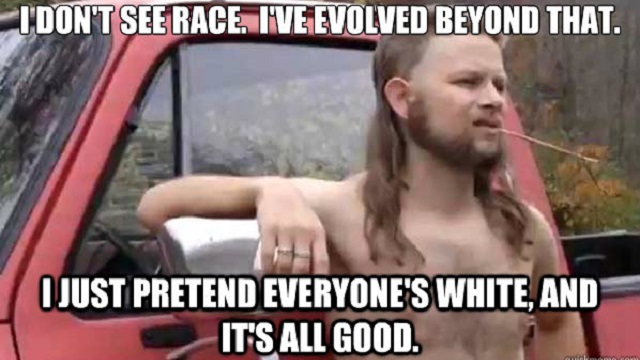
B17: “The one who points out racism is the REAL racist.” Quote from my feed:  “[The Mikado] is only racist in the eyes of a racist.”

Analysis: ILLOGICAL. I get that you’re going for the time-honored “I’m not the nerd; YOU’RE the nerd” you picked up in grade school, but it doesn’t fly in grown-up discussions. Let’s think about this for a second. The primary voices speaking out against yellowface are Asian American. So Asian Americans who say The Mikado is racist are the real racists? Because . . . ?

race.meme.hayseed

Here comes the next one!

N44: “Why should we pander to political correctness/SJWs/liberal demands?” Quote from my feed: “A work of art shouldn’t pander down to ignorance but insist that an audience rise to its challenge.”

Analysis: BELITTLING. Treating people of color with respect is never “pandering.” You only “pander” to demands when those demands are unworthy of consideration. Making this argument is tantamount to saying that racist portrayals of people of color on our stages, including yellowface, are so perfectly acceptable that the protest against them is worthless, and any consideration of that worthless protest is pandering. This quote is even worse, as it assumes that people who protest the racism in The Mikado are just “ignorant” and unable to “rise to the challenge” of art.

racist.joke.meme

Did you get both? Get ready for the next one:

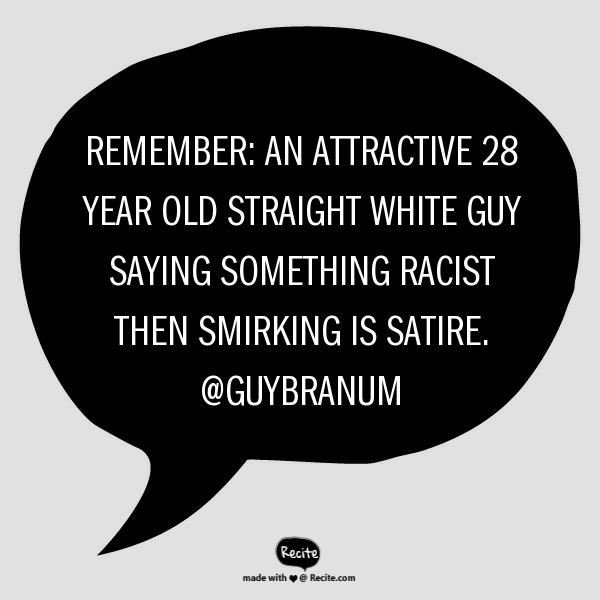
I29: “It’s actually anti-racist if you think about it.” Quote from my feed: “What always matters in the question of whether something is racist is intent. It is actually making fun of an Englishman’s condescending attitude towards other cultures…or specifically, the Japanese.”

Analysis: WISHFUL THINKING. So let me get this straight: The cartoonishly stereotypical characters in The Mikado are actually fighting racism because they’re mocking Victorian racism through modern white people performing cartoonishly racist Asian characters. This is like claiming you punched someone to show other people that punching is bad. MY INTENT WAS CLEAR. I am anti-punching. Therefore, I get to punch whoever I want. QED.

satire

Ooh, I bet you guys are getting close! Just a couple more spaces to fill……

042: “You just don’t understand.” Quote from my feed: “[The claim that The Mikado in yellowface is racist] is an astonishingly simple and one-dimensional understanding of this lighthearted but really profound and many layered work of comic art.”

Analysis: NONSENSE. We understand; we just disagree. We see all the layers that you do, sweetheart, we just don’t agree that the “profound” message that Victorians were racist and Orientalist (lol, “profound”) does not earn the right to perform yellowface in 2015.

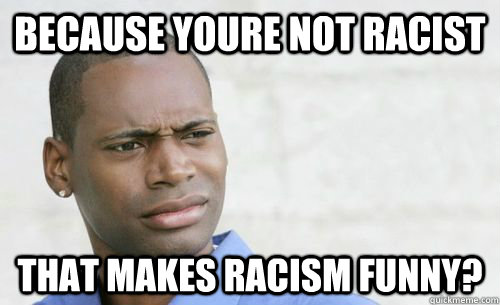
racismfunny

One more . . . Come on, Millie! I’m so close!

G8: “This is ART.” Quote from my feed: “There’s a very good reason these works have endured…why they are admired.”

Analysis: IRRELEVANT. This is an apologia favorite. “Art needs to be protected; art should be pushing boundaries and making people uncomfortable; pieces like The Mikado have have endured and long been admired; we should never censor art.” No one is claiming these works should be demolished. We should continue to study them. Pretending our history of racism never existed is a dangerous idea. But what we’re choosing to perform as “light-hearted” comic performances, what we choose to put on our stages, and how we choose to present work, are all completely different considerations. The work didn’t endure because of the racism in it, and often, as Rick Shiomi demonstrated, there’s a wonderful workaround that makes the piece relevant to an audience for whom racism is no longer acceptable.

The main problem with the “preserving ART” argument is that racism and racist caricatures had one cultural context in the Victorian (or Elizabethan, or Classical, or what you will) era, and have completely different contexts now. Fighting to preserve a racist work as written most often vandalizes that work’s original intent. The racist symbol was created to convey a meaning it can no longer convey. Yellowface can no longer convey the meaning Gilbert originally intended when writing The Mikado because that meaning has been superceded by a modern understanding of yellowface’s inherent racism. Even if you believe the yellowface in The Mikado means “Victorians are racist; isn’t that funny?” it can never mean that to an audience in 2015 because yellowface is read as racist in and of itself, and stomping your feet and insisting that Gilbert’s intent was completely different does exactly nothing to change that.

But purism is a smokescreen to hide the real issue at hand. If people are fighting so hard to perform classic works as originally performed, where are the castrati? The boy actresses? The act intervals? The on-stage audience seating? These people have no interest in purism as such. They’re upset because they feel entitled to the right to be able to decide what is acceptable and what is not. White people have always had that right, and the idea that people of color might have the cultural power to contradict them and be heard galls them. An issue these white people find acceptable– racism in performance– is being challenged, and they will fight as hard as they can to retain the cultural supremacy that entitles them to continue to define racist performance as “acceptable.” They’re fighting more and more furiously because they know they are losing.

I, however have WON!

RACIST APOLOGIA BINGO! B17, I29, N44, G8, O42! BAM!

Suck it, Marlene, Esther, and Florence! See you at the next Hadassah meeting in my NEW HAT.

Suck it, Marlene, Esther, and Florence! See you at the next Hadassah meeting in my NEW HAT.

P.S. Shana Tova to my fellow tribespeople and Jew-ish affiliates! I hope you all have a wonderful 5776.

UPDATE 9/18/15: NYGASP has announced the production will be cancelled and replaced with Pirates of Penzance. I still think a better solution would have been to update the work like Rick Shiomi did, but I understand why they felt they should just shut the whole thing down. I hope this opens a conversation at NYGASP (and elsewhere) about representation and diversity on our stages.

Tagged , , , , , ,

“Too Street”: Hypocrisy in Policing the Speech of our Actors

Idris Elba, the living embodiment of

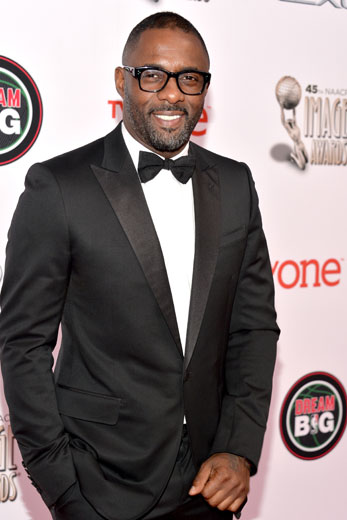
Idris Elba, the living embodiment of “suave,” was labeled “too street” to play James Bond by Bond author Andrew Horowitz.

I just had an interesting conversation with someone whose white teens are using the slang words “finna,” “aight,” “brah,” etc. She characterized it as “shortening words to sound hip.” I’m almost certain she just didn’t know where the terms came from; I don’t think she was trying to be erasive. But it brought to mind how poorly we’re handling political issues around language, especially in the theatre.
Those slang words aren’t about being hip and cool– they’re about being Black. I’m not trying to stop Black people from influencing the language as a whole. Black slang is, and has always historically been, one of the most important influences on the way English is spoken in America. But understand the context here. When a Black person uses the slang they create, they’re slammed for not being “professional,” not being “articulate,” but when that slang finally makes it to white mouths, it becomes “hip” and “cool.” Usage changes language, and language is political. Our culture constantly appropriates Black invention as “hip” and “cool” while deriding and marginalizing Black people for using their own inventions. Language is an enormous part of that. If it’s become “hip” for white kids to say “finna,” how are we approaching Black people who use their own slang? Because right now, I see a hallway full of shut doors for Black people who aren’t speaking perfect English at all times.
black.shakespeare.meme
I corrected a girl for saying “ax” in my class last year, and I’m deeply ashamed of that now. I read up on that usage, and I came to understand how wrong I was. Language is political. We have to understand what we’re enforcing, and why we’re enforcing it, when we police usage.
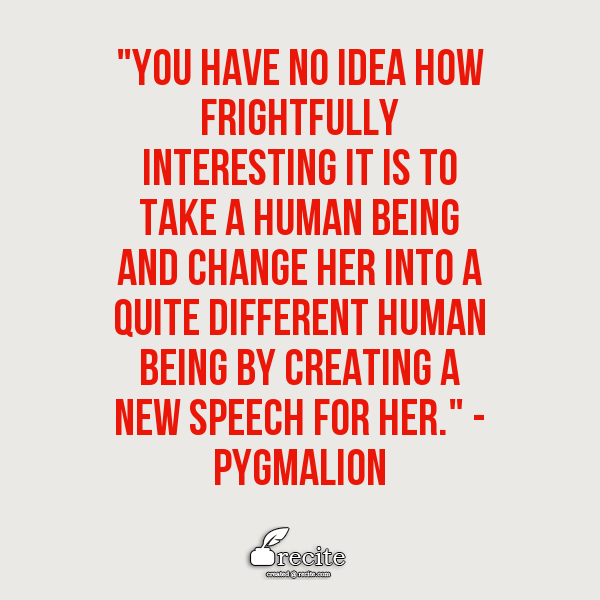
I know a Black actor who was told by a Black professor at the university where I used to teach that he would never be cast in Shakespeare because his speech was “too Black,” and that he needed to amend his speech in order to be cast. The actor told me this after I had cast him in several Shakespeare plays at my company (as well as several new plays– this actor is phenomenal). As a white director whose approach to classic work deliberately eschews stiffness and formality, I’ve always had an eyeroll for “American Standard,” which we still teach actors to this day. Even actors completely untrained in it will often fall into its faux-British, formal tones when doing Shakespeare. A couple of years ago at my company’s general auditions, I had a very diverse bunch of college actors, all from the same university (perhaps not coincidentally, where I used to teach), and every single one came in with a cookie cutter, faux-British, semi-Standard American accent. I actually considered contacting the chair with a “What are you teaching these kids?” email, but I knew exactly what they were doing: prepping them to perform in a world that rejects anything that doesn’t reek of privilege.
studio-180-tweet

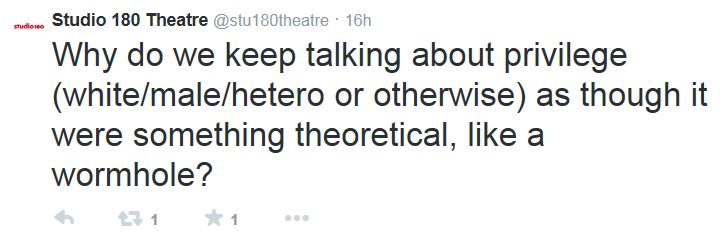
When we cast Shakespeare, when we cast new plays, when we teach actors, when we go to the theatre, when we choose our seasons, what choices are we making that reinforce privilege? How often have Black actors heard they were “too urban” or “not urban enough” for a certain role? How often have Asian and Latino actors been asked to “do the accent”? How often are we shutting people out because their speech– or their writing– does not conform to the expectations of white privilege?

The evidence is everywhere. Critics who slam plays because they don’t conform to the values and expectations of white privilege. Actors are told by white directors and casting directors in auditions to be “more urban” or “less urban,” meaning, “perform Blackness in the way I expect you to.” Black comedians Sasheer Zamata and Nicole Byer wrote a fantastic sketch, performed by Byer, called “Be Blacker,” mocking the many auditions in which Black actors are told to “be more urban.”

What does it mean to ask an actor to perform Blackness in a way white people expect or want? How often are we encoding the enforcement of privilege in our casting? How often are we encoding the enforcement of privilege when we say we’re teaching actors “speech and diction”? How much policing of speech is enforcing privilege?
American culture– and that includes American theatre– needs to take a long, hard look at the multitude of ways we police speech, especially the speech of people of color and people without class privilege. I’m including both spoken speech and written speech in that. If we’re making commitments to diversity, then we need to think about the multitude of ways in which we’re reinforcing the idea that diversity must be performed only in ways that are acceptable to white privilege. White people are measuring the acceptability of people of color by how closely they resemble whiteness off stage, and how accurately they can portray Blackness to white specifications in various situations on stage. I’m not claiming this is limited to Black people– cis people measure the acceptability of trans people by how closely they resemble cis people, and so on. But the topic at hand is how we believe Black speech is acceptable coming out of white mouths, but reject it coming out of Black mouths unless we can directly profit from it.
pygmalion
 In other words, if white America is talking about how hip and cool it is that white kids today are saying “finna,” then we need to look long and hard at the actors we’re rejecting because their speech isn’t “ready,” is “too urban,” or who “aren’t articulate.” We need to look long and hard about how we teach our students. We need to look long and hard at the people we’re not hiring at all levels because we perceive their speech– or their presence– as performing a kind of Blackness (or Asianness, or any other kind of identity that differs from straight, white, cis, class privileged) with which white people are uncomfortable.
I’m not excepting myself from this. Quite the opposite. I’m saying: This is a place wherein we’re falling down, and dragging far too many people down with us. Let’s examine what we’re doing more closely, and find a better way forward together.
Tagged , , , , ,

Celebrating Thin White Women

Sometimes it seems like our whole entire culture is one huge celebration of thin white women. Ogling them, collecting them, advertising products to help other women become more like them, giving them all the awards for everything ever. It’s not just that the pinnacle of American womanhood is seen as thin and white (and cis, and able-bodied). It’s that thin white women are framed as “normal,” “neutral,” and every other woman is measured by her distance from that “norm.” “Black woman,” “transwoman,” “plus-size woman.”

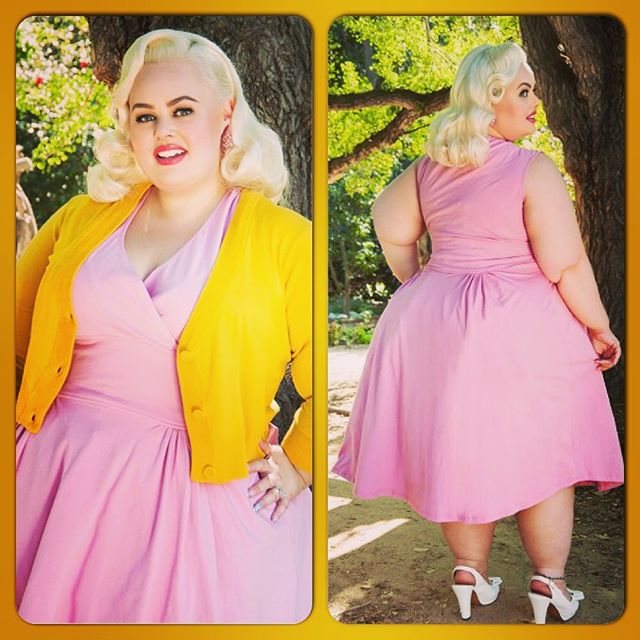
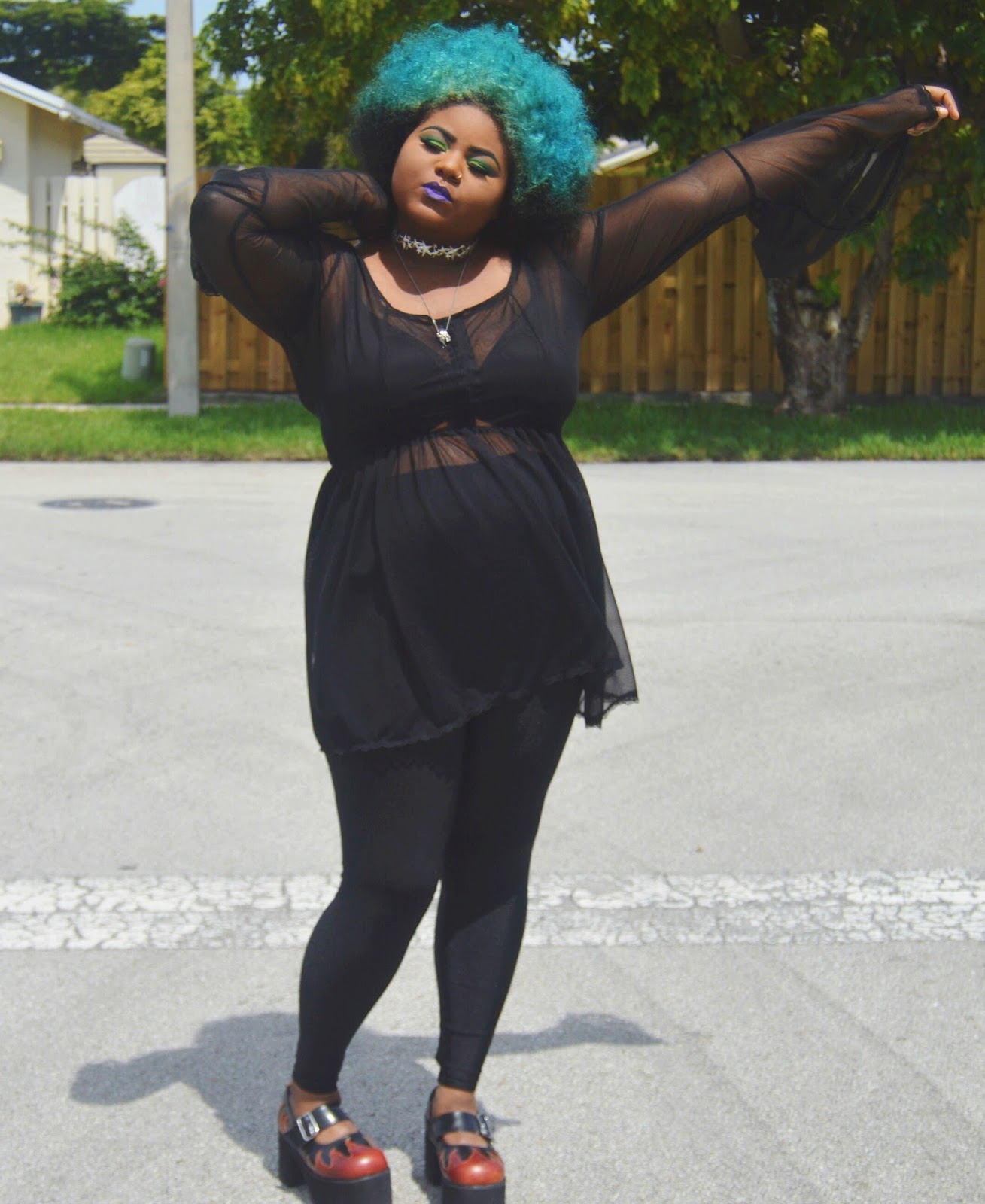
Maybe this is changing, maybe not. Like you, I live on the internet, where one can find pictures of all types of women, from professional shots to vacation snaps, and plus-size (I know, I know, bear with me) women are everywhere. There are plus-size models (both professional and indie, some with huge followings), fashion bloggers (also with huge followings), sex bloggerssingers in various genres, photographers who specialize in gorgeous shots of plus-size people, and, of course, a handful of famous plus-size actors cast in film and television roles. The body positivity movement is extremely popular, and has a significant presence on every social media platform and the internet in general, where it promotes self-acceptance and stands against the shaming, bullying, and body policing with which women (and some men) are victimized every day, as well as the tsunami of relentless backlash the movement itself faces.

Model Tess Holliday (Source: Vogue Italia, vogue.it)

Model Tess Holliday (Source: Vogue Italia, vogue.it)

Nothing brings out the angry, outraged commenters faster than a picture of a woman who’s not rail-thin.

Humans LOVE bigotry. We LOVE grouping together in “us” vs. “them” to shame, disparage, and belittle “them,” shoring up our “us” identity and placating our own insecurities and self-doubts. This makes us feel like we’re part of something larger, something strong, something, above all, superior. This is an intense human impulse that is expressed in things as damaging as racism and as benign as choosing a sports team. When we claim membership to a group, along with that comes shaming, disparaging, and belittling people who are not in that group, either good-naturedly when we have no real power over “them” (“Dodgers suck”) or with devastating consequences when we do. Every single group that ever existed has a list of “known,” “true,” or even “scientifically proven” reasons that people outside their group deserve disparagement. Science has been used to confirm literally every racial bias the west has ever had.

Science only gets answers to the questions it asks. The cultural biases of researchers very often generate results that confirm those biases. Biases lead researchers to create studies or aggregate data in ways that are designed to produce results that confirm their biases. Science understands this and attempts to correct for it with things like double-blind studies and peer review, which are all, of course, still deeply influenced by the culture.

Don’t get me wrong– I’m very pro-science. But I’m also realistic. The well-known cultural trope of “overweight = unhealthy” is being problematized in study after study (after study), while other studies confirm it (as relentlessly reported in every corner of the media). Which studies are “true”? The ones that confirm your pre-existing biases, of course. The rest are “junk science.”

Marie Denee, founder and editor of The Curvy Fashionista-- curvyfashionista.com. (source: Glamour.com)

Marie Denee, founder and editor of The Curvy Fashionista– curvyfashionista.com. (source: Glamour.com)

There’s an enormous amount of conflicting information about what an “ideal” weight is (the ranges were ratcheted lower several times in the 20th century), how people become overweight, lose weight, or maintain weight loss, yet our culture “knows” that overweight people are that way through choice, laziness, gluttony, lack of self-control, or even a lack of moral fiber, thereby excusing and even lauding the bigotry against fat people.

When an image of a woman who is not rail-thin is publicly displayed in any context other than one specifically discussing her weight in a negative light, even if the context has nothing whatsoever to do with weight, people go out of their way to make disparaging comments. The comments fall into two main categories: insults/slurs, and some version of “I’m just concerned about [this total stranger’s] health”/”this promotes an unhealthy lifestyle.”

You can’t determine the health of an individual by looking at a picture. If you look at a picture of a fat person and think, “they’re unhealthy,” you’re engaged in an act of bigotry stemming from cultural bias, not making a medically sound diagnosis. And if you’re not posting similar comments on images of high heels, MMA and boxingbacon, or other well-known public health concerns, then you are a concern troll: someone who uses “concern” as a cover for shaming, belittling, and bullying.

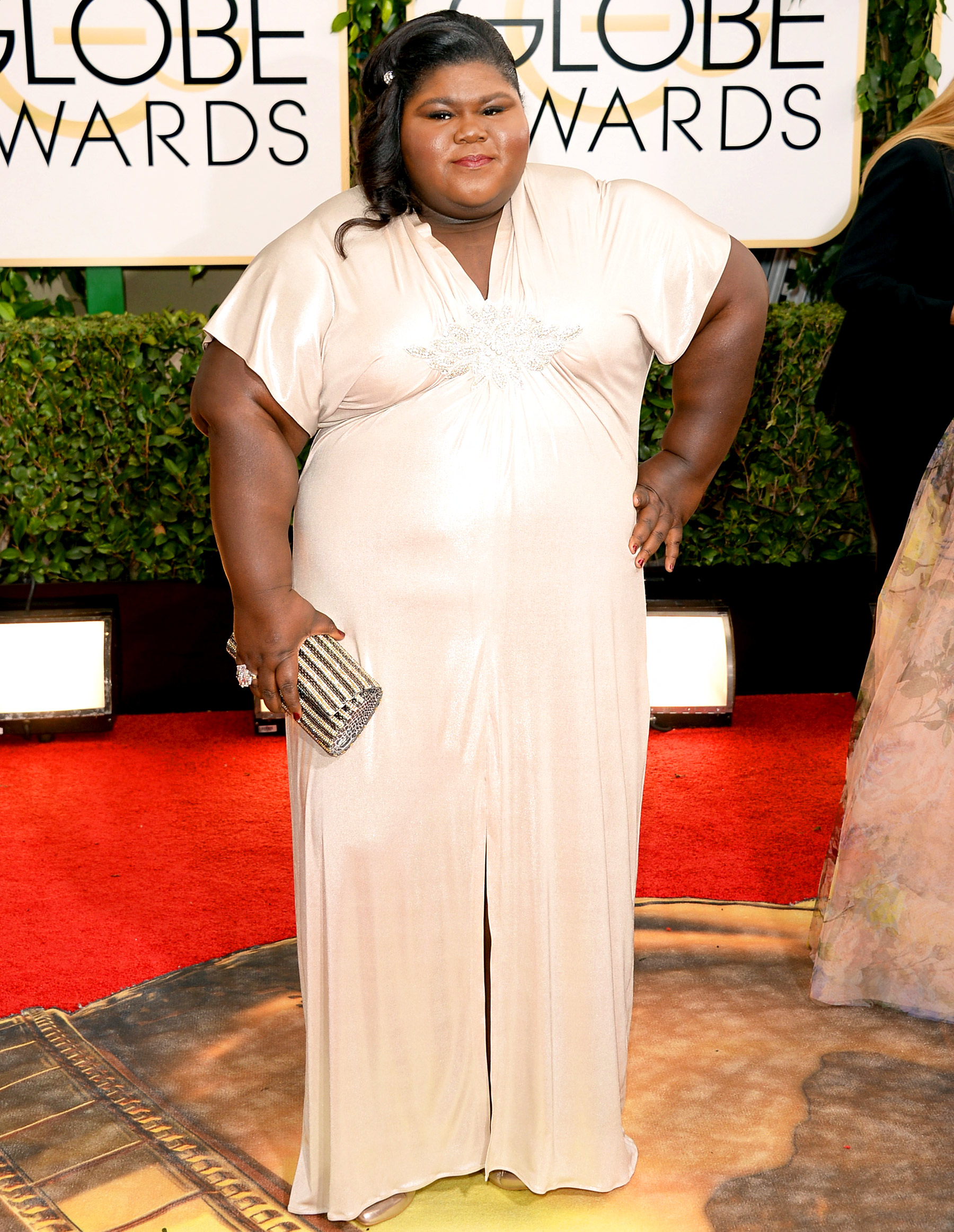
Actress Gabourey Sidibe at the Golden Globes in 2014. ( Jason Merritt/Getty Images)

Actress Gabourey Sidibe at the Golden Globes in 2014. ( Jason Merritt/Getty Images)

Someone cannot “promote” any kind of lifestyle simply by existing. Yet I’ve seen– we’ve all seen– “this is promoting an unhealthy lifestyle” comments on shampoo ads, fashion photography, celebrity profiles, and even photos of fat women working out.

The August 2015 cover of Women's Running featured model and runner Erica Schenk, drawing both widespread praise and criticism. (James Farrell, WomensRunning.com)

The August 2015 cover of Women’s Running featured model and runner Erica Schenk, drawing both widespread praise and criticism. (James Farrell, WomensRunning.com)

And let’s pause for a moment and remember that this issue is intersectional, and that larger women of color are the targets of unfathomable bigotry and hostility. Most people don’t even bother to cover their bigotry with “concern” like they do for white women.

We’re in a cultural moment where people are pushing back against thin privilege, and are being met with culturally-approved, flat-out HATRED. As content creators in the entertainment industry, who impact culture more than any other single source, we need to work against this hatred.

Indie model Sydney Sparkles, from her Instagram account, @aussieplussizebarbie

Indie model Sydney Sparkles, from her Instagram account, @aussieplussizebarbie

We stand up for gender parity, yet the only women our industry feels are worthy of inclusion are thin ones, or women like Robyn Lawley, whose “plus size” (at 6’2″) is 12. We need to stand up for the inclusion of ALL women, which includes stepping away from the constant, constant focus on women who only fit a certain body type unless the script explicitly calls for it. The adamant defense of thin privilege throughout our industries has got to stop, and the only way to get there is to make a conscious decision to stop it. This is our choice to make, and we must make it.

Robyn Lawley is considered a

Robyn Lawley is considered a “plus size model,” the first to be featured in Sports Illustrated. Photo: James Macari/si.com

We need to be realistic about the ways our current fight for gender parity often ignores intersectionality. Here in the Bay Area, there’s been some discussion about adding a marker to theatre listings that indicates which shows have gender parity (cast, crew, and playwright) so people can support them.  This ignores a raft of crucial issues. A show about four thin, white, wealthy women would be starred and therefore recommended and publicly congratulated, yet a show devised and performed by four young Black men speaking the truths about their lives would not.

Of course many (perhaps most) people fighting for gender parity are also fighting for greater racial diversity, but I’ve personally seen industry professionals say things like, “Gender is a more important issue than race, which is basically just a look.” I’ve seen multiple times: “We have to cast beautiful women because actors have to be desirable objects for the audience,” which begs the question: What is “beautiful?” Because I will bet the farm that means thin, white, able-bodied, and cis.

Yet WE CONTROL what “beautiful” is. We change the definition of beauty by creating cultural content. We’ve done it over and over and over, from Gibson Girls to Clara Bow to Marilyn Monroe to Farrah Fawcett to Scarlett Johansson. This is our choice to make.

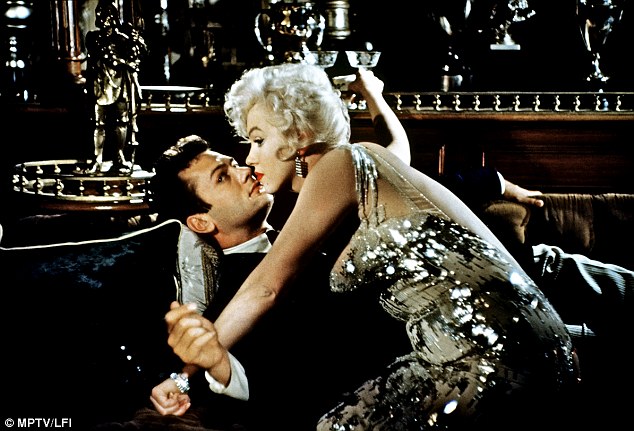
Tony Curtis and Marilyn Monroe in Some Like It Hot.

Tony Curtis and Marilyn Monroe in Some Like It Hot.

There’s no reason we can’t open our definition of “beautiful” to include more diversity– more intersectional diversity that better reflects the women in this country– the people who are buying most of the film and theatre tickets. But first we must open our definition of “woman” to include more intersectional diversity, and cast women who aren’t thin, white, cis, AND able-bodied, because right now, you need all four to be considered “right” for the role of “woman.” If you’re missing even just one of those, you’re only “right” for “Black woman,” “overweight woman,” or “disabled woman.” This is our responsibility to change.

Fashion blogger Stacey from Hantise de L'oubli. Photo: hantisedeloubli.com

Fashion blogger Stacey from Hantise de L’oubli. One of my personal favorites. Her instagram is @hantisedeloubli. Photo: hantisedeloubli.com

If we’re going to push theatre and film companies for gender parity, let’s make sure we don’t enable yet another cultural space that celebrates thin, white, cis, able-bodied women and ignores (at best) everyone else.

Tagged , , , , ,

Maybe we should pretend black people are lions

cecil

Cecil.

I was sad for the killing of Cecil the lion. I really was. I’m softhearted about animals and haven’t eaten meat in over 20 years because of it. But with the nonstop public outrage, and now the support for extradition, I have reached my limit.

Are we seriously going to create an internet outrage machine to extradite that dentist fuckwit for shooting a single lion? Let’s put this into perspective.

People who eat meat every single day are screaming for this man’s head. And no, it’s NOT “different.” The difference between that lion and the cow you ate for dinner is imaginary, created in your head and in our culture to make you feel better. I’ve seen literally hundreds of posts about how disgusting it is to shoot a “defenseless animal,” and the hypocrisy is wearing me down. I’m seeing post after post about how disgusting hunters are. I saw post after post outraged over that dog meat festival, written by people who eat cows and pigs without a second thought. The difference is cultural, imaginary, artificial. And I would be a lot less irritated with that hypocrisy, and probably even laugh it off, if it weren’t part of a performance I’m tired of seeing.

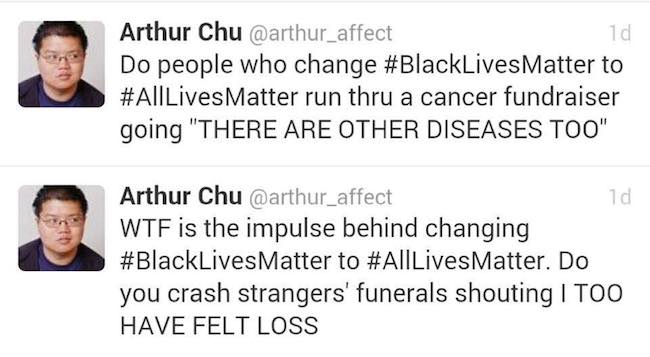
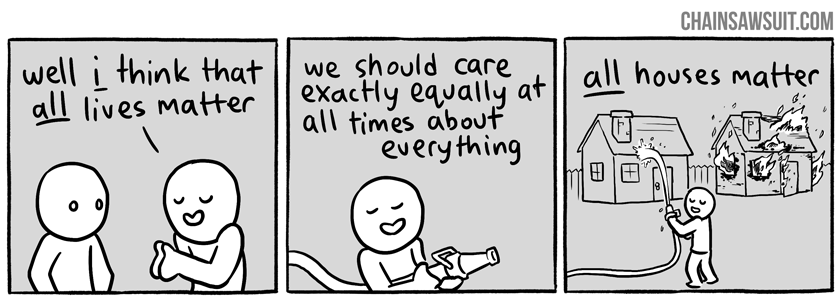
Yes, I’m going to be one of those people bringing up #BlackLivesMatter, because this extradition thing has pushed me over the edge. The entire country is screaming for extradition, but a 12-year-old boy was gunned down in the street for playing with a toy gun– something I am willing to wager 95% of the men, and a large chunk of the women, in this country have done at similar ages– and white people charged onto social media to explain why it was OK for a police officer to shoot this CHILD within literally 2 seconds of rolling up, let him bleed while he cried for his mother, and not even bother to call an ambulance himself. This case is ongoing. And people are calling for the EXTRADITION of this idiot who shot a lion.

BlackLivesMatter-AllLivesMatter

Tamir Rice? I chose him at random, because I’m a mom, and my heart aches and I tear up every time I think about him. But I could have put any one of HUNDREDS of names here of unarmed Black Americans killed by police just in the past few years.

Here’s what’s going on.

People love to play out scenes from “The Lottery” when they believe someone has done something wrong, but only when it’s something to which they can feel morally superior. They’re not calling for the head of this dentist (in some cases, literally) because they care so much about a lion they had never heard of a week ago. They’re calling for his head because it makes them feel like Crusaders for Justice. It’s a performance: I AM OUTRAGED OVER WRONGS COMMITTED AGAINST THE INNOCENT. I am GOOD. I am a good person. We will hunt down and eradicate evil together.

I am just as susceptible to this as anyone else.

But white people aren’t fighting anywhere near as hard, or in anywhere near the numbers, for Black lives. The movement for Black lives is different than Cecil. White people can’t participate in hunting down and scapegoating evil against Black people, because we’re the ones who are fucking up. White people are terrified of being called “racist,” seriously. And to be an effective ally, hell, to be an ally AT ALL, step one is to realize that we live in a white supremacist society that puts racism into our hearts and minds, and that being an ally means acknowledging that racism, and fighting it in ourselves and in the culture every day, forever. You don’t get a “Not Racist” trophy for hiring a Black guy as shift manager. It’s a process, and it requires honest self-examination, and white people do not get to be the hero.

WHITE PEOPLE DO NOT GET TO BE THE HERO.

But with Cecil the lion, they do get to pretend they’re the hero, and they create little performances about it, little LOOK AT HOW DISGUSTED I AM BY VIOLENCE AGAINST INNOCENT ANIMALS performances they use to play Good Guy. While eating a different animal they don’t give two fucks about because reasons.

And I am angry enough to delete any comments that try to “prove” how it’s OK to kill cows but not lions, because we EAT cows, and we need to eat, and lions are different. First of all, you have choices about what you eat, and you no more needed to kill that cow than that dentist needed to kill that lion. Secondly, focus your outrage on Black lives, not on creating a performance about how you eat meat but you still get to be the Good Guy.

blacklives.matter

Yes, I am angry. I was sad for the lion. I really was. And I still am. But the ongoing firestorm of outrage over that while your brothers and sisters get killed in the street and my fellow white people ARGUE with me, tell me they “hate” Black Lives Matter because they don’t want to have to tell their children about racism, or because it doesn’t include them (the ridiculous “All Lives Matter”), or because they might have to, for one second, not believe they’re the GOOD GUY all the time. They’re charging after this dentist because doing so makes them feel better, makes them feel like champions for justice, protectors of the innocent. And they fight against Black Lives Matter because they don’t get to be the Good Guy, because the fight requires that we admit our place in this oppressive system.

It’s time to step up, white America. You desperately want to be the Good Guys. Well, here’s your chance. Allow someone else to take center stage for one freaking minute, and focus your attention on the hundreds of unarmed Black men, women AND CHILDREN killed in this country each year. You can be mad about the lion, too, although I still have an eyeroll for you if you’re mad about this one creature and you ate 7 creatures last week. Just please remember that being a Good Guy takes more than being upset about a hunter.

Tagged ,