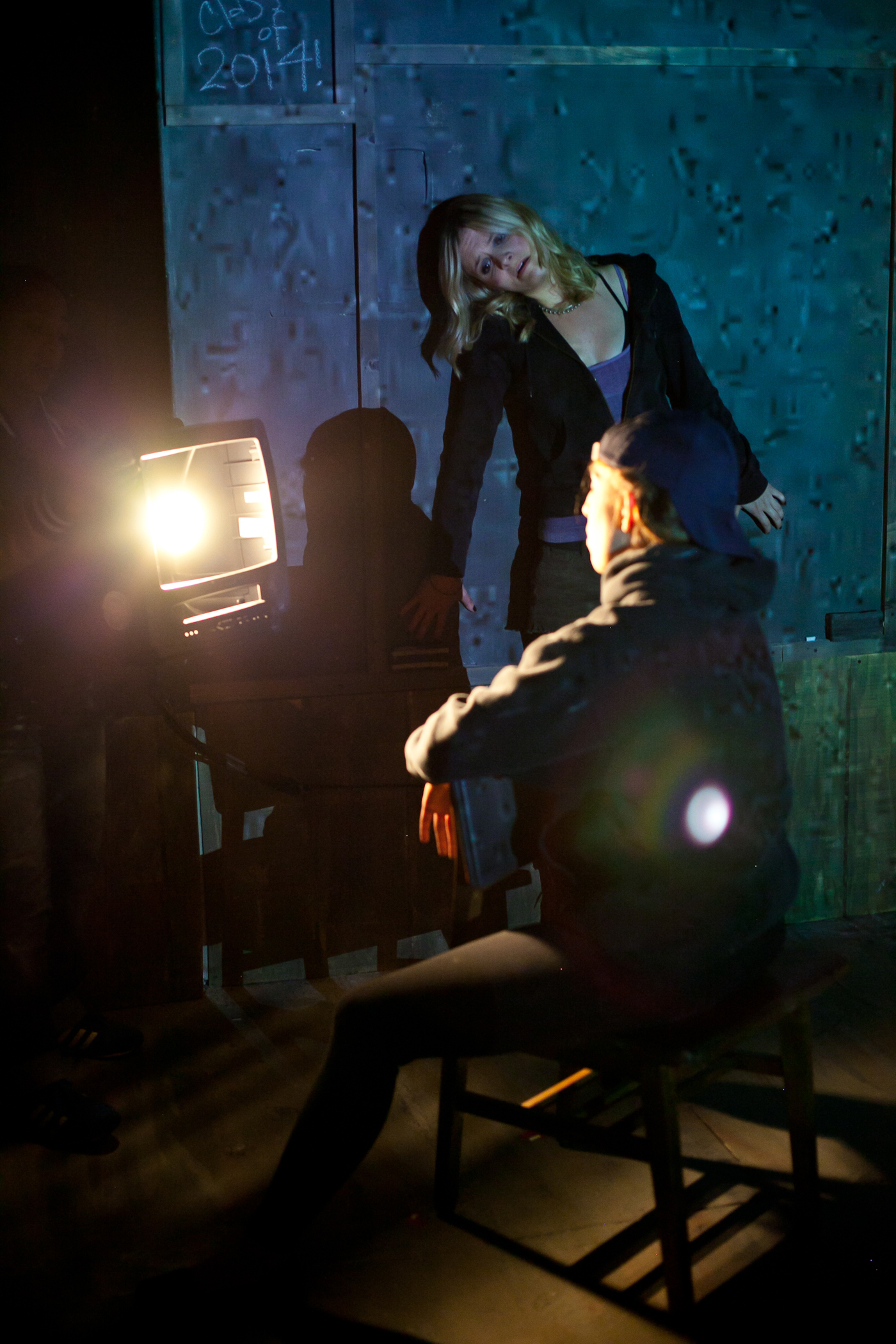
Arisa Bega in Monica Byrne’s What Every Girl Should Know at Impact Theatre. Photo by Cheshire Isaacs.
I’ve been thinking a lot lately about what theatre is and why we do it. It sounds like an easy thing to think about until you actually start thinking about it.
Someone I know recently referred to himself as a “provocateur” in how he creates his art, and that it’s not enough for him to just “do theatre.” I’ve known quite a few people who see themselves primarily as something along those lines– trying to “awaken” people, or provide some kind of “transformative experience.” And I think those can be laudable goals, to a certain extent. But what does it mean to “just do theatre”? Is being a “provocateur” more than “just doing theatre”?
I’m not sure if the “provocateur” approach can be, ultimately, a successful starting point all on its own. Provoke them to do what? Rush Limbaugh and Anne Coulter are two of the best provocateurs in the game. So are middle-schoolers. Provoking people isn’t a laudable goal in and of itself. Awakening people to what? Transforming them from what to what? This is unspecific language that is ultimately self-serving, focusing more on our personal importance to the process than on the work itself. That’s not to say artists aren’t important– that bears repeating, especially now as our importance to culture is under constant attack– but that, if our goals are audience-focused, we’re going to need to think more deeply about what we’re doing.
Dennis Yen, Mike Delaney, and Seth Thygesen in Twelfth Night at Impact Theatre. Photo by Cheshire Isaacs.
In the ensuing discussion with the “provocateur,” we both discovered that he meant so much more than what that word implies. He meant something for which there is no single word. He wants to engage his audience’s hearts, minds, souls, and bodies. He wants to reach down past the dross of the everyday and into a place of deeper meaning, deeper connection. And now we’re getting somewhere.
This type of engagement is about communion; it creates community. It’s one of the deepest, oldest human impulses. Hell, it’s a primate impulse. Be with me. See me. Hear me. Know me. Share this experience with me.
Chris Quintos in Joshua Conkel’s The Chalk Boy at Impact Theatre. Photo by Cheshire Isaacs.
I’ve had hundreds of discussions with hundreds of theatremakers, and when you dig deep enough, it all hits this same foundation: engagement, communion. How do we accomplish this communion? How do we, in the context of what we do as theatre artists, engage others in a way that creates communion?
Anyone who tells you that what we now call “audience engagement” is the pathway to this is just completely wrong. It *can* be, but just providing ways for your audience to interact with your work will not mean they’re automatically engaged with it in a meaningful way. Anyone can write on a wall, stand on a stage, sing a song, or tweet while being bored out of their minds and wishing they were at home playing Mass Effect. The techniques we use to “engage” audiences will not, in and of themselves, work. They can be very powerful, and they can be boring as all fuck.
How we make “audience engagement” techniques work is the same way we make theatre work: narrative. We’re storytellers.
Luisa Frasconi and Maria Giere Marquis in Joshua Conkel’s The Chalk Boy at Impact Theatre. Photo by Cheshire Isaacs.
When I say “narrative,” I don’t mean any one kind of narrative. A narrative doesn’t have to be linear. It doesn’t have to be traditionally structured in any way. Theatre is a narrative art form, and if you create an “audience engagement experience” without any kind of compelling narrative, you’re not going to successfully engage them.
While some people are quick to denigrate the term “storyteller” because it doesn’t sound important to them, theatre is, at its heart, about stories. How we choose to tell those stories differs from artist to artist and genre to genre, but the human brain understands the world through narrative. It’s why religion is conveyed primarily through narrative. Narrative and poetry are how we convey all the mysteries of our existence; narrative and poetry are how we convey all the secrets of the human heart. To be a storyteller is to be both the keeper of and the maker of our culture– past, present, and future. HOW you choose to tell those stories is up to you. But we’re all storytellers in this art.
In theatre, “poetry” can be what we usually mean by the word– unexpected juxtapositions of language that create an insightful, emotional impact– but we also have the luxury of creating it in the physical world– movement, sound, sets, lights, costumes, props, the bodies of the actors, the way those bodies tell the story being told. Poetry works in service to the narrative. It illuminates it or cracks it open or reframes it or explains it or even problematizes it (Shakespeare in particular loves that last one).
Mike Delaney in Lauren Gunderson’s Toil and Trouble at Impact Theatre. Photo by Cheshire Isaacs.
We start with something we want to say– a story we want to tell– and then we decide how we need to tell that story. The audience comes in the door and sits with us while we tell the story in the way we need to tell it. Maybe they participate in the telling; maybe not. But we– like an old woman sitting at a paleolithic campfire and every other storyteller in between that woman and us– create a world, open that world, and throw it like a blanket around our audience. Be in this world with me, feel its joy, its pain, its magic.
And through that ritual of storytelling– whether we’re creating a traditional, linear narrative or an experimental, non-linear movement piece, or anything in between— we’re attempting to engage, to create communion. When we’re successful, when we achieve that (because of course we don’t always, and we have to make room for failure if we ever wish to succeed), that engagement, that communion, can be provocative, transformative, or awakening. It can raise political consciousness. It can create an emotional journey. It can change minds, heal hearts, elevate souls. It can do ANYTHING, because a group of people fully engaged in a narrative is one of the singlemost immensely powerful tools available to the human experience.
Jonathon Brooks in Cameron McNary’s Of Dice and Men. Photo by Cheshire Isaacs.
There’s a wealth of information about the neurology of storytelling– how the human brain experiences narrative and is enriched by it is especially interesting. Our brains see the world, and other humans, as a collection of narratives. When we say we’re “storytellers,” we’re saying we engage other humans through the deepest, most primitive, most mysterious means possible. We’re talking soul to soul when we tell stories. What binary is to computers, narrative is to humans.
And this is what I think theatre is for: gathering a group of people to enter into a world wherein a story can be created, shared, and fully experienced in real, physical space and time by both creators and audience. Our stories contain all the mysteries of our existence, all the secrets of our hearts, all our hopes and fears and dreams and longing and joy and pain and everything that makes us who we are, who we were, who we fear becoming, who we want to be, what we dream we can be, at the deepest, most meaningful level our brains can comprehend.
So don’t shy away from the term “storyteller.” It’s one of the most meaningful labels we have for ourselves as theatremakers. It contains within it everything we’re trying to do with audience engagement, everything we’re trying to do when we say we want to “take risks” or “provide a transformative experience.” Everything we are and everything we will be are made of narrative. Theatre is the most powerful expression of the intensely human magic that is narrative.
I’ve written before about playwrights and rejection. I think it’s difficult, though, to understand just HOW MUCH rejection we’re talking about here, and how insanely resilient writers have to be.
Monica Byrne. I stole this picture shamelessly from her blog. I have more official pictures of her, but I just really, really love this one.
Monica Byrne is a writer whose work I believe in. My company is a few days away from opening her fantastic What Every Girl Should Know . Between unsolicited submissions and the plays we request, Impact Theatre receives as many as 450 plays a year to fill the 3 slots we have available (the 4th goes to the annual classic and the 5th goes to a local solo performer). Those odds are just nuts, so you know we must really believe in Monica and her work– and we do. But What Every Girl Should Know wasn’t the first play Monica sent us. The first play she sent us was Nightwork. It was a really interesting play that wasn’t right for us. It made it pretty far up the chain before we sent the rejection. I was intrigued and asked her to please continue submitting. She sent us What Every Girl Should Know.
The salient fact here, however, is that WE REJECTED HER FIRST. And when I asked her to please keep sending me her work, SHE DID.
Then she wrote THIS. She calls it her “anti-resume.” It’s a blog post that contains a link to a spreadsheet of all her rejections. It starts in 2007. It is impressive. Apart from the obvious bravery, it shows just how much rejection a writer– even a gifted writer who is on the verge of nationally-recognized success in two fields (take a gander at this)– can go through.
Recently I posted on The Book of Faces that I was considering writing a post about audition tips for theatres, and I was deluged with responses from actors: horror stories, pet peeves, constant annoyances, along with gratitude for moments of kindness, special consideration, and respect. I had comments both publicly, on the post itself, and privately, in messages and emails, by the tankful. Actors shared with me their ups and downs about the entire process, not just auditions, and it was quite an education. Going through them all, one thing stuck out to me immediately: No one is telling anyone else the truth about any of these things.
This is where I always come in, right? My brother likes to call this “career-limiting behavior.”
Career limiting behavior. Part of JD Hancock’s awesome Stormtroopers series.
So here you go. The things actors are thinking but don’t ever tell you.
Note: I invented exactly none of this. Everything you see below comes directly from the actors themselves. And while I’m certain there will be actors who disagree (“What? I LOVE having to come in for 6 callbacks for a show that pays $250.”), I only included issues mentioned by multiple actors.
Also: This is for producers and directors, and I include myself in that (obviously). I’m in no way perfect and make mistakes all the time, so don’t think I’m castigating you from on high. I am but the messenger. I have many posts with advice for actors (this one, also this one, here’s another one, yet one more), so don’t worry– I’m an equal opportunity meddler.
AUDITIONS:
Directors, we need to be realistic about callbacks. If you’re directing for a LORT and have big AEA contracts to give out, yes, you are entitled to three callbacks. If you’re working for a small theatre paying a $500 stipend for the whole shebang, you can bring the same actor back to see the same people once. You get a second callback if it’s significantly different from the first in the material covered or in the approach to it, or if the actors are there to be seen by different people (for example, a dance callback on a different day than the vocal callback). However, if you’re asking actors to come in for a second or third callback to do basically the same things for the same people they saw in the initial audition and first callback, some actors are starting to think you just don’t know what you’re doing, you don’t know what you want, or both. They start to wonder if working with you will be a good experience. You might want to address with actors specifically why you need to see them do the same stuff over again. Maybe having to articulate it will help you understand what the issue is, and might even guide you to making your decision without additional callbacks.
Another oft-cited problem with auditions in general and callbacks in particular ispoor organization. This takes two forms: Disrespect for the actor’s time and disrespect for the actor’s preparation. When our callbacks are poorly organized, we run behind and end up making actors wait– sometimes even for hours– past their slot. Actors have time commitments just like anyone else– they need to get to work or pick their kids up from school or meet friends for dinner. If you told them they’d be there from 7-7:30PM and they’re still there at 9PM, you blew it. But wait! All is not lost! Did you apologize profusely for blowing it, or did you act like an entitled jerk? A sincere apology goes a LONG way.
Disrespect for the actor’s preparation often stems from running out of time. If you ask an actor to prep five sides, that’s a HELL OF A LOT OF SIDES. Actors will spend a significant chunk of time prepping that massive callback for you. If they get into the space and only get through 1 and 1/2 of those sides before you send them on their way, they are not happy. So be realistic about the amount of time you’ll need for each audition and the amount of material you’re giving each actor to prep. And again, a sincere apology when you blow it really goes a long way. Let’s face it: We all blow it sometimes.
Another pet peeve actors have about auditions is when directors ask them to perform material they haven’t been asked to prep. Again, a sincere apology goes a long way here, and there are always exceptions. An actor’s not going to get cross with you if you call him in to read for a small role and decide on the fly to have him read for the lead. But actors WILL get cross with you if you ask them to perform “something” from a show you see on their resume (“You mean the one I did five years ago? In college?”). Another pet peeve of actors is when directors ask for outlandish adjustments, such as asking them to perform the monologue they just did for you, but this time as a spider. If you know you’ll want actors to do improv work or extreme, unusual adjustments, tell them in advance. If you decide on the fly you want to see something unusual, be cool about it and understand that you’re asking a lot.
What actors love about your audition: Being treated with respect and kindness. Free snacks (a simple bowl of mini Reese’s peanut butter cups was mentioned as an especially nice touch). Available water, bathrooms, and seating. Directors who pay attention during the monologue rather than text or eat. Directors who respond to an actor after the audition either way. An offer is always nice, but a timely release is appreciated as well, as difficult as they are to send.
We’re auditioning for the actor as much as the actor is auditioning for us. Think of it as a blind date.
Your blind date is less likely to end in happily ever after if you text through the whole thing.
REHEARSALS:
Directors, you should probably know that a lot of actors don’t want to pretend their characters are animals, especially experienced actors who already have their own character creation processes developed over years of trial and error. Being forced to choose an animal seems twee to many actors. It works for some, but not (from what I’m hearing) most.
“Now is the winter of our discontent made glorious summer by this son of York. Squeak.”
The most popular complaint, though, was time-related. “Mind if we stay late tonight?” I’m hearing that directors ask actors to stay late in the middle of rehearsal, or even at the end. The actors who pointed this out as a pet peeve fell into two basic categories: people who use public transportation and people who have early morning jobs. If you hold actors until 11:30, it makes it difficult for them to get home using public transportation (in the Bay Area, at least. Sigh.). Actors who have early morning jobs are already stealing from sleep to be at your rehearsal and are not at all excited about going in to work tomorrow on 4 hours of sleep, especially since you’ve scheduled another rehearsal that next night. No one wants to be the one who has to say, “Yes, I mind.”
Another issue is lack of concern for safety. This includes things like refusing to bring in a fight director and making untrained actors stage their own fights; making an actor perform blocking they feel is unsafe; making actors wear a restrictive costume that makes them feel unsafe (such as restricting vision). I’ve already blogged about why you need to hire a fight director. Otherwise, we need to remember to listen carefully and respectfully to actors when they tell us they feel uncomfortable or unsafe, and check in with actors when we’re asking them to do things that might be difficult or uncomfortable. And actors, if you’re reading this, please be honest with us. Lying to directors about your comfort level serves no one.
Lack of respect and hostile work environment. Just because you’re the director does not mean you can yell at an actor until she cries. You can’t throw fits, scream at your tech people, call your staff names, or make racist. anti-Semitic, or misogynistic comments. Learning how to direct by watching movies about directors is ill-advised. I understand there’s cultural support for bad behavior by directors (the auteur being SUCH A GENIUS that he is allowed to be horrible to everyone around him) but it’s actually not OK. Producers: WHY WHY WHY do you hire these people? There are brilliant directors all over. Give someone else a chance. You really don’t need to allow someone to treat your people poorly.
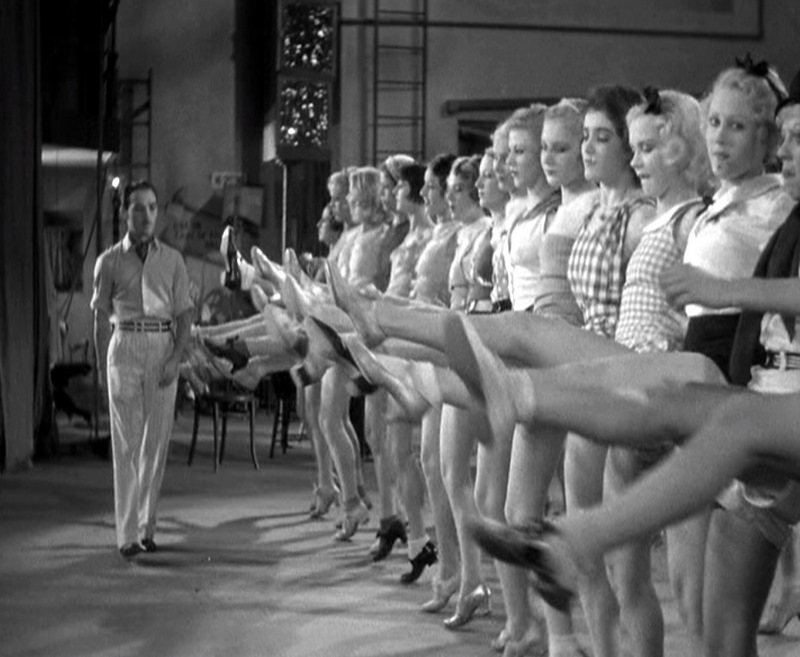
WATCH ME! IT’S SO SIMPLE! GIVE ME THE PLAYBACK!
What actors love about your rehearsal process: Respect. Being treated as collaborators. Having a clean, safe rehearsal space with bathrooms and nearby, easily accessible places to get food and beverages. Having a detailed rehearsal schedule sent out in advance.
DURING PERFORMANCES AND AFTER:
Refusing to do maintenance. Yeah, you kind of have to make sure the laundry gets done, props get repaired or replaced, etc. It’s not the actor’s job to do any of that. It’s our job as producers.
That’s what I get for doing another blood show . . .
Refusing to honor contracts. I’m not going into details here, but I’ve personally seen contract violations of both AEA and non-AEA contracts, in addition to the people who added this to their list of pet peeves. Honor your agreements.
What actors love about performances and after: Being allowed to use PR shots for their websites; producers who are accessible and approachable; a reasonable comp policy (no one expects 100 comps, but no one expects zero either); staying in touch after the show closes; recommending an actor to other companies; being paid on time with a check that doesn’t bounce.
We will not make our processes as magical as Batman riding a robot unicorn, BUT WE CAN TRY, DAMMIT.
Of course we all screw up from time to time. I’m no exception. I make 12 mistakes every day before breakfast. The overriding message I’m getting, though, is not that actors expect you to be perfect, but that they want to be treated with respect and dignity, and are happy to forgive you if you apologize sincerely for your mistakes.
Also of course, every actor is different. What one actor finds odious is perfectly fine for another actor. Talk to your actors and listen to what they have to say. Do your best to create an environment where your actors aren’t afraid to come to you with issues. Ask questions. Use your actor friends as a resource if you’re unsure. Communication is key.
I don’t know a lot about Lena Dunham or her work. And this post isn’t about her specifically. My point is the fact that in this major portrait of a powerful young woman shot by Annie Fucking Leibovitz, the photographer who shows up to tell you you’ve ARRIVED– she is posed like THIS.
This familiar, infantilizing, pigeon-toed stance that is one of the ways we pose young women to make them look hapless and charming and harmless. The semiotics of that pigeon-toed stance are clear and culturally very well-defined. And of course everything in this photo is deliberate. Leibovitz is a master photographer, not your aunt shooting holiday snaps. Both of these women know what they’re doing, and deliberately chose a pose with a specific cultural meaning.
As I’ve said, I don’t know much about Lena Dunham and I’ve never seen Girls (because I suck at watching TV) but I’m fairly certain that this woman who is well on her way to heading a media empire is, if anything, sure of herself.
Why does it matter? Why do I have any fucks to give about a person I’ve never met and the pose she’s throwing in her Annie Leibovitz portrait?
Because: How we portray powerful women MATTERS. This is a portrait of a young woman who is newly very, very powerful, and she is posed in such as way as to ameliorate that power. Lena Dunham is a very powerful, very young, very wealthy woman now, and whether she herself chose to ameliorate that by using a childlike pose and Leibovitz agreed, or whether Leibovitz posed her that way deliberately and Dunham agreed, it sends exactly the wrong message.
We have a lot of trouble with powerful women in our culture, and even more trouble with powerful young women. We pose young, powerful men in ways that celebrate their power (this, this, this, this, this, and this). We pose young, powerful women in ways that sexualize or infantilize them (or–ick–both). See this, this, this, this, this, and this.
I understand that Lena Dunham’s character in Girls is all about straddling the line between adolescence and adulthood. I get that. But this is not a portrait of her character. It’s a portrait of a powerful writer, producer, and actor.
I understand that it’s her choice to pose how she likes, and Leibovitz’s choice to shoot what she likes. I understand that Dunham is likely considering her branding in this image, and uses the helplessness and winsomeness she’s portraying here to aid her success in an industry that’s famously skittish around powerful women. I understand the “don’t mind me; I’m harmless” branding choice. I understand branding yourself that way makes powerful men in the industry less nervous, and makes potential audience feel protective and charmed.
Understanding all this is part of what makes me so frustrated with it. We only ask women to ameliorate their power in this way. Only women need to soft-sell their power. This is gendered branding.
What would make it suck a lot less for me, personally (because this whole blog is, of course my personal opinion, and YMMV)
DID YOU JUST READ THAT?
DID I JUST TYPE THAT?
OK, I’m stopping myself. I have a blog that’s read by more people than I ever imagined possible. I’m in the middle of a post about the portrayal of women, and how it sucks that we’re encouraged to soft-sell our power. AND I JUST MITIGATED MY OWN OPINION IN THE MIDDLE OF WRITING IT. This training runs deep.
In the facebook discussion leading up to this post, I was told by an older man that my “style of criticism” was “over the top.” Whenever women speak out, whenever women claim our own power, whenever women voice an opinion without a meek “Well, it’s just my opinion,” someone is there to tell us we’re wrong for it. Often, we do it ourselves. This training runs deep.
I’m choosing to own my power. This is my critical read of this image and this branding. Full stop.
Deep breath.
What would make this a lot less frustrating for me would be if the imaging and branding of men and women were less gendered. There’s nothing wrong with a woman posing for a portrait in an infantilized way in and of itself, but at this cultural moment we’re faced with the hard, cold reality that women– young women especially– are instructed to present ourselves in ways that mitigate our power, and are met with a wagonload of disapproval if we do not, while men are encouraged to do exactly the opposite. This kind of gendered branding sucks for women AND men.
I’ve spent quite some time this morning looking through images of young, powerful men and women. I’ve flipped through hundreds of images of dozens of people. And the one that seems to sum it all up is this:
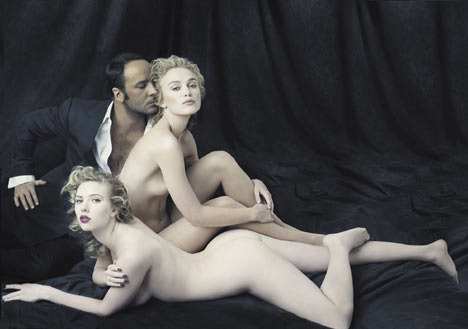
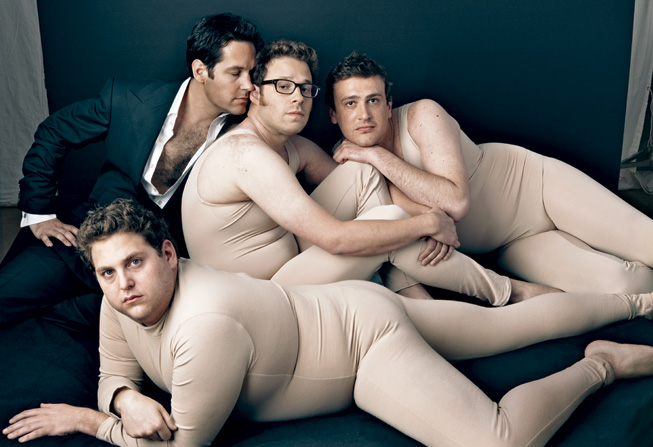
This photo of Tom Ford, Scarlett Johansson, and Keira Knightly, shot by Leibovitz for a Vanity Fair cover in 2010, sums it all up nicely. The parody shot Leibovitz did later also speaks volumes about how we portray powerful men vs. how we portray powerful women. It’s funny because of the ironic juxtaposition.
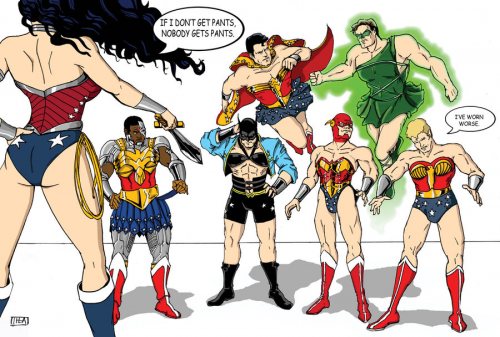
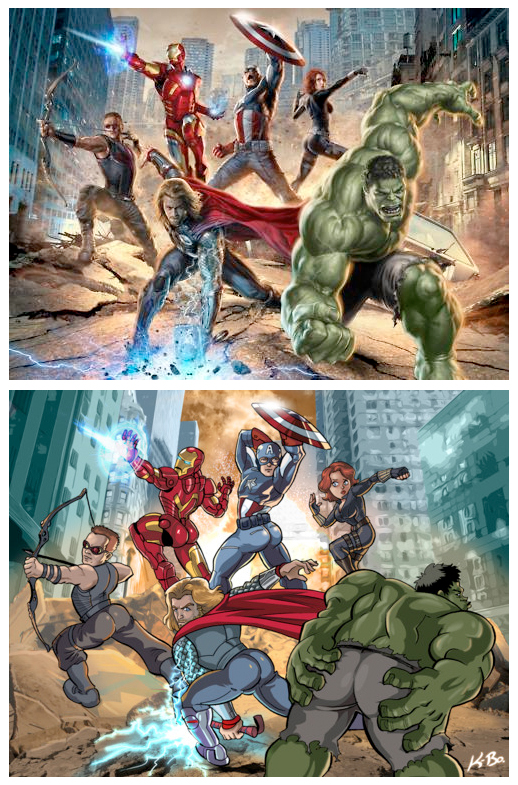
It’s the same kind of humor we get from this bit of awesomeness:
Created by Theamat on Deviant Art
and this:
What if all the Avengers posed like artists draw female superheroes?
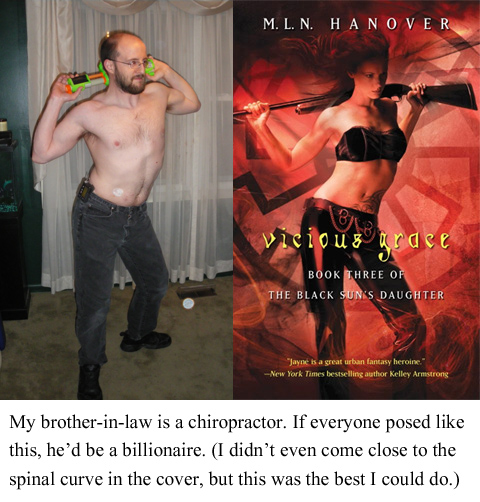
And this:
The man in the above photo is fantasy author Jim C. Hines, who has an entire series of photos of himself posing the way women are drawn on book covers. It’s glorious, so check it out here.
There are numerous examples of men posing or dressing the way women are posed and dressed, all creating humor out of the ironic juxtaposition and all (hopefully) highlighting the sexualized and infantilized ways we create images of women. Check this out, and this, and this.
Lena Dunham is a powerful young woman, and an Annie Leibovitz portrait is a potent, lasting statement of one’s celebrity. I just wish they had chosen to frame her within that power, rather than mitigating it.
UPDATE: To my astonishment, 3000 people read this post within the first 48 hours it was up. So far I’ve read and/or received dozens of comments on it in various venues. The people who agree with me are a mixed bag of genders. The people who disagree with me are, so far, 100% men. That was, I must say, completely unexpected. I assume there will eventually be women who disagree (or, more accurately, voice their disagreement to me), but the fact remains that it’s gone this long with only male voices telling me I’m wrong, scolding me for “reading too much into it,” or taking me to task for “attacking” Lena Dunham. Interesting, right?
Arwen Anderson and L. Peter Callender with Marissa Keltie, Julia Brothers and Robert Parsons in Circle Mirror Transformation by Annie Baker, at MTC
Marin Theatre Company, a LORT here in the Bay Area (and let’s give them a round of applause for how much local talent they hire, shall we? YAY) has two prizes they’re giving out for new plays. No submission fees, and the submission process is simple and online.
Here’s the deal: No matter what the thing is– prizes, contests, festivals, open calls– plays by men make up between 65% and 75% of the submissions. I’ve experienced this personally, seen it measured in studies, and had it quoted to me anecdotally by other ADs.
While I’m sure there are some contests out there somewhere achieving 50/50 submissions, the norm is nowhere near parity. If we want 50/50 productions, the first step is to make sure everyone has 50/50 submissions.
Start with MTC.
Bowman Wright (Lincoln) and Biko Eisen-Martin (Booth) in Topdog/Underdog by Suzan-Lori Parks, at MTC. Photo by DavidAllenStudio.com
I’ve issued my challenge on my facebook. All you need to do is submit to one of the two prizes MTC has going and then comment “DONE” on my facebook note. I want to see 100 women submitting to these contests.
If 100 women comment on my facebook note that they’ve submitted, I’ll do profiles of three playwrights, randomly selected from the list, on this blog. I’m no Adam Szymkowicz, but still.
I’ve been steadily working on a post about auditions for directors and producers (what drives actors crazy, what they love, what works, what doesn’t) and I keep getting hung up on specific issues that end up taking on lives of their own. The homogeneity of the women on our stages was the first one, and now this. Eventually I’ll have a post for you (PINKY SWEAR) but I think we all need for it to be less than 38,000 words long, so I’m breaking these larger issues out into posts of their own.
So, cold reads, amirite? They’re almost always completely useless. Let me count the ways.
1.The information a cold read gives you is beside the point. When you hold an audition, especially a callback, you’re attempting to obtain a specific set of answers to a specific set of questions about an actor. Chiefest among them are how the actor makes choices, shapes narrative, engages with scene partners, handles the language, physicalizes choices, and takes direction. You need to know how the actor inhabits the character for which she’s auditioning. You need to see her make emotional and physical choices within that, and make thoughtful adjustments to those choices. You need to see what her style is– does her approach to the material fit with your own well enough to ensure a productive rehearsal process? An actor who has not had adequate time to prepare will be able to show you almost none of that, because that work is complex and takes time– which is why we have a rehearsal process instead of just having actors memorize the script on their own and show up to tech to get their blocking. We expect actors to come into rehearsal prepped, and it’s without a doubt that auditions, as artificial as they are, will provide you with the most accurate information about how your actor will rehearse (and, therefore, perform) if they can replicate as closely as possible the conditions of rehearsal.
A cold read is a completely different experience than either rehearsal or performance in almost all cases. What a cold read shows you is whether an actor can make choices QUICKLY and how adept the actor is at reading aloud. While either of those skills can be useful in some very limited situations (soap opera acting and voice over work spring to mind), they are of limited use in casting your production of, say, Hamlet or Eurydice, where creating a space for the actor to show you her talent, skill, and craft will be of much better use than seeing how good she is at pulling something out of her ass on the spot that will be, of necessity, superficial.
In case you needed any more evidence that cold reading skills are only loosely related (at BEST) to acting skills, I am an EXCELLENT cold reader and LOVE to cold read. Ahem. ‘Nuff said.
OK, I’m not THAT bad.
2. An actor who lacks the time to prepare is an actor glued to the script. Of course no one expects an actor to come into callbacks with the sides memorized, but a prepared actor is an actor whose head isn’t constantly buried in his script. If he’s unfamiliar with the lines, the basic narrative of the scene, or the emotional narrative of the character for which he’s auditioning, he’ll be unable to connect with his scene partners as his head will be glued to his script trying to piece together what comes next and what he’s going to do about it. If being able to engage scene partners is an important skill to you (SPOILER ALERT: it is), then you want that kid’s head out of his script as much as possible. Giving him the opportunity to look it over in advance is the way to do that.
3. Dyslexic actors are more common than you think. While many mildly dyslexic actors have found ways to work around a cold read situation, you’d be surprised at how often incredibly talented actors are so severely dyslexic they have to turn down your callback because you can’t be arsed to send sides in advance. When I posted about this on facebook, I was deluged with grateful responses.
“I’m literally crying as I type this. You have no idea how many auditions I have had to turn down because I didn’t want to look like an idiot, stumbling over words, and sounding them out in front of the auditors.”
“Many dyslexics are incredibly expressive and artistic people, which is what makes them such brilliant performers. I am one of these people. Thank you so much for seeing us in a world that often doesn’t.”
“Yes! Thank you. I have this issue so frequently.”
Personally, I learned firsthand how useless cold read auditions were years ago when I worked with an incredibly talented actor who was so severely dyslexic he could not read aloud at all. However, he was almost always the most talented actor in the room. People can succeed if you give them the tools they need to succeed, and all a severely dyslexic person needs is a little time.
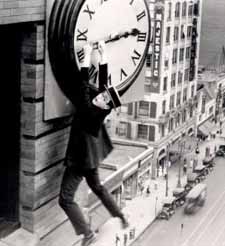
If I could just have a few more minutes with the script . . . No?
4. When is a cold read audition appropriate? If you’re directing a film or TV show wherein you know the actors will be receiving new pages regularly and will need to be able to prep and perform those pages almost immediately, a cold read audition is a useful tool in addition to an audition that allows for more in-depth work. Similarly, many commercials and music videos require on-the-spot preparation. (Not that you need six hours of rehearsal to prep a 30 second Valtrex ad or the character “Hot Girl Dancing near Lamborghini.”) If you’re directing a play and cold read skills are required as part of the performance, such as an audience engagement piece where the actors perform material the audience has written on the spot, you’ll want information about an actor’s cold reading skills.
“Thank GOD for my RADA training or I’d never be able to get through this”
You might be able to get the information you need from a cold reading if you’re not the kind of director who is focused on in-depth work with actors. There are some directors who are more visually-focused, storytelling through visual imagery rather than focused on storytelling through acting and the actors’ emotional narratives, and for those directors, simply seeing an actor talk and move through space may be enough. If you’re not going to do in-depth acting work, there’s no need to see how the actor approaches in-depth acting work, right? So a cold read, which by necessity cannot ever be in-depth, could give you the information you require.
But for the rest of us, the information we get from a cold reading is just beside the point of the information we need to make informed casting choices, and marginalizes severely dyslexic actors (whose numbers are much greater than you think) to boot. So eliminate cold reading auditions unless you really need to test the actor’s cold reading skills specifically. You’ll get better information AND be more inclusive.
I have nothing against skinny white girls. I really, really do not. I know and love many of them. I cast them all the time, which is not surprising, since the nonunion acting pool anywhere in the US is made up of something like 65% skinny white girls. And even lumping them all together in one group is needlessly reductive– they are as varied as any other group of humans.
But but but.
My eyes are exhausted from looking at skinny white girls and ONLY skinny white girls.
In nearly every representational context, “female” = “skinny white girls.” We, as a culture, are forcing the female experience, in all its variety, to be almost ALWAYS represented by and contained within the body of a skinny white girl. Skinny white girls are not seen as particular; they are seen as general, as “the female.”
In our culture, we posit the stories of straight able-bodied white people, especially of straight able-bodied white men, as universal, and the stories of everyone else as marked by difference. A romantic comedy starring a straight, white, able-bodied couple is just a romcom; but change any one of those characteristics and it becomes a genre film: a Black film, a gay film, a disability “issue” film. You wouldn’t need to change a single word of dialogue to change the perception of the film– just the casting.
What is considered “universal” in representational media is actually reflective of a particular experience– the experience of privilege, usually straight white able-bodied male privilege. Those of us who do not share that experience are always expected to translate– to find and relate to the humanity within the experiences of people unlike us. But those privileged people are rarely expected to do the opposite. Men are rarely expected to relate to plays or films about women, but women are ALWAYS expected to relate to plays or films about men. A film centered around the story of a white man is just a film culturally positioned with the expectation that all will enjoy it in its universality, but a film centered around the story of a Black woman is culturally positioned with the expectation that only Black women will relate to it.
This is a potent issue resulting in a paucity of variation in the portrayal of women. In American mainstream film, TV, and, unfortunately, theatre, what’s positioned as a “normal” and “universal” portrayal of a woman is skinny and white. All women everywhere are expected to see ourselves, find our humanity, and relate our experiences to the experiences of skinny white girls, most of whom (let’s be realistic) are under the age of 40. AND WE DO. We do it all the time. We do it so well we don’t even think about it most of the time.
I didn’t even realize how exhausted I was by this until I started going to shows at African American Shakespeare Company. As I was watching Merry Wives of Windsor, it slowly dawned on me that I had a level of buy-in to the three lead female characters in the show that I hadn’t had in quite some time. I found myself wondering why. Was it the fantastic acting? Well, sure, but I see fantastic acting all the time. Was it the solid directing or the midcentury costumes (I’m such a sucker for vintage)? I turned it over and over in my mind. And then I realized: Because the three lead women were not all skinny white girls, I felt a level of comfort with them and, by extension, with the narrative, that I hadn’t experienced in a long time. By seeing women who were outside the circle of mainstream privilege, even though they were outside it in a different (and, I would say, more deeply meaningful) way than I am, I felt . . . welcomed. I felt like I could relax. I felt like there was a level of implied judgment that was left outside.
So what does this mean? I’m not saying we should stop casting skinny white girls. Of course not. They’re talented, wonderful human beings who deserve roles and love and cupcakes and all the good things in life, just like anyone else. But clearly we need to step away from the formula “normal = skinny and white.”
I think we all, as a culture, need to look at the ways in which we portray women. While we always portray men in specific ways (the attorney, the action hero, the troubled scoundrel, the cop, the bad guy), we all too often portray women in generalized ways (“the woman”) connected only to their relationship with the men, or to the male-driven narrative. When we step out of that, we fear scaring away potential audience by stepping outside of the “universal” when we step outside the portrayal of privilege.
If you’re a skinny white woman, or a white man, you represent an ever-shrinking segment of the population, but the bulk of representational media still posits you as “normal” and everyone outside of you as marked by difference– the further the difference, the deeper the marking.
Here’s what you can do– here’s what we ALL can do– to have the greatest impact on creating real diversity in our representational media.
If you ever find yourself thinking, “That play/film/show/book isn’t for me,” STOP YOURSELF and ask yourself why you think that. Is it because it has a central female character? A central non-white female character? What is it about her experience or humanity that you find so foreign to your own human experience you feel like her story ISN’T EVEN POSSIBLE TO UNDERSTAND? Yes, you will need to do some work to find YOUR humanity in HER story, but I promise you that you can do it, because SHE does it for YOUR stories every day of her life.
I have heard, dozens and dozens of times, smart, educated, awesome men say about plays with female-driven narratives, “I think this play is well-written, but I don’t get it.” They see the difference and stop there, because they’ve never learned to translate. They’ve never had to.
This is a learned skill. You have to TRY to do it if you don’t already know how. It has to be a conscious choice to step over your privilege and learn to translate the experiences of people who do not share your privilege, finding your own humanity within them. Will you understand every nuance? Of course not. I don’t understand every nuance of every play about the male experience. I’ve never been a closeted boy on a chicken farm, I’ve never been kicked in the balls, I’ve never been on a professional sports team. BUT NEITHER HAVE YOU. Well, maybe the balls part (sorry, that must have sucked), but certainly not the other two. Yet, because the protagonists of Joshua Conkel‘s MilkMilkLemonade and Richard Greenberg’s Take Me Out (both wonderful plays) are male, I’ve seen men relate to those characters and effortlessly see their own humanity in them, even while claiming not to understand plays with female central characters whose stories more closely match their own experience.
I firmly believe that being able to have a theatre community that stages work with female protagonists– or, hell, even with female supporting characters– who are as diverse in as many ways as women actually are RELIES on having translation buy-in from the resistant members of our potential audiences AND from the resistant members of our own community– two groups, by the way, with significant overlap.
Skinny white girls are cast in almost all our female roles, and have become associated with “normal woman,” because our culture equates whiteness and thinness with beauty (an extremely problematic notion in and of itself), and the body of the actress is there to be looked at– the actress is all too often there to be “the female” in a man’s story rather than there to inhabit a particular story about a particular woman. We can change this in two ways: by expanding the concept of desirable beauty to include more types of women (good) and (even better) we can stop positioning women all the damn time as “desired object,” start staging work that features stories about different kinds of women, and stop pretending that any play that doesn’t conform to “normal woman = skinny white girl as object of desire” is some kind of crazy deviation from the norm.
In order to do this, to achieve diversity, especially a realistic diversity of women on our stages, those who are unused to translating must make a commitment to learn how to translate the experiences of others unlike themselves and see their own humanity therein. But this must be a conscious CHOICE and an ongoing process, or it’s not going to happen.
I know this is not only possible, but happening right now, because I see it myself. Not every white guy is mystified by translation. We’re in a cultural moment where everything is shifting, and our kids are growing up in a world that values diversity in ways never before seen in the history of the world. This is an achievable goal. But we must consciously CHOOSE to achieve it.
Once that choice is made, we’ll start to see more work wherein women aren’t there as decorative objects and events in the lives of men, and we’ll start to see more women on our stages who do not conform to mainstream images of beauty, because their primary function will be telling a story, a story the entire audience will be able to relate to, empathize with, see themselves in because they have chosen to. Our stages will still have room for skinny white girls, but they will also have room for every other kind of woman, and, for that matter, every other kind of man.
We just have to all make the choice, together, to see the humanity in others.
My husband and I out in front of our theatre. Photo by Cheshire Isaacs.
This is something I wrote for Theatre Bay Area‘s Chatterbox blog in 2011. If you’re a Bay Area theatremaker or theatre company, you need to be a member of TBA!
You can see this post in its original setting here. I recommend going there to click around the blog. There are some really excellent articles there. Velina Brown‘s posts with advice for actors are particularly excellent.
THE ABSOLUTE CORE TRUTHS OF THEATRE PERSONNEL MANAGEMENT
This season marked my 10th anniversary as artistic director of Impact Theatre, and my 15th with the company as a founding member. When I became Impact’s AD, I quickly became aware of the fact that there’s no AD boot camp. There’s no Handbook for New ADs. Some local people were very helpful—Patrick Dooley at Shotgun Players was especially generous. Now that I’m more established, people who are planning to start their own theatre companies, or who are in their first few seasons, come to me for advice and I do my best to pay it forward.
I always give a lot of practical advice—how to handle auditions, how to get insurance, why you should join Theatre Bay Area, how to write a playwright contract, etc. One thing that’s struck me recently, however, is something I’ve never discussed in these situations: How much time we spend in the theatre finessing personnel management. I’m sure it’s the same in every field, but since theatre is where my managerial experience lies, I’m going to speak specifically to that.
Here’s what I’ve learned are the Absolute Core Truths of Theatre Personnel Management. These are probably all already printed in some management book, so feel free to tell me if I’m boring you by repeating something you had to read in business school, and I’ll go back to the ranting and inappropriate jokes you’ve come to expect from me. Here’s what I learned in the School of Hard Knocks™.
R-E-S-P-E-C-T
1. You don’t buy loyalty with a paycheck. You earn it by treating people with respect.
This doesn’t mean complimenting their work. “Great job!” or “You’re so good at this” only go so far with your staff if you treat their opinions dismissively and if you routinely override their expertise. Your marketing director, your lighting designer, and your box office manager all know more about their areas than you do. It’s their job to know more about it than you do. Listen to their opinions. Allow them to disagree with you. Take their opinions very, very seriously, because if they’re disagreeing with you about their area of expertise, it’s almost certain that they’re right and you’re wrong. Respect their knowledge and experience, and they will reward you in 100 ways.
2. Give your staff ownership of the company and the work. Allow your staff the freedom to make decisions. Don’t interfere with their decisions or their processes unless absolutely necessary. Does the set design violate fire code? Necessary. Does the rehearsal schedule violate the terms of your AEA contract? Necessary. Did no one tell the director the script is a comedy? Necessary. Do you think the backdrop should be light green instead of blue? Unnecessary. Do you think the sound designer should use “Bittersweet Symphony” instead of Sigur Ros? Unnecessary. Obviously you should make your opinions known, but putting your foot down and requiring a designer, development director, or stage manager to make unnecessary changes to their products or to their processes creates disgruntled, unhappy, underappreciated staff. Give your opinion or guidance, and back off unless the matter truly requires intervention.
Wearing authority with ease. Art by Michael Fleming.
3. Wear your authority with ease.
Nothing says “I’m insecure in positions of authority” like someone yelling at staff or refusing to allow staff to voice their opinions. A strong leader engages staff as equals, respecting their expertise. This doesn’t mean you should cede authority. Allowing your staff to make their own decisions and create their own processes doesn’t result in an authority drain. Step in when it’s necessary to step in. Put your foot down, respectfully, when it’s important. But have the strength to recognize when it’s important and when it’s not. And when mistakes happen or disaster strikes—because it will, trust me—blaming staff or yelling at people or otherwise losing your cool is the worst thing you can do.
4. Admit when you’re wrong. Because they all already know it. Bluffing makes you look foolish.
The error makes it delicious. Admit my wrong what, Uncle Sam?
5. Don’t be afraid to make the hard decisions. Sometimes people need to be let go. This is the hardest thing for me personally and something I’ve bitched out on doing a number of times, hoping for the best. Learn from my mistakes. Be gentle, be respectful, but get rid of the people who can’t do their jobs. Again, everyone else already knows, and they’re sick of covering for that person.
Keep your techs happy. You can’t see it, but he’s carrying a case of Newcastle.
6. Do whatever you have to do to keep your tech people happy. While all theatre personnel are equally important, too often techs get treated poorly, blamed for mishaps, and left out of the glory. Happy techs make a show sparkle with awesomeness, like a magical lighting and sound unicorn flew over the theatre. Happy techs can build a gorgeous set out of popsicle sticks and coffee filters. Happy techs call 427 cues without breaking a sweat. Unappreciated, yelled-at techs will still do their jobs perfectly—they’re professionals—but they will withhold the awesome and take someone else’s gig next time around. Or worse—continue taking your gigs and talk shit about you in the community.
7. Relax. It’s theatre.
This isn’t brain surgery. No one will die if the director casts Actor X instead of the actor you liked best at callbacks. No catastrophe will ensue if your lighting designer went with a different gobo. It’s not fuckpocalypse if your marketing director thought one show was on the weak side. Breathe. Creating art is about both process and product. Don’t beat your process to death with your image of the perfect product. Nothing is going to be perfect, but it’s within your power to make it awesome.
Cheshire’s basic poster image for the world premiere of The Fisherman’s Wife, by Steve Yockey.
You know what I hear ALL the time? “Your posters are amazing.” “Your production shots are incredible.” “Your flyers are gorgeous.” I KNOW. You know why?
Another Cheshire poster image. I directed this show, and he captured its feel perfectly with this image.
Apart from being Impact’s Managing Director, my partner in crime, and my theatre husband (you can ask Cheshire and my real life husband about how I can’t keep track of who I told what to. Magical), Cheshire is Impact’s Graphics Overlord. If you’ve ever seen an Impact poster, image, or photograph and loved it, you have Cheshire to thank.
So why am I telling you all this? Because, kittens, Cheshire is leaving his job as Art Director at Berkeley Rep and going freelance. Need an amazing poster? A kickass logo? Exceptional, attention-grabbing PR shots or production photos? New headshots? BAM. He’s your hookup, no question. (He’s San Francisco Bay Area-based, so photography will have to be within a reasonable distance unless you have a TARDIS.)
Cheshire’s basic image for Cameron McNary’s Of Dice and Men. My real life husband painted the mini to match the actor playing the paladin, Jonathon Brooks.
Cheshire has been making me look cooler than I am for years now, and now he can make YOU look cooler than YOU ARE. And if you’re already extremely cool, well, his work will make you EVEN COOLER.
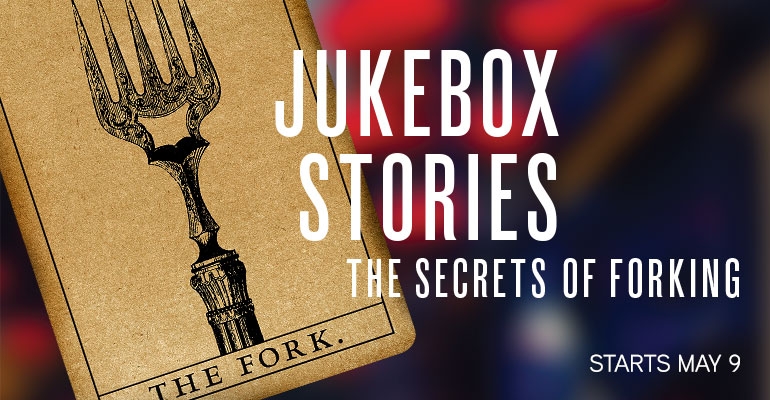
Cheshire’s image for Prince Gomolvilas and Brandon Patton’s last installment of Jukebox Stories
I have a lot of his poster images here, but fewer of his PR and production shots, because I have tons of his shots all over the blog. Click around and check it out. His shots are incredible.
So check out his stuff and drop him a line when you need some amazing art, OK?
One of Cheshire’s PR shots for Impact’s Titus Andronicus. Mark McDonald, Reggie White, Anna Ishida, Michael Garrett McDonald, and Joe Loper pictured.
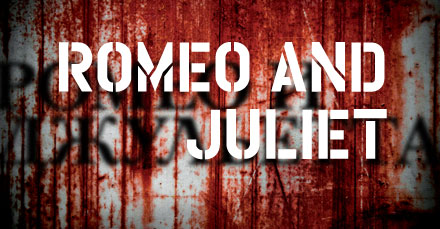
One of the PR shots Cheshire took for my Romeo and Juliet. You can see how the poster and PR shot match in tone and feel. Joseph Mason, Mike Delaney, Reggie White, and Jonah McClellan, with Seth Thygesen as the corpse.
Stacz Sadowski in a production shot from Cameron McNary’s Of Dice and Men, of course by Cheshire.
Cheshire’s art for Impact’s production of Lauren Yee’s Ching Chong Chinaman is now the cover art for the published version, available from Samuel French. This isn’t the only Cheshire Isaacs theatre poster that eventually became the book cover.
As many of you know by now, I’ve been teaching at the Berkeley Digital Film Institute since its founding. Many film directors have passed through my classes, and exactly . . . um, carry the two, OK, FOUR PERCENT of them understand when they start my class that staged violence needs a fight director. And before you start congratulating yourself for being in theatre and therefore knowing better, easily half of all stage violence is blocked without a fight director. Maybe more. Here’s why you need to hire a fight director for your film or theatre violence.
Impact’s Romeo and Juliet. Seth Thygesen as Benvolio, Marilet Martinez as Mercutio, Michael Garrett McDonald as Romeo. Photo by Cheshire Isaacs. Violence by Dave Maier.
They’re better at it than you are. I know you totally think you can stage that fist fight based on your many viewings of Star Trek TOS, but believe me, you can’t. Or, rather, you CAN; it just won’t be safe or look anywhere near as good as if you had brought in a professional. Here’s the deal: Ideally, you know the look that you want. But the road to get there is not necessarily a straight line. You don’t, for example, set up a stage punch exactly in the same way you’d set up a real punch. It’s not as simple as just not landing your punch. Additionally, every fight has a narrative. Do you know what the story of your fight should be? Do you know how to tell that story clearly? A fight director does. Nothing is more annoying, or pulls you out of a moment faster, than watching badly done violence. It can take a beautifully acted scene and throw it straight down the toilet. You can have all the honesty you want, but if your violence looks cheap and crappy, it’s going to obliterate all that honesty immediately. So, for the same reason you hire any other designer whose entire job is to know more about their area of design than you do, hire a fight director. It’s the difference between a badass fight and this.
…….or you could just use your phaser. Still: KIRK RULES.
Fight Director Christopher Morrison:
“The fights are integral to the story. A fight happens when the characters run out of language to pursue their objectives and their choices become physical. Block/direct accordingly. Also understand a fight is a DESIGN element. As a director you should understand what KIND of violence you want, how that violence fits into the world of the play/spine of the story, and what tone the violence should be (i.e. cartoon, filmic, epic, comic book, intimate, ‘fake,’ dirty, etc.) and be prepared to speak to your fight lady as you would another designer on the team.”
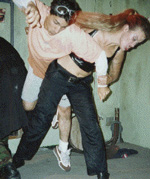
Christopher Morrison getting thrown by Cara Gilson in Impact’s production of Zay Amsbury’s The Wake Up Crew. Violence by Christopher Morrison.
They’ll keep you, your actors, and your audience safe. Apart from the obvious first thought– you want the people around you to remain unharmed because you’re not a psychopath– I’m guessing that you, like me, are someone who enjoys staying out of prison and avoiding lawsuits. An excellent way to do that is to hire a professional to stage your fights safely. Fight Director and actor Carla Pantoja:
“I can’t tell you how many stories I have heard or been privy to of actors getting physically injured because someone didn’t use a respectable fight director. Now when I say ‘respectable fight director,’ I mean someone with reasonable and up-to-date training, or even hiring someone in the first place. [Name] shared a story awhile back of a nonunion (sadly, most of these horror stories are peopled with nonunion folk) actor who had her arm broken and dislocated because the director didn’t hire someone and wanted an arm lock that was ‘real’ (ugh, I hate that term used in relationship to theatrical violence– you want ‘real,’ start a fight club). This director demonstrated on her and snapped her arm. She required surgery.
Part of using a respectable and up-to-date fight director is getting the up-to-date knowledge. There are techniques that are outdated. Just like acting, techniques change. “
All fights, no matter how well-choreographed or rehearsed, carry some measure of risk, like everything in life, but the better choreographed and rehearsed they are, the lower that risk is. If you’ve ever lived through an actor getting injured on your stage, knowing you did everything in your power to prevent that is a world of difference from knowing your actor has a puncture wound because you couldn’t be arsed to hire a professional.
And please be prepared to trust that professional and follow his directives. A safe fight will not remain safe if you throw all the fight director’s instructions out the window. Fight Director and actor Andrew Rodgers:
This show is about as bad as it can get for a fight director. The company called and asked if I’d choreograph the violence and the description of the play didn’t seem so bad. But then I saw the publicity photos– the sole actress of the production (let’s call her ‘Jenny’) had a knife in her hand in the pictures. I came to a rehearsal to see what was going on and I discovered that ‘Jenny’ had NO IDEA what safety meant. The knife she was using was a dulled-down butcher knife, and my heart stopped when she first brought it out. The blade was dull but it still had a point on it, and she was playing with it like it was a teddy bear– rubbing it on her face, putting it in her mouth, holding it by the blade or with two fingers. I nearly exploded. To complicate things, there was no structural, dramatic or narrative reason for the knife to be in the show– the playwright thought it’d be cool and edgy, and he refused to do rewrites until opening week. I had to explain to ‘Jenny’ that all weapons, dull or not, should be treated as though they are sharp, and that the knife that she was futzing with could actually kill her or another actor. I thought she had it, then my stage manager called to say she was doing it again.”
I’ve been lucky at my theatre to have worked with many wonderful actors who would never dream of ignoring a fight director’s instructions, but of course we always reinforce that with support from the director, fight captain, and stage manager. Everyone needs to be on board.
Stacz Sadowski and Anna Ishida in Impact’s Titus Andronicus. Photo by Cheshire Isaacs. Violence by Dave Maier.
Yes, you can afford it. Carla makes an excellent point that nonunion actors bear the brunt of the foolery of the producers and directors who don’t want to hire a fight director. Why is that? Because the small theatres who work with nonunion actors are always looking for ways to keep costs down. I’m right there with you in the trenches. My company is the smallest of the small. No one at my company draws a salary. But we wouldn’t dream of doing a show with fights without hiring a fight director. We build it into the budget from the start along with every other design element. If I can do it with my microbudget, so can you.
Obviously you want a trained, professional, certified fight director, but can you afford one? YES, dammit. A little research will show you who the big theatres in your area are using. While a small theatre is unlikely to be able to afford the kinds of rates paid by a LORT, perhaps that LORT fight director is willing to work with you on a sliding scale. If not, it’s almost certain she has a highly-trained associate or star student who’s qualified and talented but is early in his career and looking to build his professional resume. Is there an organization in your area that trains fight directors and actor combatants? Is there a university in your area that offers stage combat training? A little sleuthing will reveal who teaches those classes. Don’t just assume that these professionals are out of your price range, even if your price range is $100 and a sixer of Pyramid Hef. YOU NEVER KNOW. No asky, no gety. But don’t skimp. Pay your fight director what every other designer is getting, because that’s what a fight director is: part of your design team.
Carla Pantoja:
“For those who believe it is too expensive to hire a fight director, did you know that most of us are willing to talk about prices? Sure, there are price points I can’t go below due to commute, etc., however, I know people and I will point you in the direction of someone who may be in your price point.”
Bring your fight director into the process in preproduction, not during tech week. Again, a fight director is part of your design team. You should be meeting with your fight director before rehearsals even begin. Even if the violence is nothing but a single punch, talk to your fight director in advance, let her know who the actors are and what skills they have, discuss the fight narrative and style with her, and ask her how much rehearsal time she’ll need and where in the process she needs that time to be. Fight director Alaric Toy:
“The sooner you include the fight director in the show the better. If the fight director can be part of the audition process, even better. That way s/he can get a good idea of each actor’s true performing capability then and there. Listing ‘gymnastics’ and not being able to perform a cartwheel is just bad. I speak from personal experience looking at some actors’ supposed resumes and the reality of their movement capability doesn’t match when I have to choreograph the fight.”
Carla Pantoja:
“Producers, please call us in early to the rehearsal process. I can’t tell you how many calls I get to stage something like R & J two weeks before opening and none of the actors have ever held a weapon. I’m not kidding. You are setting us all up for failure. When you call me the first time INTO TECH! to help stage a fall or a hit and the actor can’t do it fluidly and it looks clunky, it isn’t the fight director or the actor’s fault. I am not a miracle worker; I can’t magically give that actor the time it takes to incorporate the moves into their body. BTW, falls are the hardest things to sell, I have found. They are the hardest thing to get right technically while visually looking convincing. I don’t do these last minute calls anymore, they hurt my soul.”
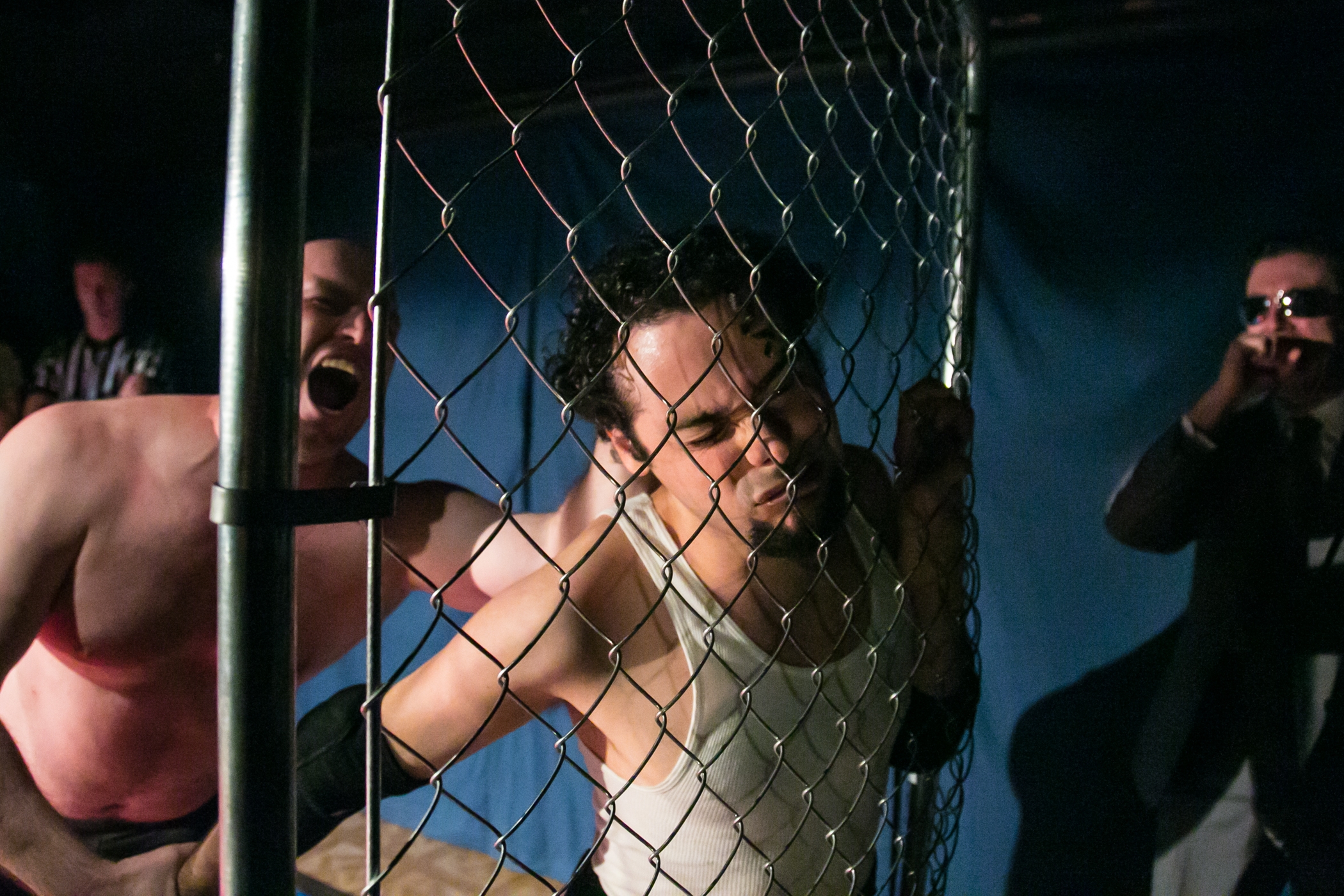
Reggie White and Cassie Rosenbrock in Titus Andronicus. Photo by Cheshire Isaacs. Violence by Dave Maier.
What the hell do you mean by a “fight narrative”? Isn’t it just a fight? Ow, even typing that hurt me. This kind of attitude is all too common, and makes as much sense as asking why you should hire a lighting designer, because can’t you just turn the lights on and off yourself?
Andrew Rodgers:
“That is the key to good choreography– thought. The actors MUST be thinking or the fight turns into empty steps. The fight MUST have a purpose, just like any other scene in the play, otherwise it’s an uncomfortable dance break (and I’m usually a fan of dance breaks.) The actors MUST be processing what the characters are thinking. It’s the simple things like this that make good combat– not speed or big shiny weapons– although those have their place. It’s about thought.”
Carla Pantoja:
“I remember one of my mentors, Richard Lane, tell someone: ‘Would you do Oklahoma and not hire a music director? Or would you hire actors to do a play, just give them a script and have them direct themselves?'”
Don’t avoid hiring a fight director because you think your actors don’t have the training to pull off a professional fight. A trained professional fight director will work with your actors’ capabilities.
Carla Pantoja:
“While actors are amazing, we need direction. We need an outside eye to tell us if what we are doing is working. Safety is also nice. Fear is detrimental to our work as actors, not only fear of ‘is this working?’ but fear of being hurt physically.
As a fight director, I am an actor advocate. My job is to help you portray violence in a convincing way in a safe manner, creating a fight with you and for you. A fight you will enjoy to do and can do well within your own abilities. It doesn’t behoove me to make you do a move you physically cannot do, a move you are fearful of, or hold you back if there is a special move you can do that can be highlighted in the fight.
I have sadly worked with too many actors who have been injured and left distrustful of theatrical violence.”
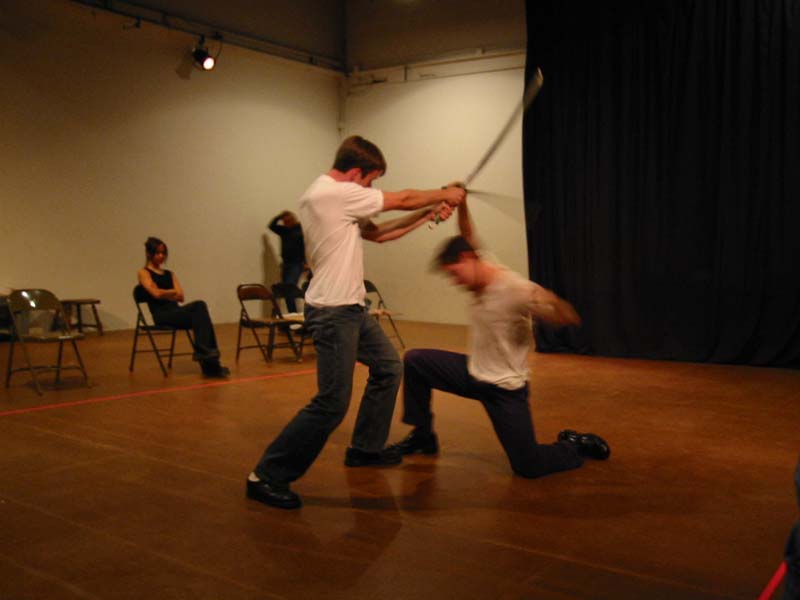
Rehearsing the Hotspur/Hal fight for Impact’s Henry IV: The Impact Remix. Violence by Christopher Morrison.
FOR THE LOVE OF GOD PLEASE TREAT YOUR WEAPONS LIKE WEAPONS. Never, ever, ever, ever, ever allow an actor to point a gun loaded with blanks at someone, or at himself, and pull the trigger. A blank is not a NOTHING. That noise is made by a violent discharge that can seriously hurt someone. Just because it’s not propelling a bullet through the air does not mean it is a fluffy puppy. (Personally, I use sound cues for gunshots. A sound cue will recreate the sound of the gun in the setting. Is your play set outdoors? In close quarters? Is that gun supposed to be a hunting rifle, a shotgun, a .22? A blank fired in your theatre will always sound like nothing other than a blank fired in your theatre, and yes, all blanks of all sizes and types sound like blanks fired in your theatre, not like a bullet fired in your setting. That is, IF the blank even goes off. I’ve been through far too much “click click click click POP” to rely on blanks. And again, they sound like crap. An excellent sound designer is worth every blank in the world put together.)
A dulled blade is not magically prevented from doing any harm to anyone. It’s still a hunk of metal that can penetrate a squishy human body rather easily.
MORBO LAUGHS AT SQUISHY HUMANS
And NEVER take your weapons out of the theatre unless they’re in some kind of case or containing device. Do you want three uniformed police officers and one plainclothesman charging downstairs into your theatre five minutes before curtain? Then make sure your actor leave his weapon on the prop table when he runs to the bathroom, not shoved down the back of his pants.
(I don’t need to tell you that an actor who plays with the prop weapons backstage is an actor you should NEVER HIRE AGAIN, right? If an actor can’t follow the simple directive of “don’t fuck with dangerous props (or any props, really)” then that lack of concern for professionalism and safety is bound to carry over into other areas of his work.)
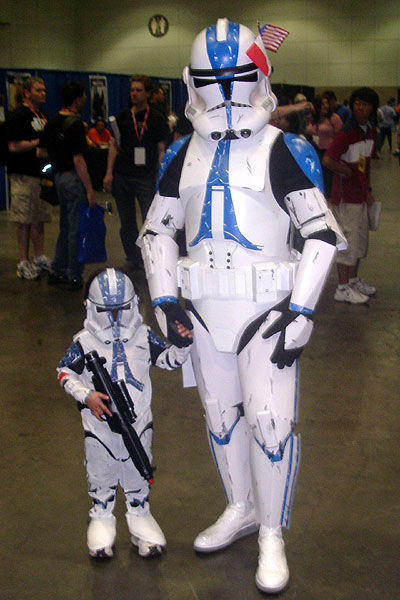
All good troopers know to put their weapons back on the prop table when they’re off stage, and never touch anyone else’s props.
So please hire a fight director. You CAN afford it. A qualified fight director will enormously enhance the quality of your show, keep everyone in your building safe, and open your eyes to new perspectives on work that you may, in many cases, have been turning over in your mind for years. When you finally get your hands on Lear (and by “you,” I mean “me”), a fresh perspective on those scenes you’ve been dreaming about blocking for a decade will not only make the violence better, but will provide fresh insights into the entire piece– narrative, themes, and characters.
Stacz Sadowski and Miyaka Cochrane in Impact’s As You Like It. Photo by Cheshire Isaacs. Violence by Dave Maier.
This piece wouldn’t be complete without a shout out to the fight director Impact Theatre works with– Dave Maier. Dave is brilliant. He and I see eye-to-eye about violence and tend to exacerbate each other’s love for stage combat when we’re working together as director and fight director. We’ve been known to turn the simple direction “they fight” into scenes that say as much about the characters as the dialogue, maybe more, and that’s something I would never, ever be able to do on my own. Working with Dave is a joy. I learn something every time I work with him, and his ideas about character and narrative are always fantastic.
So hire a fight director. Be safe. Be a better artist. Be awesome.




























 Bitter Gertrude