Yearly Archives: 2013

The Politics of Accents

Image

This guy.

While I could write plenty about nonsense like Asian actors being asked to do “the accent” in their audition for “Prostitute #3” and “Kung Fu Master Criminal,” or Black actors being asked for a more “urban” accent or audition piece, I’m actually heading in the opposite direction.

There’s a “Shakespeare accent” that American actors are taught to use, or sometimes just pick up on their own through exposure. I’ve seen plenty of teachers throughout the years refer to this as “RP,” “Standard American,” or “Mid-Atlantic” (not to be confused with the actual accent of people in that region– more on that later). The terminology is confused and not always accurate. “RP” stands for “received pronunciation,” which is in actuality a British dialect considered “proper,” and “Standard American” refers to an accent that uses a harder final R than these actors are being taught. But the accuracy of the terminology is not the point.

We all know that accent. It’s slightly faux-British, posh, and its main feature as practiced seems to be the dropped R.

We know from the study of OP (“Original Pronunciation”) that the British accent of Shakespeare’s day was actually nothing like this “Shakespeare” accent American actors use, or than British RP for that matter. Check out this comparison between RP and OP. So why do we teach actors to speak in these faux-British tones? Why do actors adopt this fabricated accent when they do Shakespeare?

The answer can’t be “because the text suggests it,” or “the text sounds better that way due to the way it’s written.” A notable part of OP is its harder final R. This entirely contrived  “Shakespeare accent” is most notable for its soft R. In fact, that’s its main (and often sole) feature as practiced across American stages. So “because Shakespeare” cannot be the answer.

What *IS* the answer? We know that what’s often called the “Mid-Atlantic” accent, popular in pre-1960 America, was a deliberate, acquired marker of wealthy white privilege, and was therefore cultivated by people looking for upward mobility and acceptance in the upper classes of America, or by actors whose careers would be built on playing upper-class roles. In 2013, we still use a version of it to denote “posh” or “privileged” in popular culture– look for it in films, cartoons, video games. It’s everywhere.
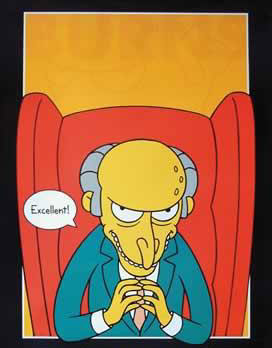

excellent

profx

There are some teachers out there now teaching an accent they call “Classical American,” as in, American accents for use in classical theatre.  “Classical American” is a reverse-engineered accent that labels and codifies the semi-British “Shakespeare accent” that has evolved from (and is still sometimes labeled as) Mid-Atlantic or RP. There’s a book originally published in 2005 flogging “Classical American” as “an intermediate option between well-pronounced Neutral American and Standard British. It builds upon Neutral American, blending additional rhythmic and sound elements, which result in more formal or heightened speech without sounding British to an American ear” (emphasis mine). Precisely. I’ve heard this accent referred to innumerable times as “formal,” “heightened,” and “elevated.”

“Formal.” “Heightened.” “Elevated.” “Formal” has long been code for “posh.” But what’s being heightened here? What are we “elevating” when we drop our American accent and move to a semi-demi-faux British accent? CLASS.  That’s what’s being heightened. The appearance of privilege. Poshness.

The “Shakespeare accent” has nothing to do with acting Shakespeare and EVERYTHING to do with acting “posh.”

Those of us in the theatre talk a good game about how Shakespeare is for everyone, and whine a great deal when our audiences are less diverse in race or age than we’d like. Although we have a long way to go, we’re slowly getting better at looking to ourselves for problems with racial diversity in our audiences, but we epic fail with looking to ourselves for problems with age diversity in our audiences, generally blaming lack of swarms of twenty-two year-olds at our productions on their boorishness and lack of interest in “culture.”

Maybe the way we frame Shakespeare is to blame for the homogeneity of its audiences. When people talk about Shakespeare as “lofty poetry,” it makes me cringe. Not because they’re wrong– there’s certainly enough lofty poetry in Shakespeare to keep your lofty poetry needs happy for quite some time before you have to turn to Blake or Donne– but because Shakespeare ON STAGE is less about poetry as such and all about stories– rich, passionate, violent, emotional, heart-ripping stories at that. Shakespeare uses poetry to tell stories, and he will drop the poetry or jack up its rhythmic demands in a hot second to make an emotional point. The poetry is in service to the stories. These stories tell all the secrets of the human heart, and we continue to frame them in popular culture as staid and boring “high culture,” as if Shakespeare is medicine that you must take because it’s good for you rather than ZOMG THESE PLAYS ARE AWESOME.

Part of sequestering Shakespeare into the special, rarefied, and (most importantly) exclusive domain of “high culture” is this pretend, contrived, completely non-regional “Shakespeare” accent; an accent created solely and specifically to denote “upper class.”

This accent is part of the mythology that Shakespeare is “high class” art for the privileged. If we as directors or audience demand that Shakespeare actors adopt an accent that was created specifically to signal “rich and white” and still signals that to this day in popular culture, what are we saying about Shakespeare?
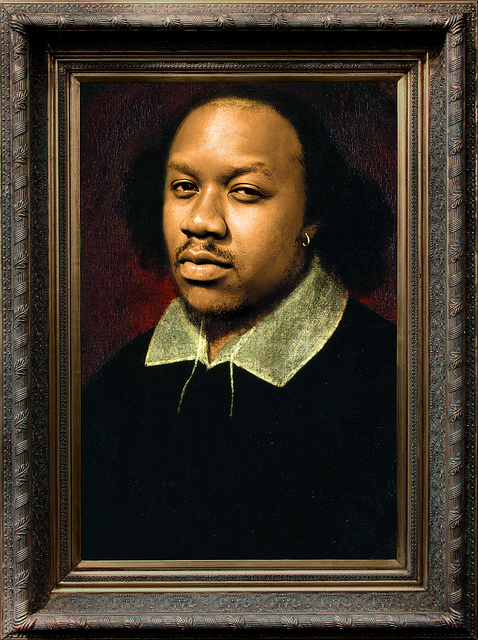
blak.shakespeare

I know an exceptional Black actor with enormous range who was told by one of his college professors (also a Black man) that he would never be able to do Shakespeare because of his “Black accent.” Of course he was wrong. Apart from this particular actor’s massive flexibility, the professor’s own experience as an actor was decades ago, and this is the 21st century in the Bay Area, where that kind of thinking is thankfully now on the wane. However, there are still too many directors out there who will absolutely refuse to cast a Black actor– or ANY actor– who does not adopt the upper class white accent our culture has come to associate with Shakespeare, and too many universities and training programs that teach that as NORMAL. At general auditions for my company last spring, I had a batch of diverse, newly-hatched college grads all from the same Bay Area university (not the same one I discuss above, depressingly) whose actors, each and every one, came in doing the “Shakespeare accent.” I almost wrote to the department. I probably should have. But even more depressingly, there are plenty of teachers and directors who still think that’s necessary.

Let me just say: Balderdash.

BECAUSE we know that Shakespeare’s plays were written for an accent nothing like this contrived “Shakespeare accent,” but an accent no one anywhere today would mistake for “posh,” and BECAUSE we know that Shakespeare’s plays are the greatest plays ever written in the English language and tell all the secrets of the human heart, and therefore belong to everyone, and BECAUSE we recognize that more diversity of all types on our stages and in our audiences is a good thing, and BECAUSE this is almost 2014, FFS, I RESOLVE:

THE DEATH OF THE SHAKESPEARE ACCENT IS AT HAND.

Listen, if that’s how you really talk, then I have no problem with you using that accent when you do Shakespeare. In fact, that’s my entire point. YOU ARE GOOD ENOUGH JUST AS YOU ARE for Shakespeare. Your body, your voice, just as they are, are worthy carriers of these stories, whether your speech is “posh” or straight outta Compton. Talk like you talk. YOU ARE WORTHY OF SHAKESPEARE, just as you are.

And directors? Please stop. Just stop. These stories are yours to tell. You don’t need to overlay fake poshness to prove you’re worthy to enter the club. You’re already worthy.

These stories are part of the human literary heritage. They already belong to you. They’re about you, whoever you are. It’s time to liberate these plays from the mythology of exclusivity.
Tagged , , , , ,

The Remarkable World

I’m speaking to you from the center of two mind-blowing experiences.

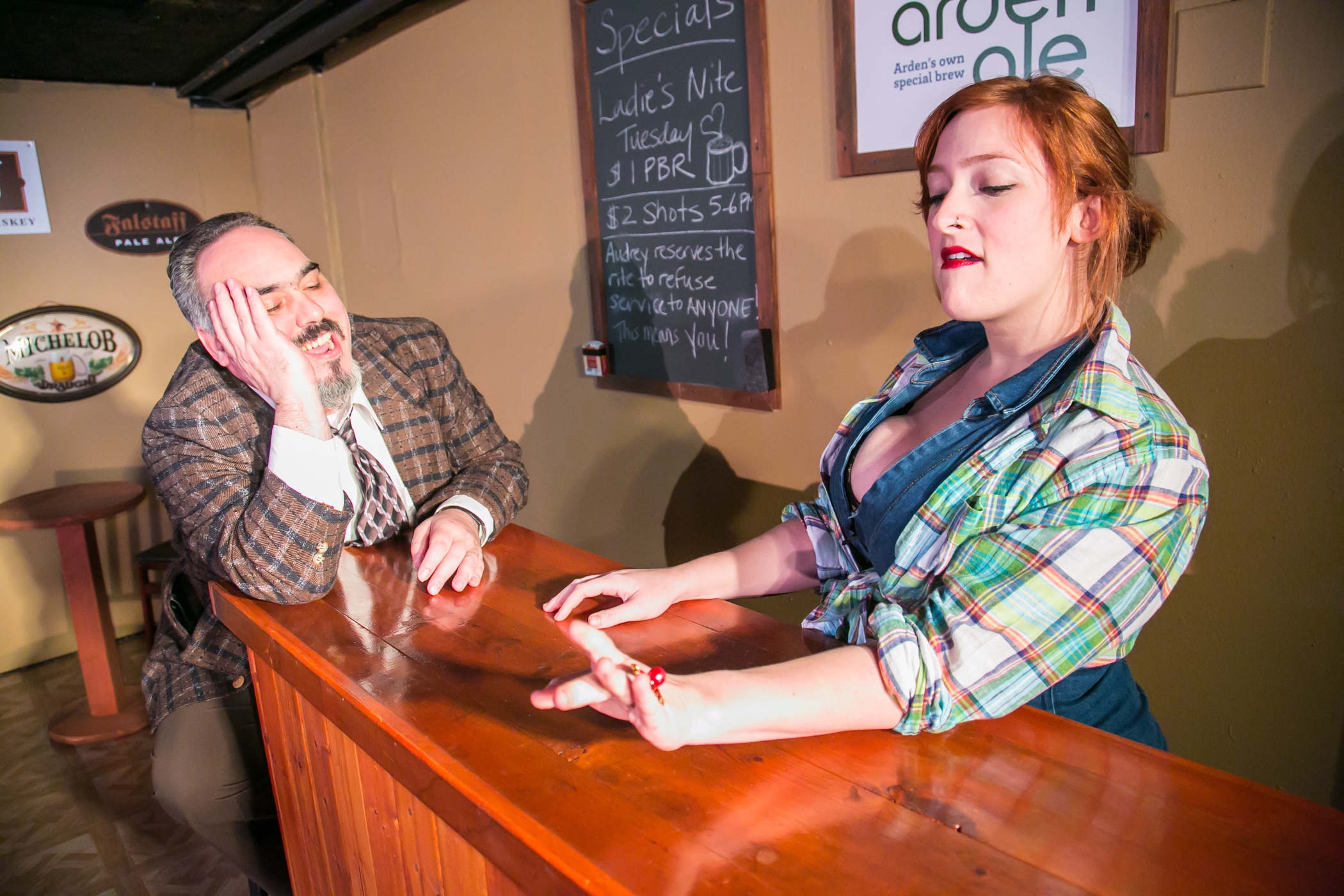
Cassie Rosenbrock as Audrey in Impact's production of As You Like It. Warden Lawlor was her Touchstone. Photo by Cheshire Isaacs.

Cassie Rosenbrock as Audrey in Impact’s production of As You Like It. Warden Lawlor was her Touchstone. Photo by Cheshire Isaacs.

The first involves a close friend of mine, the amazing and wonderful Cassie Rosenbrock. She’s been going through an incredibly difficult time, including the sudden and unexpected death of her father and her husband’s mysterious and debilitating illness they’re now hoping the Mayo Clinic can diagnose. All while giving birth to her second baby. This family is generous, warm, and full of love and humor. No, seriously– you would LOVE THEM. A few of her friends and I set up a donation site to help cover their ballooning medical expenses, and the money just roared in. We’re overwhelmed by the outpouring of support.

Lauren Spencer as Ulysses and Rogelio Landaverde as Paris in Impact's production of Troilus and Cressida. Photo by Cheshire Isaacs.

Lauren Spencer as Ulysses and Rogelio Landaverde as Paris in Impact’s production of Troilus and Cressida. Photo by Cheshire Isaacs.

The second involves my theatre company, Impact Theatre. We’re a small company, living close to the bone. The first two shows of this season were huge successes– we were artistically satisfied, we got great reviews, and we had very happy audience members whose responses were very positive. We also raised artist stipends this season to match what other companies our size are paying. We’re still at the low end of that, to be honest, but we had to at least get on the board to remain competitive and continue to attract the best local talent. We have three upcoming shows this season we’re very excited about. We just made a local critic’s (the awesome Sam Hurwitt) list of top ten productions of 2013 with our summer show, Thao P. Nguyen’s Fortunate Daughter. On the surface, things couldn’t be better at Impact.

We have a commission opening this spring by rising star Christopher Chen called Mutt. It's a political comedy about the hapa experience in America.

We have a commission opening this spring by rising star Christopher Chen called Mutt. It’s a political comedy about the hapa experience in America.

Unfortunately, neither of the two shows so far this season came even close to reaching sales goals, and, with very little cushion this year, we’re facing a truly terrifying financial crisis. We weren’t even sure how we were going to pay rent over the next few months. We don’t do donation campaigns very often. I think we’ve done about 3 or 4 since we started the company 18 years ago. We’re quite open about the fact that we accept donations, and we put words to that effect in our programs and on our website, but that end of the year letter or email you get addressed to “Mail Merge” from 132 places asking for donations during this season of giving? That’s just not something we usually do. We decided we really needed to if we wanted to live to fight another day, and put out a call for donations.  And again, the money just came roaring in. It was overwhelming. I got email notice after notice after notice with donations from actors, audience members, former Impact members who had moved away. We received donations from people we only knew through social media. Twenty-four hours into it, and it looks like we might, if this keeps up, reach our goal.

I was floored going through all the emails. I could not stop crying.

I believe the “meaning of life” is to live in service to others. I have a personal mission to somehow help everyone I meet to success and happiness. I want to leave the world, and people’s lives, better for having known me. I always want to be the person who reaches out to help.

But nothing, NOTHING could have prepared me for what it was like to reach out *for* help and see 100 hands reaching back to me. It’s been one of the singlemost humbling experiences of my life.

The amazing Thao P. Nguyen, whose solo performance this summer at Impact, Fortunate Daughter, was voted one of the top ten Bay Area productions of 2013.

The amazing Thao P. Nguyen, whose solo performance this summer at Impact, Fortunate Daughter, was voted one of the top ten Bay Area productions of 2013.

The world is remarkable. Yes, it’s shit, and people are awful, and politics are awful and terrible people say terrible things on terrible TV shows about their terrible beliefs. But the world is remarkable, full of love, and hope, and kindness.

My blog will be a year old in a few days. I’m grateful for each and every one of you who read it. Thank you so much for helping to make this such a remarkable year. Happy Holidays to you and yours.

Jax Steager, Impact's resident lighting designer, Read Tuddenham, our production manager, and Sarah Coykendall, one of our resident actors.

Capturing the Impact holiday spirit perfectly are Jax Steager, Impact’s resident lighting designer, Read Tuddenham, our production manager, and Sarah Coykendall, one of our resident actors.

Tagged ,

High School Yellowface

Image

I’m not posting pictures of the actual minors in the show. Instead I’m choosing to post pictures from America’s vast yellowface past. This keeps the kids’ identities confidential while also providing some cultural context.

Someone I know recently posted some pictures of her son’s high school performance of A Midsummer Night’s Dream. Of course I’m stoked that the kids are doing Shakespeare instead of Grease or One Direction: The Musical or whatever. And I definitely understand the impulse to want to set these plays in a fanciful place and time, especially if you have hundreds of hours of free parental labor and thousands of dollars at your disposal. I’m not a huge fan of randomly chosen settings, like Love’s Labour’s Lost in an 18th century brothel or King Lear on the Death Star (although I might have to give that last one some serious thought). But I understand the impulse, even if I do not agree with it.

The problem with this play is that it’s set in “Ming Dynasty China.”

Image

I’ve written about race in casting before (this and this). But I’ve been thinking about this issue all day, for two reasons: One, the fact that this is educational theatre; and two, that half the kids in the cast are Asian American, but the faculty director is white.

There’s a reason theatre education belongs in schools. It teaches kids about the challenges and joys of creating art collaboratively. It helps kids learn how to extract meaning from text in very concrete ways. It teaches kids how to work under an utterly unforgiving deadline. It teaches kids about the massive, gorgeous, messy pile of dramatic literature available to us in the 21st century, which are all windows open to different places, times, experiences, and points of view. Theatre education is a life-changing, mind-expanding experience.

This is precisely why this is so disappointing to me. These kids are being taught that it’s acceptable for white people to play characters of color. It’s nowhere near acceptable in the professional world, where a mistake like that can create national controversy. If you don’t have an all-Asian cast at your disposal, you shouldn’t be doing a play set in Ming Dynasty China, and to place high school kids into such a situation is to do them a huge disservice. There’s a reason why I’m not posting pictures of these kids. This is not their fault, and I’m not holding them up to global mockery. It’s easy to say, “What does it matter? It’s just high school theatre.” If that’s the case, then what does ANY educational activity matter? Why not blow it all off and let them all play CoD: Ghosts instead of reading Catcher in the Rye or doing those calculus problems? I guarantee you that the skills theatre kids are learning are more likely to be useful to them in their future day-to-day lives as adults than calculus will be. If you believe education is important, then it follows that teaching kids that something highly controversial and racially problematic is just fine is shockingly irresponsible. Either education matters or it does not.

Image

Midsummer is a play people love to set in various places, and it can be quite successfully done that way. Bindlestiff Studio in San Francisco did an all-Filipino Midsummer using Filipino folklore tropes, with Tagalog-speaking mechanicals that was so fantastic I saw it TWICE. Which is insane, since I rarely get out of my own theatre. But this was a Filipino production, headed by a Filipino director, with an all-Filipino cast, at a Filipino theatre. This was about taking ownership of a classic story, coming from a deep, authentic positionality. A white director setting Midsummer in Ming Dynasty China with a half-white cast is not the same (especially when that cast are all teenagers working under an adult authority figure who makes the bulk of the creative decisions). It doesn’t have a deep message that comes from the center of Chinese or Chinese American culture. Instead, it’s a white director using a non-white culture as WINDOW DRESSING. And no matter how much research was done, or how many accurate renderings of period costumes or sets there were, this was using a culture as decoration, not marginalized people telling a story from within that cultural positionality. It’s deeply problematic.

Image

When I first started discussing this issue, I was told that half the cast is Asian, some of the techs are Asian, and the faculty choreographer is Asian. I was told that the Asian families coming to see their kids in the show weren’t complaining about the yellowface (out loud). I was told that the performances weren’t “stereotypical,” and that someone was playing traditional Chinese music during the show. I was told that the casting was “multicultural.” These were all held up to me as reasons it’s OK for white kids to play people of color. I actually gave it some thought. After all, the kids were in traditional Beijing Opera makeup, not actual yellowface . . .  did that matter? And I wondered for a bit if the presence of Asians working on the show changed the equation at all.

Image

Oh, right. No, it doesn’t. Not even an Asian director makes a difference in the ensuing controversy apart from: “He should have known better.”

It’s just not acceptable for white people in America to play people of color at all. Race has meaning. And although I suppose it could be argued that a half-white cast isn’t as egregious as a fully-white cast, or one wherein all the leads are white, race still carries narrative that cannot be erased. The meaning of a white person playing an Asian person is culturally problematic in profound, complex ways attached to a lengthy history of appropriation, erasure, and oppression. It’s a common misconception that “multicultural casting” means that white people should be able to play characters of color because we cast people of color in roles originally written for white actors. To pretentiously quote my own damn article that I linked to above (see, now you don’t have to click on it):

Using a white actor as [a character of color] has a very different impact on the narrative than casting a person of color in a traditionally white role. It erases the physical presence of the person of color and substitutes it with blackface/yellowface, imperialism and cultural appropriation. The West has a long history of casting white actors in racist portrayals of people of color, of appropriating the narratives of people of color and reshaping them through a white lens, and of shutting artists of color out of positions of importance. An American audience viewing a white person portraying a person of color will be reminded of all of these, and of blackface, of yellowface, of the history of racism with which we still struggle. These are all present in any production wherein a white actor is cast as a person of color because they are so palpably present within our culture. Again, race is always part of the narrative.

Maybe it’ll change some day, and we will be so many hundreds of years past the issues that make yellowface culturally unacceptable that it truly will not matter any longer, because race will no longer carry the same narratives it does now. Perhaps it’ll carry new, better narratives, less painful, less difficult. But that day is not today, and both yellowface and whitewashing remain culturally unacceptable.

Image

I’m not going to reveal the location of this production, and I won’t approve any comments that do, because at its heart, this is about protecting those kids. They should be taught right from wrong, and yellowface is wrong, just as all whitewashing is wrong. In our current cultural context, it’s never OK for a white person to play a person of color, even in a high school. ESPECIALLY in a high school. And claiming that it’s OK because there are Asians in the room is like the guy who says “My Black friend LOVES my racist jokes.” Whether it’s true or not, the jokes are still racist, and there is a much larger cultural context to consider.

Tagged , , , , ,

Emotional Isolationist

I was deeply honored to be asked to participate in Lit Crawl by the head of Limina Magazine— an online journal of women writing about faith that will have its inaugural issue in January. Because the piece was supposed to be about faith or spirituality in some way, I needed to write something for it rather than pull something from here. I took a deep breath and, without thinking too much about it, wrote a piece that was more vulnerable and frightening to me than any other piece I’d ever written. It was about how I had become an emotional isolationist, and how that functions in my life.

God, I used to just hand my heart out to people like passed hors d’oeuvres. I look back on it with astonishment. And it was just a few years ago, which is even more astonishing, because it feels like a distant, foggy past. I had an intensely shocking, painful experience, and the whole machine just shut down. There are a few people I still confide in, people I knew from Before, but even with them, even with people who’ve demonstrated trustworthiness for years, I’m guarded, fearful. This event knocked the emotional wind out me, and I still haven’t gotten back up.

I understand why it happened. Sometimes it takes strength to do the right thing, and not everyone always has that strength. People will lie to make themselves look better because they can’t stand the disapproval of others. They create casualties to stand on to get their heads above water instead of learning how to swim.

I once handed my heart out, invested myself deeply in the people around me, and gave of myself lavishly. I was, in a word, an idiot.

I told myself I was just pulling away from the two people responsible. Instead, I just . . . shut down.

So now I’m an emotional isolationist. A different kind of idiot. This is the story I read for Lit Crawl about it.

***************************************************************************

“I want to go home.”

This phrase pops, unbidden, into my head at least five times a day, almost always when I’m at home. Fives times a day. For over two years. You can only respond to yourself, “You ARE home, dumbass” a certain number of times before you’re forced to acknowledge there’s something happening to which attention must be paid.

Homesickness. Longing. Loneliness. Ah.

A few years ago, I had an experience so full of high school-style drama nonsense I’m cringing as I write this. I knew a young woman in a bad relationship. She and her boyfriend both confided in me regularly about their unhappiness. She was naïve and confused; he was troubled and controlling. They were both miserable. I loved them both expansively and did my best to help them. I trusted her. I trusted her so deeply and completely that it never crossed my mind that there could be any other possibility. And then, in order to save herself from his disapproval and shift blame for something, she told a series of horrible lies, accusing me of something monstrously unethical. My trust in her impeded my ability to understand what had happened, and it took me weeks to put it together. She told him I had done something monstrous. He believed her (of course!) and accused me, angrily. She told me she had said no such thing. I believed her (of course!) and accused him, angrily. My relationship with both of them shattered. Not only did these lies destroy our friendships, but they also completely destroyed my ability to trust. She has a very sweet, caring personality that no one could have predicted contained within it the capability of such intense betrayal. If she, of all people, had been hiding the ability to commit such an act, who was not? I stopped trusting—everyone. I became incapable of trust. I locked myself down and became an emotional isolationist.

Like everyone, I live on the internet. I have a whole network of friends I talk to every day, people I would truly consider friends, people whose lives, whose triumphs and failures mattered to me. And of course I shared with them my day-to-day ups and downs, my own triumphs and failures. But the deep secrets, the true face of my soul, I showed no one. My husband and I had been through a rough patch (like everyone who’s ever been in a long-term relationship) that left us further apart than we wanted to be, and with a difficult pathway ahead to re-establish connection. Instead of reconnecting, I went further into myself. I had pulled my innermost, vulnerable self deep inside me and locked the door.

Then it started: “I want to go home.” At first examination, I took it as a sign that I was done living on earth and ready to check out. When that idea occurred to me, it felt right. I’m a firm believer that we must live out all the life we’re given, and that my continued existence means there’s some part I’m playing in something bigger than myself. I believe that we’re all interconnected and that our life’s work is service to others, so my continued existence was, must be, about someone else’s need. My children. My father. The young artists who work in my company. My continued existence was proof that my service was still needed. So I began to wait. My life became about waiting for my service to be over, and wondering what the last act, the one that would release me, would be. I filled my days with tasks. I was ready to go home.

I’ve been fascinated with religion my entire life. I was raised Jewish by very Reform Bay Area parents. I’m the fifth generation of my family to live in the Bay Area, so we were a long way from the Old Country. I belonged to one of two Jewish families in my school in Fremont, so I was detached from any kind of Jewish community as such. From the moment I had heard of such a concept, I longed for a female deity. I had been told the Greek and Roman Gods, all the Pagan Gods of old, and all the Gods of existing polytheistic religions, like those of the Hindus living all around us, were “pretend,” and I was bitter about being denied female divinity, and suspicious about why a male God was “real” but a female Goddess was “pretend.” I envied, intensely, my Catholic friends’ ability to pray to Mary. I prayed to her in secret—not because I thought she was the mother of God; I didn’t believe in the divinity of Jesus—but because I thought she could hear me. She was a kind of Goddess—a Jewish woman who sits at the right hand of God. This appealed to me. I wondered about people who felt they had the authority to make the decision about which Gods were “real” and which were “pretend.” I would sit in the backseat as we drove past the rolling hills of the East Bay, and I would see them between imagining and believing as the curves of a Goddess lying asleep beneath the blanket of the grass. When I was twelve, I finally decided that all religions were “the same song in different keys”—that was the phrase I used, and still use sometimes. My Goddess was real; she was in the hills, she was without question in the ocean, she was in the trees, in the earth. I sat in her cupped palm like a baby bird.

I got older and discovered that there were people who were practicing Pagans, even Semitic Pagans, and that my need to understand at least some aspects of divinity as female was not at all unusual. I found meaning in why one of the primary words for “God” in Hebrew, “Elohim,” was plural, and what I believed the Shema was actually about. Even now, as an adult, no Jewish (or, for that matter, Christian) explanation of why “Elohim” is plural has held water for me—it’s plural, they say, but not really. There’s only one God, therefore it has to be singular and we’ve been jamming it into singular sentence structure since the Torah was written. OK. Neither Judaism nor Christianity have ever been much good at monotheism. “Who was this Asherah,” I asked myself as a child. But I already knew. Christianity in particular always seemed to me to be overt polytheism, and I mean that as a compliment. Elohim: This made sense to me. The Shema is the central tenet and most important sentence of Judaism:  Hebrew Listen, Israel: the Lord our God, the Lord is one. Even as a child, it seemed unlikely to me that the central declaration of our entire faith was just, “We’re monotheists.” There had to be more to it than that, I thought. Distanced as I was from Jewish community, I had less than no clue about the intricacies of Jewish mysticism. I had to sort it all out for myself armed with my wits, such as they were, and what I could find in the Fremont Main Library. Discovering Paganism snapped the Shema into place for me: The mystery of unity, of The One, where all aspects of God unite in one divine element that connects all living things, where all Gods and all Goddesses become the same God seen from different angles, sung into focus in different keys by people who were both part of and apart from that divinity. Separate and the same and connected and apart. The central mystery.


When I was a child, I also liked to hide in closets. That dark, quiet hiding spot meant safety. If no one could find you, no one could hurt you. I would hide in closets and be alone with my thoughts about God. I believed solitude, quiet, and darkness were sacred, and I knew they were safe. And now, decades later, I’m doing exactly the same thing, only instead of hiding my body, I’m hiding everything else. I sit every day with the divine, this all-encompassing Goddess, her counterpart, the God, the earth, the sky, the air, the flame of a candle, the electricity that animates my cells, my blood, my breath. I created a sacred solitude of the soul, a safe place, and made it a prison. And I do want to go home. That phrase is still part of my daily inner monologue. But I’m ready, or maybe I just want to be ready, to step away from this isolation and learn how to trust again.

I experienced an event that destabilized my ability to fully experience my web of connections to the people around me. I didn’t choose to become an emotional isolationist. One day I realized that it had already happened, past tense. One day I realized I was alone, and I had created that solitude, and although it’s safe, and sacred, it’s not enough. We experience our personal connection to the divine both as individuals AND through communion with others. Separate and the same and connected and apart. The central mystery. In retreating to this safe, sacred space, I’ve cut myself off from experiencing the sacred that exists in true, deep, intimate connection with others. The sacredness of the world I live in is overwhelmingly beautiful, but it is half a world. Stepping away from solitude and back into the world has to be a deliberate act, and I don’t know what those actual actions entail. I love to bake. There are many recipes I know so well I can bake them almost without thinking. Step One: Get the big bowl out of the cabinet. I want to trust others. I want communion. Step One: who knows. Maybe Step One: Open your mouth and pour out your story? Maybe.
Eventually I will find the door out of this sacred, dark room or it will be shown to me. I won’t be left here unless I refuse to leave. I love sacred solitude, and I want to be able to come back here, often, but living here permanently is not living completely. There has to be a way out. For now, I’m still in the dark closet, safe, sacred, and close, like the womb of the Goddess. I don’t breathe. I don’t talk. I just wait.

Stop Complaining that Young People Don’t Like Shakespeare

Janette Penley and Will Hand in Lauren Gunderson's Toil and Trouble. Photo by Cheshire Isaacs. 2012.

Jeanette Penley and Will Hand in Lauren Gunderson’s Toil and Trouble. Photo by Cheshire Isaacs. 2012.

Once upon a time, I was ALL ABOUT the new plays. I wrote my dissertation on appropriating and subverting canonical narratives around gender, sexuality, and race in theatre by young artists.  I helped found a theatre, the one I head today, whose initial stated goals were all about new plays for an under-40 audience. New plays by emerging playwrights were going to be my life, and, for the most part, they are. I’m hip deep in the new plays community, and I wouldn’t have it any other way.

Alyssa Bostwick in the PR shot for Impact's 2002 production of Scab, by Sheila Callaghan. Photo by Cheshire Isaacs.

Alyssa Bostwick in the PR shot for Impact’s 2002 production of Scab, by Sheila Callaghan. Photo by Cheshire Isaacs.

Even though we were focused primarily on new plays, early on at Impact we started talking about what an Impact Shakespeare would look like. We all loved Shakespeare and we wanted to be able to convey that to our audience, who we believed felt alienated from his work solely due to how it was framed and staged. Founding Artistic Director Josh Costello was very focused on the story of Prince Hal as being analogous to the stories of many young people– working very hard to live up to the scorn and underestimation of the older generation, but able to throw down when the need arose. We began to develop a script that took a little of Richard 2, a lot of Henry 4 Part 1, and a little of Henry 4 Part 2. I was slotted to direct, and we went forward with our first Impact Shakespeare: Henry IV: The Impact Remix. This was 2002.

Falstaff and the tavern dwellers surround Prince Hal in our production of Henry IV: The Impact Remix. Photo by Cheshire Isaacs.

Falstaff and the tavern dwellers surround Prince Hal in our production of Henry IV: The Impact Remix. Photo by Cheshire Isaacs.

It was how we always did things back then, and still do now: We did something we thought *we* would want to see. Honestly, I wasn’t sure how people would take it. I have a theory about Shakespeare: Because there were no period costumes or period sets as such in the Renaissance, making Shakespeare’s mise en scene essentially contemporary, and because no matter where or when the plays are set, they’re riddled with contemporary references, the plays are written to be staged in a manner contemporaneous to the audience viewing them, and are at their most effective in that staging. I’m not saying that your 1887 staging of Merchant is crap– I’m saying that a period setting adds an additional roadblock to the audience finding a point of entry into the play, and I believe the plays are at their most effective when as many roadblocks as possible are removed.

Our Hamlet PR shot by Cheshire Isaacs. That's Patrick Alparone, Cole Alexander Smith, and me. That shutter speed was crazy slow, so my back was killing me holding this pose. Cheshire said I bitched more than anyone he's ever shot except Olympia Dukakis. 2005.

Our Hamlet PR shot by Cheshire Isaacs. That’s Patrick Alparone, Cole Alexander Smith, and me. 2005.

Whenever I talk about this, there are always plenty of angry remarks from people who consider themselves “purists” and believe the plays need to be staged in some kind of period. But I maintain that I’m a purist– I’m preserving Shakespeare’s intent. He staged his work with contemporary sets, costumes, props, music, acting style and conventions. I’m doing precisely the same thing. I’d also like to point out that almost none of these “purists” are staging these plays anything like they were originally staged– in Renaissance dress, with Renaissance accents, Renaissance acting styles (as far as we can reconstruct them), all-male casts with ingenues played by underage boys, Renaissance set and props, Renaissance music played live. Such an experience, while historically exciting and thoroughly badass, is prohibitively expensive, not to mention problematic for other reasons– staging lark and nightingale with a young man and an underage boy in drag could get you arrested now.

In my experience, most “purists” are pleased enough when a play is set in any period of the past, as long as it isn’t contemporary. However, a production set in 1887 is no different than one set in 2013 as far as difference from Renaissance norms goes. In fact, in many ways, we’re closer to the earthy Renaissance in taste and customs than the (at least publicly) prudish Victorians. A production of Lear set in 768 BCE makes very little sense within the context of the play’s narrative (for one thing, the play assumes the main characters can read and write), references, and language, even though the play is ostensibly set then, in Britain’s pagan prehistoric past. Lear is set in 8th century BCE Britain in name only, and the culture of 2013 is much closer to the English Renaissance, where the play’s social structure, references, and narratives were originally located, than prehistoric Britain’s is. So unless they’re advocating for a full-on Renaissance reconstruction, “purists” have no leg whatsoever on which to stand when bitching about modern-dress productions. Let’s leave them aside to work on their production of Coriolanus in Napoleonic dress and move on.

Macbeth. Harold Reid, Skyler Cooper, Pete Caslavka, and Casey Jackson. Photo by Kevin Berne. 2003.

Macbeth. Harold Reid, Skyler Cooper, Pete Caslavka, and Casey Jackson. Photo by Kevin Berne. 2003.

Henry IV: The Impact Remix was an enormous success for us, and was a life-changing event for me personally. I had approached this play with respect, love, and admiration, but without reverence. I believed that my main duty was to tell this story in a way my audience would find exciting and emotionally powerful. It was life-changing for me because it was the first time someone said this to me:

“I hated Shakespeare until I saw this play.”

Jonah McClellan in what will eventually be our Troilus and Cressida poster image. Photo by Cheshire Isaacs.

Jonah McClellan in what will eventually be our Troilus and Cressida poster image. Photo by Cheshire Isaacs.

I’m in the middle of rehearsals for Troilus and Cressida, so, counting that and Henry, I’ve directed 10 plays by Shakespeare at Impact, along with one other classic play (Tis Pity She’s a Whore by John Ford). Every single time we’ve done one of these, at least one person, usually many people, and almost all under 40, say the same thing: “I hated Shakespeare until I saw this play.”

Romeo and Juliet. Pictured: Joseph Mason, Mike Delaney, Reggie White, Jonah McClellan, and Seth Thygesen. Photo by Cheshire Isaacs. 2011.

Romeo and Juliet. Pictured: Joseph Mason, Mike Delaney, Reggie White, Jonah McClellan, and Seth Thygesen. Photo by Cheshire Isaacs. 2011.

Am I just a genius director who wields my personal genius to create once-in-a-lifetime Shakespeare experiences? Hahaha no. Not at all. I’m a solid director, but I’m no standout genius. I don’t have LORTs scrambling to fly me out to lay down some King Lear on them. I don’t have some kind of cult following. I’m just a regular director.

The heart of my point here is that ANYONE can do what I do.

It’s exhausting to listen to person after person after person bemoan how few young people like Shakespeare. They blame it on their lack of culture and general boorishness. They blame it on the language. They blame it on the internet, iphones, and video games. They blame it on hip hop. They lay the blame everywhere but where it lies: In boring, lifeless productions.

All of these off-base theories result in “solutions” that are ultimately, of course, unsuccessful. They result in things like that abomination, No Fear Shakespeare. They result in a massively unpopular Romeo and Juliet with “updated” language that was provided as a “translation” of the Shakespeare by Julian Fellowes. “I can do that because I had a very expensive education, I went to Cambridge,” says Fellowes. They result in poorly conceptualized productions that cram popular markers of “youth” such as hip hop or live feed cameras into the production without any regard to the storytelling or any attention paid to the acting style.

But here’s the thing: You don’t need ANY OF THAT to get young people to like your Shakespeare production. A stiff, formal production that doesn’t know what it’s about and privileges poetry over storytelling is not going to be compelling just because you used a hip hop soundtrack or “multimedia” or let people tweet during the show.

I get asked all the time how I get so many young people into our Shakespeares. And again, I want to reiterate that I’m no genius by a longshot, which I think is key to my point that ANYONE can do what I do. The trick is wanting to.

Carlos Martinez and Vince Rodriguez in Titus Andronicus. Photo by Cheshire Isaacs. 2012.

Carlos Martinez and Vince Rodriguez in Titus Andronicus. Photo by Cheshire Isaacs. 2012.

Here’s what I do. Use it or ignore it as you will, but this is the answer to “How do you get so many young people to see Shakespeare?”

I refuse to allow my actors to put on fake British accents or use RP. If you’re actually British, fine. My point is: use the accent you use everywhere else in your life. I don’t scan in rehearsal unless I absolutely have to, and you’d be amazed at how little that is. Unless your actors have deep experience with scansion, it results in stiff, formal dialogue that becomes rote recitation of poetry and loses all sense of storytelling, especially if you make your actors scan all their lines on the first day. I love codes as much as the next nerd, but it’s just not productive if what you’re trying to produce is relevant, passionate, narrative-based storytelling in a six week rehearsal period.

“Talk like you talk; act like you act” is what I tell my actors. “You’re modern people with access to heightened language. Approach this in the same way you’d approach Sarah Ruhl.” When I edit, I privilege narrative over poetry. I find contemporary analogues for every character and situation and stage to that. Staging and costuming provide context that takes care of the language barrier. I approach the  plays as if they’re living, relevant stories that tell all the secrets of the human heart in glorious, heart-stopping language instead of historical artifacts or holy writ. Most importantly, I approach the plays as if they’re both FOR and ABOUT the people sitting in my audience.

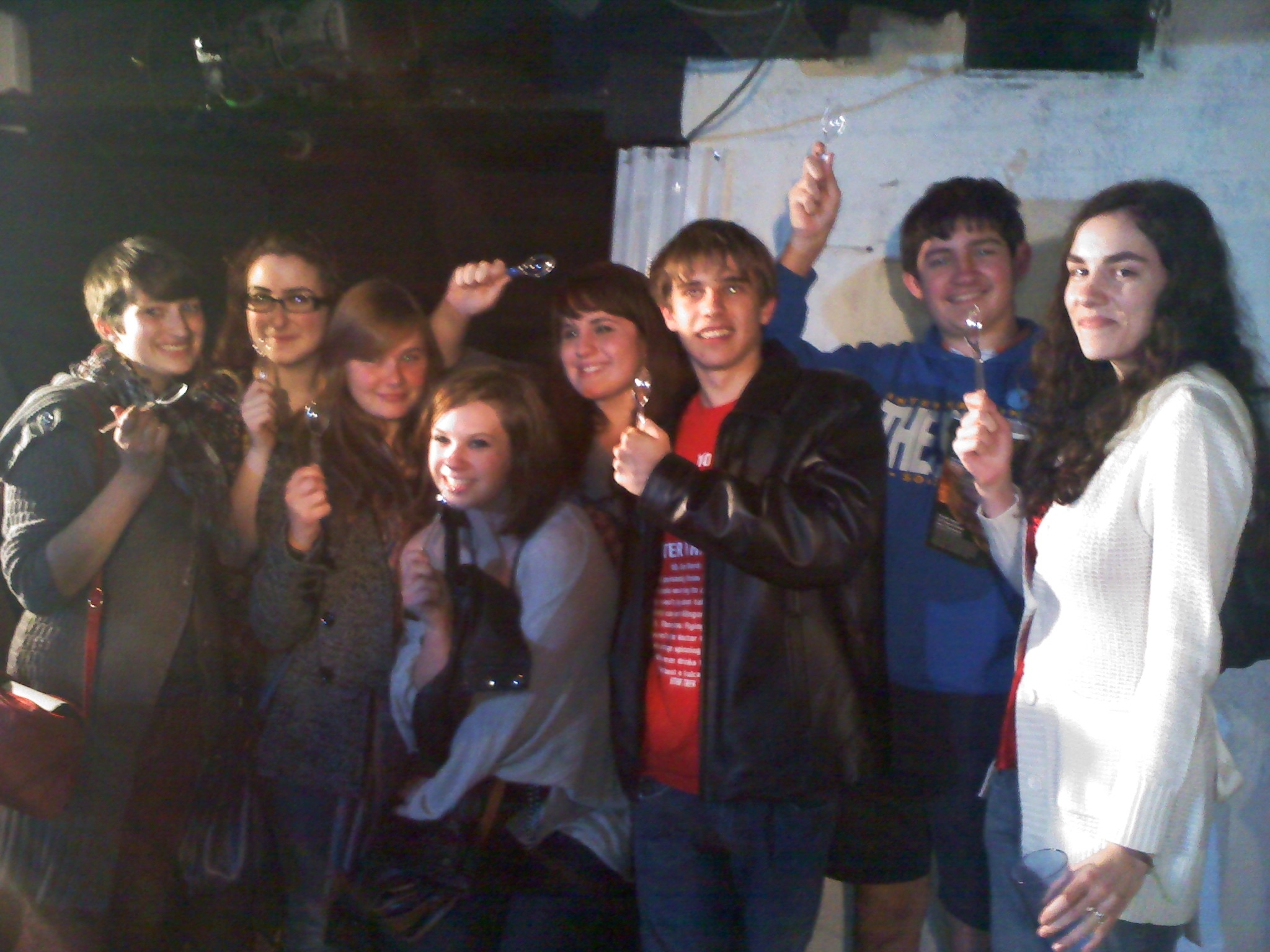
One of my favorite moments as a director. This group of high school students came to see my Titus. They all brought spoons with them and held them up when the pie came out. I collared them after the show for this picture.

One of my favorite moments as a director. This group of high school students came to see my Titus Andronicus. They all brought spoons with them and held them up when the pie came out. I collared them after the show for this picture.

It’s not difficult. In fact, it seems to me to be a lot easier than forcing actors into some kind of separate “SHAKESPEARE” space instead of allowing them to just fucking act like they would in any other play. This is part of the reason why I’m mystified by classes in “Acting Shakespeare.” There’s no such thing, or there shouldn’t be. It’s all just ACTING. There’s no need to get precious about it. Shakespeare’s just about the least precious playwright who ever wrote in English. Are these plays the best things ever written in the English language? YES. Do any of the characters know that? NO. Othello has no idea he’s one of the most important characters ever written. All he knows is that his heart is breaking.

If we’re going to go out of our way to teach “Acting Shakespeare,” then what we should be teaching is how to step away from the idea that it’s any different than any other play that uses heightened language. It should be a detox class more than anything else. You’re discovering the language as you say it; it’s the only way you can express what you need to say, focus on your objectives rather than the poetry or states, make your characters real, complex people. Make sure you know the meaning of every single thing that comes out of your mouth, and why you’re saying it. You know: acting.

Marissa Keltie as Desemona and Skyler Cooper as Othello. Photo by Cheshire Isaacs. 2004.

Marissa Keltie as Desdemona and Skyler Cooper as Othello. Photo by Cheshire Isaacs. 2004.

If you get out of the way, you can give young people the opportunity to love Shakespeare. You have to allow them, though, to love it on their own terms. You’re never going to force someone to love something exactly the same way that you do. Once you hook someone on Shakespeare, it’s a lifelong addiction, and the plays will change for them as they progress through their various life stages. When I first read R&J at 14, I identified strongly with Juliet and was crushing hard on Mercutio– my very first literary crush. Now, as a mother of two teenage sons, the character who resonates the most for me is the nurse, the only person in the entire play who truly loves Juliet for who she is, and therefore the person with the most to lose.

Jon Nagel as Lord Capulet, Bernadette Quattrone as the Nurse, and Luisa Frasconi as Juliet. Photo by Cheshire Isaacs. 2011.

Jon Nagel as Lord Capulet, Bernadette Quattrone as the Nurse, and Luisa Frasconi as Juliet. Ara Glenn-Johanson in the background as Lady Cap. Photo by Cheshire Isaacs. 2011.

I don’t think I have the one definitive answer to what under-40 audiences will like in their Shakespeare. This modern, story-focused approach has worked really well for us, and I’ve seen stiff, scansion-focused, stand-and-declaim productions fail with younger audiences time after time. That’s really all I’ve got for you. I have no doubt that there are directors out there who are working on genius approaches that will excite younger audiences in ways I’ve only dreamed about, approaches that are neither of the two above. All I can say is what I’ve seen fail, and what has worked for me.

If your taste differs, that’s fine. If you want a very poetry-focused, static Shakespeare set in some distant period, that’s great. But don’t bemoan the fact that younger people aren’t flocking to something made to YOUR TASTE.

Tim Redmond as Oberon and Pete Caslavka as Puck. Photo by Cheshire Isaacs. 2009.

Tim Redmond as Oberon and Pete Caslavka as Puck. Photo by Cheshire Isaacs. 2009.

I want to address one last thing before I head off to the grocery store while the I WILL MURDER YOU WITH MY RIVERSIDE comments roll in (probs not going to approve those, guys). We get a sizable chunk of OVER-40 people in our audiences as well. Modern stagings won’t push your subscribers out the door. Some of my favorite audience members are retirees. We used to have a group from a local retirement community that regularly came to see our shows and loved what we did. I adored them. They all had a deep knowledge of Shakespeare and honored me with the best discussions after the show. Older people are given the shaft as audience members these days. Everyone complains about them and no one seems to value them. I *LOVE* having them in our space. They’re smart, sophisticated viewers who have been seeing shows since before we were born, and have insights and opinions well worth listening to. People who look down on older audience members don’t know what they’re missing. And bear in mind that 75 isn’t what it used to be– that 75-year-old woman in your front row was in her 20s, naked, at Dionysus in 69. So don’t judge.

Marilet Martinez as Mercutio with Miyuki Bierlein as Balthasar underneath. Photo by Cheshire Isaacs. 2011.

Marilet Martinez as Mercutio with Miyuki Bierlein as Balthasar underneath. Photo by Cheshire Isaacs. 2011.

But honestly, I don’t think younger people like Shakespeare or hate Shakespeare or are indifferent to Shakespeare in any sizably different proportions than any other demographic. The issue is that we believe that young people SHOULD like Shakespeare, because it’s “good for them,” but we are much more likely to leave older people and their tastes alone. There’s no question that the average American middle-aged man would rather watch football or porn (especially in Utah— high five, Mormons) than Shakespeare. However, we don’t, by and large, bemoan the fact that that football-loving, porn-watching BYU facilities manager doesn’t like Shakespeare in the same way that we bemoan the fact that those football-loving, porn-watching BYU students don’t. For some reason, their disinterest is posited by the culture as dire, while the facilities manager’s disinterest is seen as his due– just his taste.

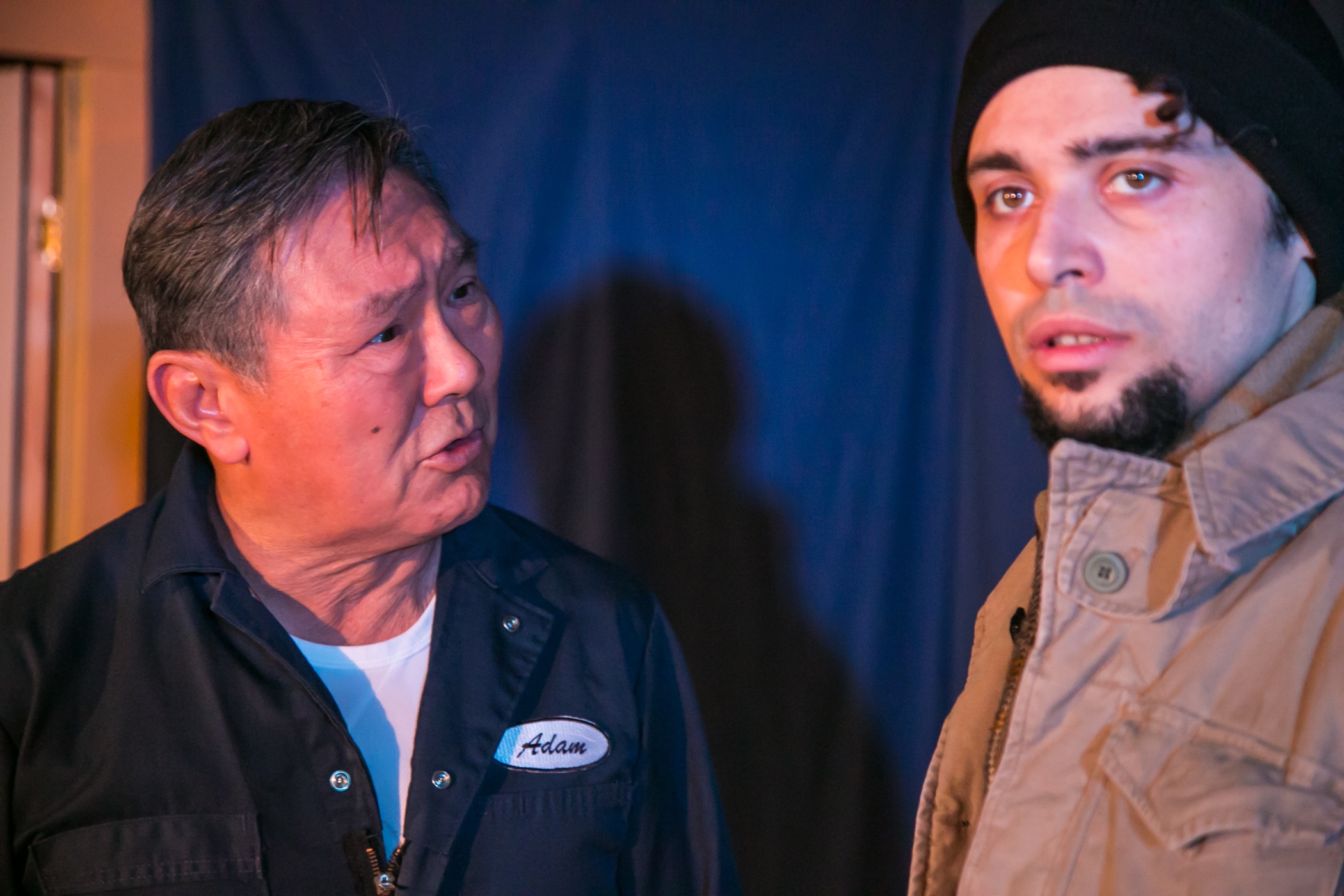
Dennis Yen as Adam and Miyaka Cochrane as Orlando. Photo by Cheshire Isaacs. 2013.

Dennis Yen as Adam and Miyaka Cochrane as Orlando. Photo by Cheshire Isaacs. 2013.

I wouldn’t worry about young people not loving Shakespeare. Shakespeare is unstoppable. Those stories and that language contain an irrepressible power and beauty, and there are plenty of young people who will find them, especially if you don’t hide them behind a screen of fake accents and stiff delivery. Let them breathe. They will reward you.

Tagged , , ,

Just Out of Curiosity, WHAT THE HELL IS WRONG WITH YOU, Commercial Costume Companies?

Image

For little girls. But it’s OK because all police uniforms include a miniskirt, right?

This is the time of year when Concerned Citizens, such as MYSELF, like to point out how uncomfortably sexualized Halloween costumes have gotten, especially for little girls, and how the sexualization of Halloween costumes for girls and women of all ages is a symptom of the way in which women are positioned in our culture as containers for “sex,” and are valued primarily– and I mean that literally, as in, first and above all else– on how well we inhabit that role. Women are judged on how well they contain “sex” no matter how much wealth or power they have, and no matter what else they happen to be doing at the moment. You could be accepting the Nobel Prize for Physics and you would still be judged primarily on how well you are enacting the role of sex toy.

Image

A costume for little girls that Spirit calls “Major Flirt.”

While the sexualization of children needs to be stopped, I’m not sure what the answer is to the overall sexualization of women, especially as regards Halloween– the human brain responds to visual sexual stimuli, and this dance of display/observe is older than humans are– but working towards a major cultural shift that opens up the way women are perceived so that perception can contain both sexuality as well as other things– every scrap of humanity we allow men– should be the goal here. To be clear, sexualized costumes for adult women are not the problem in and of themselves, and women should be able to display their sexuality whenever they like. I’m not here to slut shame.

In fact, I’m not here to discuss Sexoween at all. I think most people are aware of the Sexoween issue to some degree. In prepping for this article, I dove into the many Halloween costume websites, and while there were plenty of the expected “sexy plumber” and “sexy branch manager” and “sexy ball peen hammer” costumes, I was floored by the massive amount of racist costumes for sale at major costume retailers JUST SITTING THERE ONLINE AS IF THEY’RE NOT COMPLETELY INSANELY JAW-DROPPINGLY RACIST. Many of them have the extra-added bonus of being sexist AND racist. Of course I knew racist costumes exist, but the flat-out, overtly racist, fuck-it-it-might-as-well-be-1954 straight-up racism in both these costumes and their accompanying text descriptions surprised me. Not that I believe retailers have a single fuck to give about racism, just that I would imagine there would have been public outcry long before now about this. And yet.

While Spirit was the big winner, there were plenty to be found all over. I could have done this quite literally all day long. The costumes, along with their accompanying text, I present to you without comment. OR EDITING, although it pained me.

Party City’s “Old School Tight Afro Wig.”

Image

“Want a ‘fro that’s totally tight? Pull on our Old School Tight Afro Wig for a look that’s all right. This Tight Afro Wig features larger-than-usual black afro curls in a slightly disorganized mop of hair that reflects your carefree attitude towards life. No job, no problem! ”

Party City: “Hey Amigo Mexican Costume.”

Image

“Hey amigo, this Mexican Costume is bound to be noticed! Hey Amigo Mexican Costume features a fringed poncho, long moustache, red trimmed sombrero, and pants with an attached plush donkey and rider legs, which create the illusion that you’re riding said plush donkey.”

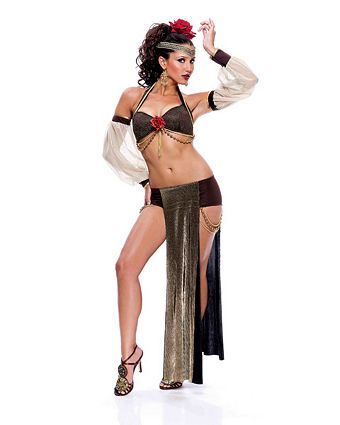
Anytime Costumes: “Arabian Seductress”

Image

“Cool Arabian nights will be blazing like in the daytime when you wear the Sexy Arabian Seductress Halloween Costume. It features a halter bikini top with a rose accent and beaded chain trim, matching mini-shorts with an attached panel skirt and gold chain trim. Sheer arm sleeves also come included to make your dances more seductive and mysterious and a gold headband and rose head comb remind your significant other why royalty has everything the best. If you’re getting into belly dancing and want to put on a show, you’ll be instantly prepared to add the sultry component that makes these dances a marvel to watch. Put on a spectacular show and become the head courtesan of the harem. Stop by our accessories page to add some jewelry accessories to add some lively noise to the dances that will keep him wanting.”

Spirit: “Reservation Royalty”

Image

“There’s no need to send smoke signals to get your point across when you wear this Reservation Royalty adult womens costume. The fringed, microsuede mini dress comes complete with a matching feathered headband. You’ll be a smokin’ hot site in this sexy womens costume.”

Spirit: “Pimpin Da Hos”

Image

“Show me da money! Be a hustler on Halloween when you don this outrageous Pimpin’ Da Hos adult mens costume. It’s all flash so be ready to talk the talk and walk the walk in this over the top ensemble. Great couples or group costume…”

Spirit: “Asian Empress”

Image

“Explore the mysteries of the East when you don the Asian Empress adult womens costume. The satiny black dress of this seductive and sexy womens costume features purple trim and comes complete with a pair of chopsticks for your hair. Add some mystery to Halloween!”

Spirit: “Mexican Style”

Image

“Grab a bag of tortilla chips, open a can of salsa, and show off your spiciness in this Mexican Style mens costume. This funny costume comes with a colorful sarape, traditional sombrero, and giant mustache–sure to get you laughs both north and south of the border.”

Spirit: “Sexy Bandita”

Image

“Spice things up with some south of the boarder heat when you wear this smokin’ hot, Sexy Bandita adult womens costume. The brown, vest-like top comes complete with a matching low-rise fringed mini skirt, a serape-inspired striped scarf, a red bandanna and a belt with shot glasses.”

Finally, deserving its own category of TAKE A SEAT wrongness, I give you:

Spirit: “Phat Pimp Child Costume.”

Image

“Be the big money when you trick yourself out in this Phat Pimp child costume. The purple, polyester jumpsuit of this pimp costume features zebra print trim, attached fake money, a PVC waist loop and a matching zebra print hat.”

Like I said, I could have done this literally all day long. It stands to reason that companies wouldn’t be selling this nonsense if people weren’t buying it. There are an infinite variety of costumes you can choose that do not involve racism. Seriously. Do us all a favor and choose one.

Tagged , , ,

What Theatre is For

Arisa Bega in Monica Byrne's What Every Girl Should Know at Impact Theatre. Photo by Cheshire Isaacs.

Arisa Bega in Monica Byrne’s What Every Girl Should Know at Impact Theatre. Photo by Cheshire Isaacs.

I’ve been thinking a lot lately about what theatre is and why we do it. It sounds like an easy thing to think about until you actually start thinking about it.

Someone I know recently referred to himself as a “provocateur” in how he creates his art, and that it’s not enough for him to just “do theatre.” I’ve known quite a few people who see themselves primarily as something along those lines– trying to “awaken” people, or provide some kind of “transformative experience.” And I think those can be laudable goals, to a certain extent. But what does it mean to “just do theatre”? Is being a “provocateur” more than “just doing theatre”?

I’m not sure if the “provocateur” approach can be, ultimately, a successful starting point all on its own.  Provoke them to do what? Rush Limbaugh and Anne Coulter are two of the best provocateurs in the game. So are middle-schoolers. Provoking people isn’t a laudable goal in and of itself. Awakening people to what? Transforming them from what to what? This is unspecific language that is ultimately self-serving, focusing more on our personal importance to the process than on the work itself. That’s not to say artists aren’t important– that bears repeating, especially now as our importance to culture is under constant attack– but that, if our goals are audience-focused, we’re going to need to think more deeply about what we’re doing.

Dennis Yen, Mike Delaney, and Seth Thygesen in Twelfth Night at Impact Theatre. Photo by Cheshire Isaacs.

Dennis Yen, Mike Delaney, and Seth Thygesen in Twelfth Night at Impact Theatre. Photo by Cheshire Isaacs.

In the ensuing discussion with the “provocateur,” we both discovered that he meant so much more than what that word implies. He meant something for which there is no single word. He wants to engage his audience’s hearts, minds, souls, and bodies. He wants to reach down past the dross of the everyday and into a place of deeper meaning, deeper connection. And now we’re getting somewhere.

This type of engagement is about communion; it creates community. It’s one of the deepest, oldest human impulses. Hell, it’s a primate impulse. Be with me. See me. Hear me. Know me. Share this experience with me.

Chris Quintos in Joshua Conkel's The Chalk Boy at Impact Theatre. Photo by Cheshire Isaacs.

Chris Quintos in Joshua Conkel’s The Chalk Boy at Impact Theatre. Photo by Cheshire Isaacs.

I’ve had hundreds of discussions with hundreds of theatremakers, and when you dig deep enough, it all hits this same foundation: engagement, communion. How do we accomplish this communion? How do we, in the context of what we do as theatre artists, engage others in a way that creates communion?

Anyone who tells you that what we now call “audience engagement” is the pathway to this is just completely wrong. It *can* be, but just providing ways for your audience to interact with your work will not mean they’re automatically engaged with it in a meaningful way. Anyone can write on a wall, stand on a stage, sing a song, or tweet while being bored out of their minds and wishing they were at home playing Mass Effect. The techniques we use to “engage” audiences will not, in and of themselves, work. They can be very powerful, and they can be boring as all fuck.

How we make “audience engagement” techniques work is the same way we make theatre work: narrative. We’re storytellers.

Luisa Frasconi and Maria Giere Marquis in Joshua Conkel's The Chalk Boy at Impact Theatre. Photo by Cheshire Isaacs.

Luisa Frasconi and Maria Giere Marquis in Joshua Conkel’s The Chalk Boy at Impact Theatre. Photo by Cheshire Isaacs.

When I say “narrative,” I don’t mean any one kind of narrative. A narrative doesn’t have to be linear. It doesn’t have to be traditionally structured in any way. Theatre is a narrative art form, and if you create an “audience engagement experience” without any kind of compelling narrative, you’re not going to successfully engage them.

While some people are quick to denigrate the term “storyteller” because it doesn’t sound important to them, theatre is, at its heart, about stories. How we choose to tell those stories differs from artist to artist and genre to genre, but the human brain understands the world through narrative. It’s why religion is conveyed primarily through narrative. Narrative and poetry are how we convey all the mysteries of our existence; narrative and poetry are how we convey all the secrets of the human heart. To be a storyteller is to be both the keeper of and the maker of our culture– past, present, and future. HOW you choose to tell those stories is up to you. But we’re all storytellers in this art.

In theatre, “poetry” can be what we usually mean by the word– unexpected juxtapositions of language that create an insightful, emotional impact– but we also have the luxury of creating it in the physical world– movement, sound, sets, lights, costumes, props, the bodies of the actors, the way those bodies tell the story being told. Poetry works in service to the narrative. It illuminates it or cracks it open or reframes it or explains it or even problematizes it (Shakespeare in particular loves that last one).

Mike Delaney in Lauren Gunderson's Toil and Trouble at Impact Theatre. Photo by Cheshrie Isaacs.

Mike Delaney in Lauren Gunderson’s Toil and Trouble at Impact Theatre. Photo by Cheshire Isaacs.

We start with something we want to say– a story we want to tell– and then we decide how we need to tell that story. The audience comes in the door and sits with us while we tell the story in the way we need to tell it. Maybe they participate in the telling; maybe not. But we– like an old woman sitting at a paleolithic campfire and every other storyteller in between that woman and us– create a world, open that world, and throw it like a blanket around our audience. Be in this world with me, feel its joy, its pain, its magic.
And through that ritual of storytelling– whether we’re creating a traditional, linear narrative or an experimental, non-linear movement piece, or anything in between— we’re attempting to engage, to create communion. When we’re successful, when we achieve that (because of course we don’t always, and we have to make room for failure if we ever wish to succeed), that engagement, that communion, can be provocative, transformative, or awakening. It can raise political consciousness. It can create an emotional journey. It can change minds, heal hearts, elevate souls. It can do ANYTHING, because a group of people fully engaged in a narrative is one of the singlemost immensely powerful tools available to the human experience.

Jonathon Brooks in Cameron McNary's Of Dice and Men. Photo by Cheshire Isaacs.

Jonathon Brooks in Cameron McNary’s Of Dice and Men. Photo by Cheshire Isaacs.

There’s a wealth of information about the neurology of storytelling– how the human brain experiences narrative and is enriched by it is especially interesting. Our brains see the world, and other humans, as a collection of narratives. When we say we’re “storytellers,” we’re saying we engage other humans through the deepest, most primitive, most mysterious means possible. We’re talking soul to soul when we tell stories. What binary is to computers, narrative is to humans.

And this is what I think theatre is for: gathering a group of people to enter into a world wherein a story can be created, shared, and fully experienced in real, physical space and time by both creators and audience. Our stories contain all the mysteries of our existence, all the secrets of our hearts, all our hopes and fears and dreams and longing and joy and pain and everything that makes us who we are, who we were, who we fear becoming, who we want to be, what we dream we can be, at the deepest, most meaningful level our brains can comprehend.

So don’t shy away from the term “storyteller.” It’s one of the most meaningful labels we have for ourselves as theatremakers. It contains within it everything we’re trying to do with audience engagement, everything we’re trying to do when we say we want to “take risks” or “provide a transformative experience.” Everything we are and everything we will be are made of narrative. Theatre is the most powerful expression of the intensely human magic that is narrative.

Tagged , , ,

Facts Are for Chumps, Amirite?

Race in casting is an issue I care deeply about. I’ve written about it, more than once. I’ve assigned Racebending to my university students. I discuss issues of race in screenwriting, casting, and directing with my film students over and over. This issue is close to my heart.

So when I saw this, I was excited:

It’s part of a website entitled “Me + You,” which serves as both a promotional site for the film and a fundraising site for the production. I clicked on the video with high expectations.

In it, actor Iyin Landre discusses how difficult it is for Asian actors to get roles that aren’t stereotypical, minimizing, or marginalizing. Amen, sister. Then she goes on to make three statements that are so obviously wrong that I started to re-evaluate my entire experience of the video. Was this satire? Is this a Sarah Silverman-style joke? Is this bait– see how many people fall for it and then reveal that we’ve all been punked? In under five minutes I went from “I’m trumpeting this from the hilltops” to “I better not in case this is some kind of Joaquin Phoenix project.”

If you haven’t already watched the video, here’s what made me start to question it:

1. Playing a lab tech: “The results are back. He’s a B plus. He’s not a match.”

2. “1935 was when Teddy Roosevelt was president.”

3. “1935 was when we still had black and white TVs.”

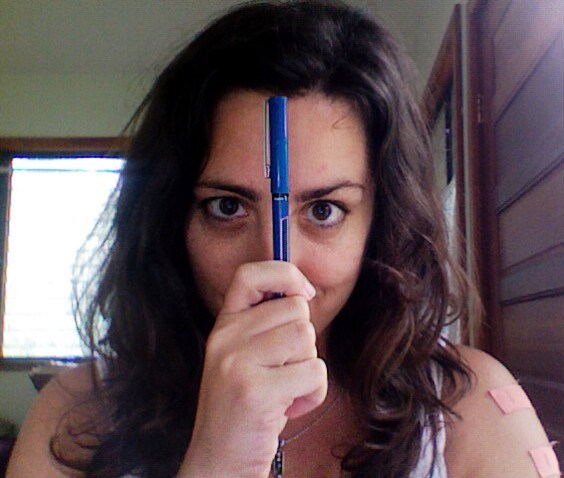
Imagine this is me. But with more hair. And female. And with, like, seven more question marks.

Imagine this is me. But with more hair. And female. And with, like, seven more question marks.

It’s impossible to believe that no one working on that video knows that a blood type is “B positive,” not “B plus.” Isn’t she complaining, AND RIGHTLY SO, about having to play lab technicians over and over? But she doesn’t know how you say a blood type? That can’t be right. And not one single person working on the project knew that in 1935 Franklin Delano Roosevelt was president, Teddy Roosevelt was dead, and that almost no one in the US had a television until after WW2?

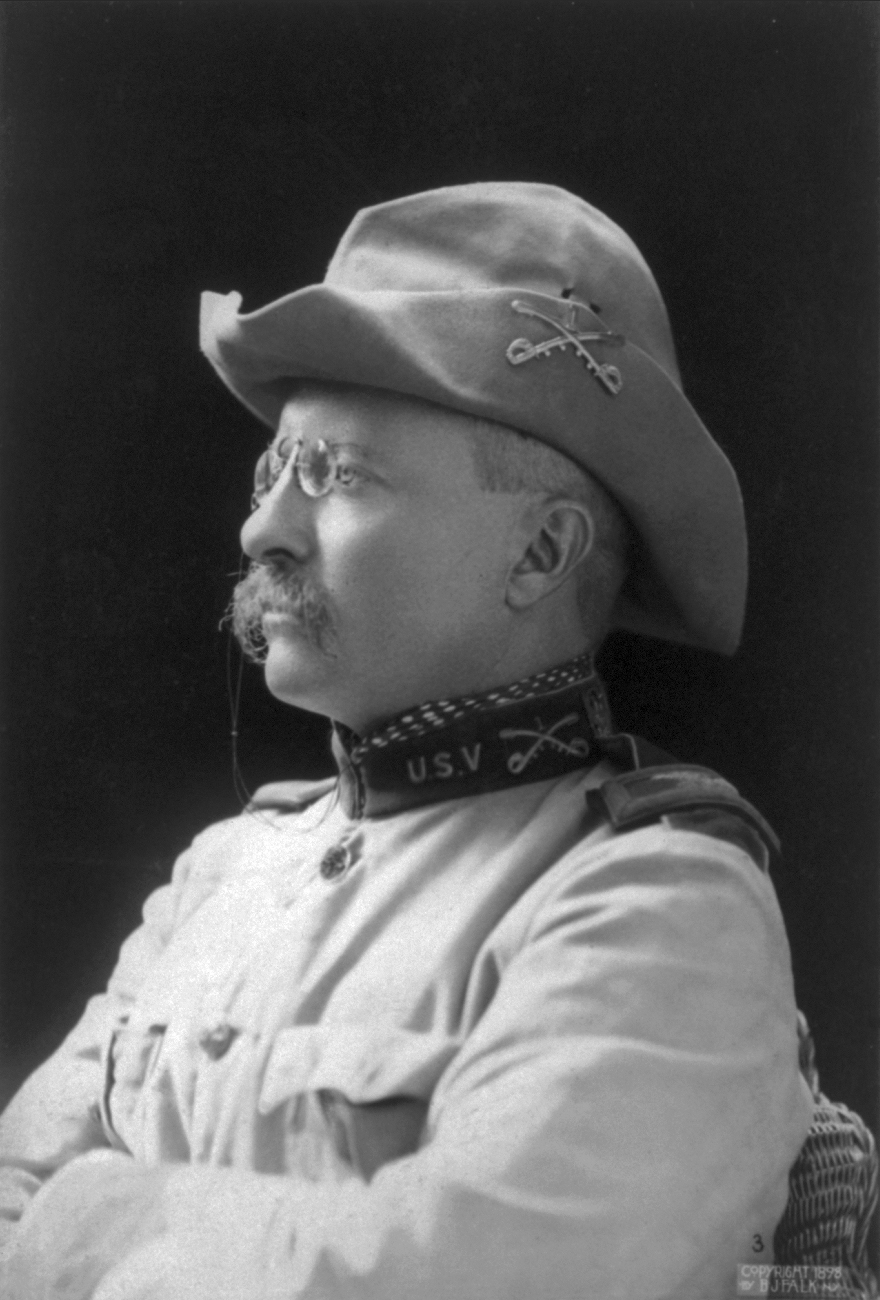
T.R., October 27, 1858 – January 6, 1919. One of the most interesting presidents we've ever had.

T.R., October 27, 1858 – January 6, 1919. One of the most interesting presidents we’ve ever had.

Yes, technically there were a handful of black and white televisions in existence in 1935, but it was well before the average American family included television as part of its life. This was still firmly the era of radio.

Families gathered around radios to listen to FDR's fireside chats. FDR was president 1933 - 1945.

Families gathered around radios to listen to FDR’s fireside chats. FDR was president 1933 – 1945.

Even giving her that one on a technicality (I am the soul of generosity) the level of inaccuracy put the whole video into question for me. Once I satisfied myself that it’s not some kind of poor taste satire, I had to conclude these are real, and really glaringly obvious, errors. If you can’t be arsed to factcheck your own money beg, why would anyone expect you to be able to successfully produce a film? Film production requires the ability to manage an enormous amount of detail with both speed and accuracy.

And yet her film is fully funded. While I applaud the concept of funding a film (or an ANYTHING) with an Asian American protagonist, I had to wonder: Why did no one seem to care about those glaring inaccuracies? I’d love to say that it’s because a film starring a person of color trumps other considerations.  I’m still holding out the hope that donors said to themselves, “OK, her work is clearly going to be a little sloppy based on her disinterest in factchecking, and maybe she’s not the smartest person in the world, but FUCK IT. I’m sick of Asian actors being marginalized in Hollywood and I’m going to do something about it.”

BTW, There are a ton of projects on indiegogo and kickstarter starring people of color, and/or produced by people of color that have not met their funding goals. I found these in just a few minutes: My Manz, But Not for MeInnaI Just Wanna BallIn the Mind of a Man-WomanMad Black MenFor a Dark Skin Girl, Roxe15. There are plenty more.

Whether a filmmaker knows anything about blood types or the history of her own nation, or whether she has any attention to detail, are minor issues, and exceptionally so in comparison to the larger goal of Asian representation in visual narrative art. But these painfully glaring errors nagged at me for DAYS. I spent hours and hours trying to sort out why it bothered me so much. And then I figured it out.

Factual accuracy is dead. No one has even a single, tiny, trembling and lonely fuck to give about factual accuracy. The fact that Iyin Landre had no interest in making sure the words that came out of her mouth were accurate (checking who was president in 1935 takes less than four seconds on google) is not important to most people, not because of the massively MORE important issue of Asian representation but because NO ONE CARES.

No_one_cares

Why is that? When did we decide, as a culture, that facts mattered so little that we don’t need to bother factchecking? When did we decide that facts are just decorative?

The result is devastating: Deniers. The pure anti-science nonsense that is the anti-vaccine movement is causing real damage to real people, many of them children (see also this), but deniers who have little respect for rigorous factchecking see a random website quoting unqualified sources as equivalent to the entirety of the scientific community. Mitt Romney and Paul Ryan’s obvious lies were discussed so often that Romney campaign pollster Neil Newhouse publicly stated, “We will not let our campaign be dictated by fact-checkers.” Deniers consider a few fringe opinions about climate change to be equivalent, again, to the bulk of the entire scientific community. There are people who deny the moon landing, the Holocaust, and President Obama’s American citizenship regardless of the avalanche of factual information proving them all. Deniers are the footsoldiers of the aggressively ignorant.

I don’t know if we’ve ever cared about facts, to be honest. The mendacity of the current GOP and its media lapdogs is part of a grand tradition in the US of yellow journalism, not some new occurrence, and we have no lock as a culture or as an era on ignorance by any means. But it bothers me. It’s truly upsetting that people just do not care. It’s troubling that people cannot (or will not) evaluate sources, or understand that they’re believing an unqualified source over a qualified one simply because the bullshit source is telling them what they want to hear. I tell my students all the time: Being educated means asking yourself every day, “Why do I believe what I believe?”

See? Question your beliefs about EVERYTHING.

See? Question your beliefs about EVERYTHING.

Listen, I want to be right as much as the next nerd. I want to be right so much that I’m willing to be wrong now in order to be right later. If I find out that something I believe to be true is incorrect, I will kick it to the curb with gleeful alacrity. I’m wrong all the time, and I want to be right. So I *try* to be right. I try really fucking hard. I factcheck. I listen to people who know more than I do. I worry about fucking up. And I don’t understand why everyone isn’t filled with anxiety about this issue. But they’re not, and I’m endlessly fascinated and disturbed by it.

Another person who wasn't president in 1935.

Another person who wasn’t president in 1935.

I have no idea whether Iyin Landre’s film will be “good” (whatever that means) or not. For all I know, it’ll be the greatest film ever created. And one thing I know with rock-solid certainty is that opportunities for Asian actors in the film industry, while marginally better than they once were, are still alarmingly bleak, and any project with an Asian woman at the center who isn’t wearing a lab coat or working as a prostitute is a fucking breath of fresh air. So overall, I’m glad her film got funded, and I wish the projects above could meet their funding goals as well. (BTW, check out Hero Mars as well.)

But this idea that factual accuracy isn’t important, and its corollary idea– that the only sources that can be trusted are the ones that confirm your own prejudices– need to be questioned EVERY TIME WE SEE THEM. We need to start teaching the importance of factual accuracy, separating fact from opinion, and understanding the difference between a reputable source (all of science) and a disreputable source (Jenny McCarthy).

Just-the-Facts1

Racism for Breakfast

Because my cosplay article has been kinda going crazy the past few days, people are tagging me all over the book of faces in discussions of various cosplay and cosplayers. I’ve been ignoring most of them (because I can’t spend all day commenting on facebook, despite evidence to the contrary), but I’ve commented on a few, usually because they were posted by a personal friend or professional connection.

One of these happened this morning. Someone tagged me in a post about some rando cosplaying as Hitler at Dragon*Con, asking what I thought. I responded that, although I’d love to tell him to eat a platter of dick tacos because he’s cosplaying a symbol of real-life violent racism against me and my family, I don’t agree with the calls to ban his costume from future cons. I don’t think costume censorship leads anywhere useful.

And then all hell broke loose.

I can boil “all hell” down to a few sentences: I was evacuating all credibility I had in my stance against shaming cosplayers for race, size, age, or gender identity because I was “shaming” cosplay Hitler. My call for acceptance of cosplayers of all races and body types should naturally extend to an acceptance of someone’s choice to cosplay Hitler. Expressing my discomfort with cosplay Hitler is bullying and victimizing him.

Image

Now, first of all, this is probably an academic distinction, but I did not actually tell cosplay Hitler to eat a platter of dick tacos. I speculated that I might do such a thing were I to ever see him in person. The chances, however, of me actually having the nards for such a face-to-face confrontation are precisely equal to the chances of me being elected the next Mormon prophet. That said, I do admit that I said in writing that I would like to invite him to such a dining experience. So the distinction is academic. But it exists.

But here’s my point (and I know you’re all relieved that I actually have one): Expressing discomfort at a costume that embodies real-life violent racism against me and my family– and I have living Holocaust survivors in my family– does not make me the bully.

Those of us who fight racism and speak out against the symbols of racism are used to being told that we’re the problem. “Toughen up,” we’re told. “Freedom of speech,” “You’re too sensitive,” “Get over it,” “Stop taking everything so seriously.” But the worst, by far the worst, is being told that we’re the ones oppressing and victimizing by speaking out against racism, its symbols, and its tools. I think it’s very difficult for people who have never personally experienced bigotry to understand what it means for people who have been violently oppressed to be confronted with symbols of that oppression. It’s flabbergasting, though, when they refuse to even attempt understanding and instead blame the victim for speaking out.

This isn’t about the principle of “accepting all cosplay no matter what.” Only the inexperienced think all principles should be taken to their furthest extreme and still hold. There’s always a line. And being able to see that line is almost always about experience and always about understanding. Sometimes it’s the experience of age, sometimes it’s the experience of bigotry and marginalization, sometimes it’s education. There’s no freedom that isn’t curtailed at some extreme expression of it. Freedom of speech, for example, ends at libel, slander, and copyright violation. Generally a given freedom is curtailed when the exercising of that freedom harms someone else, and surely the freedom to wear whatever costume you want without being told by someone, “What the actual fuck are you doing? This is not OK” ends at the moment you choose a costume that is aggressively racist.

I know it’s hard to have compassion for people who have experienced bigotry when you haven’t experienced that bigotry yourself. My son and I are confronted with anti-Semitism in real life all the time. There are people who absolutely believe we don’t deserve to live because of who we are. And Hitler is one of their main symbols. Making a choice to dress as Hitler is making a choice to bully, to victimize, to hurt. People at Dragon*Con posed with that person while making the Heil Hitler salute. This is aggressive, deliberate racism.

Cosplay Hitler is the BULLY, not the VICTIM. It does not undermine my stance against bullying to express that I am personally uncomfortable with a costume that bullies ME DIRECTLY, and the implication that HE is somehow the victim of MY bullying is nonsense-flavored nonsense, especially considering that I am defending his right to wear that costume despite everything wrong with it.

It’s super-common for people who fight against bigotry to be told they’re the ones being the oppressors, that it’s somehow violating someone’s constitutionally-protected freedom of speech to say, “Hey, that’s racist,” as if freedom of speech protected them from the consequences of that speech. So I should have known better. I should have been able to predict what would happen, because it happens all the damn time. But frequency doesn’t lessen the pain.

I went back into that discussion and deleted all of my comments. I’ve been trying to shake the hurt, anger, and deep, deep disappointment all day. My husband came home and I cried all over again just telling him the story. Racism fucking hurts. Being told that you’ve lost credibility and that you’re the bully because you expressed personal discomfort with a racist act FUCKING HURTS.

Part of the pain and disappointment is being ashamed of myself. I should have stood my ground, but I wasn’t strong enough this time, and for that, I’m ashamed.

So this is what I ask, from the center of my pain and my shame: The next time you see someone say “That’s racist and hurtful to me,” don’t tell them they’re wrong. Don’t tell them it undermines their opinions or their credibility. Don’t tell them that their outcry victimizes the racist. Ask them why it hurts. Stand with them. Apologize. Try to understand. You do not get to decide whether or not bigotry, its symbols, or its tools are hurtful to their targets, or how hurtful they are. Listen, learn, and comfort rather than accuse, blame, or belittle.

We all fuck up, all the time. We all make stupid, bigoted remarks out of ignorance or carelessness, or sit by in silence while others make them. But we have to KEEP TRYING. We have to stop ourselves from saying stupid, hurtful shit like, “toughen up,” or “You’re the bully for shaming the racist.” We have to keep asking ourselves the difficult questions. We have to try hard to understand the bigotry others face. It’s a choice we have to consciously make.

It CAN get better if we CHOOSE to make it better, and that has to be a conscious choice we all make as individuals.

I stand by my opinion that cosplay Hitler should be allowed to wear his costume to whatever con he likes, because I can’t side with costume censorship. And I stand by my opinion that it’s an aggressively racist act to costume yourself as a real-life violent racist murderer and torturer whose victims are still living. And I stand by my opinion that he deserves whatever blowback he gets for his public display of racism. And I stand by my opinion that people who shame cosplayers for their race or size are being colossal jerks. I stand by all of it.

But most of all, I stand by my pledge to try my best to understand the experiences of others and to have compassion for those experiences.

Tagged ,

Don’t You Want Me, Baby?

This is just here to amuse me.

This is just here to amuse me.

I’ve written before about playwrights and rejection. I think it’s difficult, though, to understand just HOW MUCH rejection we’re talking about here, and how insanely resilient writers have to be.

monica.byrne

Monica Byrne. I stole this picture shamelessly from her blog. I have more official pictures of her, but I just really, really love this one.

Monica Byrne is a writer whose work I believe in. My company is a few days away from opening her fantastic What Every Girl Should Know Between unsolicited submissions and the plays we request, Impact Theatre receives as many as 450 plays a year to fill the 3 slots we have available (the 4th goes to the annual classic and the 5th goes to a local solo performer). Those odds are just nuts, so you know we must really believe in Monica and her work– and we do. But What Every Girl Should Know wasn’t the first play Monica sent us. The first play she sent us was Nightwork. It was a really interesting play that wasn’t right for us. It made it pretty far up the chain before we sent the rejection. I was intrigued and asked her to please continue submitting. She sent us What Every Girl Should Know. 

We’re the first theatre in the San Francisco Bay Area to produce Monica Byrne’s work, and we won’t be the last. My company has introduced dozens of playwrights to the Bay Area early in their careers, including Steve Yockey, Sheila Callaghan, Roberto Aguirre-Sacasa, and Enrique Urueta. We’ve done world premiere plays by writers like Lauren Gunderson, Lauren Yee, Prince Gomolvilas, and Peter Sinn Nachtrieb. We know how to pick ’em.

The salient fact here, however, is that WE REJECTED HER FIRST. And when I asked her to please keep sending me her work, SHE DID.

Then she wrote THIS. She calls it her “anti-resume.” It’s a blog post that contains a link to a spreadsheet of all her rejections. It starts in 2007. It is impressive. Apart from the obvious bravery, it shows just how much rejection a writer– even a gifted writer who is on the verge of nationally-recognized success in two fields (take a gander at this)– can go through.

So read Monica’s anti-resume. Take it to heart. And keep submitting.

DON'T STOP BELIEVIN'.

DON’T STOP BELIEVIN’.

Tagged , ,