Tag Archives: feminism

The White Guy Problem

Before you start limbering up your fingers to write NOT ALL WHITE GUYS before you even read the article, lemme just say this: I KNOW. The only reason I’m able to track the performative phenomenon I’m about to discuss is because it only occurs in a small subset of white guys. Since most white guys are NOT doing this, but a solid and vocal minority are, it’s been easy to spot, track, and wonder about.

Earlier this week a friend of mine posted Cera Byer’s Salon article, “To My White Male Facebook Friends.” The article, originally a facebook post that was reposted so many times Salon asked Byer for permission to publish, has a basic thesis: White guys, don’t immediately get defensive when women or people of color tell you about their experiences. Listen and believe them.

Like everything ever in the history of ever, the reaction to that article proved the need for it repeatedly, thoroughly, and with no room for doubt.

In one thread of which I was a part– a public post (I know, I know, I usually know better)– a young Latina grad student was commenting in support of the article and about her experiences with white men as a queer woman of color, and one man– let’s call him “Jake”– posted this in response to her:

“Ah yes, the fiery Latina, hot in the sack, but not much going on upstairs if you catch my drift, and that temper? Yikes. It’s cool if you’ve nothing substantial to contribute, I’m good at ignoring. Just let me know if you’re going to slap those bongos of yours, ’cause I’d like to watch. “

He was immediately called out for his racism and misogyny, of course, by a healthy percentage of the people still actively participating in the thread, many of whom were white guy allies. Shocked, and, quite frankly, exhausted by the public racism and misogyny we’ve seen so much of in recent weeks, I copied and pasted the above into a status of my own and told people where to find the public thread.

His response to the censure he received for such open racism and misogyny was enormously telling, and, as it dawned on me that I was seeing a predictable pattern, the impetus for this article.

For the past few decades, our cultural norm in cases where someone has been caught in public making a racist or sexist comment has been some kind of apologetic (or half-assedly apologetic) performance. “I never intended to offend anyone” is a popular (half-assed) performance in these cases. Think Mel Gibson. Think Michael Richards. Think Donald Sterling and Bruce Levenson. Think Paula Deen. Public racism, in particular, has been long considered the kind of activity that can ruin a business, get someone fired, destroy reputations. But something has changed, and quickly, spearheaded by a small but vocal minority of white men.

When “Jake’s” comment was first posted and subsequently called out, I fully expected, given the egregious nature of the comment and the fact that it was in a public thread (and thus viewable by his boss, clients, whoever), some kind of, “While I disagree with you and the article, I should not have said what I said. It was inappropriate and I apologize.” Standard American CYA behavior.

Instead, he opted for a new pattern of behavior I’ve since begun to think of (after Byer’s article) as “the Defensive White Guy performance.” While I realize this has always been happening *privately*, I’m seeing a new, widespread willingness to behave this way *publicly*.

This Defensive White Guy performance is particular and predictable the moment it begins. Of course I understand that a LOT of human behavior is predictable, for all types of people– I live in Berkeley and can predict a knee-jerk liberal reaction to the letter and the link– but this DWG phenomenon is representative of a widespread willingness to perform and then defend racism and misogyny publicly.

It’s a very particular performance I’m seeing more and more of, and it’s always the same: the Defensive White Guy makes a racist or misogynistic statement, is called out for it, then immediately begins claiming he’s the victim, either in the discussion, in American culture, or both. He claims that he is not racist or sexist. He labels any oppositional commentary, no matter how bland, as an attack, often conflating the commenter with entire groups, such as “liberals,” “feminists,” or “SJWs.” Often he will double down on the original racist/misogynistic statement by posting more of the same, even while claiming not to be racist or sexist. His attacks are filled with horrible insults. He claims perfect entitlement to the usage of those terms because he is being “attacked,” or because the people who disagree with him “deserve” it.

In this particular case, “Jake” responded with accusations of slander (playing the victim) and responses to women like, “Don’t you have dishes to do?” (doubling down), in addition to a wide variety of attacks of various types. While attacking me publicly, he came to me privately, begging me to take the status down, claiming he was receiving “threats” from my “friends.” I hid the status and then asked him for specifics, stating that, if that were true, it’s not OK, and I would speak with those friends and personally ask them to stop. In response, he accused me of being a (somehow anonymous) participant in these supposed “threats,” said he would give my name to “the authorities,” and blocked me, forcing me to conclude this was just another “playing the victim” performance. Despite the fact that he was almost certainly lying, I reopened the thread and posted a request for people to leave him alone, left it up for 24 hours, and then re-hid the thread.

So what’s happening here? Why would a guy be all bluster, racism, and misogyny in public, then come privately to me and ask me to protect him from the consequences of attacking me (and others) and expect me to comply? Why couldn’t he just man up and sincerely– or even somewhat sincerely– apologize to the woman he originally attacked, utilizing the same CYA performance that’s been the standard for the past several decades?

Again, just to head off the inevitable YOU’RE BEING RACIST AGAINST WHITE MEN reactions, most white guys are great. Most white guys are empathetic people trying to understand the lives of others. But the entire nation is currently being dragged down by a small group of people whose reaction to the pain of others is MY PAIN IS MORE IMPORTANT, whose reaction to racism and the role of their own privilege in that is LALALA I CAN’T HEAR YOU, or worse, PRIVILEGE IS MADE UP BECAUSE MY LIFE IS HARD.

Here’s what I think is happening:

We all see ourselves as the “good guy” in the narrative of our lives, and these Defensive White Guys are no different. They believe in their hearts that they understand racism, and believe they understand the experiences of others. They believe in their hearts they are not racist or sexist, and that assertion is almost always a loud component of the DWG performance. They BELIEVE it. They grew up with Free To Be You and Me and learned in school about the many laws and customs we once had that barred women from participating in public life– voting, higher education, certain kinds of employment. They learned about the income disparity. And they said to themselves, “I am not that.” And they believed it. In school they learned about lynchings and listened as their teacher played “Strange Fruit” or read to them about Emmett Till. They saw pictures in their grade school textbooks of drinking fountains marked “WHITES ONLY,” they learned about the 1963 Birmingham church bombing, they learned about brave little Ruby Bridges, they learned about racism and they said, “I am not that.” And they believed it.

As they grew up, they demonstrated this by talking about how little they cared that their co-workers were Black, or their boss was a woman. They voted for women or people of color. They didn’t see anything wrong with interracial marriage. They BELIEVED they were not sexist or racist, and for that, they believed they were one of the “good guys.”

As our culture progressed, however, and became more and more willing to study racism and misogyny, and how they both operate systemically within our culture, we articulated the concept of privilege, we studied it and created a mountain of statistics to show its existence, we began to examine the myriad ways in which racism and misogyny are encoded into our culture. We realized the problem was deeper and wider than we thought.

And the definition of “good guy” changed. It was no longer just a public declaration that you weren’t bigoted and a lack of active oppression of women and people of color. Being a “good guy” now meant engaging in a difficult and complex process of understanding privilege, including your own privilege, acknowledging that, and understanding how racism and misogyny are created and disseminated, how much of that we’ve internalized, and how we work to end that. Suddenly a stated belief in “equality” and a simple lack of active oppression– both relatively easy to understand and believe you can accomplish (despite the fact the we now know this is much more complex than originally thought)– were no longer enough. Many white people had the courage and/or resources to meet these new challenges head on. Many had to slowly come to understanding. Most of us are still struggling with these issues and our place within them every day. But some white people, including these men I’m discussing, whose personal narratives and self-conceptions, like all of us, rely on being “the good guy,” are LIVID. The definition of “good guy” changed. It requires understanding and accepting something they do not have the will and/or ability to understand, and they are angry. They feel betrayed that “good guy” went from easy to difficult, was taken away from them while they weren’t looking, and is something to which they feel entitled, but is in reality something they now have to earn.

In addition to the fact that the qualification for “good guy” status has changed, the culture is changing all around them. While white men still hold almost all of the positions of power in our culture, and control almost all of the wealth, demographically their numbers are shrinking, and the culture is changing slowly to reflect that. The entire shape of the economy slowly changed since the Reagan Revolution, tipping the nation’s wealth to the hands of a few families, shutting people without wealth out of the political process, and almost entirely ending the American Dream of upward mobility. Many white men are hurting economically. Since all white American-born men have lived their entire lives in a culture that always put their needs first and was structured around their narratives, the idea that someone else’s narrative could be just as important, or, possibly, for even just a moment, more urgent and important, is, for some white men, literally impossible to understand. This subset of white men cannot comprehend that idea as anything but a MASSIVE injustice against them. They’ve been first in line for so long THEY NEVER EVEN KNEW THE LINE EXISTED, and they believe that being asked to wait in line like everyone else is bigotry against them. This subset of white men cannot comprehend that ending street harassment is a more urgent issue than their desire to approach women whenever and however they like; that actual rape is a more urgent issue than their fear that one day someone might possibly accuse them of rape; that the killing of unarmed Black men (and BOYS) is a more urgent issue than their fear of Black “thugs”; that the killing of unarmed Black men is a more urgent issue than a few broken windows.

This subset of white men cannot comprehend that the expression of the pain and anger of a long-oppressed group of people is a more urgent issue than their need to be seen as “a good guy.” It takes a truly mind-blowing amount of self-absorption, entitlement, and privilege to answer “White people are hurting us; please help make it stop” with “NOT ALL WHITE PEOPLE.” What this response is saying is: “My need to be seen as a ‘good guy’ is more important than your pain. Please direct your attention to that and confirm that I am ‘good’ before I will consent to recognize your pain.” It’s the social equivalent of demanding that someone compliment your bitchin’ Camaro before you agree to roll it off their foot. OR HEAD.

In the face of the changing culture, and the changing job description of “good guy,” this subset of white guys, these Defensive White Guys, have sunk into their anger and resentment and are filling the culture with a level of unapologetic, overt racism and misogyny that we haven’t seen in decades. And while I don’t have the answer, I suspect it’s because they resented having to make room in their social concept for women and people of color to begin with– they were only playing along so they could secure the title of “good guy” and be liked, not because they truly believed it was the right thing to do. And now that the culture has progressed and these DWGs have discovered that they are no longer the “good guy” without a little more work and direct engagement, they’ve reached a “fuck it” moment. They are reasonably sure– and they’re right, at least for now– that the culture at large will protect them in some way because it always has.

So when they express their resentment, anger, and feelings of betrayal by making these public racist and misogynistic statements, and are inevitably called out for them, they cry victim because they BELIEVE they’re the victims– the victims of a culture that changed behind their backs and deprived them of being the well-liked “good guy” without meeting new qualifications; the victims of a culture that deprived them of the American Dream; the victims of a culture that tricked them with social issues that everyone knew were inevitably lost into voting for conservative politicians who had no intent of doing anything but further distancing that American Dream from everyone but the wealthy; the victims of a culture that suddenly “doesn’t care” about their issues because the issues of other groups are starting to be seen as equally important; the victims of a culture that no longer posits “white guy” as the one human in constant possession of the benefit of the doubt.

These DWG performances reek with fear, desperation, panic, and the hatred those three inevitably create. The world is changing, and their role in that world is changing, HAS changed, and there’s precisely nothing they can do about it. The panic is as thick as tear gas.

Most white guys are up for the challenge the new America presents, especially the rising generation. Eventually this DWG phenomenon will die down, just as anything succumbs to cultural inevitability. They’ve already lost the battle they think they’re fighting– a battle best represented by the ultimately meaningless slogan “Take Back America!” The knowledge of the loss is, of course, what’s driving much of the anger.

But I think it’s important that these guys are so pissed in part because they believe they’re “good guys,” and believe the culture betrayed that by changing the terms of the agreement. They’re attacking and attempting to discredit everything and everyone they can find that represents, disseminates, or even just discusses the new “good guy” job description. I have to believe, despite everything, that there’s hope in that “good guy” self-image. I have to believe that eventually, at least some of these guys will come to an understanding of the truth, and put in the work required to really be good guys– good citizens of a diverse America– because (again, I have to believe) they honestly want to be. Maybe that’s naive, and my internalized white privilege is making me give these guys too much of the benefit of the doubt even as I condemn their actions. But I do. I still do. I have to have hope for change.

(NOTE: This is my personal blog. I am under no obligation to approve any particular comment. Racist, sexist, or threatening comments will be trashed.)
Tagged , , , ,

Six Female Characters You Really Need to Stop Writing

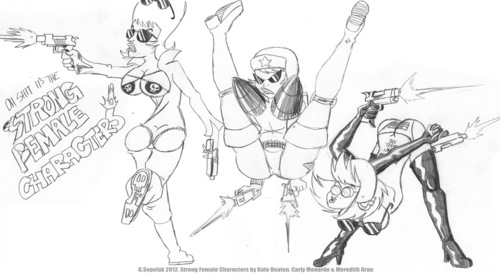
Please read Kate Beaton's entire comic here: http://harkavagrant.com/index.php?id=311   It's GLORIOUS.

Please read Kate Beaton’s entire comic. It’s GLORIOUS. http://harkavagrant.com/index.php?id=311

There’s been a lot of talk lately about the stereotypical “Strong Female Character,” based on the CRAZY idea that we need to start thinking of female characters as . . . characters, period. In that spirit, I offer the following six female characters we really need to stop writing.

1. “The Girl.” A big group of people in a narrative that could easily be non-gendered, and yet there’s only one girl along for the ride. It’s Our Hero, Handsome Scoundrel, Crazypants, Toughest Guy, and The Girl, who has no personality apart from BOOBS. She’s probably sleeping with Our Hero, or he wants to sleep with her, and/or she provides a reason for Our Hero and Handsome Scoundrel to have dramatic tension.

“But honey, I really need your opinion on the appetizers for the cat’s birthday party! It’s only a month away!”

2. “The Clueless Interrupter.” Doesn’t she know how IMPORTANT her man’s task is? She’s always interrupting him while he’s saving the world, fighting the powers of evil, or having a SERIOUS BROCONVO about SERIOUS BROFEELS with her frivolous calls about their upcoming wedding, or what she should fix for dinner, or hey, the house is on fire. Our bros just shake their heads in wonder, watch as he lies like a fourth grader caught in the pastor’s liquor cabinet (“I swear there’s nothing going on, now you just go back to your frivolous ladystuff, OK?” “But I hear robot ninjas in the–” “LOVE YOU HONEY, BYE”), or grab the phone away from him and just hang up or throw it out the window. THAT’LL TEACH HER.

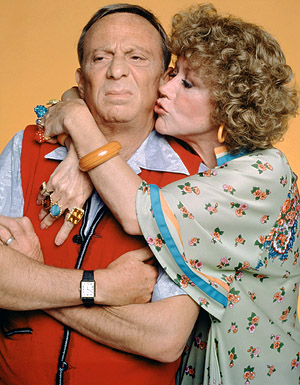
3. “The Woman Whose Sexual Desire Is Comical.” So, and you might wanna sit down for this, people over 40 have sex. People over 60 have sex. Women who are not skinny have sex. Women who are not “beautiful” (whatever the FUCK that means) have sex. Whatever kind of woman you’re imagining as undesirable, she’s having sex. So when you write a character whose main function is to throw herself comically at Our Hero because her very desire is HILARIOUS? I want to punch a wall. Yes, I know all about Restoration comedy and Mrs. Roper, but it’s time for that trope to retire.

THE ROPERS, Norman Fell, Audra Lindley, 1977-84. © ABC / Courtesy: Everett Collection

THE ROPERS, Norman Fell, Audra Lindley, 1977-84. © ABC / Courtesy: Everett Collection

4. “Hooker with a Heart of Gold.I’ve written about this before (along with the “Magical Person of Color/Gay BFF/Disabled Person,” another trope that needs retiring, but since it’s nongendered, I’m leaving it out of this particular post). So I’m just going to be an asshole here and quote myself rather than reformulate this entire train of thought:

Sex workers are not a marker for all women everywhere. If you’re writing a play about ACTUAL SEX WORKERS, then carry on, my wayward son. But if you’re writing a play about, oh, a young man trying to find himself, or a middle-aged man who’s vaguely dissatisfied with life, or a man whose wife just doesn’t understand him and constantly asks him to do horrible things like pay attention to her or fold his own laundry, then inserting a Magical Prostitute who swans into his life and shows him The Way to Happiness, or the Broken Flower Stripper who needs the man to save her from herself and show her that college exists, then I am looking at you with crankyface. Are you writing a play with a sex worker in it? Ask yourself: WHY is she a sex worker? Are you writing about sex workers, or do you just want a naked version of the Magical Person of Color? Does she have objectives of her own that aren’t there just for the male protagonist to correct? Does she have a character, or is she just a racktacular vector for Words of Wisdom?

5. “The Girl Who Doesn’t Know She Wants It.” This is the character who spends the entire piece rejecting Our Hero until she finally “gives him a chance,” or realizes she wanted him all along. Apart from being annoying, this trope is DANGEROUS. He deserves her! What she wants is irrelevant! He’s a nice guy so her lack of interest in him is her fault! Stalking is adorable and romantic! What he wants is more important than what she wants! This character has a sister character known as “The Bitch Who’s a Bitch Because She’s Not Interested in the Main Character,” which is the same thing except she never “gives him a chance,” therefore, she’s a “bitch.”

wonderwoman_post

6. “The Fantasy Feminist.” This woman is a misogynistic caricature of a feminist. She’s very vocal about hating men, not shaving, and blaming ridiculous things (like the lack of her favorite yogurt flavor at the grocery store) on “the patriarchy.” Her function in the work is to impede the main character’s love interest from “giving him a chance” or to act as comic relief. Or both.

7. BONUS ROUND: Male character you need to stop writing: “Guy Who Has No Idea How to Do Normal Stuff.” This is the guy who ends up putting a diaper on a baby’s head, or just sitting the baby in a bucket instead of diapering it. This is the guy who sets the kitchen on fire because he’s watching the game while cooking, or uses his kid’s doll carriage as a beer cooler. Believe it or not, there are tons of men who are actually quite competent at simple, real-life things.

This is happening right now somewhere on your street.

This is happening right now somewhere on your street.

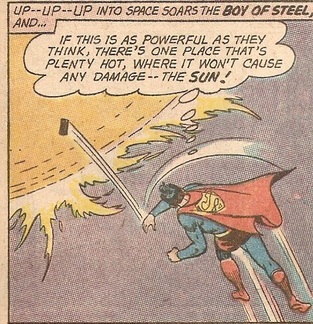
I know there are more! I invite you to comment with the sexist tropes you’d most like to see fired into the sun.

suncrop1_8653

Tagged , , , , ,

Our Role in This as Artists

Like pretty much every blogger, the plan I had for my next post got chucked out the window after the violence at UCSB. I’ve been closely following #YesAllWomen on twitter, the news stories, the many, many blog posts, the many discussions on facebook. Like we all have been. Like so many women, I’ve been repeating the truth: This isn’t at all surprising. This is just the extreme example of what women experience all the time.

The reaction to that, honestly, has surprised me far more than the attack itself. I expected some blowback, but I didn’t expect the AMOUNT and TYPE of blowback I got. Things like, “We need to wait for more information because I didn’t believe a word of that manifesto,” “You need to have more compassion for men. We’re sick of this vitriol,” “You’re just making men angry and scared,” “A lifetime of being nice to women down the drain because of one asshole,” and “Man hating is just as destructive as misogyny.”

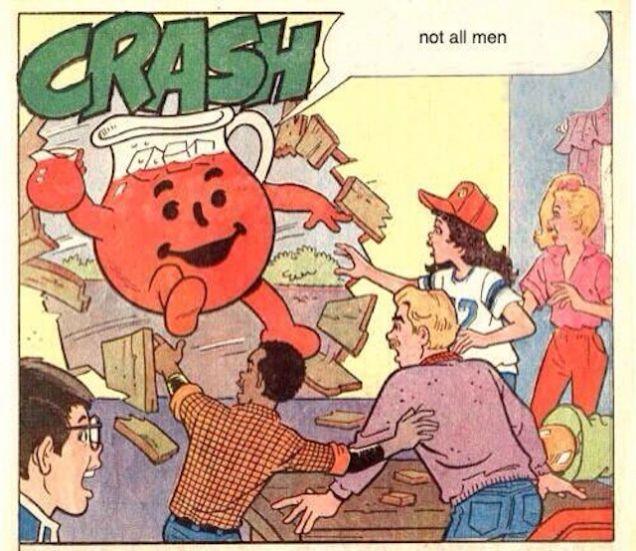
I was shocked, and it’s embarrassing to admit that I still have that much potential for naiveté. I have a husband and two teenage sons, as well as a host of friends I count as male allies in this fight. I’m well aware of “not all men.” I never expected that simply pointing out that cultural misogyny exists, that women experience this kind of violent misogyny regularly, and that the events at UCSB are only exceptional by degree, would cause so many men (and even a few women) to flip so directly out in so many bizarre directions.

feminist-cartoon

I’ve been thinking quite a bit about that. The responses fall into two categories: You’re making men feel bad, and you don’t know what you’re talking about. When a woman is saying “I have, like all women, experienced harassment, abuse and/or violence at the hands of men, so this recent misogynistic violence is no surprise in that context” what makes a man respond with some version of “MY FEELINGS COME FIRST” or “SHUT UP, YOU’RE WRONG”? And of course “NOT ALL MEN,” a combination of both. What makes that small handful of women respond with “STOP MAKING MEN FEEL BAD”?

I’ve read a lot of the excellent blog posts about this issue (examples are here and here), and they all say more or less the same thing: Americans are force-fed a master narrative from birth that describes a man’s place in the world: You deserve access to a woman’s body because you are “nice.” You should be rewarded with a woman (or women) for performing certain tasks and/or succeeding in certain areas. If a woman you want rejects you, just keep trying until you wear her down because you know better than she does what she “wants” or what’s “good for her.” The corollary, of course, is that women who reject a “nice” guy or complain about male harassment, abuse, or violence are committing an act of gross wrongdoing against men as a group.

Image

Enough people have completely bought into these fantasies to make them a pervasively destructive part of our culture. Both men and women have internalized them, perpetuate them, and, when challenged, angrily defend them. They frame anything that might prevent a man from achieving the master narrative as massively unjust. The many Elliot Rodger fan pages on facebook alone attest to that. The conservative backlash that’s working overtime to equate “man-hating” with cultural misogyny is another example. It would actually be funny if it weren’t such a dangerous idea– it’s like equating calling a straight person a “breeder” with a fatal gay bashing.

Where does this destructive master narrative come from? Where is this disseminated in our culture? Film, TV, theatre, books– narrative art. WE MADE THIS. Not alone, but we did, indeed, make this, and we need to start thinking about that. Hard.

Sure, parts of the narrative are thousands of years old. But there are plenty of old ideas we no longer choose to disseminate. We have the choice whether or not we continue to tell this narrative. We have the choice whether or not we continue to reinscribe this into our culture.

I’ve long had the desire to fire every romantic comedy into the sun. I despise romcoms, and I never spent time figuring out why. Now that the answer is in my face, it’s undeniable: they’re one way we disseminate all of the worst ideas about relationships we have as a culture, including (especially) the male master narrative. What was once just an annoyance to me now looks like the worst kind of reprehensible irresponsibility. And that’s just one tiny corner of the art we produce.

It’s easy to say, Oh, it’s just a play; it’s just a movie, etc. But there is no “just.” The narrative art form is POWERFUL. The human brain can experience narrative as if it’s happening in real life. The brain of a person telling a story and a person listening to that story experience neural coupling. Art is where we discuss who we are as a culture; our hopes, our dreams, our fears, our past, our imagined future. It’s the most important aspect of how our culture is created and how it is changed. Stories are the building blocks of culture, and we’re the ones who create and tell those stories.

My feelings about romcoms.

My feelings about romcoms.

I thought a lot about why there are people with relative privilege who can read (for example, this is in no way meant to be comprehensive) “men harass, stalk, rape, and kill women,” “cis people oppress trans* people,” or “white people marginalize people of color” and see the truth in those statements without freaking out, while a whole wagonload of men (and a handful of women) have recently demonstrated they can’t see “men harass, stalk, rape, and kill women” without having a butthurt rodeo and calling it “vitriol” and “betrayal.” Here’s the answer: Some people with privilege are actively committed to social justice, and have been working their asses off. They already know they’re part of the problem and that they contribute to misogyny, transphobia, and racism unwittingly all the time. They’re working hard to root out all the little hidden places where those exist in their psyches. They listen to women, trans* people, and people of color. They’ve committed to the process of figuring it out. They’re not consciously misogynistic, transphobic, or racist, but they’re aware the culture has drilled into them a million little bigotries they’ll always be in the process of locating and squashing.

The people who cannot handle hearing that they, or others of their group, are responsible for systemic cultural injustice or violence are people who are either so protected by their privilege they are truly ignorant of that, and/or who are so invested in their privilege they can’t abide anything that might potentially challenge it. In this case, male privilege is connected to the internalized male master narrative. Women all over the internet have been talking about their experiences with male violence, and the pervasive fear women face every day. The man who responds “NOT ALL MEN” is someone who is far more concerned with how he is being perceived, and his feelings about that, than about her actual experience of violence because from birth he’s been exposed to a culture that has TOLD HIM that anything that impedes his access to her is an injustice TO HIM, including her fear; that he is a better judge of her experience than she is, and that his experience is more important than hers in all cases, even when the match up is rape vs hurt feelings. That’s something we need to change, and because that is, I truly believe, a minority of men now, this change is achievable. I have an idea where to start.

wecandoit

We have to own our part of cultural bigotry if we’re going to be productive adults fighting for social justice, and it’s useless to say “not all men/white/cis people.” Because A. Truckload of duh, everyone already knows that; B. It’s derailing someone else’s story of oppression with your story of butthurt; C. It doesn’t make a damn bit of difference that it’s not all men/white people/cis people because it’s CLEARLY still FAR TOO MANY; and D. Uh, yeah it is. It really is all men, all white people, all cis people, even if you’re trying. Even if you’re trying hard. All you can do is KEEP TRYING. There is no bigotry master cleanse you can go on that will allow you to excrete all the bigotry the culture put into you. All you can do is keep trying. And listen.

We, as artists, however, are uniquely positioned as creators of culture to effect real change. We need to start thinking about all the many ways we create the culture that instills misogyny (and all bigotries against difference) into people.

As artists who create culture, we can take the first step by pinky swearing to each other that we will STOP disseminating that male master narrative. Stalking a girl, hitting her boyfriend in the face, or tricking her into having sex will not “win” someone a woman in real life. A woman who rejects a man is not in a “pre-yes” phase of the real-life narrative. (“Just give him/me a chance” is a line that should automatically cause your computer to crash as you type it.) Being the “nice guy” will not automatically “win” someone a woman in real life. (As many have said before me, women are not machines into which you put “nice” coins and sex comes out.)  Winning a contest, landing a great job, or overcoming some kind of adversity will not automatically “win” someone a woman. Women are not prizes granted for achievements. The male master narrative is a destructive lie, and we need to stop using our platforms to tell that lie. Writers and producers: I am looking at you. WE CAN DO BETTER.
interrupt

I’m not saying we need to stop creating male-centered work, or stop showing sexy-looking women in our work, or whatever it is you’re imagining if you’re having the OUTRAGE feels and getting ready to make some tiresome comment about CENSORSHIP or (ughbarfshutup) POLITICAL CORRECTNESS. Make your boob-centered posters. Make your love stories. Make art about men. There’s no need to obliterate every straight male thing. There are straight men in the world, and their stories have as much value as anyone else’s. What I’m saying is: Let’s stop telling straight-up lies about a man’s rights to a woman’s body. Let’s think twice about putting time and money into work that approvingly shows a man “winning” a reluctant woman because he was “nice” or won a ski-off or punched a guy. Let’s think twice about putting time and money into work that positions a woman’s “no” or resistance as meaning “try harder,” and that stalking a woman is romantic rather than terrifying. Let’s think about what we’re putting into the world with our art.

Tagged , , , ,

Speaking from Privilege

I posted the other day on facebook and twitter that white privilege and thin privilege are the toughest scrappers in the game– they’ll throw any kind of punch they can think of to preserve their privilege.

I posted that because there have been a handful of responses in the blogospere to my blog post of the other day, The Weapon of Invisibility, that advocate for “taking a step back” and “approaching these issues with nuance” and “allowing for respectful appropriation.” In other words: Go easy on the privileged when we cross boundaries, because sometimes we do so accidentally, or with respect in our hearts. Not one had a word to say about the thin privilege portion– the point wasn’t even WORTH MENTIONING. Ah, the weapon of invisibility. But I digress.

Listen, I get that you’re frustrated and want activists to go easier on people who cross boundaries of cultural appropriation. I see it all the time. You’re terrified of fucking up– or that you have already massively fucked up in something you wrote, staged, or said. Relax– of course you fucked up. So did I. So has everyone. But that doesn’t mean you get to decide what respect looks like for marginalized people. You have to live with the fact that, if you have privilege and you wish to fight for social justice, you do not create the terms of that and must listen carefully to the people who have been marginalized. If the privileged are the gatekeepers, then nothing has changed.

And yes, I completely understand how scary it is. But you cannot sit from your place of privilege and decide which cultural appropriation has crossed the line and which is respectful because, quite frankly, that is not your decision to make. What does that look like? “Dear people of color, sorry you’re all so pissed, but I believe that production was respectful borrowing, so please calm down”? Privilege cannot decide the terms of this if the goal is social justice. All that accomplishes is preserving privilege.

We all have some types of privilege and we all have some areas wherein we lack privilege. In those areas wherein you have privilege your job is to listen and allow those without privilege to set the terms of the discussion– WHAT crosses boundaries and HOW.

In those areas wherein you lack privilege, you get to set the terms of the discussion. You get to decide when boundaries have been crossed. And when, as so often happens, someone with privilege you lack comes along and tells you that you aren’t approaching the issue with “nuance” or that you should give someone the benefit of the doubt because they were appropriating with “respect” (as if intent erased results, but fine), then you have every right to be outraged at the attempt to silence you, at the attempt of privilege to retain its privilege by seizing control of the terms of the discussion and turning it into a debate.

I understand that we’re all scared. I’m scared, too, both for the areas in which I have privilege– How many times will I get it wrong today?– and the areas in which I don’t– How many times will I be told that my outrage is unjustified today? How many times will my feelings of marginalization be met with “You people are too sensitive” or “I didn’t mean it that way, so relax,” or “It’s just a joke/play/school production/Hollywood film/etc”? Because EVERY SINGLE TIME I speak out, someone with privilege I lack is there within moments to say ALL of those things to me.

Just take a deep breath and listen. When people who lack privilege you have are speaking out about that lack of privilege, and how it looks every day, and how their culture is appropriated, LISTEN. BELIEVE THEM. And use your place of privilege to speak out as an ally.

When you lack privilege and want to speak out, know that there are allies who WILL listen to you, support you, and yes, screw it up, but still keep trying. Don’t let the people who tell you that your outrage isn’t justified silence you. I see you. I stand with you. And I know you stand with me, in my fear, in my outrage, in my strength, in my mistakes, in my triumphs. There are millions of us, and for the first time in history, we’re all saying NO.

Tagged , , , ,

The Weapon of Invisibility

Image

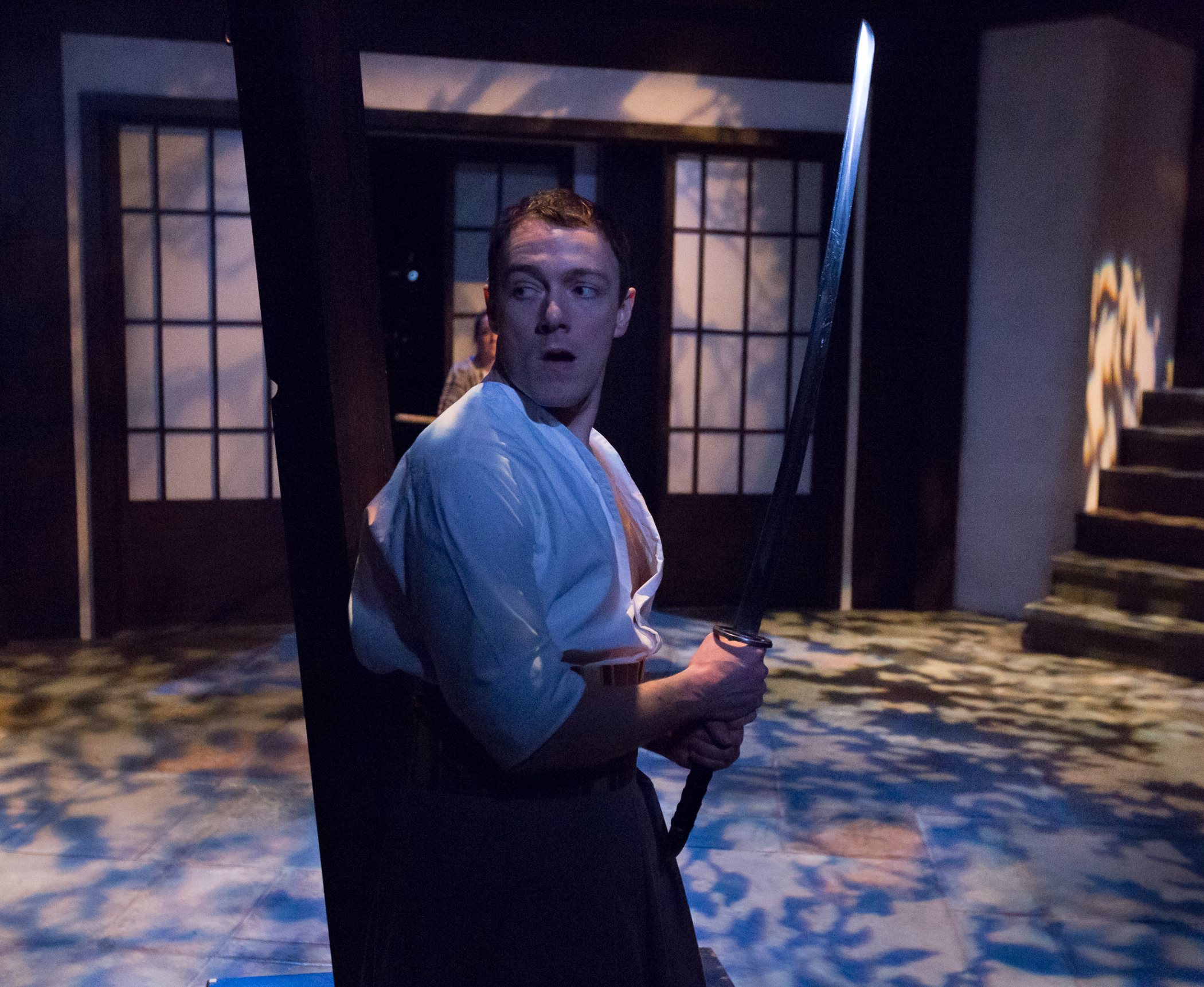
Jered McLenigan in Lantern Theater’s Julius Caesar. Photo by Mark Garvin.

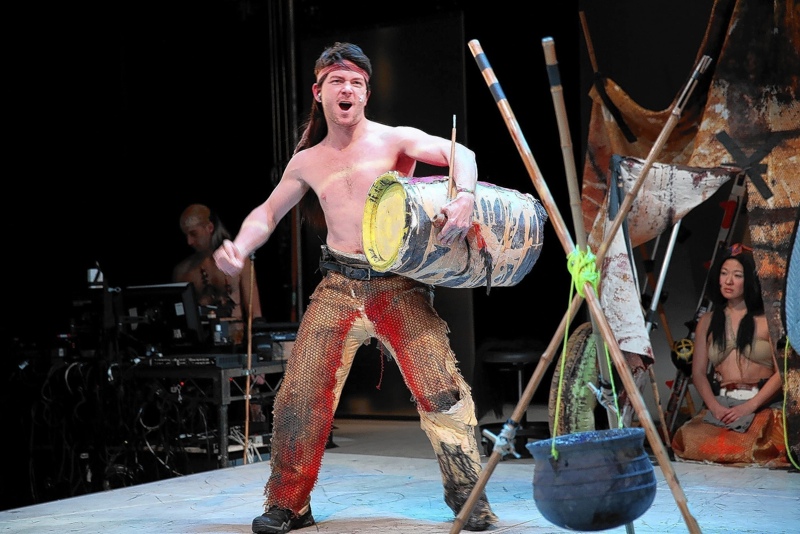
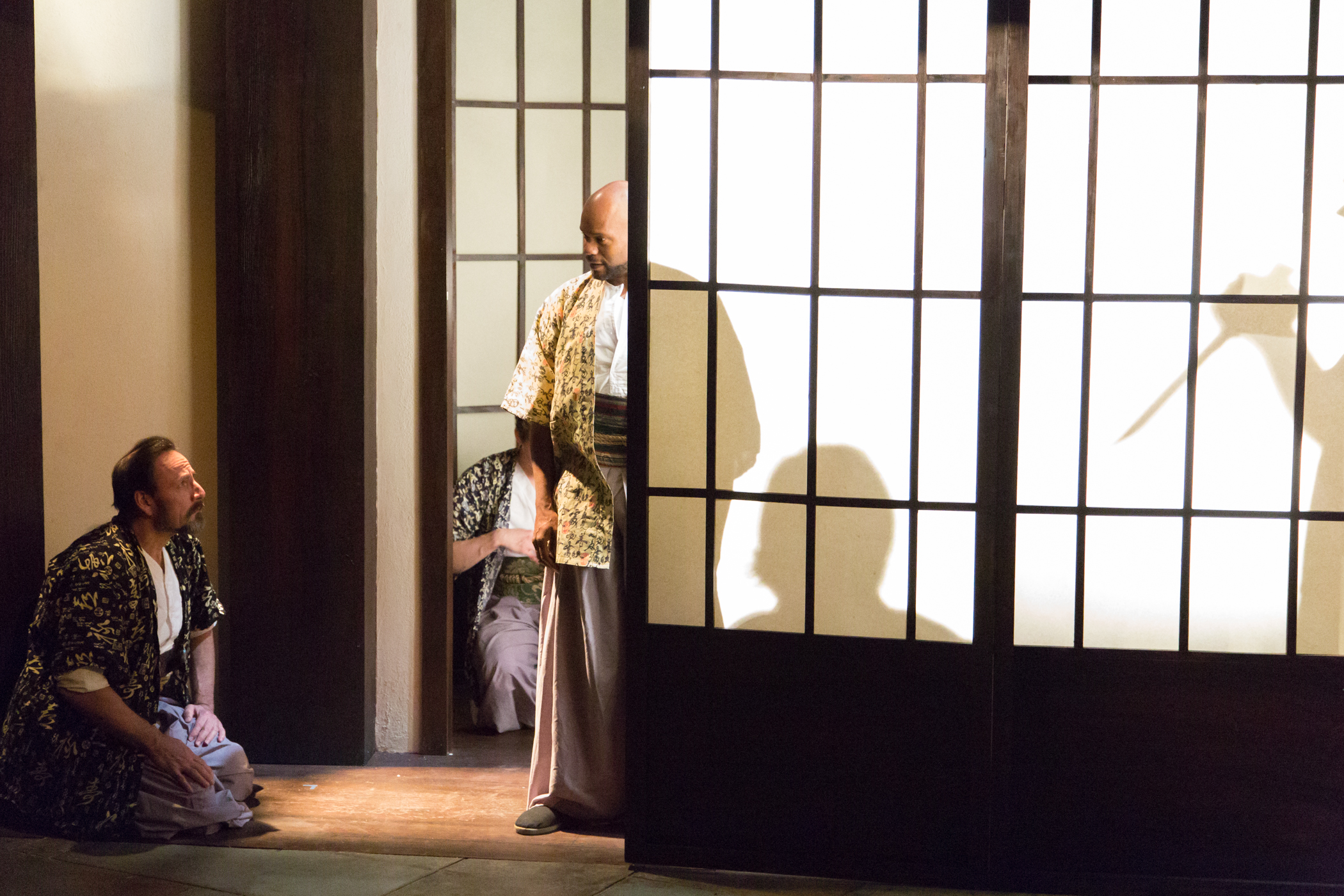
This is a piece about the Wooster Group’s production of Cry, Trojans!, Lantern Theatre’s production of Julius Caesar, the Lean In/Getty stock photography collaboration, and my head finally exploding all over my computer.

Privilege is a squirrelly thing. When your privilege is working for you, it’s undetectable to you. That’s its job: to silently ease your way through life by protecting you from the thousand little (or big, or enormous) roadblocks people without your privilege face every day.

Two examples from my own life on both sides of privilege:

I taught for a long time at a film school. I taught early-career filmmakers about casting, working with actors, and script development. One semester, a young Black man had written a short film script about four young Black men being pulled over. The police officer asked all four for their IDs. I told this young filmmaker that he would need to clean up his narrative– that it didn’t make sense for the officer to ask for the IDs of passengers unless he had some reason, and the script needed to provide that narrative bridge. I had four young Black men in that class and all four were immediately astounded. They had been asked for their IDs as passengers every single time they had ever been in a car that had been pulled over. They believed it was normal. I had never once been asked for mine as a passenger, and had never even heard of such a thing. I had been protected by my privilege so completely that I had had no idea I was even being protected. I began to wonder what else these young men were experiencing that was invisible to me.

When my son was little, he went to a Jewish preschool. I didn’t talk to him much about Christmas or Easter. When he was almost three, we were headed into a supermarket that had just been decorated for Christmas, as they are always an orgy of Christian heritage between September and January. My son pointed at a giant Santa and said, “Look, Mommy! A king!” And I was overwhelmed with unexpected gratitude that my son was, for the moment, protected from the full knowledge of his outsider status in our culture. It wouldn’t take long for him to understand. But for the moment, his lack of Christian heritage privilege was completely unknown to him.

What we know about our own privilege is always a process, and one we have to struggle for, since it involves active curiosity and empathy, two things humans are just abysmal at, despite our constant assurances to each other of the contrary. But an understanding of the shape of one’s privilege, as hard-won as that is, is just the first step if you’re interested in social justice. The second step is, you know, WORKING for social justice. Unfortunately, that involves actively working against your own privilege, and there is nothing humans hate more than that.

So we find subtle ways to fool ourselves (and others) into IMAGINING we’re working for social justice while ACTUALLY reinforcing (in grad school, we called this “reinscribing”) our own privilege and cultural superiority.

Image

Cry, Trojans! Photo by Paula Cort.

The Wooster Group is well known to you if you have a degree in theatre, or were plugged into the theatre community in the 80s. Most people know about it as the New York-based company that gave birth (so to speak) to Spalding Gray. Some people will recall its tradition of experimental deconstructions of classic works and nonlinear, aggressively designed original works in what we once called a “postmodern” style. Headed by Liz LeCompte, Wooster Group has an almost legendary status for what was, for its time, very experimental theatre. Lantern Theater is a company in Philadelphia that’s in its 18th season. A quick glance at their production history reveals a very prosaic aesthetic, featuring unremarkable, utterly safe works such as The Screwtape Letters by C.S. Lewis, The Liar by David Ives, Private Lives by Noel Coward, and The Beauty Queen of Leenane by Martin McDonough, in addition to lots and lots of Shakespeare.

So here comes the part where my head begins to explode:

These two companies, almost at completely opposite ends of the theatrical spectrum, both pulled the exact same stunt at the exact same time: They staged shows featuring non-white characters and cast those characters with primarily white actors. Cry, Trojans!, an adaptation of Shakespeare’s Troilus and Cressida, was originally conceptualized as a collaboration with the RSC and performed in London, and was reconceptualized for an American run. Originally, the Americans played the Trojans and the British played the Greeks, rehearsing the scenes separately until coming together just before opening. Wooster Group played its Trojans as “Native Americans” against the British playing the Greeks as modern soldiers. For the American run, LeCompte decided to make both sides “Native American,” using a fusion of appropriated costumes, props, and other imagery gleaned from books, films, and other materials– and an almost entirely white cast. Lantern Theater, remarkably, staged Julius Caesar in feudal Japan– but without Japanese actors, instead casting seven white people and one Latino, with African American actor Forrest McClendon as Caesar. (I highly recommend looking at actor Makoto Hirano’s letter to Lantern Theater about the cultural appropriation in their production.)

Image

JC Guzman and Forrest McClendon in Lantern Theater’s Julius Ceasar. Photo by Mark Garvin.

At this point, when the national theatre community has been decrying cultural appropriation, yellowface, brownface, and the like loudly and vigorously and at great length, it seems almost a deliberately retrogressive act. But here’s where privilege steps in and allows people to make decisions like these without understanding how deeply problematic they are.

Both Liz LeCompte and Charles McMahon (the director of Julius Caesar) believe they are working for a HIGHER CAUSE.

“Plus it’s not about that. It’s about everything bigger…We love the piece, we love the stories, we love the films, we love the people…We wanted to tell the story in this way and make it so big that this [lack of direct Native American input] wouldn’t be a problem.” — Liz LeCompte, quoted here (emphasis mine)

“’We wanted to get away from all of the clichés and assumptions about classical Rome, with people walking about in togas and looking like statues from antiquity,’ says artistic director Charles McMahon. ‘Our associations with that make it feel like we’re saying, ‘This is old, this is long in the past” . . . McMahon also wanted to avoid the specificity that comes with updating the play to the modern day. ‘We didn’t want to say this play is like Libya, or this play is like Central America or Russia or North Korea, because that’s not the point either. I think there’s something universal about it.‘ McMahon soon realized that the stoicism of Caesar’s Rome had strong philosophical parallels with Japan’s tradition of Zen Buddhism. ‘The ideas in this play of being detached from the results of actions and being emotionally remote from the events of the world are present in the great samurai epics. So these themes all seemed to add up to feudal Japan being a very resonant scenic and thematic environment to put the play in.'”– read Shaun Brady’s  whole article here, emphasis mine

LeCompte clearly thinks that her artistic vision is “bigger,” and therefore more important than issues around cultural appropriation or racism. She believes that the importance– the “bigness”– of her artistic point of view about Shakespeare’s Troilus and Cressida should eliminate the need for an examination of the racial politics she puts onstage. She overtly asserts her artistic vision’s cultural superiority over any issues of race. She has no interest in an artistic exploration of Native American cultures. She’s appropriating various aspects of Native American cultures to make what she overtly states is a more important artistic point.

MacMahon states that the way he could get his (mostly white) audience to associate emotional distance with Julius Caesar was to visually associate the play with SAMURAI FILMS. He has no interest in an artistic exploration of feudal Japan. He’s interested in importing a feeling of stoicism, manliness, and ass-kicking fighters to a mostly white audience, and is appropriating the cultural artifacts of fuedal Japan as an artistic shortcut. He’s appropriating a very specific culture and calling it “universal” because he’s imagining the feeling he gets from watching Kurosawa, not the cultural heritage of a real people whose descendants are alive and marginalized.

Image

Cry, Trojans! Photo by Paula Cort.

LeCompte and McMahon are using artifacts of other cultures– both groups currently marginalized in the US– while shutting out the people of those cultures from the artistic process because they believe their artistic vision is MORE IMPORTANT. They see these cultures as visual art available for their use, not as an inextricable part of the heritage of real, living people. They have reinforced their own privilege and cultural superiority, maintained the invisibility of those marginalized peoples, AND set themselves up as answering to a higher artistic calling– in LeCompte’s case, the “bigger” nature of her artistic vision, and in McMahon’s case, “universality.”

The Lean In/Getty stock photo collaboration is pretty much the same thing, but even more blatant. It purports to be a massive new tool for social justice while instead overtly reinforcing privilege to an almost shocking degree. I SHOULD BE USED TO IT. I knew what to expect. But I was still shocked.

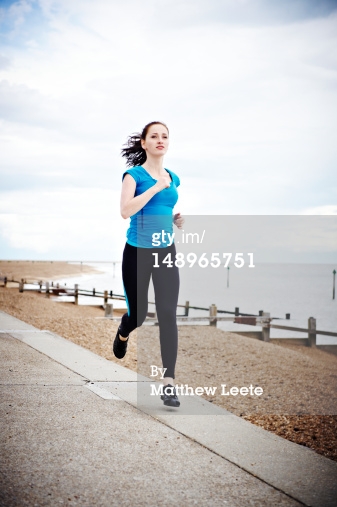
If there's one thing the Lean In/Getty collection has taught me, it's that photographers love to take pictures of young white women running. It's like CATNIP to them.

If there’s one thing the Lean In/Getty collection has taught me, it’s that photographers love to take pictures of young white women running. It’s like CATNIP to them.

The Lean In/Getty stock photography project crashed onto the internet in a loudly self-satisfied manner, proclaiming itself to be a feminist project– a revolution in stock photography that shows women in new, “more empowering” ways, claiming it will change the way women are perceived in America by changing the imagery associated with us. I reviewed all 2763 images. I set aside any containing children, as that’s a discussion for a different day. I also compared the images to the ones you can already find on existing stock photo sites.

One thing that’s immediately apparent, and for which the Lean In/Getty collection deserves a basket of high-fives, is its inclusion of older women. There are many more older women depicted than you would expect to find in such a collection, and it was damn refreshing. I loved the inclusion of photos of older women being active– biking, dancing, swimming. Another thing the collection does right is show pictures of women doing jobs, as opposed to sexy models pretending to do jobs.  Although the vast majority of workplace photos show upscale offices or studios, the few that show blue-collar workplaces do show women who look like they actually belong there, as opposed to a scantily-clad model licking a hammer.

This . . .

This . . .

. . . as opposed to this.

. . . as opposed to this.

On the other hand, exhaustingly, almost ALL of the women in these photos, elderly women included, conformed to traditionally acceptable, thin body types.

getty.elderly

Out of all the images of adult women without children, exactly FORTY-THREE (by my count) of the pictures in which women’s bodies were visible depicted women who were not thin. That’s one and a half percent. Of those 43, only FIVE showed non-thin women performing any kind of fitness activity, although the Lean In/Getty collection is rife with with women performing fitness activities (especially white women, whose workout depictions make up 10% of all photos, compared to 2.2% of all photos depicting women of color performing a fitness activity or in fitness clothing).

Unbelievably, depictions of professional women were even WORSE. Exactly ONE picture (that I could find– maybe you’ll find one more and bring the grand total up to two) depict a non-thin woman in anything that could be remotely construed as a professional or business setting, although the collection features literally hundreds and hundreds of business-oriented pictures. Searching “business” gets over 600 results, while “professional” gets over 800 results, and they are almost all of thin women. Considering 60% of women in the US are not thin, that’s an aggressive shut-out that feels deliberate. It’s just not believable that such a result was entirely accidental. Since the Lean In collection has been non-stop screaming its feminist awesomeness as empowering for all women since even before it dropped, one is left wondering why the only women worth “empowering” are the 40% who already enjoy thin privilege.

The few non-thin women depicted in a workplace are depicted in low-wage blue collar or service industry jobs (factory workers, custodians). There are a few portraits, mostly of older women. Very few young, non-thin women were depicted at all. For the record, there are precisely two pictures of a visibly disabled woman, both of the same very fit athlete.

Let’s look at some of these pictures:

Image

From the Lean In/Getty collection, from the first page of images returned from the search “business”

Image

From the Lean In/Getty collection, from the first page of images returned from both searches “business” and “professional.”

Image

From istockphoto.com, from the first page of images returned from the search “business.”

Image

From shutterstock.com, from the first page of images returned from the search “professional.”

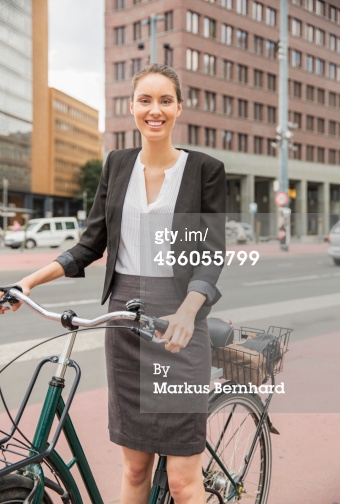
Lean In/Getty gets a high five for returning images such as this when searching

Lean In/Getty gets a high five for returning images such as this when searching “professional.”

But most of their images look like this.

But most of their images look like this.

One of a tiny handful of pictures in the collection of almost 2800 depicting a young, plus-sized woman

One of a tiny handful of pictures in the collection of almost 2800 depicting a young, plus-sized woman.

For every picture of a plus-sized young woman, there are literally over 700 of a woman with this body type.

For every picture of a plus-sized young woman, there are literally over 700 of a woman with this body type.

While the Lean In/Getty collection is doing much better with older women than other stock photography sites, it is actively reinforcing the thin privilege the woman behind the Lean In brand, Sheryl Sandberg, and the woman from Lean In who supervised the stock photo project and curated its imagery, Jessica Bennett, currently enjoy, and it can’t be completely irrelevant that Sandberg is now in her mid-forties. What the Lean In project has done, under the guise of “empowering women” through “changing imagery” is reinforce the cultural privilege and dominance of women of Bennett’s and Sandberg’s body type while making an attempt to create more cultural acceptance for women of Sandberg’s age and older, all while blatantly shutting out women without thin privilege, rendering them virtually invisible. While pretending to empower women as a whole, they have instead reinforced their own privilege.

Celebrating with salad! Yes, this was one of the photos the Lean In collection returned when I searched for

Celebrating with salad! Yes, this was one of the photos the Lean In collection returned when I searched for “celebration.”

Invisibility is a weapon, and it’s the one we most often use to reassert or reinforce our privilege and cultural dominance. If THOSE PEOPLE aren’t there, it’s because they aren’t IMPORTANT ENOUGH TO BE THERE, and the project’s focus is on “more important issues” anyway. You only get answers to the questions you ask, so be prepared, if you want any credibility in this fight for social justice, to ask WHO IS MISSING? And WHY?

Not every project needs to have a representative from every single group, but when we appropriate someone else’s culture while keeping them invisible, or when we purport to stand for a group’s empowerment while shutting out over SIXTY PERCENT of them, we have a problem.

Tagged , , , , , ,

Fathering Daughters: You’re Doing It Wrong

Image

I’m choosing to accompany this article with pictures of gorgeous women who don’t conform to the beauty myth. This is Malaysian model Loretta Lucia Kwek Leng Choo. Picture from thestar.com.

I’ve seen several articles about fathering daughters recently, all focused on combating the beauty myth, and they’re all about things dads should SAY to their daughters. This is bullshit. Or, more accurately: It’s less than half of the story.

Most men have only a vague understanding of what it’s like to live as a woman under the constant, unrelenting onslaught of cruelty the beauty and fashion industries deliberately create– an onslaught supported wholeheartedly, and continually reinscribed, by our culture. No matter how much you try to “protect” her from Disney, or the media, or whatever you think sends her the wrong messages, she is getting those messages, all day, every day. That she MUST be unhappy about her body. It’s not lean enough, strong enough, hairless enough, light-skinned enough, shaped properly. That she MUST be unhappy about her face. It’s not pretty enough, “refined” enough, it’s not perfectly even-toned, blemish-free, “flawless.” Unhappiness sells products. Our culture is exceptionally supportive of the idea that women’s bodies are in constant need of some kind of product or procedure to attain acceptability.

Image

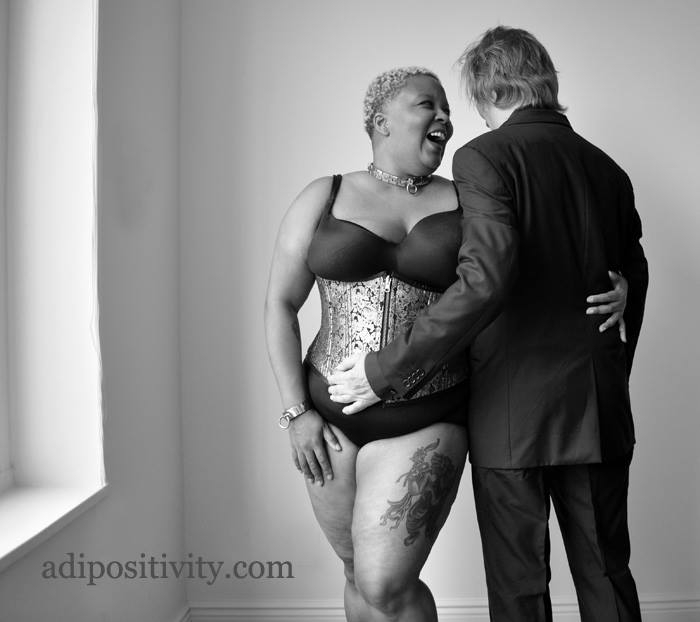
Mollena Williams, photographed by Substantia Jones for adipositivity.com. Check out Mollena’s blog, The Perverted Negress, at mollena.com.

It’s inescapable, relentless. It’s so normative that people who speak out about it are slammed for overreacting, or said to be speaking from a position of sour grapes. It starts at birth. You cannot be in public or consume media for more than a few minutes without encountering it. I’ve barely described the tip of the iceberg. There’s a lot to be said about the beauty myth, misogyny, and fathers and sons, or mothers and daughters, or mothers and sons, or parents and their gender non-conforming kids. The existence of those important issues, however, does not erase or even diminish the importance of this one. The father-daughter relationship is powerful.

Rei Bennett Photography - Kitty Creme 07

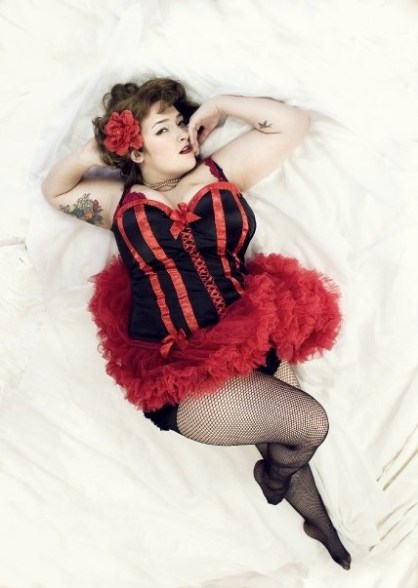
Clothing Designer Catriona Stewart, photographed by Rei Bennett. Catriona’s blog, Lingerie, Latex & Life, can be found at catrionastewart.blogspot.com, and Bennett’s site can be found at reibennett.co.uk.

So what is your daughter learning from YOU? She sees what you look at, how you look at it, and what you say, especially when you do not want her to. If you think she isn’t silently comparing herself to the pictures, people, and videos to which you react positively, you’re delusional. Before she experiences the male gaze from any other source, she’s experiencing it from you, and she’s learning ALL OF IT. I’m not saying don’t watch porn, or don’t look at women. I’m not here to Carrie Nation your cock. Just remember that everything you say, do, and consume while she is within earshot of you is making an impact on how she sees herself. (Determine how far away you can hear a whisper and add 20 feet if you want to calculate Child Earshot Value.)

Image

Cassie Rosenbrock. Photo by Heather Elizabeth. Check out her work at heatherelizabethphotography.com.

I know you’re not critiquing your daughter’s looks because you’re not a huge jerk. But if you want to have any hope of combating the massive monolith of cultural messaging that tells her that her worth is related primarily to her looks, you have to be deliberate, and relentless. It’s not enough to just tell her she’s beautiful the way she is, or that intelligence or kindness are more important than beauty. She’s watching everything you do and say. If you’re contradicting your platitudes with your behavior every day, she knows which one to believe.

In other words, you have to walk the walk, not just talk the talk. If you tell her that she’s beautiful just the way she is, but she sees you react positively ONLY to pictures of photoshopped skinny young white women, you might as well have never said a word. She sees you define “good” and she is already calculating her distance from it. If you think she’s too young, you’re delusional. Can she walk? She’s old enough to understand your behavior.

plus.amy

Model Amy Marie, photographed by Aug Glamour. See Amy’s portfolio at modelmayhem.com/627470.

The world is a big, messy, unfair place full of contradicting objectives, needs, goals, and desires, and that’s just in one person. Decide which of those you want to privilege in any given moment. The answer doesn’t always have to be the same. All I’m saying is: Don’t tell yourself you’re fighting for your daughter if you don’t understand that she’s watching you ALL the time, not just when you want her to.

From Ladybug Pin Up, a photography project in the Dominican Republic. Check out their work at ladybugpinup.com.

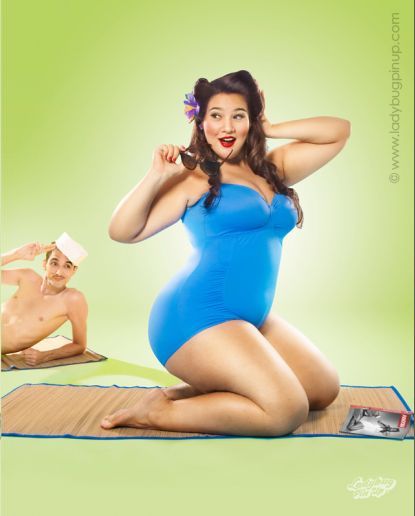
From Ladybug Pin Up, a photography studio in the Dominican Republic. Check out their work at ladybugpinup.com.

Tagged , ,

“I’m Not Apologizing for Voicing My Opinion”: Entitlement Goes to a Middle School Play

So someone I know recently went to his kid’s middle school play. Awwwww, adorable, right?

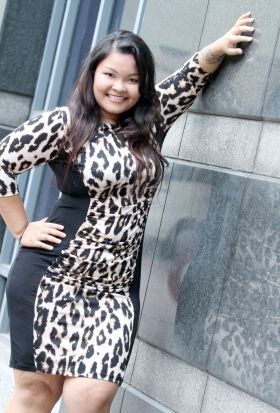
During the event, he posted a picture of a beautiful Black woman– surely another parent or relative (because who else goes to school plays?)– in a fit-and-flare leopard print dress with short sleeves, a modest neckline, and a hem that hits just above the knee. She was also wearing boots and a vintage-inspired updo. It was a secretly taken picture. She is smiling. She looks beautiful.

Image

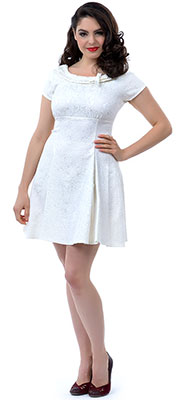
Imagine a leopard-print version of this, worn by a smiling, gorgeous Black woman with fierce boots and an adorable updo.

His comment on the picture was that her outfit is not appropriate for a “jr high play (sic),” but more appropriate for a club “or, better yet, a street corner.” He secretly took a picture of another parent at a school event, posted it online, and called her a whore. The wind was just . . . knocked out of me.

Several people called him out. The first few posts were all curious, on the order of “What? That outfit looks fine to me,” or “Why?” Mine was a little more detailed. I agreed with the other commenters that there was nothing wrong with the outfit, and that I’ve taught in similar outfits, although animal prints are not my personal style. I told him that it’s never appropriate behavior to post a secretly taken picture of a woman–a fellow parent at a school event!– that includes her face and calls her a whore, no matter what your opinion is of her outfit.

He reacted angrily. He said that my comments were “subtext crap” and refused to admit that his behavior was inappropriate in any way. He told me I needed to stop being “every females champion (sic).” He told me “If you don’t like it, that’s not my problem.” He told me, “I’m not apologizing for voicing my opinion.” He told me “I’m not going to sit here and have you ridicule me for voicing my opinion.” (Of course I wasn’t actually ridiculing him in any way, merely stating the things I’ve posted above.) He told me, “I thought you were a better friend than that.”

I received a couple of messages from people who had seen the discussion, thanking me for standing up to him. One called me her “hero for the day.” It was touching.

But the incident still nags at me, and I need to speak out. I need to speak out because this one man’s behavior reflects a pervasive cultural pattern of behavior that plagues women and people of color every single damn day in this country. Enough is enough.

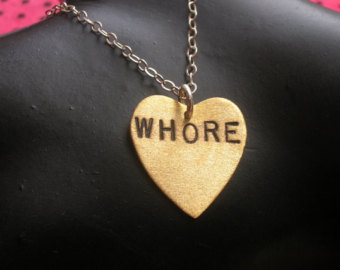
This necklace is sold by the etsy shop MetalTaboo. They have a lot of great stuff, so check them out!

1. She was not dressed inappropriately. When facebookland responded with that, his response was “You weren’t there. I was,” as if being in the physical presence of her magical Black sluttiness would make her dress lower cut? Shorter? What, exactly, was he objecting to about her outfit? A brilliant friend of mine jokingly speculated a subgroup of people who get their information about sex workers from 80s cop shows and believe leopard print = prostitute. The outfit was actually quite modest. Was it her figure? She was what used to be referred to as “va-va-va-voom.” She was a busty, curvy goddess– a full-figured hourglass head-turner. Was it her weight? Her curviness? Would he have objected to her outfit had she been a skinny white girl? It’s unclear, precisely, what he was objecting to, and he refused to clarify. The truth is, he created a rule in his own mind and punished her publicly for breaking it. He targeted her for reasons of his own. He targeted her because he could.

2. He secretly took a picture that included her face. If the picture had been from the neck down, or from behind, it would at least have had some tiny, tiny speck of respect for her as a human being. But he included her face. And of course she wasn’t a complete stranger at a mall he’ll never see again. She’s a fellow parent at the school, or a relative close enough to come to a middle school play on a Thursday night after work. The chances of running into this human being again are high. The chances of having, or at one point acquiring, mutual friends is high. This woman was reasonably identifiable within his social network reach. What does he think this woman, her partner, HER CHILD would think? Would he have done this if the woman was white? Would he have done this if the woman was walking with a man? He feels well within his right to publicly point out a woman and name her a whore. Would he be OK with another man doing this to his wife or daughters? Of course not. But this woman, in his opinion, deserves it. She is not worth basic human consideration to him.

3. “I’m not apologizing for voicing my opinion.” We’ve already covered that he targeted her simply because he could, and that he felt entitled to put her face on the internet and label her a whore. Now we get to the inevitable part where he defends this behavior as his right.

When called out by multiple people, he said he’s entitled to express his “opinion.” He clearly feels that the scope of his “opinion” includes public shaming (but only for others, as we’ll get to in a moment). He does not see the difference between having an opinion and expressing that opinion publicly. He has no fucks to give about that public expression’s consequences for OTHERS. Despite our dissent, he couldn’t wrap his mind around the fact that the picture he posted belied his opinion, and instead insisted that the OPINION redefined THE PICTURE– that his opinion was more REAL than the EVIDENCE. (“You were not there. I was.” “It must just be the picture. You had to be there. It was inappropriate.”) He believes he has every right to state his opinion (no matter how hurtful to others), that his opinion should be accepted as fact without question despite evidence to the contrary, and that there is no possible way the public expression of this opinion could be wrong in any way. “Voicing my opinion” is, for him, a magic formula of entitlement.

4. He believes his actions should have no consequences, and is shocked and appalled when they do. It comes as no surprise that someone who targets a woman almost at random, feels entitled to put her face on the internet and label her a whore, and defends this behavior as his right should also believe that this behavior should be completely without consequence– for HIM. One wonders what school admin would think if they discover a parent is secretly taking pictures of other parents at school events and posting them to the internet with nasty comments. One wonders what this woman’s attorney would think.

I know what I think: That all too often men think they are perfectly entitled to claim authority over women’s bodies and determine when and how we are displaying ourselves “inappropriately”; that all too often white people think they are perfectly entitled to claim authority over Black bodies and determine when and how they are displaying themselves “inappropriately.” This struggle over “appropriate display” has tentacles into every aspect of our culture, including my own world of theatre. WHO is appropriate for WHAT role– WHO determines what body is acceptable to inhabit Lady Anne or Biff Loman– and HOW those determinations are applied– are processes that many in this community are constantly fighting to open wider. Representation– and who controls the definition of “appropriate”– MATTERS.

This facebook debacle is one example out of millions, happening every day. THIS MATTERS. Am I “every females champion”? FUCK YES I AM.

One of the many Black Madonnas of medieval Europe. This one is from the 12th century and is in Barcelona.

One of the females I champion. One of the many gorgeous Black Madonnas of medieval Europe. This one is from the 12th century and is in Barcelona.

I was much less . . . fiery in the actual discussion, posting about four or five comments, most in response to his assertion of entitlement and (inevitable) accusations that I was attacking him. Of course, I never once attacked him. Instead I told him he did not have the right to attack HER. My comments were all respectful (no name-calling, no personal belittling), stating that he was not entitled to post secretly-taken pictures of other parents and call them whores, that her outfit was actually quite modest, that I have several outfits very much like it.

His reaction was unfocused rage. He accused me several times of “ridiculing” him, and twice told me, “Don’t you know when to quit?”

speakthetruth

And THAT, I think, reveals the heart of the matter. He felt entitled to the right to ridicule a Black woman for displaying herself publicly in a manner he found unacceptable. He did not, however, believe that *I* was entitled to the right to disagree, and that my public disagreement with him was “ridicule.” Of course I wasn’t actually ridiculing him in any way. I know how, believe me. He was automatically interpreting a woman’s dissent as ridicule. I was challenging his authority. He felt entitled to claim authority over a woman’s body without consequences, and did everything he could, including deleting my comments, to silence my dissent.

His twice-repeated “Don’t you know when to quit?” came while he was still directing comments at me– comments I was expected to take silently.

5. “This is MY facebook timeline . . . I’ll remove content from my timeline I don’t wish to have there.” Apart from the obvious (there are still ToS, harassment laws, and fucking basic human decency), he’s right that it’s his timeline and he can control its contents. He has every right to remove content from his own timeline that’s critical of his actions.

When I told him I agreed that he had every right to delete my comments, and that I would, since I had quite a bit to say about this issue, blog about it instead (assuring him I would not reveal his identity), using my own venue for my own thoughts, he accused me of “throwing him under the bus.”

He believes, correctly, that he has every right to delete comments that are critical of his actions or unflattering to him from his own timeline. But he also believes he’s entitled to post whatever unflattering content he likes about other people, and– this is the real kicker– that no one else is entitled to post anything critical or unflattering about him in ANY venue.

Of course it never occurred to him that he was throwing this beautiful Black woman “under the bus.” In his mind, she DESERVES IT by daring to appear in public in an outfit of which he disapproves. He feels that he deserves sympathy, empathy, and compassion, but she does not deserve the like.

This is the very soul of entitlement. He believes he intrinsically deserves, and should automatically receive, a level of consideration and compassion he is unwilling to extend to others.

This is an attitude I see far too often about women, Black people, people in poverty, LGBT people, people who exist outside of any of the basic markers of privilege in this country. We are not entitled to the same treatment because people like this refuse to see us as fully human, as real, as entitled to compassionate treatment as THEY are. They feel entitled to mete out punishment and shame to us as they see fit, and howl with rage when met with dissent. They do everything within their power to silence or discredit dissent.

DO NOT LET THEM SILENCE YOU. Enough is enough.

155753_v1

Tagged , , , ,

Just Out of Curiosity, WHAT THE HELL IS WRONG WITH YOU, Commercial Costume Companies?

Image

For little girls. But it’s OK because all police uniforms include a miniskirt, right?

This is the time of year when Concerned Citizens, such as MYSELF, like to point out how uncomfortably sexualized Halloween costumes have gotten, especially for little girls, and how the sexualization of Halloween costumes for girls and women of all ages is a symptom of the way in which women are positioned in our culture as containers for “sex,” and are valued primarily– and I mean that literally, as in, first and above all else– on how well we inhabit that role. Women are judged on how well they contain “sex” no matter how much wealth or power they have, and no matter what else they happen to be doing at the moment. You could be accepting the Nobel Prize for Physics and you would still be judged primarily on how well you are enacting the role of sex toy.

Image

A costume for little girls that Spirit calls “Major Flirt.”

While the sexualization of children needs to be stopped, I’m not sure what the answer is to the overall sexualization of women, especially as regards Halloween– the human brain responds to visual sexual stimuli, and this dance of display/observe is older than humans are– but working towards a major cultural shift that opens up the way women are perceived so that perception can contain both sexuality as well as other things– every scrap of humanity we allow men– should be the goal here. To be clear, sexualized costumes for adult women are not the problem in and of themselves, and women should be able to display their sexuality whenever they like. I’m not here to slut shame.

In fact, I’m not here to discuss Sexoween at all. I think most people are aware of the Sexoween issue to some degree. In prepping for this article, I dove into the many Halloween costume websites, and while there were plenty of the expected “sexy plumber” and “sexy branch manager” and “sexy ball peen hammer” costumes, I was floored by the massive amount of racist costumes for sale at major costume retailers JUST SITTING THERE ONLINE AS IF THEY’RE NOT COMPLETELY INSANELY JAW-DROPPINGLY RACIST. Many of them have the extra-added bonus of being sexist AND racist. Of course I knew racist costumes exist, but the flat-out, overtly racist, fuck-it-it-might-as-well-be-1954 straight-up racism in both these costumes and their accompanying text descriptions surprised me. Not that I believe retailers have a single fuck to give about racism, just that I would imagine there would have been public outcry long before now about this. And yet.

While Spirit was the big winner, there were plenty to be found all over. I could have done this quite literally all day long. The costumes, along with their accompanying text, I present to you without comment. OR EDITING, although it pained me.

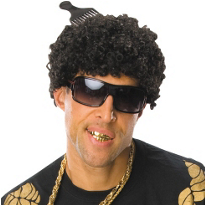
Party City’s “Old School Tight Afro Wig.”

Image

“Want a ‘fro that’s totally tight? Pull on our Old School Tight Afro Wig for a look that’s all right. This Tight Afro Wig features larger-than-usual black afro curls in a slightly disorganized mop of hair that reflects your carefree attitude towards life. No job, no problem! ”

Party City: “Hey Amigo Mexican Costume.”

Image

“Hey amigo, this Mexican Costume is bound to be noticed! Hey Amigo Mexican Costume features a fringed poncho, long moustache, red trimmed sombrero, and pants with an attached plush donkey and rider legs, which create the illusion that you’re riding said plush donkey.”

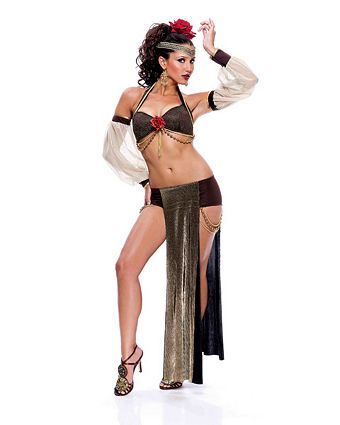
Anytime Costumes: “Arabian Seductress”

Image

“Cool Arabian nights will be blazing like in the daytime when you wear the Sexy Arabian Seductress Halloween Costume. It features a halter bikini top with a rose accent and beaded chain trim, matching mini-shorts with an attached panel skirt and gold chain trim. Sheer arm sleeves also come included to make your dances more seductive and mysterious and a gold headband and rose head comb remind your significant other why royalty has everything the best. If you’re getting into belly dancing and want to put on a show, you’ll be instantly prepared to add the sultry component that makes these dances a marvel to watch. Put on a spectacular show and become the head courtesan of the harem. Stop by our accessories page to add some jewelry accessories to add some lively noise to the dances that will keep him wanting.”

Spirit: “Reservation Royalty”

Image

“There’s no need to send smoke signals to get your point across when you wear this Reservation Royalty adult womens costume. The fringed, microsuede mini dress comes complete with a matching feathered headband. You’ll be a smokin’ hot site in this sexy womens costume.”

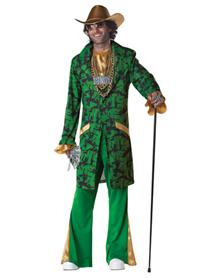
Spirit: “Pimpin Da Hos”

Image

“Show me da money! Be a hustler on Halloween when you don this outrageous Pimpin’ Da Hos adult mens costume. It’s all flash so be ready to talk the talk and walk the walk in this over the top ensemble. Great couples or group costume…”

Spirit: “Asian Empress”

Image

“Explore the mysteries of the East when you don the Asian Empress adult womens costume. The satiny black dress of this seductive and sexy womens costume features purple trim and comes complete with a pair of chopsticks for your hair. Add some mystery to Halloween!”

Spirit: “Mexican Style”

Image

“Grab a bag of tortilla chips, open a can of salsa, and show off your spiciness in this Mexican Style mens costume. This funny costume comes with a colorful sarape, traditional sombrero, and giant mustache–sure to get you laughs both north and south of the border.”

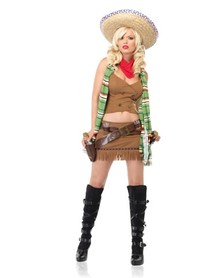
Spirit: “Sexy Bandita”

Image

“Spice things up with some south of the boarder heat when you wear this smokin’ hot, Sexy Bandita adult womens costume. The brown, vest-like top comes complete with a matching low-rise fringed mini skirt, a serape-inspired striped scarf, a red bandanna and a belt with shot glasses.”

Finally, deserving its own category of TAKE A SEAT wrongness, I give you:

Spirit: “Phat Pimp Child Costume.”

Image

“Be the big money when you trick yourself out in this Phat Pimp child costume. The purple, polyester jumpsuit of this pimp costume features zebra print trim, attached fake money, a PVC waist loop and a matching zebra print hat.”

Like I said, I could have done this literally all day long. It stands to reason that companies wouldn’t be selling this nonsense if people weren’t buying it. There are an infinite variety of costumes you can choose that do not involve racism. Seriously. Do us all a favor and choose one.

Tagged , , ,

The Problem with Cosplay Celebrity

My husband and I are both 501st. My initial forays into cosplay were through the 501st, and I became an official member in 2007. We did local events. We did cons. And we branched out early on into other areas of cosplay.

Image

My husband and I out in front of our theatre. Photo by Cheshire Isaacs.

As someone who has always been a nerd, usually in the process of varying degrees of hiding my nerdiness, the cosplay scene was like a dream come true. I’d never been involved in a more openly nerdy, less judgmental activity. It was a way to express your enjoyment of a certain thing and enjoy it along with others. The accuracy, complexity, or creativity of the costume was paramount. I remember examining the craftmanship on one woman’s costume as she proudly told me she learned metalworking in order to create it.

Then . . . it became popular. Mainstream culture moved in, and what happened to cosplay when mainstream culture moved in is what happens to everything when mainstream culture moves in. The values change. The culture changes. And the mainstream dynamic of “popular kids front and center, nerds to the margins” came roaring in. Cosplay went from an all-skate to Superhero Suicide Girls in no time flat.

Long-term cosplayers who voice concerns about the costuming and the fandom aspects taking a firm backseat to the hotness of the girl in the costume are told, repeatedly, that they’re “just jealous” because they aren’t as pretty as popular cosplayers, or are called “haters,” as if expressing dismay at being pushed to the margins of your own hobby is somehow being unfair. I felt exceedingly lucky to be able to remove myself from the whole thing by being 501st (armor is a great equalizer) but there are non-501st costumes I’ll likely never wear again.

Cosplay is now dominated by models and women striving to look like models, who sell seductive pictures of themselves posing in sexy costumes. And you know? There’s not a damn thing wrong with that. My issue isn’t what they do– it’s what we lost when cosplay changed. Cosplay, once a way of expressing fandom with other fans, has become another area of our culture where we privilege the concepts of celebrity, oppressive beauty standards, and the commodification of both over everything else.

Women who are young and beautiful (and, to a much lesser extent, men who are young and beautiful) are the “popular kids.” They’re minor celebrities with facebook fan pages, press attention, and now, web series, films, and video games devoted to them. Their popularity is based on their physical attractiveness. Cosplayers who do not conform to traditional beauty standards are publicly shamed (I will not post the many, many links as they do not deserve the hits), occupying the same position of “marginalized outsider” we occupied throughout our lives EVERYWHERE BUT THE CON SCENE, our little oasis. That was our one place to belong until mainstream culture invaded the cosplay scene and shoved us back to the margins, back to where the “not good enough” are always shoved.

I’m not implying that cosplay celebrities aren’t nerds or fans. Of course they are. Apart from the obvious– that everyone is suddenly a nerd in this cultural moment (I never thought I’d see the day)– I absolutely believe that these women are true fans of the work they represent. And I absolutely believe that most of them have no intention of marginalizing others. I see some cosplay celebrities regularly championing body acceptance and cosplayer diversity, shutting people down for shaming other cosplayers, and encouraging people of all types to get their nerd on.

I DON’T BLAME THE COSPLAYERS. Nor do I expect (or even want) them to stop doing what they’re doing. I’m so committed to not blaming the cosplayers themselves that I refuse to post any pictures of them along with this article, because I don’t want anyone to feel implicated or blamed. Cosplay celebrities are not, however, in control of the culture at large (would that they were), and even the most vocal supporter of nonconforming cosplayers has little power to change mainstream culture as a whole.

The problem isn’t cosplay celebrities themselves, it’s the way mainstream culture requires our celebrities, especially the women, to conform to oppressive beauty standards, the way we commodify women’s bodies, and the way we divide women into categories of “acceptable” and “unacceptable.”

Conforming to traditional beauty standards is the basic entrance fee to celebrity. Our culture demands that women who participate in the kinds of activities that might make one a celebrity conform to these beauty standards or receive a barrage of shaming. Actors, politicians, singers . . . and now cosplayers. Where once upon a time a cosplayer could be anyone with a costume and a lanyard, the rise of cosplay celebrity has brought with it our culture’s oppressive normativity for female (and often male) bodies in display-related activities, and that extends to body size, body type, gender identity, age, and race. Before this change, the display was from fan to fan, largely unseen in the mainstream community. Now it’s celebrity to admirers (or perceived as aspirationally so), bringing with it all the cultural restrictions on who is allowed to occupy that celebrity space and who is not. Mainstream culture demands that we know our assigned places and stick to them or the shaming is fierce.

The cosplay community was never perfect. Don’t get me wrong; there are douches everywhere. And there’s nothing (apart from being publicly shamed: again, not posting links) stopping anyone of any type from slapping on a costume and living the dream.  I see cosplayers who don’t conform openly flouting the new oppressive standards, setting up tumblrs for cosplayers of size and of color, with some cosplay celebrities in full, vocal support. I see resistance from lots of sources, and it’s good.

But it would be disingenuous in the extreme to assert that there’s been no change in the cosplay community over the past 5 or so years, or that all change has been positive. And it would be disingenuous in the extreme to pretend that the mainstream dynamic of “popular kids > marginalized misfits” hasn’t taken over cosplay to at least some degree, particularly in how it’s expressed on the internet and in press coverage, which is, let’s face it, MOST of cosplay now. Cons are only a few days long and not everyone can go to them, so cosplay celebrity lives primarily on websites, fan pages, and the like.

And even as they sit at the top of the heap, is cosplay celebrity nothing but good for these young and beautiful women? Their authenticity is questioned nonstop, as if beauty cannot coexist with a love for comics. A young and beautiful cosplayer is inundated with disrespectful attention from the kinds of guys who are at the con primarily to see hot girls in costume– the new phenomenon of cosplay fans. There have always been young and beautiful nerdy cosplayers, and there always will be, but they haven’t always been forced into a cosplay situation that values their beauty far, far more than their craftmanship, or that forces them into competitions they never sought over “who’s the hottest Poison Ivy” or “which Slave Leia is hotter?”

I don’t have a solution. I don’t think one exists, apart from the obvious: keep resisting and keep the conversation going. I think cosplay will slowly become more accepting of cosplayers whose size, age, gender identity, or race currently marginalize them, but only if we choose to carve a place for acceptance of difference in a space where acceptance of difference used to be the norm. I honestly don’t know if that will make it easier or more difficult. And maybe the change will come when mainstream culture gets bored with us and tosses us back onto the scrap heap. Until that time, I’ll stay under my helmet for the most part. But I think you look great– truly.

UPDATE: I approve almost all the comments I find in my moderation queue. I will not, however, despite the fact that they prove my point, be approving the comments I’m getting that are accusing me of being a “jealous hater,” or that are based on reading comprehension errors, such as the assertion that I “hate” that there are beautiful cosplayers now, where before there were none, all of which is demonstrably false and nowhere in the blog post, and is, of course, just another way of calling me a “jealous hater.” I have no problem approving comments that disagree with me– I welcome debate– but I am under no obligation to approve comments that have no purpose other than to attack me. So, gentlemen (and so far, all of the attacks are coming from self-identified guys), that’s what happened to your eloquently worded “Your just jealous” comment, and all comments of that ilk.

Tagged , , ,

Stand Like You Mean It!

I don’t know a lot about Lena Dunham or her work. And this post isn’t about her specifically. My point is the fact that in this major portrait of a powerful young woman shot by Annie Fucking Leibovitz, the photographer who shows up to tell you you’ve ARRIVED– she is posed like THIS.

cn_image.size.lena-dunhamThis familiar, infantilizing, pigeon-toed stance that is one of the ways we pose young women to make them look hapless and charming and harmless. The semiotics of that pigeon-toed stance are clear and culturally very well-defined. And of course everything in this photo is deliberate. Leibovitz is a master photographer, not your aunt shooting holiday snaps. Both of these women know what they’re doing, and deliberately chose a pose with a specific cultural meaning.

As I’ve said, I don’t know much about Lena Dunham and I’ve never seen Girls (because I suck at watching TV) but I’m fairly certain that this woman who is well on her way to heading a media empire is, if anything, sure of herself.

Why does it matter? Why do I have any fucks to give about a person I’ve never met and the pose she’s throwing in her Annie Leibovitz portrait?

Because: How we portray powerful women MATTERS. This is a portrait of a young woman who is newly very, very powerful, and she is posed in such as way as to ameliorate that power. Lena Dunham is a very powerful, very young, very wealthy woman now, and whether she herself chose to ameliorate that by using a childlike pose and Leibovitz agreed, or whether Leibovitz posed her that way deliberately and Dunham agreed, it sends exactly the wrong message.

We have a lot of trouble with powerful women in our culture, and even more trouble with powerful young women. We pose young, powerful men in ways that celebrate their power (this, this, this, this, this, and this). We pose young, powerful women in ways that sexualize or infantilize them (or–ick–both). See this, this, this, this, this, and this.

I understand that Lena Dunham’s character in Girls is all about straddling the line between adolescence and adulthood. I get that. But this is not a portrait of her character. It’s a portrait of a powerful writer, producer, and actor.

I understand that it’s her choice to pose how she likes, and Leibovitz’s choice to shoot what she likes. I understand that Dunham is likely considering her branding in this image, and uses the helplessness and winsomeness she’s portraying here to aid her success in an industry that’s famously skittish around powerful women. I understand the “don’t mind me; I’m harmless” branding choice. I understand branding yourself that way makes powerful men in the industry less nervous, and makes potential audience feel protective and charmed.

Understanding all this is part of what makes me so frustrated with it. We only ask women to ameliorate their power in this way. Only women need to soft-sell their power. This is gendered branding.

What would make it suck a lot less for me, personally (because this whole blog is, of course my personal opinion, and YMMV)

DID YOU JUST READ THAT?

DID I JUST TYPE THAT?

OK, I’m stopping myself. I have a blog that’s read by more people than I ever imagined possible. I’m in the middle of a post about the portrayal of women, and how it sucks that we’re encouraged to soft-sell our power. AND I JUST MITIGATED MY OWN OPINION IN THE MIDDLE OF WRITING IT. This training runs deep.

In the facebook discussion leading up to this post, I was told by an older man that my “style of criticism” was “over the top.” Whenever women speak out, whenever women claim our own power, whenever women voice an opinion without a meek “Well, it’s just my opinion,” someone is there to tell us we’re wrong for it. Often, we do it ourselves. This training runs deep.

I’m choosing to own my power. This is my critical read of this image and this branding. Full stop.

Deep breath.

What would make this a lot less frustrating for me would be if the imaging and branding of men and women were less gendered. There’s nothing wrong with a woman posing for a portrait in an infantilized way in and of itself, but at this cultural moment we’re faced with the hard, cold reality that women– young women especially– are instructed to present ourselves in ways that mitigate our power, and are met with a wagonload of disapproval if we do not, while men are encouraged to do exactly the opposite. This kind of gendered branding sucks for women AND men.

I’ve spent quite some time this morning looking through images of young, powerful men and women. I’ve flipped through hundreds of images of dozens of people. And the one that seems to sum it all up is this:

scarlett-johansson-and-keira-knightley-gallery

This photo of Tom Ford, Scarlett Johansson, and Keira Knightly, shot by Leibovitz for a Vanity Fair cover in 2010, sums it all up nicely. The parody shot Leibovitz did later also speaks volumes about how we portray powerful men vs. how we portray powerful women. It’s funny because of the ironic juxtaposition.

comedians0904pp01

It’s the same kind of humor we get from this bit of awesomeness:

Created by Theamat on Deviant Art

Created by Theamat on Deviant Art

and this:

What is all the Avengers posed like artists draw female superheroes?

What if all the Avengers posed like artists draw female superheroes?

And this:

Vicious Grace - Jim

The man in the above photo is fantasy author Jim C. Hines, who has an entire series of photos of himself posing the way women are drawn on book covers. It’s glorious, so check it out here.

There are numerous examples of men posing or dressing the way women are posed and dressed, all creating humor out of the ironic juxtaposition and all (hopefully) highlighting the sexualized and infantilized ways we create images of women. Check this out, and this, and this.

Lena Dunham is a powerful young woman, and an Annie Leibovitz portrait is a potent, lasting statement of one’s celebrity. I just wish they had chosen to frame her within that power, rather than mitigating it.

UPDATE: To my astonishment, 3000 people read this post within the first 48 hours it was up. So far I’ve read and/or received dozens of comments on it in various venues. The people who agree with me are a mixed bag of genders. The people who disagree with me are, so far, 100% men. That was, I must say, completely unexpected. I assume there will eventually be women who disagree (or, more accurately, voice their disagreement to me), but the fact remains that it’s gone this long with only male voices telling me I’m wrong, scolding me for “reading too much into it,” or taking me to task for “attacking” Lena Dunham. Interesting, right?

Tagged , ,