
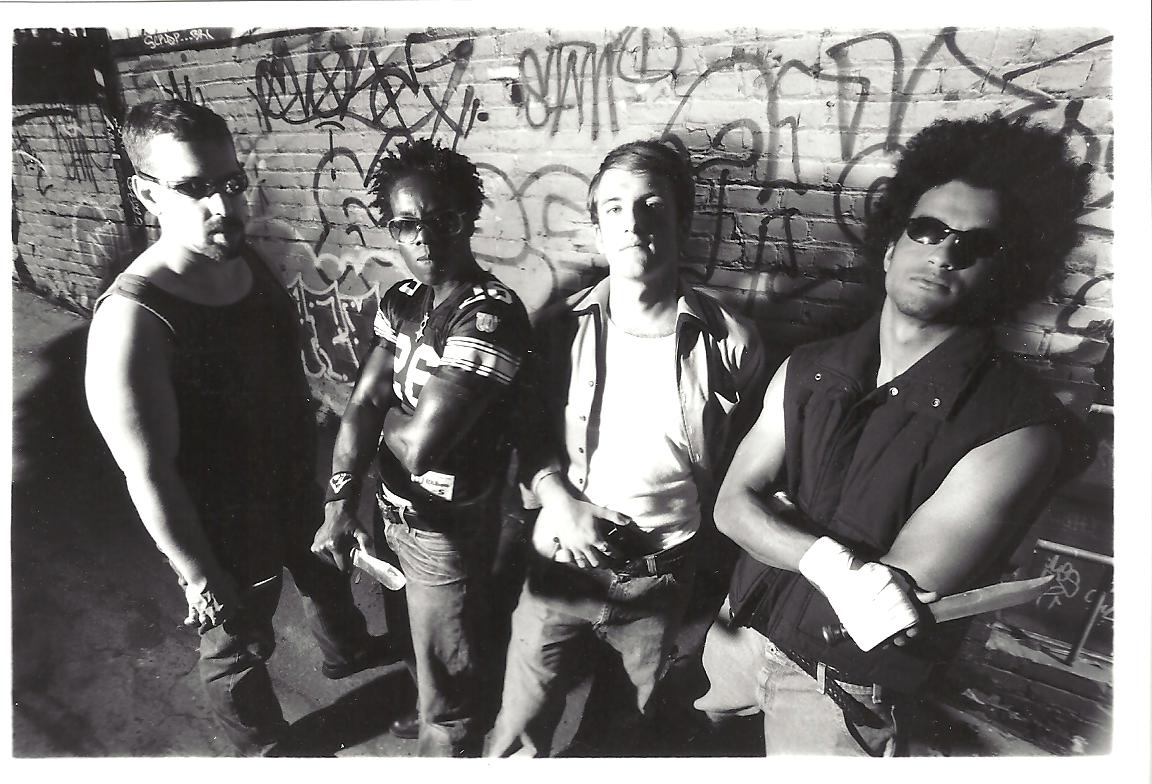
Jai Sahai as Spango Garnetkiller in Impact Theatre’s production of Of Dice and Men, by Cameron McNary. Photo by Cheshire Isaacs.
I wrote an article linked above for Theatre Bay Area Magazine’s Jan/Feb issue, and now that it’s no longer available online, I’ll post it in its entirety here.
I’ve really come to dislike the term “color-blind” casting, because it implies that the highest good is to be “blind” to race and ethnicity, and I just reject that out of hand. The highest good, in my opinion, is to both SEE difference and CELEBRATE it. Not “accept” or “tolerate”– those weak words can take a seat.
While the point of this article is race and ethnicity, I think we also need to start thinking of diversity in terms of body size, age, disability, and gender– and not just gender as in “male/female,” but recognizing the true range of gender, gender expression, and the 1000 ways in which cisgender people enjoy privileges that trans* people do not. As a cisgender woman, this was invisible to me until fairly recently. Over the past ten years (after the death of Gwen Araujo, practically in my childhood backyard), I’ve paid a lot of attention to how trans* people are treated in our culture, and while the cisgender can never truly understand, it’s crucial for us to try.
My own company is in no way perfect. Far from it. We have a long way to go with all of these issues. But it’s something I think about literally every day of my life.
UPDATE 5/20/13: Please read this account of a Filipino American actor who auditioned for a character of color, made it to the second callback, and then discovered the “Big New York Theatre” (his generous psuedonym) cast a white actor instead. It’s a great read for a ton of reasons.
“In the Land of the ‘Color-Blind'”
Theatre Bay Area Magazine, Jan/Feb 2013
As someone who‘s been producing and casting for nearly two decades, I’ve been following the recent casting controversies with keen interest.
The latest occurred at La Jolla Playhouse this past July. Duncan Sheik and Steven Sater’s The Nightingale, an adaptation of the Hans Christian Andersen tale, directed by Moisés Kaufman, was set in China but cast with mostly non-Asian actors, including white actor Bobby Steggert in the lead role of the Emperor of China. The cast of twelve included but two Asian actors in supporting roles. The backlash, led by Asian American theatre artists, was immediate and intense. La Jolla Playhouse’s Artistic Director, Christopher Ashley, eventually apologized, but initially defended the casting as “color blind.” Kaufman defended the “color blind” casting by asserting that the play was never meant to depict a “literal” China, but a “mythological” one.
During this controversy, I saw in several online discussions heated defenses of the casting of The Nightingale as ideally “color blind” and as an example of “artistic freedom.” I was flabbergasted by the initial controversy, by the defense offered by the Nightingale team, and by the arguments in favor of the casting from other theatremakers. I had assumed that the term “color blind casting” was no longer in use, and I had assumed that my own opinions about what it means to cast a white actor as a nonwhite character were nearly universal in the theatre community. I knew I needed to dig deeper, and to that end, I spoke with directors Mark Jackson, Michael Gene Sullivan, Ellen Sebastian Chang, and Alan Quismorio about their approach to this issue. I began with the term “color blind casting.”
When we cast, we consider many things: type, skill set, approach to the role, chemistry with other actors. Are we not also considering race? Are we ever truly “blind” to race? Would we even want to be?
Michael Gene Sullivan takes issue with the concept of “color blindness”: “Sometimes people will say ‘I don’t see you as Black.’ If you don’t see me as Black, you think you’ve elevated me. Somehow it’s better not to see me as Black. Why? What’s so wrong with being Black? By wiping it away, you’ve made it ‘better,’ but all you’ve done is make yourself more comfortable.”
Ellen Sebastian Chang agrees: “We can’t say ‘I don’t see color.’ Well, why don’t you see color? I see it! What does it mean to you? I see what color I am. I see what color my kid is. I see it, I deal with it all the time. Why can’t you in your casting? Why are you choosing to be blind? Even the term ‘color blind casting’—Why choose blindness? There’s something about it that has the stink of white liberal guilt.”
“I find ‘color blind’ casting to be weirdly naïve,” says Mark Jackson. “Nobody is blind to race, because race matters, and pretending like it doesn’t is no way to deal with it. That makes ‘color blind’ casting an absurd proposition, not to mention kinda racist in a cowardly liberal way.”
“Color blind” casting just doesn’t exist. Of course we see color, and when white directors assert that color doesn’t “matter,” it seems to me that they’re asserting nothing but their own white privilege. In the US, only white people can live in a reality where race “doesn’t matter.”
Race is not invisible, nor should we want it to be. Race– like gender, like size, like age– contains narrative. When we cast, that choice, whatever it is, brings layers of meaning to the production as a whole. “The audience brings a lot of connotations to the event,” says Quismorio. “If you see a white man playing a Chinese man, and we all know that a lot of imperialism happened in the past, you can’t help but look at it from that point of view.”
When a white actor is cast as a non-white character, it contains a very specific cultural meaning, and a different meaning than an actor of color cast in a role written for a white actor. A white man in the role of the Emperor of China, whether you believe it’s a “mythological China” or not, intertextualizes narratives of cultural appropriation, erasure of difference, colonialism, Asian invisibility, and “yellowface.”
“I always assume that race and gender matter, and try to make choices accordingly,” says Jackson. “The [all white] casting of God’s Plot was deliberate because it was about Puritan characters. They were culturally specific characters in 1665. Doing non-traditional casting made no sense in that context. . . . Salomania and [The Death of] Meyerhold as well—having an Asian Stanislavski or a Black Chekhov would be saying something, but I don’t know what we would be saying.”
Alan Quismorio disagrees. “I would cast a Black actor as Stanislavski, or I would cast a female as Chekhov. I’d have to ask myself why I would do it, because I’d be asked about it. It can’t just be because it was cool. If we were to do a prologue for A Pinoy Midsummer, I would cast a Filipino actor as Shakespeare. It would be saying that Shakespeare, his works, transcend color, transcend nation. It really speaks to the world population.”
Why even consider casting actors of color in roles written for white actors? “We have to be thoughtful about what ‘color blind casting’ is trying to achieve,” says Quismorio. “It’s an attempt to provide actors of color an opportunity to be cast in roles they traditionally haven’t been cast in.” Sullivan says: “Non-traditional casting isn’t about making the audience more comfortable, and that shouldn’t be the reason you came down to the theatre in the first place. The idea is to create the world onstage the way we’d like it to be. Wouldn’t it be nice if this were the way things were and everybody could be cool with it?”
Two of the main ideas behind non-traditional casting are to provide actors of color with opportunities they have traditionally been denied, and to start to approach representing them on our stages in numbers equal to their numbers in the community. There’s a third important idea as well: Casting in a way that’s conscious of color and sensitive to it is a way to frame possibilities for inclusion in the real world. So many of our steps forward as a culture in the areas of race, gender, and sexuality have been led by the arts. An emotionally profound narrative event like a play or a film can have more cultural impact than a protest, article, or lecture. “There’s a television show called ‘Once Upon a Time,’” says Quismorio, “that cast an African American actor in the part of Lancelot. When we think of Lancelot, we imagine a ‘white knight.’ Not only are we challenging what’s happening in the real world but also what’s happening in our imaginations. Ten, fifteen, twenty years from now the kids who are growing up today will know of a Black Lancelot. There are other ways of perceiving a character.” Imagining fictional characters in new ways and creating artistic space for the full range of human characteristics people of color possess, not just the stereotypical characteristics we too often see in roles written for people of color, are healthy for us both as artists and as people living in a diverse community.
Casting actors of color in roles written for white actors, however, is not without complications. “Color blind casting too often means that European-based work is reinvented so that people of color are supposed to identify their humanity with that work,” says Sebastian Chang. “’Color blind casting’ affirms that universality is in the white perspective. Why can’t we just keep developing playwrights of color? Color blind casting too often denies cultural difference.”
Sullivan says, “I would put more pressure on the playwrights. Why do you keep writing plays that deal with four white people on the upper West Side?”
“I don’t have any problem with casting actors of color in European-American plays,” adds Sebastian Chang, “I am so for artistic freedom that way and artistic imagination that way.”
What about the “artistic freedom” argument? What is the difference between casting an Asian American as Hedda Gabler and a European American as the Emperor of China? Why is “color blind casting” such a problem and “non-traditional casting” lauded? The reason is because race has meaning. It has an undeniable cultural context that must be considered when we cast. We must consider creating productions that reflect the diversity of our audiences if we want to stay culturally relevant, creating opportunity for underrepresented actors if we want a thriving theatre community, and the effect our casting choices will have on the narrative of the piece if we want to have an understanding of how our work fits into the cultural context and how it will likely be received by audiences.
When I was casting Romeo & Juliet at Impact two seasons ago, our newest resident actor, Reggie White, who is African American, wanted to do the show. I had two open roles at the time: Paris and Tybalt. Reggie is an actor with an abundance of “nice guy” energy, who exudes likeability from every pore, and captures audience sympathy the minute he steps on stage. I didn’t want an unsympathetic Paris—I believe he’s a nice guy caught in a bad situation. Reggie would have been a perfect choice for that role. Hotheaded Tybalt, on the other hand, is a stretch for an actor whose home base is “the sweetheart.” But given that both my Romeo and Juliet were white (Michael Garrett McDonald and Luisa Frasconi, respectively), how could I cast an African American as Paris? How could I stage a play where the female lead is desperate not to be married off to the Black guy? Reggie’s race would change the Paris narrative to something unpalatable. I cast him as Tybalt, and, of course, he was more than up for the stretch and his talent and versatility made his performance a huge success with both critics and audiences. In making that choice, I also considered that the party scene, wherein Lord Capulet, played by a white actor in our production (Jon Nagel), calls Tybalt “boy” several times, would take on a new, more hard-hitting meaning, and would show even more explicitly why Tybalt’s anger carries over the next day into his challenge of Romeo. In a play with so much violence from so many characters, I didn’t feel that an African American Tybalt would make a racist statement about Black male violence, but that possibility had to be considered before I could move forward with the choice. Race is always part of the narrative, and it’s our job to be cognizant of that, to consider the cultural context of our choices, and weigh, to the best of our ability, how audiences will read those choices.
Using a white actor as Othello, or as the emperor of China, on the other hand, has a very different impact on the narrative than casting a person of color in a traditionally white role. It erases the physical presence of the person of color, and intertextualizes cultural narratives of imperialism, appropriation, and invisibility. The West has a long history of casting white actors in racist portrayals of people of color, of appropriating the narratives of people of color and reshaping them through a white lens, and of shutting artists of color out of positions of importance. An American audience viewing a white person portraying a person of color will be reminded of all of these, and of blackface, of yellowface, of the history of racism with which we still struggle. These are all present in any production wherein a white actor is cast as a person of color because they are so palpably present within our culture. Again, race is always part of the narrative.
With all this complexity, how do we approach race and ethnicity in casting in the 21st century? I think the answer is that there is no one-size-fits-all solution. Yes, we should be increasing access for actors of color to roles in which they have not been traditionally cast. African American Hamlets and Rosalinds, Asian American Noras and Heddas, Latino Bricks and Estragons: we should continue to encourage these. And, at the same time, we need to actively work to develop voices from across the entire cultural spectrum and ensure that these voices get the kind of attention they deserve. All too often playwrights of color are developed to death: awarded reading after reading, but few mainstage productions at major houses. We need to continue to work towards inclusion of women and people of color in decision-making positions at larger nonprofits and in the commercial theatre.
Finally, we must continue open and honest dialogue across racial, ethnic, and cultural divides. Sebastian Chang says, “Color matters. Class matters. We wish it didn’t, but it does. It does. And it’s the human condition that’s filled with all these contradictions that we struggle with. If we would be willing to get past our fear of racism, which is a real thing, we could sit down and discuss our cultural differences, which isn’t a bad thing. So many things are just missteps of cultural difference.”
Impact’s Macbeth. Pictured: Andy Pelosi, Skyler Cooper, Pete Caslavka, and Casey Jackson. Photo by Kevin Berne.
 Bitter Gertrude