Tag Archives: producing

Playwrights of Color

Image

Lisa Kang and Dennis Yen in Impact Theatre’s production of Ching Chong Chinaman, by Lauren Yee, directed by Desdemona Chiang. Photo by Cheshire Isaacs.

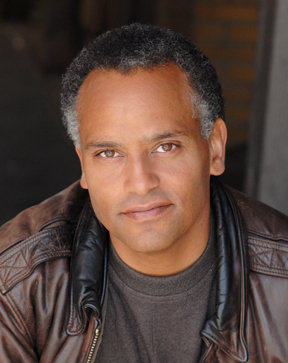
Like most producers, I’m looking for ways to increase diversity at my company. I’m guessing you are, too. So I put together (with the help of a bunch of awesome people, especially the excellent Sam Hurwitt) a list of playwrights of color from my neck of the woods, the San Francisco Bay Area. All of these playwrights have scripts ready and waiting for you to read, love, and produce repeatedly. There are even some musical theatre and opera composers included.

And just for fun, I included at the end a list of solo performers you should know about, too, just in case a funder gave you a fat wad of cash to bring one of these awesome people to your area.

If you have anyone to add, you can email me at bittergertrude@gmail.com and I’ll put their website on the list!

Hector Armienta

Jeannie Barroga

Eugenie Chan

Christopher Chen

Image

Christopher Chen

Paul S. Flores

Brian Freeman

Philip Kan Gotanda (Of course you already know his work!)

Imani Harrington

Chinaka Hodge

Image

Chinaka Hodge

Denmo Ibrahim

Robert Henry Johnson

Marc Bamuthi Joseph

Min Kahng

Cherylene Lee

JC Lee

Image

JC Lee

Charles Lewis III

Jeffrey Lo

Marisela Treviño Orta

Image

Marisela Treviño Orta

A. Rey Pamatmat

Geetha Reddy

Andrew Saito

Sean San Jose

Kirk Shimano

Octavio Solis

Michael Gene Sullivan

Image

Michael Gene Sullivan

Aimee Suzara

Ian Walker

Image

Ian Walker

Lauren Yee

Torange Yeghiazarian

Ignacio Zulueta

SOLO PERFORMERS:

Brian Copeland

Marga Gomez

Rhodessa Jones

Thao P. Nguyen

Image

Thao P. Nguyen

Tagged , , ,

Defining “Professional”

It's a question of lust; it's a question of trust; it's a question of-- oh wait, no it's just a question of money

It’s a question of lust; it’s a question of trust; it’s a question of– oh wait, no it’s just a question of money

How we define who is and who is not a “professional” in the theatre community has always been a hot-button topic, especially when you throw companies into the mix. When you start discussing this topic, a lot of people will immediately open their mouths to pour out a response that has something to do with money. This makes no sense whatsoever in the theatre community.

Sure, we could define “professional” as “making enough money at theatremaking to cross a predetermined threshold” (such as hiring AEA actors, or making your living solely as an actor as opposed to a waiter/massage therapist). This is, however, a problematic definition to say the least. Many people who are in love with using this definition for theatre companies do not pass this definition in their own careers as artists. If we’re going to define “professional” for theatre, it needs to have a single definition for us all, not one for producers, one for actors, one for designers, and one for theatre alley hobos.

If an actor lands a role that makes her AEA, and then, as is all too common, sits for two years at home working out every possible ending of Dragon Age but never landing any roles, is she still a “professional”? While the money-based definition above says no, I say YES, and I bet you do, too. She’s still auditioning, maybe taking classes, certainly attending theatre to see others’ work. She’s working at her chosen profession, just not making money at it. Her experience, training, and dedication do not evaporate just because she can’t get hired. That actor is still an actor, and I would call that actor, without question, a “professional actor,” despite the fact that it says “lab assistant” on her 1040.

I really should work on that Rosalind monologue at lunch

I really should work on that Rosalind monologue at lunch

If an actor can retain the label “professional actor” without actually making any money as an actor, then it makes no sense for anyone to be held to a money-based definition, including producers and companies. Either “professional” means meeting specific financial criteria, or it does not.

In an industry where very, very few people are making their living solely as theatremakers, and almost no theatre in the nation is generating enough earned income to pay their bills (most of their budgets coming from donations and grants), what is the point of a financial threshold? What MEANING does money have? Are we honestly going to grant “professional” only to those artists who get hired frequently, and withhold it from those who do not, disproportionately shutting out women and people of color? Are we honestly going to grant “professional” only to those companies that sell lots of tickets or land high-value grants, disproportionately shutting out small companies that do experimental work or serve low-income communities? This is an arts community that purports to have The Art as its primary consideration, and yet so many of us are distressingly willing to make money the most important consideration.  But only for others, amirite? Because while plenty of people condemn other artists and companies with “not professional,” they still consider themselves professionals even though they’ve done nothing but 2 waiver shows and a staged reading since the Bush Administration.

No, we can’t draw financial lines for each other and say, “You must be this wealthy to ride this ride” because it leaves far too many worthy artists and companies out. We need a single definition, and it can’t be money. An artist for whom money is THE most important consideration in the definition of “professional” is an artist who is deliberately shortchanging the worth of other artists and companies. Gross.

So money is out.

What about using quality as the defining factor? “Professional” implies a certain level of quality, does it not? Perhaps, then, we can use excellence as the defining factor. Let’s consider that more deeply. OH WAIT. We already tried to define “excellence” and failed. Remember when the entire national theatre community suddenly started talking about holding each other accountable for “excellence”? It went nowhere because no two people can ever completely agree on what makes a work of art “excellent.” This is ART, and one person’s heartbreaking, brilliant, moving production is another person’s self-important, pretentious dreck. So using “professional” to mean “always high quality” doesn’t work for companies.

It doesn’t work for individuals, either. I know many like to draw the line for actors between AEA (“professional”) and non-AEA (“amateur”). But anyone who has spent more than five minutes in casting knows that union affiliation is no guarantee of quality for an actor. Sure, in the aggregate, AEA actors are “better” than non-AEA actors, because the class of “non-AEA actors” includes those with little or no experience, and those who think they are actors but will shortly discover they are directors or playwrights. Or audience. Or donors! (THINK POSITIVE.) But we can’t cast in the aggregate; we have to cast individuals, and when you compare one individual to another individual for any specific role, union affiliation is not going to indicate anything useful to you about which individual actor is more “excellent,” or more anything else, for that matter. This is why we have auditions. There are stunningly brilliant nonunion actors, no question, just as there are stunningly brilliant AEA actors, and jaw-droppingly mediocre actors both union and non. It’s useless as an indicator of INDIVIDUAL excellence. And of course, even if we wanted to use union affiliation as a marker for excellence and thus “professional,” what about all those people who are directors, designers, playwrights, art directors, and so on, for whom union affiliation is a completely different ball game? Union affiliation is useless as a definer of “excellence” for individuals. In the end, though, it matters little because “excellence” is useless for defining “professional.” We can’t all agree on what “excellence” is.

You may actually believe that all AEA actors are always “better” than all non-AEA actors (because of course all actors automatically go from sucktastic to brilliant the moment they sign, right?), and who would be able to prove your opinion of nonunion actors wrong? It’s your opinion. You may actually believe that a big, expensive set or a full orchestra make a show “excellent,” and who could argue with you? That’s what you enjoy, and therefore it’s “excellence” to you. My point here is: when you can’t pin down a definition for “excellence,” you can’t use excellence to define “professional.”

So money is out and “excellence” is out. Then what the sriracha-flavored fuck CAN we use  to define “professional”?

I'm still trying to work out "sriracha-flavored fuck"

I’m still trying to work out “sriracha-flavored fuck”

I have an idea! I baked it just for you and I hope you like it. I made it out of my lifelong obsession with etymology and my need to accrue respect to theatremakers of all income levels.

So, no surprise, I own a copy of the OED. I cracked it open (any excuse, right?) and looked up “professional,” “profession,” and “profess.” Yes, I know that a dictionary definition is going to have limited applicability on its own in this context, and there is something obnoxious about using a dictionary definition in any argument, but bear with me for a second. The main concepts throughout all the definitions of “professional” in the OED (and Webster, which I also checked for fun) are: professing (self-declaration), depth of commitment (making something your main daily activity; your “profession”), and expertise.

So how about this: “Professionals” in theatre are those people who are openly dedicated primarily to the activity of theatremaking. A “professional” individual in theatre is someone who has made a commitment to the art of theatre, and has made that his or her primary daily activity, or has theatre as a primary daily activity as his or her goal (we don’t want to leave out that AEA lab assistant). A “professional” theatre is one that is staffed with such individuals, regardless of what that theatre pays them.  “Theatre professionals” are people who have made theatremaking their lives, and “professional theatres” are the companies that are staffed with those people.

I believe that resistance to this idea, and assertion that “professional” must have strict financial criteria, comes from a place of elitism. It comes from a place of wanting to protect one’s own privilege, and not have to share it with others one has previously been able to keep out. I don’t think those are useful concepts in theatremaking, so I hope to see the day they’re discarded in favor of becoming more inclusive and diverse.

MAKE ROOM FOR OTHERS. They deserve to be there. Honor the artists and companies around you, no matter how much money they have. Think of looking at the world, and at our art, in ways that do not privilege money over everything else. Yes, we all have to make a living, pay bills, and buy Dragon Age 3, but we do not need to make financial considerations the centerpiece and main defining characteristic of our art. Leave that to Scary Movie 12, porn, and A Doll’s House on Broadway starring Kanye West as Torvald and Kim Kardashian as Nora. (YOU KNOW IT COULD HAPPEN.)

Imma let you finish, but the Tarantella is the BEST DANCE OF ALL TIME

Imma let you finish, but the Tarantella is the BEST DANCE OF ALL TIME

Before I go, I want to say a word about “community theatre.” “Community theatre” is a wonderful, precious resource that exists to allow people who are not professionals to participate in making theatre. My wonderful former father-in-law, a retired chemist, spent the last years of his life acting and building sets at a truly excellent local community theatre. It enriched his life greatly. He had no intention of becoming a professional actor, but he wanted to participate in theatremaking. I truly adored watching him onstage. He was terrible, but he loved to be there, so he was a joy to watch. When he died, they renamed the theatre space after him in honor of the many ways he had contributed to that company. THAT is what “community theatre” is. It’s valuable, and important, and I won’t hear another word about it being somehow “lesser” than professional theatre. When I hear “community theatre,” I see a retired chemist, grinning from ear to ear, on a stage full of people thrilled to be there.

UPDATE: A couple of people have asked me if I’m referring to specific AEA language that appears in some of their documents. Let me explicate: No. I’m discussing how theatremakers talk about each other. If I were discussing specific AEA documents, I would have said so. I’m not really coy about these kinds of things. AEA is one union that represents one segment of theatremakers, and I’m discussing us all.

Comments for this article are now closed. 

Tagged , ,

In the Land of the “Color-Blind”

Jai Sahai as Spango Garnetkiller in Impact Theatre's production of Of Dice and Men, by Cameron McNary

Jai Sahai as Spango Garnetkiller in Impact Theatre’s production of Of Dice and Men, by Cameron McNary. Photo by Cheshire Isaacs.

I wrote an article linked above for Theatre Bay Area Magazine’s Jan/Feb issue, and now that it’s no longer available online, I’ll post it in its entirety here.

I’ve really come to dislike the term “color-blind” casting, because it implies that the highest good is to be “blind” to race and ethnicity, and I just reject that out of hand. The highest good, in my opinion, is to both SEE difference and CELEBRATE it. Not “accept” or “tolerate”– those weak words can take a seat.

While the point of this article is race and ethnicity, I think we also need to start thinking of diversity in terms of body size, age, disability, and gender– and not just gender as in “male/female,” but recognizing the true range of gender, gender expression, and the 1000 ways in which cisgender people enjoy privileges that trans* people do not. As a cisgender woman, this was invisible to me until fairly recently. Over the past ten years (after the death of Gwen Araujo, practically in my childhood backyard), I’ve paid a lot of attention to how trans* people are treated in our culture, and while the cisgender can never truly understand, it’s crucial for us to try.

My own company is in no way perfect. Far from it. We have a long way to go with all of these issues. But it’s something I think about literally every day of my life.

UPDATE 5/20/13: Please read this account of a Filipino American actor who auditioned for a character of color, made it to the second callback, and then discovered the “Big New York Theatre” (his generous psuedonym) cast a white actor instead. It’s a great read for a ton of reasons.

“In the Land of the ‘Color-Blind'”

Theatre Bay Area Magazine, Jan/Feb 2013

As someone who‘s been producing and casting for nearly two decades, I’ve been following the recent casting controversies with keen interest.

The latest occurred at La Jolla Playhouse this past July. Duncan Sheik and Steven Sater’s The Nightingale, an adaptation of the Hans Christian Andersen tale, directed by Moisés Kaufman, was set in China but cast with mostly non-Asian actors, including white actor Bobby Steggert in the lead role of the Emperor of China. The cast of twelve included but two Asian actors in supporting roles. The backlash, led by Asian American theatre artists, was immediate and intense. La Jolla Playhouse’s Artistic Director, Christopher Ashley, eventually apologized, but initially defended the casting as “color blind.” Kaufman defended the “color blind” casting by asserting that the play was never meant to depict a “literal” China, but a “mythological” one.

During this controversy, I saw in several online discussions heated defenses of the casting of The Nightingale as ideally “color blind” and as an example of “artistic freedom.” I was flabbergasted by the initial controversy, by the defense offered by the Nightingale team, and by the arguments in favor of the casting from other theatremakers. I had assumed that the term “color blind casting” was no longer in use, and I had assumed that my own opinions about what it means to cast a white actor as a nonwhite character were nearly universal in the theatre community. I knew I needed to dig deeper, and to that end, I spoke with directors Mark Jackson, Michael Gene Sullivan, Ellen Sebastian Chang, and Alan Quismorio about their approach to this issue.  I began with the term “color blind casting.”

When we cast, we consider many things: type, skill set, approach to the role, chemistry with other actors. Are we not also considering race? Are we ever truly “blind” to race? Would we even want to be?

Michael Gene Sullivan takes issue with the concept of “color blindness”: “Sometimes people will say ‘I don’t see you as Black.’ If you don’t see me as Black, you think you’ve elevated me. Somehow it’s better not to see me as Black. Why? What’s so wrong with being Black? By wiping it away, you’ve made it ‘better,’ but all you’ve done is make yourself more comfortable.”

Ellen Sebastian Chang agrees: “We can’t say ‘I don’t see color.’ Well, why don’t you see color? I see it! What does it mean to you? I see what color I am. I see what color my kid is. I see it, I deal with it all the time. Why can’t you in your casting? Why are you choosing to be blind? Even the term ‘color blind casting’—Why choose blindness? There’s something about it that has the stink of white liberal guilt.”

“I find ‘color blind’ casting to be weirdly naïve,” says Mark Jackson. “Nobody is blind to race, because race matters, and pretending like it doesn’t is no way to deal with it. That makes ‘color blind’ casting an absurd proposition, not to mention kinda racist in a cowardly liberal way.”

“Color blind” casting just doesn’t exist. Of course we see color, and when white directors assert that color doesn’t “matter,” it seems to me that they’re asserting nothing but their own white privilege. In the US, only white people can live in a reality where race “doesn’t matter.”

Race is not invisible, nor should we want it to be. Race– like gender, like size, like age– contains narrative. When we cast, that choice, whatever it is, brings layers of meaning to the production as a whole. “The audience brings a lot of connotations to the event,” says Quismorio. “If you see a white man playing a Chinese man, and we all know that a lot of imperialism happened in the past, you can’t help but look at it from that point of view.”

When a white actor is cast as a non-white character, it contains a very specific cultural meaning, and a different meaning than an actor of color cast in a role written for a white actor.  A white man in the role of the Emperor of China, whether you believe it’s a “mythological China” or not, intertextualizes narratives of cultural appropriation, erasure of difference, colonialism, Asian invisibility, and “yellowface.”

“I always assume that race and gender matter, and try to make choices accordingly,” says Jackson. “The [all white] casting of God’s Plot was deliberate because it was about Puritan characters. They were culturally specific characters in 1665. Doing non-traditional casting made no sense in that context. . . . Salomania and [The Death of] Meyerhold as well—having an Asian Stanislavski or a Black Chekhov would be saying something, but I don’t know what we would be saying.”

Alan Quismorio disagrees. “I would cast a Black actor as Stanislavski, or I would cast a female as Chekhov. I’d have to ask myself why I would do it, because I’d be asked about it. It can’t just be because it was cool. If we were to do a prologue for A Pinoy Midsummer, I would cast a Filipino actor as Shakespeare. It would be saying that Shakespeare, his works, transcend color, transcend nation. It really speaks to the world population.”

Why even consider casting actors of color in roles written for white actors? “We have to be thoughtful about what ‘color blind casting’ is trying to achieve,” says Quismorio. “It’s an attempt to provide actors of color an opportunity to be cast in roles they traditionally haven’t been cast in.” Sullivan says: “Non-traditional casting isn’t about making the audience more comfortable, and that shouldn’t be the reason you came down to the theatre in the first place. The idea is to create the world onstage the way we’d like it to be. Wouldn’t it be nice if this were the way things were and everybody could be cool with it?”

Two of the main ideas behind non-traditional casting are to provide actors of color with opportunities they have traditionally been denied, and to start to approach representing them on our stages in numbers equal to their numbers in the community. There’s a third important idea as well: Casting in a way that’s conscious of color and sensitive to it is a way to frame possibilities for inclusion in the real world. So many of our steps forward as a culture in the areas of race, gender, and sexuality have been led by the arts. An emotionally profound narrative event like a play or a film can have more cultural impact than a protest, article, or lecture.  “There’s a television show called ‘Once Upon a Time,’” says Quismorio, “that cast an African American actor in the part of Lancelot.  When we think of Lancelot, we imagine a ‘white knight.’ Not only are we challenging what’s happening in the real world but also what’s happening in our imaginations. Ten, fifteen, twenty years from now the kids who are growing up today will know of a Black Lancelot. There are other ways of perceiving a character.” Imagining fictional characters in new ways and creating artistic space for the full range of human characteristics people of color possess, not just the stereotypical characteristics we too often see in roles written for people of color, are healthy for us both as artists and as people living in a diverse community.

Casting actors of color in roles written for white actors, however, is not without complications. “Color blind casting too often means that European-based work is reinvented so that people of color are supposed to identify their humanity with that work,” says Sebastian Chang.  “’Color blind casting’ affirms that universality is in the white perspective. Why can’t we just keep developing playwrights of color? Color blind casting too often denies cultural difference.”

Sullivan says, “I would put more pressure on the playwrights. Why do you keep writing plays that deal with four white people on the upper West Side?”

“I don’t have any problem with casting actors of color in European-American plays,” adds Sebastian Chang, “I am so for artistic freedom that way and artistic imagination that way.”

What  about the “artistic freedom” argument? What is the difference between casting an Asian American as Hedda Gabler and a European American as the Emperor of China?  Why is “color blind casting” such a problem and “non-traditional casting” lauded? The reason is because race has meaning. It has an undeniable cultural context that must be considered when we cast. We must consider creating productions that reflect the diversity of our audiences if we want to stay culturally relevant, creating opportunity for underrepresented actors if we want a thriving theatre community, and the effect our casting choices will have on the narrative of the piece if we want to have an understanding of how our work fits into the cultural context and how it will likely be received by audiences.

When I was casting Romeo & Juliet at Impact two seasons ago, our newest resident actor, Reggie White, who is African American, wanted to do the show. I had two open roles at the time: Paris and Tybalt. Reggie is an actor with an abundance of “nice guy” energy, who exudes likeability from every pore, and captures audience sympathy the minute he steps on stage. I didn’t want an unsympathetic Paris—I believe he’s a nice guy caught in a bad situation. Reggie would have been a perfect choice for that role.  Hotheaded Tybalt, on the other hand, is a stretch for an actor whose home base is “the sweetheart.” But given that both my Romeo and Juliet were white (Michael Garrett McDonald and Luisa Frasconi, respectively), how could I cast an African American as Paris? How could I stage a play where the female lead is desperate not to be married off to the Black guy? Reggie’s race would change the Paris narrative to something unpalatable. I cast him as Tybalt, and, of course, he was more than up for the stretch and his talent and versatility made his performance a huge success with both critics and audiences. In making that choice, I also considered that the party scene, wherein Lord Capulet, played by a white actor in our production (Jon Nagel), calls Tybalt “boy” several times, would take on a new, more hard-hitting meaning, and would show even more explicitly why Tybalt’s anger carries over the next day into his challenge of Romeo.  In a play with so much violence from so many characters, I didn’t feel that an African American Tybalt would make a racist statement about Black male violence, but that possibility had to be considered before I could move forward with the choice. Race is always part of the narrative, and it’s our job to be cognizant of that, to consider the cultural context of our choices, and weigh, to the best of our ability, how audiences will read those choices.

Using a white actor as Othello, or as the emperor of China, on the other hand, has a very different impact on the narrative than casting a person of color in a traditionally white role. It erases the physical presence of the person of color, and intertextualizes cultural narratives of imperialism, appropriation, and invisibility. The West has a long history of casting white actors in racist portrayals of people of color, of appropriating the narratives of people of color and reshaping them through a white lens, and of shutting artists of color out of positions of importance. An American audience viewing a white person portraying a person of color will be reminded of all of these, and of blackface, of yellowface, of the history of racism with which we still struggle. These are all present in any production wherein a white actor is cast as a person of color because they are so palpably present within our culture. Again, race is always part of the narrative.

With all this complexity, how do we approach race and ethnicity in casting in the 21st century? I think the answer is that there is no one-size-fits-all solution. Yes, we should be increasing access for actors of color to roles in which they have not been traditionally cast. African American Hamlets and Rosalinds, Asian American Noras and Heddas, Latino Bricks and Estragons: we should continue to encourage these. And, at the same time, we need to actively work to develop voices from across the entire cultural spectrum and ensure that these voices get the kind of attention they deserve. All too often playwrights of color are developed to death: awarded reading after reading, but few mainstage productions at major houses. We need to continue to work towards inclusion of women and people of color in decision-making positions at larger nonprofits and in the commercial theatre.

Finally, we must continue open and honest dialogue across racial, ethnic, and cultural divides. Sebastian Chang says, “Color matters. Class matters. We wish it didn’t, but it does. It does. And it’s the human condition that’s filled with all these contradictions that we struggle with. If we would be willing to get past our fear of racism, which is a real thing, we could sit down and discuss our cultural differences, which isn’t a bad thing. So many things are just missteps of cultural difference.”

Impact's Macbeth. Pictured: Steven Epperson, Skyler Cooper, Pete Caslavka, and Casey Jackson. Photo by Kevin Berne.

Impact’s Macbeth. Pictured: Andy Pelosi, Skyler Cooper, Pete Caslavka, and Casey Jackson. Photo by Kevin Berne.

Tagged , , , ,

The Problem with AEA

Image

What I wish I had been able to do this week

I haven’t posted in awhile because I’ve had a crazy busy week. Among a few other magical surprises, my company lost an actor, and it turned out that, because the show was a commission being built specifically around this actor and his particular talents, we couldn’t, hard as we tried, recast non-AEA, so we had to scramble to fill the slot with something else. We can’t use an AEA actor because we can’t afford the lowest-tier contract right now, and we’ve used up all our waivers.

And I hear all you people outside the Bay Area saying “What?!” Yes, in the Bay Area, a company only gets a few waivers to use in their first few years of existence, and then can never use another waiver ever again for any reason world without end.

Before I go any further, let me lay down a few piles of facts: I’m very pro-union. My grandfather was a forklift driver and my husband is a middle school teacher. I know what unions are for and why they’re important, and union busting is something I cannot abide. I would never cross a picket line. I think unions are vital.

Image

I remember my mother refusing to buy grapes and making sure we knew why.

Secondly, I wouldn’t have any reason to complain about AEA if I didn’t follow its rules. I left an entire job on the table in part because I couldn’t handle willful violations of AEA contracts. I didn’t want to be associated with that, and I didn’t want to have to fight like a cornered wampa over every single contract. I could easily eliminate my problems by just violating contracts and hoping to fly under the radar (“We’ve never been caught,” I was told), but I won’t do that. For one, I think I WOULD get caught, and, much more importantly, it’s not right.

So here’s my problem: In the Bay Area, at least, AEA operates under a fundamental misunderstanding of its own market.

AEA exists in a bizarre context. There are hundreds of actors working in commercial theatre like big Broadway musicals, touring companies, and the like. These commercial enterprises would happily work these actors to death, collect wagonloads of cash from $200 tickets and 45 kinds of merch, and then pay the actors starvation wages (if that) if they could get away with it. AEA is the one thing stopping commercial theatres from using actors like human ATMs.

However, AEA also covers actors working under the nonprofit model. The 501c3 model, as it applies to the arts, exists so that arts organizations can be released from the concerns of the for-profit model– continual growth, market share, and profitability that returns income to investors. It was determined, and rightfully so, that “high art,” new advances in art, and experimental art are not usually big sellers, and that if we are to have vibrant, cutting-edge art being produced in this country, or the preservation of heritage art, we need to protect them from the vagaries of the marketplace. The nonprofit model (ideally) gives companies the freedom to stop worrying about sales, market share, growth, and profitability, and instead use grants and donations to supplement income.

After a perfunctory glance at the AEA documents library, it seems to me that AEA contracts in the Bay Area aren’t much different than anywhere else, apart from being the only place in the country without a functional waiver. (I’d love to hear from some of you folks across the country if I’m wrong about that.) Our agreements are the MBAT, the BAT, and, of course, the LORT. Theatres also use the TYA agreement and the Guest Artist agreement, but primarily, the system is BAPP (our mini-waiver), MBAT, BAT, LORT.  We have 5 LORT theatres in the Bay Area. The other 300 or so of us are BAT and below, so that’s what I’ll address.

This system is, of course, tiered, but not necessarily in the way you’d think. Bay Area companies can only use a BAPP for a few years before that agreement is denied to them forever, regardless of their income. The MBAT is only available to companies that use a 99-and-under theatre, and in the Bay Area, where competition for theatre space rental for a full run of 5 or 6 weeks can be fierce (before we had our own space, we used to start booking our season a year in advance), sometimes the only space available to you shuts you out of the MBAT, again, regardless of income. The BAT is internally tiered– the salaries you must pay the actors increase each year, whether your company’s income increases or not. Once you start working under the BAT, salaries are tied to TIME, not to INCOME.

By limiting the waiver and by tying salaries under the BAT to time rather than income, AEA is forcing Bay Area nonprofit theatres into a for-profit growth model, and it just doesn’t work. A nonprofit theatre’s income is in no way guaranteed to increase year by year– nor should it have to. The point of a nonprofit theatre is the art, not popularity. If we wanted to make a bunch of money, we would all be doing Annie starring Kim Kardashian and Justin Bieber.

Image

Perfect for Miss Hannigan.

Here’s my first example: A theatre I know qualifies for the MBAT in every way except one: The theatres they rent are over 99 seats. They could afford to hire at least 5 or 6 AEA actors a season on the MBAT contract, but they’re not allowed to use it. So they can either make an all-out push to grow much larger in order to be able to afford the BAT contract and its continual increases, or they can stay non-AEA. Of course, in this economy, that kind of growth is not realistic, and why should they be forced to grow to a size that might not be sustainable for them? Solution: they only hire non-AEA actors. So that’s at least 5 or 6 AEA actors who could have been working, who instead sat home while non-AEA actors took those jobs.

I’ll use my own theatre as my next example. We’re no longer allowed to use the waiver, and we can’t afford an MBAT. The MBAT requires a weekly salary for the actor that makes the actor the highest-paid person in the room in almost every MBAT company, including the Artistic Director. We have a tiny, 59-seat theatre and we do a 4-5 show season, primarily new plays by emerging playwrights. In order to hire AEA actors regularly, we’d have to grow by about 50%. This would take years and is by no means guaranteed since we’re dedicated to accessible ticket prices, making our only avenue grants and donations. Solution: we only hire non-AEA actors. FUN FACT: I had a high-profile AEA actor call me and ask for the lead role in a show I was directing. He knew what my approach would be to the show and felt that this would be the only chance he would ever have to perform the role in that way, or perhaps even at all. I called AEA and went to bat for him, and was told no, he could not work on a waiver, and that “AEA actors need to be protected from what they want.”

But hey, now, don’t I want to pay actors? OF COURSE I DO. I would love nothing better than to pay every actor who comes through our theatre each year (about 30 per season) a weekly salary. Hell, I’d love to pay MYSELF a weekly salary. But we don’t have that kind of money.

And here’s the answer I’ve gotten repeatedly: IF YOU’VE BEEN PRODUCING FOR [X] YEARS, AND YOU DON’T MAKE ENOUGH MONEY TO AFFORD THESE CONTRACTS, YOU SHOULD JUST CLOSE YOUR DOORS. YOU DON’T DESERVE TO PRODUCE.

This is a fundamental misunderstanding of the nonprofit model.

Nonprofit theatres are not necessarily interested in a for-profit growth model. We are not necessarily interested in constantly increasing our income or our market share. Many of us are keenly aware that our work, because of its experimental nature, will never sell 500 tickets a night. Many of us do work that is specifically designed for small spaces, limiting our earned income. Many of us are devoted to accessible pricing, which limits our income. Most of us do not wish to produce work specifically designed to be popular and make money, as the commercial theatre does. Again, we do not wish to produce Annie starring Kim Kardashian and Justin Bieber.

So now you’re asking me, “OK, you’re not going to sell 500 tickets a night at $200 each. But what about those grants and donations for which the 501c3 makes you eligible?” Here’s what you need to know: grants and donations do NOT continually increase over time. In a difficult economy, they actually decrease. There are 4 kinds of contributed income: Corporate grants, foundation grants, government grants, and individual donations. Sometimes companies decide to halt all grants to the arts and shift focus to something else, or decide they want to focus on specific geographical areas, or are having a down year and decrease the amount of money they’re granting. Foundations can only grant the amount of money their endowment makes, which, as any investor knows, is not an ever-increasing amount. And don’t even look me in the face and say “government grants.” Government funding has all but evaporated.  Individual donations are directly tied to the economy. You can’t donate to a nonprofit if you’ve just lost your job.

It’s impossible for nonprofit theatre companies to rely on an ever-increasing income. There is NO SUCH THING. Nonprofit theatres are not able to function on a for-profit growth model, despite what AEA thinks, and it’s AEA actors who are suffering for it.

Because nonprofit theatres aren’t growing on a for-profit model, and because our Bay Area AEA contract structure assumes that nonprofits theatres ARE growing on a for-profit model, a huge amount of Bay Area theatres are severely limited in the number of contracts they can afford or are shut out of AEA contracts entirely. Therefore, most AEA actors in the Bay Area work far less than they did when they were non-AEA, and, I would wager, make less at it as well. Sure, the one job they land pays more, but the non-AEA actor is working 7 jobs for every one job the AEA actor works. If you’re an AEA actor who’s a white man who can sing, chances are you’re working a few times a year, but if you’re a woman, forget it. Young white women show up to auditions by the wagonload, so unless you have a particular, hard-to-find skill, you are frequently easily cast around, and the company can save the 1 or 2 AEA contracts they can afford for that show for a role that’s more difficult to cast. If you’re a person of color, just getting considered can be an uphill climb at some theatres or by some directors. Because the pool of jobs available to AEA actors is much, much smaller than the ones available to non-AEA actors, actors of color are especially hard hit when they become AEA.

At the risk of repeating myself: when you’re forcing nonprofit companies into ill-fitting for-profit growth models, most companies (if not all) must limit the number of contracts they can underwrite each season. LORT theatres are favoring shows with small casts, something with which playwrights nationwide have been struggling for years now. In the Bay Area, the lion’s share of BAT and MBAT theatres are only able to hire a few AEA actors per show, casting the rest of the show nonunion, while the AEA actors who could have been playing those roles sit at home perfecting their Covenant abatement strategies.

Image

Not that there’s anything wrong with that.

So what’s my solution?

Tie AEA agreements to INCOME, not to TIME or to SEATS or to anything else. That would make the relationship between AEA and nonprofit theatres realistic, and would result in more AEA actors being hired, which is good for both the theatre companies and the AEA actors. AEA contracts could be tied to a company’s income in the prior fiscal year. If it’s under X, you work under this contract, if it’s over X but under Y, you work under that contract, and so on. Income is REAL. Imagining that money undergoes mitosis and automatically grows over time is not. Imagining that a theatre space with more seats will automatically make a nonprofit theatre more money is not. Use the real income, not the imaginary income. Work out salaries that are fair when compared to the company’s income bracket. You wouldn’t need to reduce the salaries that already exist—just allow companies a more realistic set of criteria for qualifying for contracts.

Bring the Bay Area in line with the rest of the damn country and allow waivers for companies whose financials qualify, regardless of how long they’ve been producing.

Empower your membership to decide for themselves what jobs they will take. The companies who would be using a waiver are currently not using any AEA actors at all. The companies you’ve shut out of the MBAT who can’t grow to BAT are not using any AEA actors at all. Is that better for your membership, really?

And finally, stop imagining that small, nonprofit theatre companies are all sitting atop hoards of gold, arrogantly refusing to give your actors a dime while wiping their asses with hundred-dollar bills. Most of us are barely paying ourselves. Some of us don’t pay ourselves at all. And, apart from a few bad apples, almost all of us are aching to pay AEA actors– who are our friends, people we have worked with for years, people we LOVE– a living wage. Personally, I want to be able to pay ALL actors, AEA or not, a living wage.

What’s best for AEA actors? Because it can’t be struggling year after year to get any work at all while the non-AEA actors around them are working nonstop, right? And the reason that happens isn’t because producers are dicks. It’s because we’re desperately trying to keep the doors open, and we only have so much to allocate for personnel after donations have fallen off and one of our major granting orgs closed their grants for the arts completely, and we did two new plays last year that were critical successes but didn’t sell well, and because we want to keep ticket prices affordable so our audience can stay diverse. And because we’re not working under a profit-driven growth model. And we don’t want to do The Facts of Life: The Musical! with Taylor Swift as Blair, Beyonce as Tootie, and Seth McFarlane as Mrs. Garrett. OK, maybe a little BUT THAT’S NOT MY POINT.

My point is: There has to be a better way, for ALL of us.

UPDATE: There are indeed several other places across the country without a waiver. I feel your pain, Salt Lake City and Las Vegas (and anyone else out there). I feel your pain.

SECOND UPDATE: I’m thrilled with the conversations this has started. I’m even more thrilled that we seem to be thinking of ways to come together to work within the confines of the financial reality of the nonprofit theatre world.

Comments for this article are now closed. I’ll be posting a follow-up article soon!

Tagged , ,

Playwrights: Not Actually Slaves

Image

This is a playwright. Playwrights are people. This particular playwright is the awesome Lauren Yee.

Why are so many people surprised to discover that you ALWAYS have to secure the rights to perform a play that’s not in the public domain, whether you’re charging admission or not? Do they think “published” means “public domain”? Do they just think they won’t get caught? Do they think schools, churches, and cafes are magically exempt? I don’t get it.

If your school, church, or theatre company needed a pickup truck (don’t we all), would you just take one you liked off the street? So why do you feel entitled to do that with someone’s play?

I don’t want to argue about copyright law. I really don’t.

Image

So for the purposes of this post, I’m going to limit this to living playwrights.

Living playwrights are people who work hard at a job makin’ stuff. And the stuff they make are PLAYS. It’s hard, thankless, underpaid work. The number of people who actually make a living on nothing but their rights ‘n’ royalties is something like, oh, I don’t know, let’s sayyyyyyyy . . .  12. The rest are teaching, writing for TV and film, processing purchase orders, giving handies in the alley, waiting tables, and all manner of things that aren’t writing plays.

Do you like plays? I do. You do, right? OK, do you like GOOD plays? Show of hands? EXCELLENT. So imagine this: If we PAY playwrights to do the job of writing plays, more of them could quit that job at the Cheesecake Factory and just WRITE. I’m sure you can imagine how difficult it is to create quality writing after a day of being yelled at by people who think service personnel are subhuman servebots who both DESERVE and WELCOME the wrath of a frustrated middle manager failing spectacularly to impress his blind date.

It’s hard enough for playwrights to support themselves with their writing without people stealing their work. While I’m not an idiot (despite what you may have heard) who believes that closing that loophole would result in all playwrights suddenly getting a living wage, a tiara, and a case of Newcastle, making sure they’re paid for their work is a step closer to that ideal.

Let’s review:

1. Yes, it is the law (no matter what you THINK of the law) that you cannot use someone else’s intellectual property without their consent, and any play by a living playwright is that playwright’s intellectual property. It belongs to that playwright, just like her bed, her toothbrush, or her Magic cards. You are not entitled to use her property simply because you can get to it without her seeing you.

2. Playwrights DESERVE to be compensated for their work. Slavery is not actually OK. If a playwright allows you to use her work free of charge, that is a GIFT to you. If you perform her work without paying for it and without her consent, that is theft. You are not ENTITLED to her labor. She is not your slave.

3. It doesn’t matter who you are, where you perform, or what you charge. It matters not if you are the Endor Community Theatre or Patti Lupone Elementary or Our Lady of the Sacred Sound Design Church and ADR Studio. It doesn’t matter if you’re not charging for admission. It doesn’t matter if you’re performing in a cafe, or a park, or your mom’s driveway. HOW YOU PRODUCE THAT WORK doesn’t change the fact that the work is not YOURS to use without consent.

So get the rights, OK? OK.

UPDATE: Playwright Don Zolidis, who knows much more about this than I do, says his estimation is that about 50 playwrights are currently making a living from their plays alone. So more than 12, but not nearly enough.

Also: You can learn more about Lauren Yee here.

Tagged , ,