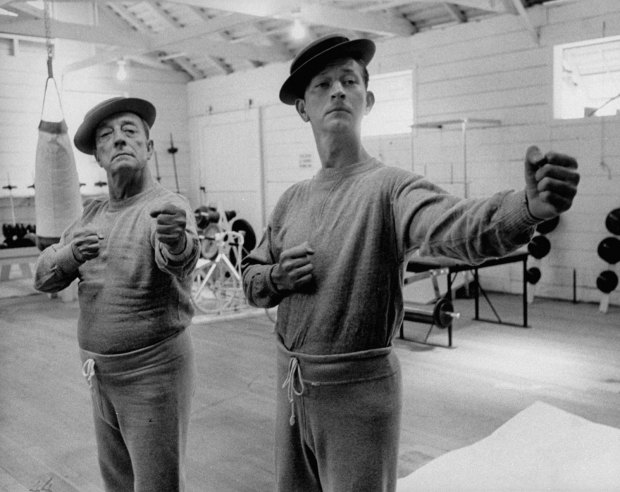
Buster Keaton and Donald O’Connor rehearsing in 1956
A few days ago, I had two conversations almost back-to-back. One was with an experienced and talented actor who believed they were getting the message that their career was over just because they were in a dry spell. The other was with yet another Bay Area actor whose career had stalled the minute they went AEA. While we talked about the many reasons why that happens, this actor said to me, “I want to see if I’m good enough to be an AEA actor.” And my heart just broke because, as someone whose life is always on the other side of the table, I know how seldom casting is purely about who’s “good.” I hate that experienced, talented actors can see whether or not they get cast as a measure of their intrinsic worth as actors.
So here you go, actors of the world. The pure, unvarnished truth about why you didn’t get the role.
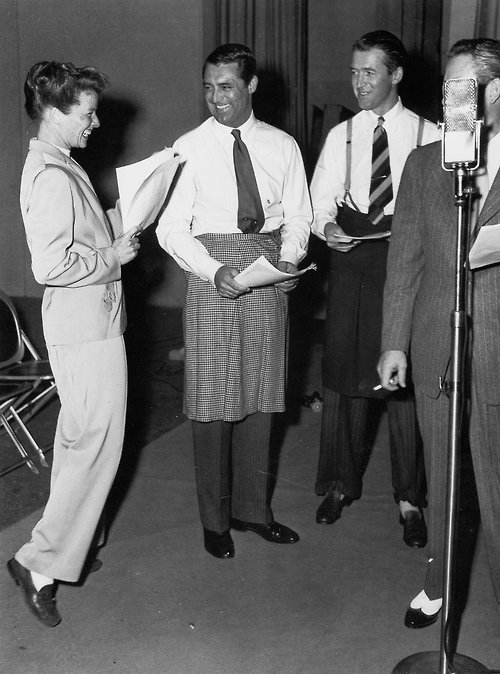
Katherine Hepburn, Cary Grant, and Jimmy Stewart performing Philadelphia Story for Victory Theater, 1942.
1. MOST COMMON: You’re just not right for it. I know this sounds like a massive, shit-eating cliche, but it’s absolutely the truth. A director walks into the room with a character conceptualized in a certain way, and is looking for the person whose type or energy matches the character. The truly amazingly badass Leslie Martinson of TheatreWorks taught me this years ago, when I was first starting out: Every conceptualized character has thirteen adjectives that describe them. Every actor has thirteen adjectives that describe them. Casting is about finding the best match. I pass over actors I flat-out adore all the time because the fit isn’t right. For example, a director might have Orlando conceptualized as a man in his 20s with a gentle, soft-spoken energy, while your audition presents a man in his 30s with a bright, aggressive energy. While your audition might be fantastic, you’re not going to be that director’s Orlando.
2. Your skillset isn’t developed. This is the second most common, and the one people like to think of as “not good enough.” That way of thinking is total bullshit. How do I know? Because year after year, I see actors grow and develop. I see actors go from maaaaybe having the skills to handle a small supporting role to being ready to carry a play in one season. Either they took a class that unlocked something, or worked with a director who stretched them, or went on a spiritual quest in the New Mexico desert, or had mind-blowing sex with Ian McKellen, whatever. But I see it happen all the time, because dedicated actors are constantly working on their skillset.
Judi Dench, Ian McKellen, and Joe Melia rehearsing Too True to be Good at the RSC in 1975.
3. The role was precast. Some directors are superstitious and will read people for roles that are already cast. It’s unfortunately common for actors to commit to roles that they later bail on (a better-paying gig, a family emergency, a medical situation), and if you auditioned other actors for that role, you have some go-to options. One casting director told me she was so superstitious that she didn’t get rid of the casting data for a show until it CLOSED. On the flip side, lots of theatres are upfront about which roles are precast. Don’t let that necessarily discourage you. You may want to consider coming in for a show where your dream role is precast– you may end up playing that role after all.
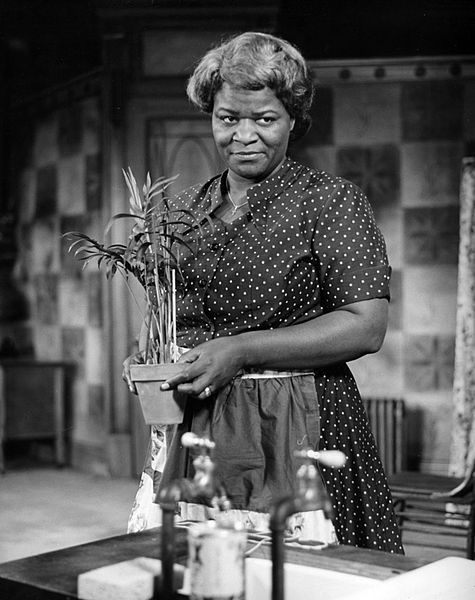
Claudia McNeil in A Raisin in the Sun, 1959
4. The role went to someone they’ve worked with before. This is incredibly common. You know an actor’s work, you have a shared language, you understand how to work together. A known quantity is less of a risk, even if the known quantity didn’t crush the callback like you did. The director knows from past experience that the other actor can give them what the work needs.
5. You’ve had a history of behaving unprofessionally. Luckily, this one is extremely rare, but it does occasionally happen. Violating your contract (coming consistently late or no-showing to rehearsals or shows, for example), treating fellow actors or crew disrespectfully, making unreasonable demands (such as demanding the theatre violate their contract with the playwright so you can change something in the script despite the fact that the playwright declined to allow the change, or demanding the day off during tech because it’s your one year dating anniversary), deciding closing night is the time for GAGS! and IMPROV!, badmouthing the show on social media (“This play is going to be total shit!”). Although I’ve seen every one of these examples firsthand, they are, as I’ve said, pretty rare. The converse, happily, is MUCH more likely to be true– that we take a chance on an actor unknown to us because someone at another theatre is raving about how awesome they are. And believe me, I’m not trying to imply that this doesn’t happen in the opposite direction. I know plenty of directors treat actors in unconscionable ways. But that’s an entirely different blog post. My point is that, in any theatre community, companies share personnel. While we don’t necessarily go out of our way to share that kind of information, the Literary Manager at one theatre is directing a show at another theatre. The actor at one theatre is the Artistic Director at another theatre. What happens in Vegas, so to speak, does not stay in Vegas. But be happy that the converse is also true and much, much more common– we’re raving about how wonderful you are to our friends at other companies. I’ve sent many a “heads up” email to directors to let them know that an actor new to them and about to audition for them is someone I’ve worked with and believe in.
6. Conflicts. You may have been the best person for the role, but since you’re planning to be in Oklahoma for Baton Twirling Nationals during tech, they’re going to go with someone else.

7. You tanked the audition. Oh, man, this one is a heartbreaker, and I see it all the time. It’s one of the reasons I tell my students that the best way to cast is to see as many plays as possible so you’re seeing actors in their natural habitat. Auditions are weird little creatures, artificial and forced. However, if we want to open our theatres to new people and new communities (and we do), we’re stuck with open auditions. Like standardized testing, which only measures how good you are at standardized tests, auditions often measure how well you audition and little else. While callbacks are theoretically meant to correct for that, you don’t always make it to the callback to show them. I’ve seen plenty of actors give me a crap audition and then give a beautiful performance in someone else’s play. They had a bad day, or memorized a new monologue they thought would be “better” for the role the day before, or were too nervous. There are a million reasons why a great actor would tank an audition. Don’t let it discourage you. Take an audition class or work with a coach if this is a common problem for you. Do what you need to do. But KEEP TRYING. Invite artistic directors and casting directors to see your work. Don’t give up! You won’t tank them all.
And that’s my main piece of advice: Don’t give up. If this is your dream, persevere! Nothing is insurmountable. FALL DOWN SEVEN TIMES, GET UP EIGHT.

 Bitter Gertrude
Frankly, this was probably the starkest, most directly delivered truth about casting I have read and it has helped me. Thank you.
Excellent!!!! Loved every minute of it!
Awesome! I kind of needed this right now. Actually, I’ll be honest–I REALLY did. I think I need to bookmark this and read it after every single audition I go on. Thanks. 🙂
Try again. Fail again better.
Every pass in an audition is closer to the next “yes”…..
The most intriguing advice I ever received was to focus on the task of being a professional auditioner. Your ‘job’ is auditioning. G-d forbid, you get cast, because then you don’t get to audition for a while. This helps soften the blow of rejection and motivates you to work on honing your audition skills.
I love that advice!!
So true and something we all need to remember!
Well said, get up, dust off, step on…..
Excellent! I will now refer actors to this entry when they complain to me or ask me why why why. “I pass over actors I flat-out adore all the time because the fit isn’t right.” so true! Actors I LOVE and know well, but they’re just not right– and then they feel betrayed because I didn’t cast them in a show… sigh.
As for “keep trying”– Ed Hooks used to tell a story of a woman he knew in L.A. who started pursuing her delayed acting career in her 70s. She took classes and auditioned for absolutely everything she could. Finally, on her 80th audition, she got cast in a national coke commercial– and that did it. She became the hottest “old” actress in town, got cast consistently for years, had a terrific career. What if she had given up at audition #79??? 🙂
Only thing I might add to your list is “Know your type.” Too many actors want to audition for characters they will never be cast as, either for type or age, sometimes using wildly inappropriate monologues. It helps to know how you’re perceived by casting directors, and helps when choosing monologues. Maybe look at actors a little older than you who are your type, and see what shows/roles they’ve done– sometimes you can mine their resumes for good monologue sources… And if you work on altering your type, alter your monologues too…
Fantastic insight. Know your Brand, just as a corporation does. Coca Cola is known for selling soda, but it does a huge business in selling water too.
Cool, Melissa, I expect to pass this on.
I wish I had written this. This is very good.
great points here. Too many factors are not in your control. My theory is to always prepare…then have fun because…oh yeah…this is supposed to be fun…and…auditions is a chance to work…then after…leave it….move on…in theory…in practice sometimrs hard sometimes not…
The photo of The Philadelphia Story was not that cast rehearsing the film, but of a later performance they would give of the story on radio’s “Victory Theatre.”
Thank you! I’ll amend.
Excellent post. The only thing I would add is that your first 15-30 seconds in the door can make the difference between getting cast and not getting cast. The energy you walk in with can seal your fate. Thanks for this!
Brilliant! And so true.
I would suggest that another reason casting happens is visual aesthetic. You may have given me the best audition for my female lead, but my male lead is 5’5″, and you are 6’3″.
I would definitely include that in “just not right for it,” although I strongly encourage directors to look past their received notions of “visual aesthetic.” Tall girls *do* date short guys. Big girls *do* date classically handsome guys. Disabled people date classically beautiful able-bodied people. We can see past our preconceived notions of who looks “right” together and become more inclusive.
Completely agree. I’m not saying this happens every time, but it does happen.
I think there are many times where it’s easy to look past the visual aesthetic, but there are also times when it’s just not possible. Can you cast an African-American to play the birth father of a white actor? Absolutely. But if that African-American actor doesn’t read as “old enough” to be the father, then that’s a problem. Similarly, if I know that my two leads are going to have a dance moment, and the visual aesthetic I want for that doesn’t lend itself to two actors of disproportionate heights, then I’m more likely to cast two actors of similar stature.
At the end of the day, what it comes down to is that there are always more actors then there are roles. For actors who didn’t get cast, I’d say to them: are you happy with your audition/callback? Did you present yourself as a team player? Did you make strong choices? If so, then there’s not much more you can do. Everything else is out of your control.
Another thing that I have seen is that you won’t be cast because you don’t fit with another person that the director REALLY wants in a certain role. Like if you have to look related or something along those lines. I saw it happen in the last show I did.
To every actor or actress I speak with about casting I with them this goal: find a way to sit in the audition/casting process on the other side of the table. It will open your eyes in way that auditioning yourself and classes never can. Make friends with a director, a producer, anyone who can get you behind the table as an observer and get your butt behind the table. It will change your life.
Excellent insight! One tip that has helped me – treat every audition as a performance opportunity, and every performance gives you a chance to grow as an actor. Even if you are performing the role for one person, the casting director, that is a meaningful performance.
Thank you, tiny potato.
Love, love this!
It was only when I started directing that I understood all of the above. But there are many other reasons.
1. Your height, colour, gender. I was to be cast as Captain Von Trap except the Baroness was about 5’10” and I am 5’7″ it would have looked ridiculous. However in the same company I was cast in a leading role opposite her in ‘House Of Blue Leaves’ it was a comedy and it read well with the height difference.
2. Yo cannot play every role. Get your ego out of the way and stop thinking that you can play every role. If they are making a film or play about Martin Luther King Jrn, I don’t care how good of a white Actor you are, your never going to get the role. I know that’s bait extreme but so many aActor think they can play every role.
3. Chemistry. If you don’t have the chemistry to play opposite Benedick as Beatrice or vice versa then it will go to the person who does.
4. The director may have an already set idea of who it is who they want to lay a role and if we do not fit that then nothing we will do will change their minds.
If we dwell on the fact that we are not getting cast and we start to make it into a story we will start to second guess ourselves and that will read stronger than any great audio we might do.
Break A Leg!
Wouldn’t it be beneficial and educational for a director of, say, a school play to explain why an obviously talented, experienced actor isn’t cast in a major role year after year causing that student/actor to lose confidence and interest in theater? Of course there are reasons: the student looks older than any of the roles require; the student is, as stated, taller than the other actors, etc. If the student had any clue as to why they were constantly cast as “ensemble” when they have had major roles in other theater groups, they might not be as likely to “give up” on theater. What if Clint Eastwood had given up when he was told that he’d never make it as an actor because his Adam’s Apple was too big? The “ensemble” works just as hard as the “stars” of a show in most plays. It would help them to know that there is a reason they are in the ensemble instead of a major role time after time.
As someone who writes and directs his own material, #1 is probably the most reoccurring theme.
Loved this. I was the reader for several casting sessions in New York and I’d like to add another item to this list– “Sometimes the director is a f***ing hack who doesn’t know what he’s doing.” I saw some Brilliant actors give brilliant auditions and then be made fun of when they left the room. Just because some idiot has been hired to direct a play doesn’t automatically mean they know anything about good acting. Don’t always assume the problem is you.
Yes!! There are so many mean-spirited people who somehow finagled their way to a spot behind the table. The previous actress’s perfume is still wafting in the air and someone behind the table is already making a catty comment.
i have often said that the wonderful joy of being able to say “yes” to a talented artist is often undercut by the horrible responsibility of having to say “no” so many MORE times to equally talented ones….
Fortunately, I’ve never been on the receiving end of the bad news. I’ve been the guy who’s *delivered* the bad news, though. And I’ve always made the effort to assure candidates of the above.
It would be a better world if as many casting directors read this so they could deliver the bad more professionally.
It’s so creepy when you get that feeling a SM, AD or CD get some sick, secret enjoyment from passing on bad news. I’ve encountered a couple of stage managers who took passive aggressive pleasure in giving actors negative “fix-it” notes.
And remember, there will always be those who will root for you no matter how neurotic you are!
http://www.nbc.com/saturday-night-live/video/24-hour-energy-drink/n41900
Thanks, I thought I didn’t get the part because I am a shitty actor.
I know certain actors who loved to audition because they thought of it as another chance to perform. I was never one of those. If I ever get back to the theater I am going to take an audition class. Then at least I will know where to look when I am singing. I hate auditions. I love performing.
Quite often precasting ocurrs regularly in amateur theatre in order to keep an actor in favor in lieu of pay-the so-called “core of actors”. It works,but cheats audience out of fresh performances with fresh faces and talents….incestous yawn theatre.
This is my first read of your column and gosh it was so helpful. Doubt is such a killer. It’s hard sometimes to keep it’s loud voice muzzled! But perspectives such as these atleast help one not to invest in what we hear it say! Thank you.
I honestly feel that most directors put far too much emphasis on merely LOOKING the part. I’ve been to more than a few auditions where I thought I absolutely nailed a role, only to see it given to a guy who gave a totally pedestrian reading (but who was over 6 feet tall, was slim and still had a full head of hair). : P What is ultimately more important — casting someone who looks right but who will give a merely functional performance, or someone who can bring more to the table in playing a certain role, regardless of his/her looks?
ABSOLUTELY!! You cannot succeed without failure.
I would add a necessary expansion of your Point #1:
You don’t connect with the other actors at call-backs.
I know tons of actors who get through the solo auditions – prove that they could do the role as the direct envisions – go to the call-backs, and don’t get the role because they just didn’t click with any of the other actors, the energy between them wasn’t right. A show doesn’t just need the right actor for each role – they need the right cast, the right actors for each other.
I’ve seen shows with all-star casts – the best performers the theatre community has to offer – that were mediocre. Each individual performance was great… but the cast had no synergy.
I’ve seen shows where none of the actors were anything much better than decent, but the energy between them made the show incredibly compelling.
The energy of the cast as a whole is, in my opinion, the most important ingredient behind a successful show. And it’s the first thing performers overlook when they wonder why they didn’t get cast in something.
Really love this. Thank you, little potato.
Great article, I love it!
As someone who’s been on both sides, I really get this. Whenever I see a fantastic audition that for whatever reason doesn’t work, I email the person telling them why. It takes me 1 min and can do wonders for someone’s self-esteem.
But it can be hard for many young actors who are transitioning from Amateur to Pro, and find themselves going from the only competent High Tenor for 30 miles in any direction to someone who has to compete for roles.
They have no idea what roles they should audition for, and no self-concept of themselves as an actor, because they’ve been getting every role they auditioned for by default. 10 or 11 auditions in, that gets really rough on them.
At the community theatre I volunteer at, number 5 plays the biggest role. It’s all generally the same people for each show, so if someone starts causing a ruckus and acting unprofessionally, then they get to take an involuntary hiatus.
What happens when you join equity only to realize that you’re a type most theatre producers/directors don’t earmark for a contract? You’re not a Beast or Gaston, but rather, Cogsworth or Maurice.
Off topic, what advice do you have for an actor who has lost their…passion? Drive? Ambition? Their groove! Tell me, Stella, how does an actor get his groove back?
One more thing, AUDITION! Keep auditioning as often as you can find auditions. Can you carry a tune? Audition for musicals as well as streight plays. It gives you more options. Also there are a limited number of casting people seeing talent. The more they see you, the better your chances of being cast.
One thing I emphasize to the singers I work with in my shows – two words – BE MEMORABLE! Even if you don’t get the part, if you put on a performance people remember and talk about you’re a lot more likely to get a call for a show you DO fit in the future. Ultimately, auditions are a numbers game, but cut the odds in your favor by going to the ones that suit you the best.
way to be kind and truly informative…hope a is good with you
Perfect. This should be copied and hung on the call board of every theater training program in the country.
Thanks for writing such an insightful article! I have a question about auditions that no one I know has yet been able to answer: Why do some (casting) directors not look at you while you are performing your monologue? I have encountered this twice in the past year alone- one director was looking down at his notepad the entire time and another was looking down at her laptop…It really throws me off and puts me in a ‘wow, how badly am I doing that they can’t even look at me?’ state of mind which makes my monologue start to falter….are they trying to test the actor’s limits? Or is it something else?
Thanks!
I got rejected this morning for a role I wanted badly. Unfortunately, reading this post has done nothing to ameliorate my feeling that I was not good enough. I don’t yet know what will.
You know what? Maybe you weren’t good enough– maybe the person they cast has a better-developed skillset. But that’s just TODAY. You can improve, develop, and grow. I’ve seen it a million times. I’ve had actors audition for me for years with skillsets that were not on par with what we were doing, then take the right class, or make a connection that caused them to make a real leap, come audition for me again, and knock my socks off. I’ve seen it over and over and over. Look for a class in your area that’s right for you. Go back through a book that inspired you, or ask friends which books inspired them. I know a lot of actors still love Uta Hagen’s Respect for Acting. Work on your voice and diction skills with exercises you can find online. There are so many ways to improve your skillset. There will ALWAYS be someone better than you are– there are better directors than I am, better bloggers, better teachers, better artistic directors, better moms. I’ll never be THE best, but I can improve from where I am today. And so can you. That role you didn’t get? That’s in the past. Face forward, step forward, and knock their socks off next time. XO
Actually, I have more than 40 years’ experience. My skillset is pretty well honed (which is not to say I’m perfect – but I’m not a novice and not a stranger to voice and diction skills). I’m a veteran of several acting classes, as well. Also, the role was one I’ve played before – earlier this year, in fact.
I just have to say that that little potato was so needed. Like I’m sitting here crying but that stupid little potato made me so happy so I just wanna thank u for that
Thanks so much this really helped!!! THE LITTLE POTATO WAS SOOOO CUTE
As an agent of over 30 years these are things that we have seen so many times and our actors always beat themselves up over these things. frustrating to you and to your agent as well. Show biz is a “game” and you have to play by someone’s rules without much control. Actors will come out of an audition and feel great about it but someone else gets the role, then the “beat down” starts. What did I do wrong, What should I have done different, I felt great about that audition just knew I at least would get a callback, and so on. Actually you were spot on, but the actor they went with was the star/director/producer’s 2nd cousin that wants to get into the business, or you look like a person someone didn’t like, an ex-wife/husband..it had nothing to do with your acting and yet you are beating yourself up with “what if’s”. All we as agents ask of actors is to keep working on your craft, if you get a call to audition do as much research on the project, the director, other projects he/she has done, find out as much as you can on both, if you get sides be prepared, make choices but be flexible if ask to make changes and do the best you can. Once you are done, move on to the next project and forget about this one. Hard to do we know but you did your best, you feel good about what you did and the rest is not up to you or the agent.
Is it possible to fail a fitting as an extra? I know it sounds strange but, I was a bit too nervous when I went to the fitting and had a rough night before, so I had awkward chatter with the others waiting. I’m guessing the people who help you fill out paperwork are the gatekeepers. If I dif blow it. Is there hope of ever being casted? Curious.